Tips
Tips
...

 Tips
ReplacingPhotoshop with Workflow
App Debuts
The Incident
iOS Apps for Students Preparing for Exams
Tips
ReplacingPhotoshop with Workflow
App Debuts
The Incident
iOS Apps for Students Preparing for Exams Rene Ritchie at iMore, in an article titled “Siri vs. Alexa is hilarious to people outside the U.S.”:
Imagine if, on a weekly basis, you saw or heard “Xinghua” being compared to Siri. But “Xinghua” was available only in China and only to people who spoke Mandarin. How meaningful would those comparisons really be to you in the U.S.? That’s about as meaningful as headlines comparing Amazon’s virtual assistant, Alexa to Apple’s Siri are to the vast majority of the world’s population.
Right now Alexa is solving only for people in America who speak English. That’s an incredibly small subset of what Siri, which just recently added Hebrew and several other languages in several other reasons, solves for.
With all due respect to Rene, I think this is a disingenuous way of defending Siri from the comparisons to the Amazon Echo’s Alexa.
It is, of course, a fair complaint that the Amazon Echo is not available in countries outside the United States, and that it can only understand US English.1 But I do not think it is legitimate to imply that the Echo’s geographic and lingual limitations somehow undermines the advances that the Echo offers in other areas such as its integrations with services which is seeing it receive praise from all-corners of the industry in recent months.
A large part of the praise of the Amazon Echo is because in 18 months it has gone from a product that didn’t exist, into one that many in the US find incredibly useful. Also significant is that in those 18 months it has evolved rapidly, adding great new features that make it even more useful. That is why people are comparing it to Siri, which launched in 2011 and has undoubtedly improved, but at a much slower pace and in less substantial ways (multi-lingual support aside).
I’m an Australian and I don’t think this Siri vs Alexa debate is “laughably US-centric”, I think it’s important, even if I can’t personally use Alexa. Just last week, Google announced that it will be releasing a very similar product later this year, and credited Amazon for their pioneering work with the Echo. I am certain Apple has taken similar notice of Amazon’s (seemingly successful) efforts with the Echo, and if Apple acts on those observations, then everyone with access to Siri will benefit.
So I’m not laughing, I’m grateful, if a little envious that my friends in the US are (yet again) getting a taste of the future before me. But I know it’ll reach me soon enough, whether it’s via Apple, Google, Amazon, or even Microsoft.
Bloomberg reports that Apple has been denied a key exemption that will likely scuttle Apple’s plans in the short term to open official Apple Retail Stores in India:
India’s finance minister has ratified a decision that Apple Inc. must meet local sourcing rules to open its own stores, according to people familiar with the matter, dealing what may be a fatal blow to the iPhone maker’s effort to open retail outlets in the country.
Minister Arun Jaitley decided to support the decision by India’s Foreign Investment Promotion Board that Apple will have to procure 30 percent of components locally if it wants to sell through its own retail stores, said the people, asking not to be identified because the matter is private. The company makes most of its products in China and doesn’t currently meet that criteria.
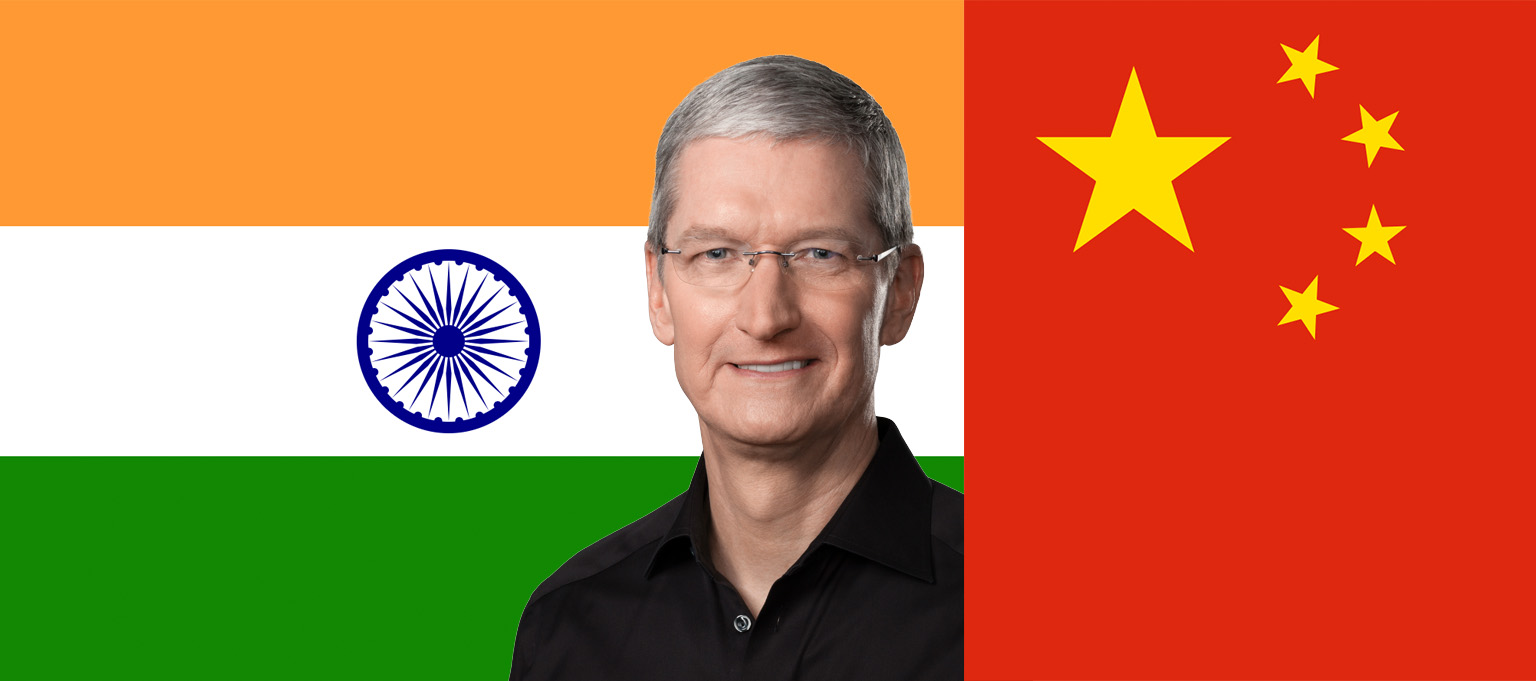
It comes after another government panel had recommended, in late April, that Apple be granted the exemption. But more significantly, today’s move comes after Tim Cook visited India in his first official trip to the country as CEO of Apple.
The decision by India’s finance minister may not be the last word, as Indian Prime Minister Narendra Modi could theoretically intervene. During Cook’s trip to India he met with Prime Minister Modi and Apple’s retail plans were reportedly discussed, as was Modi’s “Made in India” program which encourages foreign companies to manufacture in India. In public comments during the week Cook suggested that Apple was looking to establish a facility in India that would refurbish old iPhones for resale in India, but had no plans for other manufacturing at this stage.
If you’re interested in reading more about Cook’s week-long tour of India and China (which occurred last week), I wrote about the context of the trip as well as providing a timeline of what actually happened.
It may not have made the front page headlines, but Apple just concluded a significant week-long tour of India and China. Tim Cook has made numerous trips to China in recent years, but this was the first time that Cook visited India on an official trip as CEO of Apple. The trip also comes at a crucial time for the company as it begins to make big strategic moves to attract more Indian consumers, and at a time when Apple’s growth in China last quarter screeched to a halt after a period of huge growth.
OS X Productivity Boosters, Vol. 1