Graham Spencer

1054 posts on MacStories since January 2011

Former MacStories contributor.

Rovio Hires Iron Man 2 Executive Producer For Angry Birds Movies

Back in August last year, there was news of Rovio being approached by several movie studios to potentially create an Angry Birds movie. Over the following year, Rovio’s Angry Birds franchise has continued to see exceptional growth on the iOS platform and has since launched Angry Birds merchandise and a deal with 20th Century Fox to create Angry Birds Rio – a crossover version of Angry Birds with the animated movie Rio that arrived in cinemas earlier this year.

I’m very honored and excited to join Rovio, and my goal is to help unleash its great potential, Rovio has already had amazing success and established a great brand with Angry Birds. The business model, intellectual properties, and the franchise potential of Angry Birds give Rovio the most exciting prospects I have seen in the entertainment business since Marvel in 2003.

Yet this isn’t enough for Rovio, they are set on creating their own Angry Birds movie and if you haven’t thought that they were serious about it, think again. Today they revealed that they have brought David Maisel on board to be a special advisor to Rovio and the executive producer for the Angry Birds films – yes, “films”, according to this Rovio blog post. Maisel has got considerable experience for this role as he was the executive producer for Iron Man 2, Thor and Captain America: The First Avenger and was the Chairman of Marvel Studios.

Rovio also reveal in the post that earlier this month they had acquired a Finnish animation studio, Kombo, to add to its in-house animation capabilities. They note that they are still looking out for more animation talent – but it isn’t clear if this is for the Angry Birds apps or movie development.

[Via The Next Web]


Apple Releases Thunderbolt Cable, Sony Unveils Details Of New PC Featuring Thunderbolt

Update: The cable has made its way on to the online US Apple Store and it is indeed US$49.

Following yesterday’s Thunderbolt firmware update that brought “performance and stability fixes”, Apple has released the ‘Apple Thunderbolt cable’ that allows users to connect and daisy chain multiple Thunderbolt capable devices. The 2m long accessory is simply a cable that features the Thunderbolt connector on both ends. It is priced at $55 in Australia, £39.00 in the UK but has not yet made it into the US Apple Store – although based on similarly priced accessories it will be roughly US$49.

Thunderbolt technology supports blazing-fast data transfer with two independent channels of 10Gbit/s each. Use the Apple Thunderbolt cable to connect your Thunderbolt-equipped peripherals to your new iMac or new MacBook Pro.

As explained in our Thunderbolt editorial a few months ago, the Thunderbolt specification works by daisy chaining multiple devices together – allowing just one cable from the Mac to actually connect a number of devices together. This Thunderbolt accessory cable is that cable that can connect multiple Thunderbolt capable devices together.

The other piece of Thunderbolt news is that Sony has announced details of its new 13.1-inch VAIO Z that features Thunderbolt, except they are calling it Light Peak (the old name of the specification). Interestingly it features a ‘Power Media Dock’ that includes an external GPU and optical drive – all connected by Light Peak. It is certainly an interesting use of the Thunderbolt specification, and with its speeds that external GPU will certainly make that laptop much more powerful when connected.

[Via This is my next]


MacBook Air Supplies At Best Buy And Others Dwindle, Refresh Creeps Closer

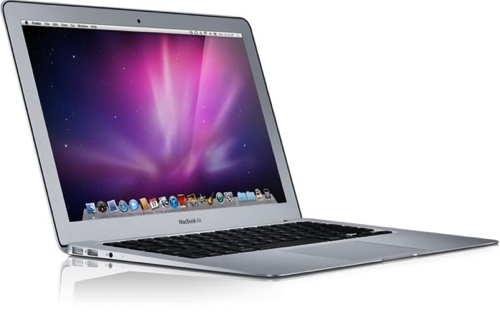
It is pretty clear that a refreshed MacBook Air line is coming soon, based on the numerous rumors and reports that have come in over the past month or so. Further evidence of an imminent refresh came late yesterday night when 9to5 Mac discovered that Best Buy had stopped shipping all MacBook Airs from its website. Although they are still selling them from their retail stores, stock is reportedly low, with some “exceptionally low on MacBook Air stock”.

The UK Best Buy online store is also completely out of stock except for the 128GB version, which is low in stock and can only be collected from certain retail locations.  The story is similar with Canadian retailer Future Shop which is also low on stock as well as Amazon, which has low stock in a number of countries. 9to5 Mac also speculated in its post that July 4th could be a potential release date for the refreshed models, other rumors had suggested the launch would correlate with the launch of Lion.

The refreshed line of MacBook Airs is widely expected to include the new Sandy Bridge processors from Intel, as well as the new Thunderbolt I/O port which made its debut in this years refresh of the MacBook Pro models, and more recently in refreshed iMacs – both refreshes also brought new Sandy Bridge processors.

[Via 9to5 Mac]


Apple Blocks SHSH Blob Method Of Downgrading Firmware Versions In iOS 5

Apple and the jailbreak community have always enjoyed somewhat of a cat-and-mouse game between them and today we are learning that Apple has pounced to fix up one of the common circumventions used by jailbreakers. The circumvention in question doesn’t involve an actual exploit to jailbreak devices but rather a way that people were using to downgrade from one iOS version to another – often to a version that was capable of being jailbroken.

Apple had implemented a system where it would only authorize certain iOS builds to be installed, making it nearly impossible for downgrades. The circumvention was that by using SHSH blobs people could use iTunes to restore to a previous firmware version. According to what the jailbreak Dev-Team has said in a blog post today, that is all changing in iOS 5 as Apple moves to a new signing process. As the Dev-Team explains, the new process will become much more like the BBTicket (Baseband Ticket), which will make it much more difficult to reverse engineer:

Starting with the iOS5 beta, the role of the “APTicket” is changing — it’s being used much like the “BBTicket” has always been used. The LLB and iBoot stages of the boot sequence are being refined to depend on the authenticity of the APTicket, which is uniquely generated at each and every restore (in other words, it doesn’t depend merely on your ECID and firmware version…it changes every time you restore, based partly on a random number). This APTicket authentication will happen at every boot, not just at restore time. Because only Apple has the crypto keys to properly sign the per-restore APTicket, replayed APTickets are useless.

It isn’t all bad news though, restoring to pre-iOS 5 firmware versions will still be possible (although it will probably require an old version of iTunes) and tethered limera1n exploits will not be affected by this. As for why Apple has decided to now change this process, the Dev-Team explains that it was only a matter of time before Apple made the changes and that with delta iOS updates, it was made all the more necessary. The Dev-Team ends the post by noting that whilst Apple has “stepped up their game”,  there may be ways to combat this move.

[Via Dev-Team Blog]


Apple Posts iCloud Transition Q&A, Confirms iCloud Will Have Web Apps

With iCloud set to replace MobileMe, Apple has just published a transition Q&A to help explain to users of MobileMe what the transition will be like and what will change as they move to iCloud. MobileMe will be discontinued on June 30, 2012, and some services like Gallery, iWeb, and iDisk will no longer be available after that date.

One issue that has been in contention recently is whether or not iCloud would offer web apps with as MobileMe did. Today’s transition Q&A confirms that, yes, there will be iCloud web apps for Mail, Contacts, Calendar and Find My iPhone.

Will I be able to access iCloud services on the web?
Yes. Web access to iCloud Mail, Contacts, Calendar, and Find My iPhone will be available at icloud.com this fall.

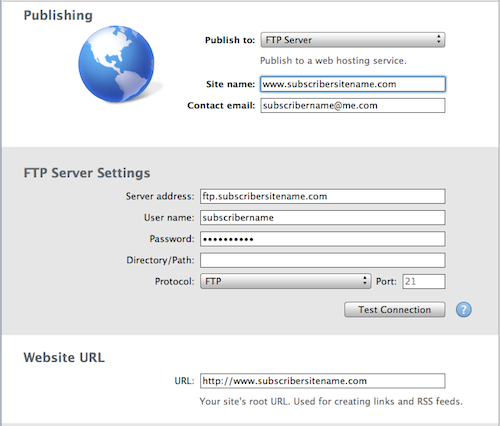
In the same transition Q&A, Apple also details the necessary steps to move existing iWeb websites, MobileMe Gallery photos and iDisk files from the old MobileMe infrastructure to different services or a local folder on your Mac. For iWeb, as previously reported the service will be discontinued on June 30, 2012, and if users are willing to keep their websites reachable they’ll need to move files via FTP to a new hosting provider. Instructions are available here.

You will be able to continue publishing iWeb sites to MobileMe through June 30, 2012, even after moving to iCloud.

  • You need an account with a web hosting provider that supports FTP (File Transfer Protocol) before proceeding.
  • When publishing an iWeb site to a web hosting service other than MobileMe, the following features are not available: blog and photo comments, website password, blog search, and hit counter.

iDisk files will simply need to be copied locally on a Mac or PC before June 30, 2012, and no online interface for files will be available.

You will be able to continue using MobileMe iDisk through June 30, 2012, even after moving to iCloud. You should save copies of all files stored on iDisk before that date.

  • From the iDisk window, drag and drop the files and folders you want to keep to your desktop or a local folder on your Mac. For larger files, you may see a progress bar indicating download progress.
  • Check all of your folders on your iDisk for important files including the Documents, Movies, Music, Pictures, and Public folders as these are places where important files and folders are commonly stored. If they have files you want to keep, download these folders.

Last, MobileMe Gallery photos. Apple says that “it is likely that most of your Gallery photos are already in iPhoto or Aperture”, but if they’re not, detailed steps to download photos from MobileMe before June 30, 2012, are available here.

You will be able to continue using MobileMe Gallery through June 30, 2012, even after moving to iCloud. You should save copies of all photos published to your Gallery before that date.

  • Click the “http://gallery.me.com/subscribername…” link at the top right of the page.
  • On the page that opens, click the download arrow icon at the top of the page.
  • If you are downloading a photo album, Gallery will create a .zip file that contains all of the photos and movie clips in the album. Once processing is complete, click the Download button.

Furthermore, Apple has confirmed in the Q&A syncing of Mac Dashboard widgets, keychains, Dock items, and System Preferences will be discontinued after you move to iCloud, or June 30, 2012. Unlike iWeb publishing, Gallery, and iDisk, syncing of these items will no longer be available even after you move to iCloud.

As for separate iTunes and MobileMe accounts, Apple says you won’t be able to merge them, but you’ll be able to transition an old @me.com account to iCloud, and keep using the iTunes one for iTunes in the Cloud and Store purchases. More storage for mail, documents, and backup will be available at a price that Apple will outline this Fall once iCloud launches publicly. For users with Family accounts from the previous MobileMe offerings, they’ll still be able to create new family accounts and manage them if they already have a Family pack. New family packs can’t be purchased or upgraded. More importantly, Family pack members can move their MobileMe accounts separately to iCloud, meaning there shouldn’t be any confusion with a single iCloud account automatically sending purchases to all devices).

Check out Apple’s full Q&A on the MobileMe transition to iCloud here.


The Financial Times’ Web App Is Doing Well With Nearly 200,000 Downloads In Two Weeks

Two weeks after The Financial Times launched their new web app, they are apparently close to racking up a rather impressive 200,000 downloads. The Financial Times had launched the web app as a result of imposing conditions that Apple was asking for with its In-App subscription service, in particular was the lack of data that The Financial Times could attain from user activity.

The statistic comes from Media Week which says Financial Times is about to hit 200,000 downloads of the web app after getting 100,000 downloads in its first week. Given the apparent success of the app (although it remains to be seen how many people will subscribe) it could see other news publications move to the web app model instead of developing a native app. Publishers that develop a native app and charge a subscription fee must give up 30% of revenues to Apple – something all publishers have been somewhat hesitant of doing.

It is not known whether Apple’s revised In-App subscription guidelines will entice The Financial Times back to offering their native app. But they did comment on Media Week’s article, saying:

“We’ve seen strong demand for the FT web app since its launch. We have an ongoing marketing campaign encouraging users to migrate to the new platform and we’re confident we can maintain the momentum.”

[Via The Next Web]


iOS 5 Code Reveals New iPod Touch Model, Normal Fall Launch Expected

Update 2: TUAW made a mistake in their reporting, there isn’t any reference to iPod4,2 in 4.3 - they had accidentally opened the iOS 5 file twice, instead of the 4.3 file. Please ignore update 1.

Update 1: Erica Sadun of TUAW decided to double check whether this reference had existed prior to iOS 5 and sure enough, the same reference was found in iOS 4.3.

When Beta 1 of iOS 5 was released earlier this month some people found references to a next generation iPad and iPhone. That news itself wasn’t all that riveting, new iOS versions often hint at new and upcoming hardware – what was somewhat odd was that those people didn’t find any references to a new iPod Touch as would have been reasonably expected.

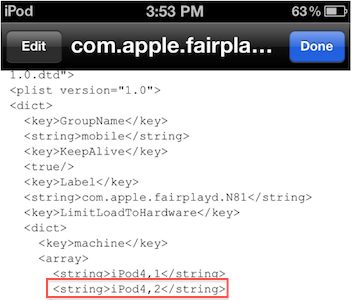
It turns out that there are in fact references to a new iPod Touch, they were just hidden away elsewhere, found earlier today by members of the iFans forum. Found inside the “com.apple.fairplayd.N81.plist” file (located in /System/Library/LaunchDaemons/) there is a reference to the “iPod4,2” – a new reference to an iPod Touch.

There haven’t been many rumors surrounding the fifth generation of the iPod Touch, but one would assume Apple would follow the pattern it has set from previous years, launching it sometime around September. The reference within iOS 5 makes this more likely, but perhaps a bigger reason is Apple would unlikely want to miss launching a new iPod Touch for the holiday season given how popular the Touch has become.

[Via Cult of Mac]


Apple Ramping Up Component Orders For July MacBook Air Refresh?

A report from DigiTimes today claims that Apple’s supply chain for its MacBook products will begin to “run in full gear” from early July as Apple prepares to a launch an updated MacBook Air. The report is in line with previous suggestions that Apple will wait until late July to launch a refreshed MacBook Air to coincide with the launch of Lion – which DigiTimes itself corroborates in the report.

[Increasing orders for components] is in line with Apple’s previous strategy to ramp up deliveries prior to the launch of new products.

The report does also mention that Apple expects to take “deliveries of over eight million MacBook Airs in the third quarter”. However, as MacRumors has pointed out, that figure is extremely large and actually represents double the amount of all Macs sold in the second quarter.

[Via DigiTimes]


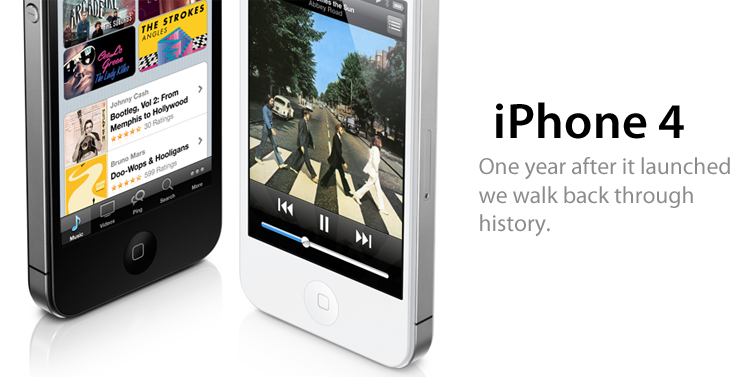
iPhone 4: A Retrospective, One Year Since It Launched

Today is June 24, 2011. Believe it or not, it has already been one year since the iPhone 4 went on sale across the US, UK, France, Germany and Japan to literally millions of people who eagerly waited in line to get their hands on the latest and greatest iPhone yet. The history of the iPhone 4 has been remarkable, controversial and fascinating, filled with prototype leaks, criminal investigations, amazing technology, scandals, mystical white unicorns, new carrier allegiances and more. Come along with me as we mark the one-year anniversary of the iPhone 4 with a walk down memory lane.

Read more