Graham Spencer

1054 posts on MacStories since January 2011

Former MacStories contributor.

Apple: Samsung “The Copyist” Is Attempting To Harass Us

There’s been some news on the Apple vs. Samsung patent battle today with some recent Apple filings coming to light where Apple alleges that Samsung is “attempt[ing] to harass” them and that Samsung’s demands are not made in good faith – even going so far as to label Samsung as “the copyist” in the documents. It comes after Samsung requested Apple to hand over the iPhone 5 and iPad 3 (or the most recent prototype) to Samsung’s lawyers, which itself was a response to Apple’s request for several Samsung products that hadn’t yet been released (although they were announced).

Samsung’s Motion to Compel is an improper attempt to harass Apple by demanding production of extremely sensitive trade secrets that have no relevance to Apple’s likelihood of success on its infringement claims or to a preliminary injunction motion.

This Friday (1:30 PM Pacific Time) Apple and Samsung will meet with their judge for the purpose of discussing Samsung’s request for expedited delivery (Samsung gaining access to the next generation iPhone and iPad). Apple’s recent filings are in preparation for this court session. FOSS Patents has given the filings a good look over and found some highlights.

As many had expected, Apple’s lawyers make the note that Samsung is asking for much more than what Apple asked given that the Samsung products, although unreleased, had been fully revealed and were available for pre-order. By contrast the next generation iPhone and iPad do not officially exist – in fact it notes in its filings that “Apple is widely recognised as one of the most secretive companies in the world”.

It also tackles the idea that whilst Samsung’s law firm may not leak the details of the iPhone 5 and iPad 3, it could use their knowledge of them to form future patent infringement theories for other companies it represents – which includes other major Android device makers including Samsung, Motorola and HTC.

It also puts the argument that since no future iPhone or iPad products are included in Apple’s complaint of Samsung products, there isn’t reason to show them. It also dismisses Samsung’s suggestion that future design changes “could indicate that Apple is not as consistent as it claims, and consequently Apple’s related rights could be weaker”. Be sure to head over to FOSS Patents if you want a more thorough review of the recent filing and if you want to remind yourself of what the lawsuit is about, be sure to head over to read This Is My Next’s excellent analysis.

[Via FOSS Patents]

Some Early Signs Of iCloud Web Apps Found

Details of iCloud, particularly over any potential web apps, have remained murky at best since Steve Jobs introduced the service at WWDC last week. Yesterday Joshua Topolsky of This Is My Next obtained what seemed to be a confirmation that web apps would not be offered with iCloud as they were with MobileMe:

Let’s be clear about what happens when iCloud goes live – according to what was described on stage at the event, and what I’ve confirmed with Apple PR –the service will effectively replace the current web offerings of MobileMe. That means that when the cutoff date of June 30, 2012 comes around for users, the web-based email client, calendar, contacts app, and other components of the web suite will cease to exist.

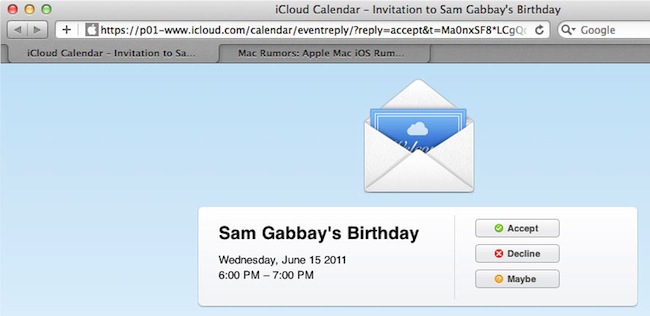
This drew a sceptical response from many, a post by John Gruber is representative of that scepticism, and today MacRumors seems to have found that Apple is actually porting iCloud to at least some of the MobileMe web apps. One of their readers sent themselves a Calendar invitation in iOS 5 and received a link to the iCloud.com domain. The above image illustrates what was linked to – and identical page to the current MobileMe invitations system (visually at least) except that was on the iCloud.com domain and had some iCloud branding at the bottom of the page.

It seems reasonable that Apple is working on at least some level of web support for the iCloud components but as usual they won’t confirm anything that they aren’t ready to talk about. If you wanted some more convincing of the reader’s screenshot jump over to this iCloud.com link and see for yourself.

[Via MacRumors]

Update: Well-sourced Apple journalist Jim Dalrymple at The Loop says iCloud will have a web interface, with Apple saving some interesting tidbits for iCloud’s public launch this Fall:

As for Josh’s Apple PR confirmation. The only thing I can think of is that there was some kind of misunderstanding. Daring Fireball’s John Gruber says Topolsky is making a “bad assumption.” That sounds about right to me.

Of this, I am sure — Apple will have a Web-based interface for iCloud. In fact, I expect an even cooler interface than the latest updates we saw with MobileMe calendar and email.


Apple To Offer $100 iTunes Credit Instead Of An iPod For Back To School Promotion?

Apple’s ‘Back to School’ promotion is scheduled to start up again sometime very soon and if reports from today come true, the promotion could be a bit different to years past. 9to5 Mac is reporting that when a student purchases a MacBook this year, they will receive a $100 worth of iTunes credit rather than what has previously been an iPod Touch in recent years.

Launching three months before the September iPod event Apple seems to have every year, the ‘Back to School’ promotion was largely viewed as one way of clearing out iPod inventory ahead of the refresh in September. Previous rumors of this year’s promotion suggested that Apple was set to offer $200 off the price of an iPad.  As always, regardless of the bonus offered during the promotion, students get an education discount on the cost of any Mac they purchase.

[Via 9to5 Mac]


Apple Settles With Nokia Over Patent Dispute


Nokia today announced that they have reached a settlement with Apple over a complex web of patent disputes between the companies that have been keeping both companies (and the courts) busy since 2009. The settlement involves a one-time payment as well as on-going royalties to be paid to Nokia by Apple – the size of the fee and royalties is undisclosed, as is the length of the agreement.

We are very pleased to have Apple join the growing number of Nokia licensees,” said Stephen Elop, president and chief executive officer of Nokia. “This settlement demonstrates Nokia’s industry leading patent portfolio and enables us to focus on further licensing opportunities in the mobile communications market. - Nokia Press Release

As FOSS Patents relays, the settlement of this dispute will free up precious resources for both companies – Apple in particular will need them whilst it battles three of the big Android device makers; Motorola, HTC and Samsung. The win for Nokia against Apple will be somewhat of a precedent for future potential patent battles, particularly given the veracity with which Apple had displayed in attempting to ‘win’ this lawsuit. In particular, it is very likely that Nokia will soon go after Android device makers and it is questionable whether they would fare any better than Apple did.

The price isn’t disclosed but FOSS Patents gives a brief opinion how sizeable it could be:

Theoretically, it could be a symbolic amount, but that’s very unlikely. I’m sure Nokia had to go down from its maximum demands because otherwise there wouldn’t have been a settlement. But the deal structure is very telling: a combination of a payment for past infringement as well as running royalties is a clear indication that there’s serious money in this for Nokia.

Updated: Could Nokia be earning €8/$11.50 for each iPhone sold? Florian Mueller of FOSS Patents thinks it is ‘plausible’ - in which case Nokia would be raking in something like $200m from today’s settlement.

[Via FOSS Patents, Picture via Engadget]


Apple Starts Selling Unlocked iPhone 4 In The US, GSM Model Only

One day earlier than was predicted, Apple has finally offered consumers the ability to purchase an unlocked iPhone 4 in the United States. At the moment only the GSM variety is available but you’re free to choose it in either white or black styling and in 16GB or 32GB variety.

Regardless of the color you choose, the iPhone 4 in 16GB variety starts at $649, whilst the 32GB is $749. It doesn’t come with a micro-SIM card so you’ll need to activate one yourself from any supported GSM carrier (worldwide). Whether you plan on using an iPhone extensively overseas or just on an alternative carrier, the unlocked iPhone may be your best choice – at least if you don’t want to go down the jailbreak and unlocking road.

You can purchase an unlocked iPhone 4 from the Apple online store here, and it is expected that Apple retailer stores will have them on sale from today or possibly tomorrow – we will update when we know for sure.


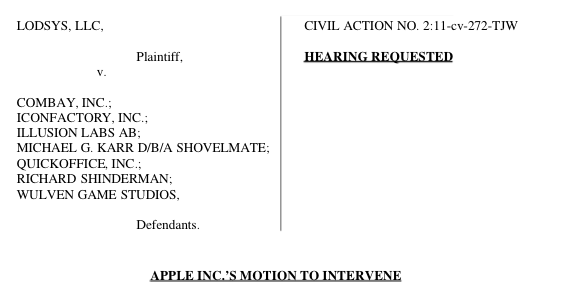
Apple Files Motion To Intervene In Lodsys Suit

According to FOSS Patents, Apple has filed a motion to intervene in the proceedings between Lodsys and several app developers. Lodsys nine days ago filed a civil suit against several app developers including Iconfactory, Illusion Labs and Quickoffice in East Texas over patents it owns.

Whilst Lodsys can oppose Apple’s attempt to intervene in the case, FOSS Patents says that “Apple is fairly likely to be admitted as an intervenor”. In Apple’s proposed defence, it is argued that Apple’s existing license agreement with Lodsys covers the third party developers being sued – an argument Apple made with Lodsys in its letter to them. Contrary to what some might have presumed would happen, Apple does not claim any other defences such as disputing the validity of the patents – but the third party developers could still do so.

I’m reasonably optimistic that Apple will get to intervene. There appears to be precedent for that. Apple cites three interventions admitted in more or less comparable cases (Intel against Negotiated Data Solutions, Intel against U.S. Ethernet Innovations, and Microsoft against TiVo).

It isn’t clear what Apple’s relationship with the developers is (likely under a non-disclosure agreement) but more than likely is that Apple will help them with financial costs and perhaps even the potential risks. In its motion, Apple states that those developers being sued by Lodsys are “are individuals or small entities with far fewer resources than Apple and […] lack the technical information, ability, and incentive to adequately protect Apple’s rights under its license agreement”.

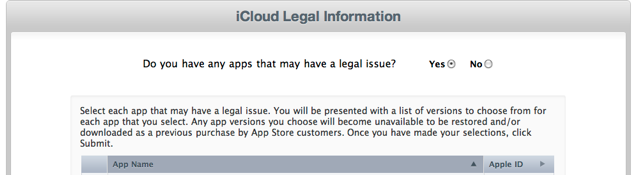
In its post, FOSS Patents also shares some screenshots of the developers iTunesConnect app management service which asks developers about potential legal issues with their apps. If a developer says “yes” to legal issues, that app will become “unavailable to be restored and/or downloaded as a previous purchase by App Store customers” through the new iCloud service.

If you want a full rundown of Apple’s motion to intervene, FOSS Patents has an excellent run down, along with questions that the motion does not answer. If you feel brave enough you can also read the official motion here.

[Via FOSS Patents]


Apple Backs Down Over Subscription Rules

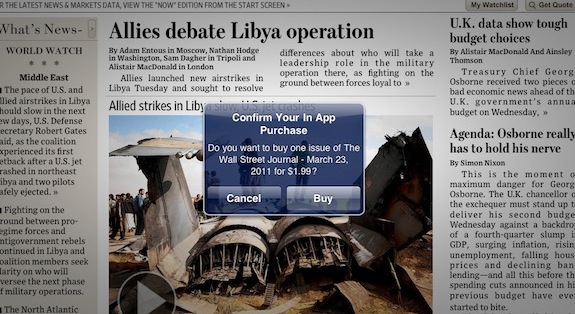
A few days ago Apple quietly modified its ‘App Store Review Guidelines’, and it has significantly reduced the requirements that apps, which deliver content, must abide by, effectively stepping down on their previous demands. In February this year it was revealed that Apple had imposed a deadline of June 30 for all publishers of iOS Apps that delivered subscription content to implement In-App Subscriptions. The requirements were that any app that sold content outside the App Store must also offer the same content to users through In-App Purchases and at the “same price or less than it is offered outside the App”.

Yet as MacRumors has published today, Apple has amended the App Store Review Guidelines to state as follows:

11.14 Apps can read or play approved content (specifically magazines, newspapers, books, audio, music, and video) that is subscribed to or purchased outside of the app, as long as there is no button or external link in the app to purchase the approved content. Apple will not receive any portion of the revenues for approved content that is subscribed to or purchased outside of the app

In plain English this means that content providers with an App Store presence are no longer forced to offer In-App purchases or subscriptions for content. But if they do choose to implement IAP or subscriptions they can offer the content at any price they wish – even if it is more than what they charge outside the App Store. The only requirement is that within an app, there cannot be an external link that redirects users to purchase content from outside the app.

It is unknown why Apple has decided to change tack on this issue, but a likely reason is that a number of publishers decided the 30% cut was too much to bear and had put pressure on Apple to redraw the guideline. Just a few days ago The Financial Times released its iPad webapp in order to sidestep the App Store and its overbearing terms. Similarly, earlier this year Time magazine had also ruled out using the subscription service because of the 30% revenue cut and customers ability to opt-out of giving them certain personal details .

Readability, which launched in February, was also set to offer iOS users an app that would tie into the Readability service, but because of the subscription rules they weren’t able to release the app. Similarly iFlowReader complained in mid-May that Apple’s subscription policy had shut them down because the 30% revenue cut would eat into their already small profit margin. The question now is whether these services and magazines will now re-embrace the App Store under these revised terms.

[Via MacRumors]


Hands-On with iTunes’ Purchase History for Apps, Songs, and Books


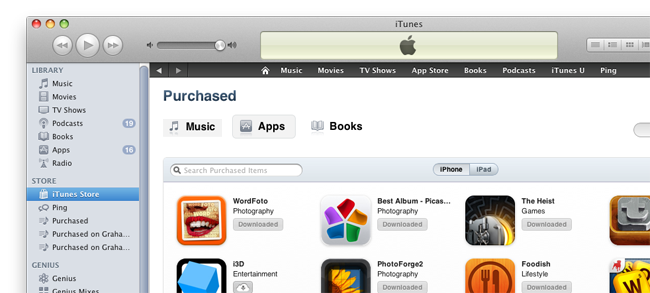
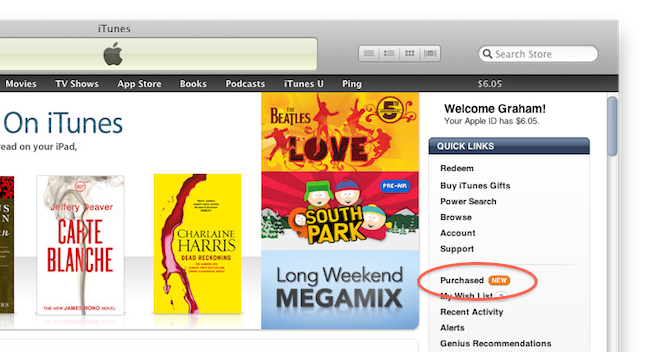
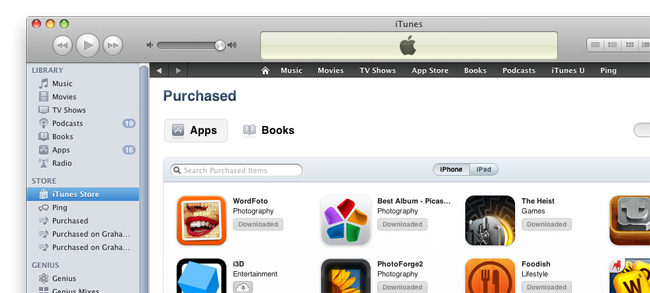
iTunes 10.3 was released a couple of hours ago and one of the new features it brings is a ‘Purchased’ screen that lists every song, app and book that you have ever downloaded from the iTunes Store, App Store or iBookstore. You can get to the ‘Purchased’ screen simply by going to the iTunes Store homepage and clicking “Purchased” from the sidebar on the right of your screen(see below), it should also have a ‘New’ tag beside it, at which point it will take you to ‘Purchased’ screen.

The ‘Purchased’ screen is a really  handy feature to easily and quickly find a previous purchase and instantly download it or even download all of your previous purchases with just one click. The feature, which is also included in iOS 5, is part of Apple’s iCloud, which was unveiled at yesterday’s WWDC keynote. The ‘Purchased’ screen also gives you some fairly powerful tools to find the exact purchase you want, either from just searching, only displaying items not downloaded to your iTunes library or just list the purchases alphabetically.

Make sure to jump the break for a whole slew of screenshots that demonstrate the new feature from iTunes 10.3 (for developers, this feature is also present in iTunes 10.5).

Read more


iCloud: Photo Stream

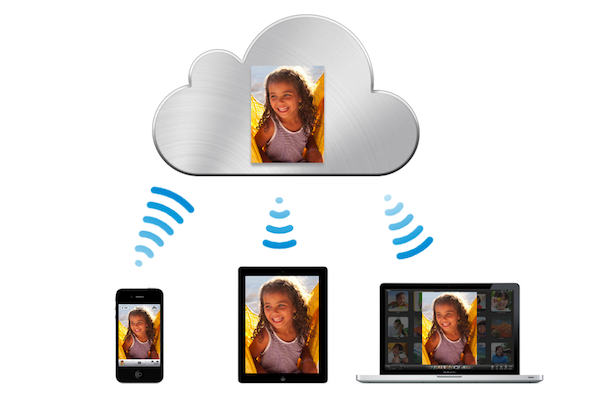
Another cornerstone feature of iCloud that was just unveiled was ‘Photo Stream’ which will bring all your photos to the cloud. It works so that as soon as you take a photo with your iPhone, that photo will instantly be whisked away to the cloud and then pushed back to all of your other devices - whether it be a Mac, iPhone, iPad, Apple TV or even a Windows PC!

How many times have we taken photos on our iPhone and wanted to share them on the iPad. Wouldn’t it be great if they were already there?

Photo Stream is built right into the iOS Photos app so there is “nothing new to learn” and on the Mac it is built right into iPhoto whilst on a PC it integrates with the ‘Pictures’ folder. The Apple TV won’t miss out either, Photo Stream is integrated straight into it.

Each photo will survive on iCloud for 30 days, at which point old photos will no longer be pushed to devices. iOS devices will be able to keep the last 1,000 photos but Macs and PCs will keep all photos.