Graham Spencer

1054 posts on MacStories since January 2011

Former MacStories contributor.

Bellevue Apple Store’s Relocation Pokes Fun At Microsoft Store

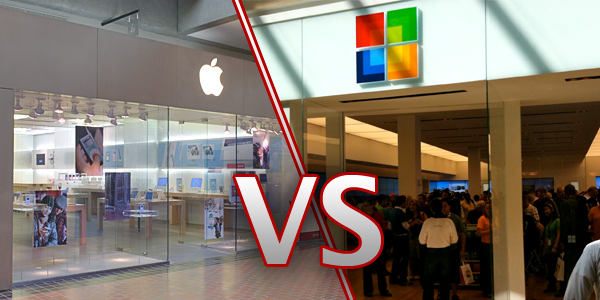
The retail shopping store war between Microsoft and Apple at Bellevue Square in Washington is heating up again with Apple’s plans to relocate its store. You may recall that the Bellevue Microsoft Store was built just a few doors down from the Apple Store that had existed for some time prior. Well now, Apple will be moving its store to a larger retail space on the second floor, but what is really interesting is where on the second floor it will be.

Yep, that’s right – directly opposite and above the Microsoft store. Just to make sure that those leaving the Microsoft retail store will be able to see the huge Apple store above them. I suspect that although increasing the store space from 4,600 square feet is the main goal of this move, Apple couldn’t resist taking a nice jab at Microsoft after they opened up shop so close to their original store. What better way to do that than let Apple customers look down upon Microsoft customers on the floor below and vice versa!

Apple’s move should be completed by the end of the year, probably by holiday shopping season.

[Via TUAW]


iPad Cannibalization Of PC Market Slows

The iPad’s cannibalization of the PC market may have slowed if the latest NPD market research report is any sign of things to come. The report found that new purchasers of the iPad are less likely to have foregone purchasing a PC than the early adopters of the iPad. It found that of those who had purchased the iPad over the holiday season, 12% would have decided against a PC purchase when they bought an iPad. This is a 2% drop from the 14% of those decided against a PC amongst those who had owned their iPad for 6 months or more.

Netbooks were saved the most, with iPad cannibalization falling by 50%, which actually led the netbook market to grow by 21% between September 2010 and March 2011. NPD also believes that the slowing of PC sales over the past couple of months has more to do with Windows 7 than the iPad:

The explosion of computer sales when Windows 7 launched, as well as the huge increase in netbook sales at that time, are much more to blame for weak consumer PC sales growth than the iPad

The report contradicts what analysts were calling the “iPad effect” in the first quarter of 2011 when US PC sales fell 10.7%. In fact at least one analyst, including Katy Huberty of Morgan Stanley, revised her 2011 PC shipments down after predicting a tablet cannibalization rate of 29% - which is nearly 3 times what this NPD report says was the rate when it surveyed customers in March.

[Via AppleInsider]


Digital Downloads Drive A Music Industry Recovery

Well it looks as though things may be looking up for the music industry again, after its decade long slide in sales. A Nielsen Soundscan report yesterday said that US music sales (by unit) have increased by 1.6% over the course of this year.

The report gives the credit for the rise, unsurprisingly, to digital music sales, which in terms of albums was up 16.8% and in terms of individual tracks was up 9.6%. As for physical media, CDs were down by 8.8%, but Vinyl increased by 37%, although they only account for 1.2% of sales.

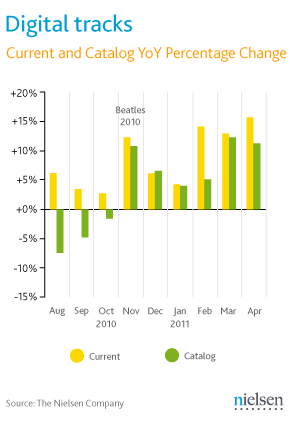
No one is exactly sure why digital is up dramatically this year, although Nielsen interestingly suggests the arrival of the Beatles on iTunes as a key reason, pointing to a dramatic increase starting from when it was released on iTunes (see graph above) – although this seems a bit of a stretch. That said, catalogue music sales have been on the rise by 5.4%, whilst current music is down 7%. As for the most popular genre’s, Rock had the greatest market share in album sales whilst Pop was the most popular for digital tracks.

[Via AllThingsD]


Component Supply Chain To Face Shortages In Coming Months After Japan Crisis

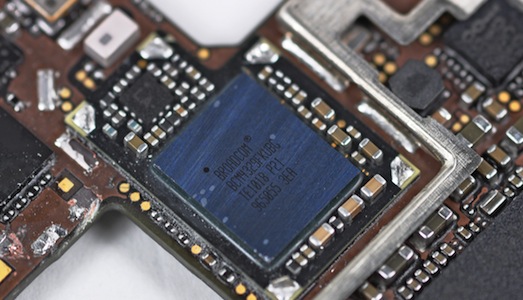
Two reports out of DigiTimes today reveal that there will likely be component shortages in the next two months as a result of the Japanese earthquake and tsunami from earlier this year. Since the devastating crisis, many PC and mobile device makers have been downplaying the impact the crisis would have on component supply and prices, but DigiTimes reports that this was largely to try and quell any increase in component prices by the suppliers. In reality, many key players from Asus, HTC, Motorola and Apple have been aggressively acting to secure various components such as PCBs and glass touch panels.

Japan’s earthquake as well as the power brownout policy have already created strong pressure on the global IT supply chain, especially for PC players and in addition to component shortages, the labor shortage issue in China has also grown to become another menace to the IT industry.

The strong pressures on the component supply chain will likely result in shortages beginning next month with supply still hampered from the impact of the Japanese crisis. Prices too will inevitably rise for many of the key components such as touch panels in the face of inadequate supply. It may also bring the unfortunate consequence of more defective components being used as manufacturers become desperate to maintain production to keep up with demand.

DigiTimes also reported today that Foxconn, which is a key manufacturer for Apple products, is facing not only a shortage of components but also labor. The double knock on supply may be enough to impact on shipments of iPad 2 and iPhone 4 orders in the second quarter. Foxconn, in responding to the suggestion, said that the company has extensive experience in dealing with “arranging manpower to assist clients in reaching their goals” and that it will do all it can to keep up with client demands.

[Via DigiTimes (1) (2), Image via iFixIt]


Report: Buyers Go With Either The Most Expensive Or Cheapest iPad

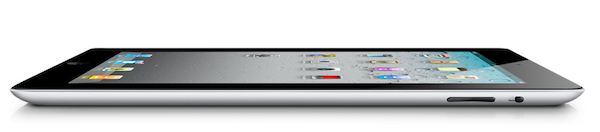
Apple offers quite a number of variations on the iPad 2, you can get it in white or black, with 3G or just WiFi, and in sizes of 16GB, 32GB and 64GB. Well it turns out that the most popular model, according to research firm Context, is the 64GB 3G iPad.

The research was done by Context in Western Europe and it found that more than half of all iPad buyers would choose either the 64GB 3G model (also the most expensive), which accounted for roughly 33% of sales, or the 16GB Wi-Fi-only model (curiously the least expensive model), which received 22% of sales. On that evidence, as TheAppleBlog points out, consumers are going “all or nothing” – and many more seem to be saying “all”.

The report also discovered that the iPad represented 80% of tablets sold during the first quarter of 2011 – in line with a Nielsen report from last week. Yet this is a 5% drop from the previous quarter, a consequence of some take up of Android tablets. Curiously, one of the analysts from Context noted that it is likely that less publicised Android tablets such as the Acer Iconia will do better than the Xoom or Galaxy Tab. Nonetheless, Context has no doubts that at least by the end of this year, Apple will still hold top spot for tablet market share.


Apple’s In-App Purchase Policy Forces iFlowReader to Shut Down

BeamItDown Software, developers of iFlowReader, today announced that they will be forced to cease their operations at the end of this month. The move comes after Apple decided to enforce rule 11.13 of the ‘App Store Review Guidelines for iOS Apps’ – with Apple set to begin removing apps that do not conform to this rule by June 30. This means iFlowReader, which sold eBooks through an online store, would have to offer the same books within the app through In App Purchases – consequently meaning Apple gets its 30% cut of every sale made through the app.

In a statement on its website, BeamItDown Software makes it clear how if they went ahead and followed Apple’s guidelines, they would have to take a loss on every e-book sold – clearly not a sustainable business model. They explain that this occurs because the largest publishers (which account for more than 90% of the e-books they sell) have adopted an “agency model” in which means resellers, such as BeamItDown, receive a margin of less than 30% after paying the publisher. They say that the big publishers adopted this agency model after Apple negotiated with them over the iBooks deal. Prior to the agency model, resellers would typically receive a 50% discount on e-books.

The end result of BeamItDown Software and their iFlowReader, which had become quite a popular iOS e-reader with over six million downloads, is that it has, in essence, been shoved out of the iOS e-book market by the power Apple has over developers who rely on the iOS platform.

“We bet everything on Apple and iOS and then Apple killed us by changing the rules in the middle of the game.”

If you are a user of the app and its service, the short story is you will still be able to read your e-books, but you will have to jump through some hoops to ensure this. You will have until May 31st this year (the end of this month!) to do a few things related to back-up and downloading all your e-books from the site, which is shutting down. Jump to their statement for the details on this.

It was back in February when it was reported that Apple was tightening its hold on the iOS walled garden after it was revealed that Sony’s e-reader app was rejected for re-directing users to an online store for e-book purchases. Apple responded shortly after saying;

We have not changed our developer terms or guidelines,” Apple spokesperson, Trudy Muller, told The Loop. “We are now requiring that if an app offers customers the ability to purchase books outside of the app, that the same option is also available to customers from within the app with in-app purchase.

The impending shutdown of BeamItDown does raise the question over whether Apple is using monopolistic behavior to force out other e-book services. In their statement they highlight that with one swift change in policy application, Apple will be able to sell e-books at a cheaper rate than every other service on iOS and likely force a number of services, like iFlow Reader to completely shut down because they cannot afford that 30% cut.

What sounds like a reasonable demand when packaged by Apple’s extraordinary public relations department is essentially an eviction notice to all e-book sellers on iOS…They want all e-book business on iOS and since they have the unilateral power to get it, we are out of business and the iFlow Reader is dead.

In the face of such questions, many will argue that Apple deserves to have complete control over its own App ecosystem, and that Android and the Kindle offer strong competition to Apple and iBooks. However, at least in my mind, I get the sense that Apple, with it’s large user base, may have unfairly forced this company out of the e-book market to advance the use of iBooks.

Section 11.13 of App Store Review Guidelines for iOS Apps

Apps can read or play approved content (magazines, newspapers, books, audio, music, video) that is sold outside of the app, for which Apple will not receive any portion of the revenues, provided that the same content is also offered in the app using IAP at the same price or less than it is offered outside the app. This applies to both purchased content and subscriptions.


Adobe Finally Releases Its Photoshop Touch SDK iPad Apps

It was supposed to happen last week, but today Adobe finally released its three iPad apps that use the Photoshop Touch SDK. The three apps, including Adobe Eazel, Adobe Nav, Adobe Color Lava, were built be Adobe to demonstrate the potential of the Photoshop SDK for creating powerful companion apps for mobile devices from the iPad and iPhone to Android and BlackBerry. See below for brief descriptions of each of the three apps and if you want more information be sure to check out our original coverage of the apps and the Photoshop Touch SDK. Screenshots are included after the break.

Adobe Color Lava ($2.99) is a simple utility that allows you to mix colors, organize and save palettes and color groups to send to Photoshop wirelessly. Upon sending a palette to Photoshop, you’ll be able to see details on the colors you mixed, and send via email to someone else if you don’t want to share colors with your local Photoshop installation. The colors will appear in the Swatches panel of desktop Photoshop.

Adobe Eazel ($4.99) is perhaps the most innovative app of the initial rollout, as it features some interesting multitouch controls and menu choices I haven’t seen in any other iPad app before. Eazel is a drawing app, but instead of placing controls for brush sizes, colors, or opacity in dedicated toolbars, Adobe decided to develop a “five-finger touch UI” that takes a bit of learning, but it’s actually pretty clever once you get used to it. Basically, controls are placed above each finger, through a series of overlays that you can interact with using your fingertips after selecting an item. Sounds more complex than it really is, at least after some practice. When you’re done painting, you can send your creation to Photoshop and keep editing or refining there.

Last, Adobe Nav ($1.99) is the app we believe will be most successful among Photoshop users, as it drives the application’s UI remotely and allows you to see open documents on the iPad’s screen. Most of Photoshop’s tools and palettes are displayed on the iPad’s screen as bigger buttons meant for touch interactions, enabling you to select and modify the controls that you see on the desktop. There’s no doubt Nav will be tested by many as a complete replacement for Photoshop’s on-screen controls, which may get a little obtrusive on smaller portable computers. Alternatively, you can also browse open documents in Nav and instantly change the file you’re working with in Photoshop for Mac or Windows.

Adobe’s new iPad apps are available for download on the company’s App Store developer page. Check out the official promo videos and screenshots after the break.
Read more


Mobile Devices Claim Largest Share Of Digital Game Downloads

Digital game downloads have been on the rise in recent years and according to the latest NPD report, a large portion of that increase can be attributed to mobile devices which count for nearly half of all video game downloads. The report, which focused solely on full game downloads (not micro-transactions, add-ons or previously purchased games), notes that even those who owned a console would generally download more games to their mobile devices.

Following mobile devices were personal computers as the second most common platform for downloading games, no doubt driven primarily by Steam, then consoles and finally portable gaming devices (Nintendo DS, Sony PSP). Obviously it should be pointed out that, typically, a full game download for a mobile device is priced far lower than a game for consoles and even computers. Nonetheless, Anita Frazier notes in the report “Mobile gaming represents one of the fastest growing segments of the digital games market, and potential for future growth remains strong.”

Interestingly, of those that have purchased a mobile game in the past three months, a surprising 60% said they still spend the same amount on console or portable gaming device games. The report also revealed that if a game was available in physical and digital form at the same time, at the same price, 75% would buy a physical copy because they liked to own a “real” copy – the remaining 25% mainly cited convenience as their reason.

[Via TUAW]


Queen Of England Demands An iPad

The Queen of England has apparently ordered her staff to buy her an iPad after the newly married Prince Will and his brother Prince Harry showed off theirs to her on a recent gathering at Buckingham Palace.

The Princes, the Queen’s grandsons, gave her a demo of how the iPad worked which, as a royal insider told The Sun, led her to be impressed and “particularly taken with how easy it was to use, the large screen and how light it was” The insider also notes that the Queen is fairly “switched on” for an 85 year old woman, saying “It was only a matter of time before she asked someone to go and get her one.”

“The Queen has a mobile phone as well as the iPods, so an iPad is the logical progression. She thinks it will be great to keep her entertained on all the long trips she has to make.”

The same royal insider says that the Princes think her reaction is hilarious, but also “love the fact that their gran wants an iPad and think she’s really cool”. The iPad won’t be the first Apple product that the Queen owns either, she previously bought a £169 silver iPod in 2005 and was given a new iPod by Barack Obama in 2009, which was loaded up with happy snaps from the Queen’s US visit in 2008.

[Via The Sun]