Graham Spencer

1054 posts on MacStories since January 2011

Former MacStories contributor.

Android Strides Ahead In US Smartphone Market Share

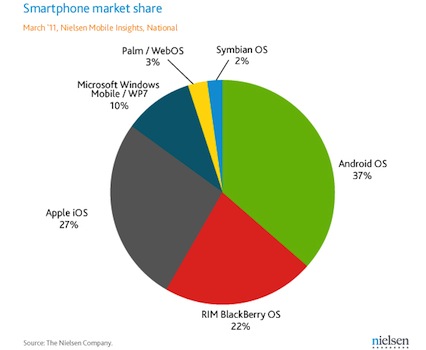
A new market survey by Nielson in the United States has shown Android drive ahead and gain 37% of the smartphone market share, a strong 10% margin over Apple and the iPhone which sits in second place at 27%. The figures show a significant change since the last Nielson survey, done in October that had the iPhone with the largest smartphone market share at 27.9% and BlackBerry in second place at 27.4%. Android has largely absorbed the 5.4% market share BlackBerry lost as well as the decreasing share of Symbian and older Windows Mobile devices to go from 22.7% in October to its 37% market share in March.

The survey also revealed that Android is now the most desired smartphone operating system for consumers, with 31.1% of consumers surveyed saying they would choose an Android phone compared with 30% who would go with an iPhone. In both the market share and desired operating system, Android is showing significant increases whilst Apple is seeing minor reductions compared to others such as BlackBerry or Symbian.

A final aspect of the survey was what recent smartphone acquisitions were and it reveals that 50% of all new smartphones purchased were running Android, whilst 25% were iPhones and 15% were BlackBerry phones. It is worth noting that this survey was solely focused on smartphones and as such did not include reference to the other iOS devices such as the iPod Touch or iPad. Jump the break for two more graphs.

[Via AllThingsD]

Read more


The “Re-Imagined” TweetDeck 2.0 iPhone App Hits The App Store

TweetDeck has today released its completely new 2.0 iPhone app that has received a “Hollywood re-imagining”, being rebuilt from the ground up to be “fast, flexibe and full-on powerful.” The update, which has been a long time coming, adds a number of new features and improvements whilst retaining the “guiding principles” of the original.

One of TweetDeck’s new and innovative features is the use of pinching on a column to access the columns’ settings so that any combinations of Twitter timelines, mentions, DMs, Facebook feeds and so on can be merged into one customized column. The whole user interface has also been redesigned, following the direction that their Android and Chrome apps have gone in, and of course it now takes advantage of the Retina display.

Also improved is multiple account handling and gestures, which although not extensive as those present in Tweetbot, are greatly improved adding the ‘pull to refresh’ and pinch for column settings gestures and general improvements in swiping through your various feeds. Finally there is built-in Deck.ly support, letting you write those longer messages on Twitter without hassle.

The 2.0 version comes after “several months of feverish work” and a promised iPad revamp of the app is also coming in a Universal binary “in the next couple of weeks”. In fact technically TweetDeck 2.0 is not an update and the old versions of the app have been temporarily removed from the App Store to avoid confusion. So don’t go to the updates tab of the App Store, it won’t appear there, you’ll have to download the new TweetDeck app from the actual store.

Jump the break for some more screenshots of the new update.

[Via TechCrunch]

Read more


Evernote’s Most Valuable Users Are On Apple Platforms

There has been some discussion in recent times about whether iOS users are more valuable to a company than Android users may be. Evernote CEO Phil Libin weighed into the debate yesterday and talked about how their revenue varied from platform to platform. Libin used three metrics in evaluating each platform; revenue, users gained and revenue per developer. In all three, iOS was the leading platform with nearly a third of all Evernote’s revenue coming from that platform. It’s where Evernote has gained a large chunk of its users and is perhaps one of the best success stories of the iOS app platform.

Evernote is also a big fan of its Mac users who generate more revenue growth than their Windows counterparts and also stick with the service for longer – although Windows still currently brings in 24% of revenue compared to the Mac’s 20%. Libin is unsure of why Apple users are more willing to pay for their service and additionally notes that the desktop should not be ignored, reflecting upon the fact it still brings in 44% of Evernote’s revenue.

In Libin’s speech at VentureBeat’s Mobile Summit he also noted that most users of his service don’t return after a short period of using the service, but those that do bring in a lot of revenue to Evernote. For example of the 31,334 users who registered in March 2008 only 11,000 remained three months later. In that month those users only brought in $700 to Evernote but by January of 2011 they ended up bringing in over $10,000. Libin attributes this to the fact that as users stick with the service they find it more valuable and end up subscribing for the premium features.

[Via VentureBeat]


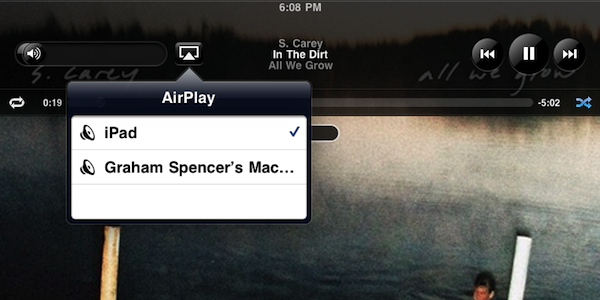
BananaTunes Streams Your Music From iOS To OS X Through AirPlay

Erica Sadun, author of the great AirPlay hack BananaTV has come out with a new beta application; BananaTunes. Taking advantage of the recent reverse engineering of AirPlay it will allow you to transmit full stereo music from an AirPlay enabled iOS device to any Mac running BananaTunes.

Previously AirPlay hacks such as BananaTV or AirFlick and AirTuner only expanded upon the video side of AirPlay but thanks to that reverse engineering magic we can now stream music too. TUAW reported mixed results with BananaTunes (it is beta after all) with it working fine with their iPad 2 but having some issues with an iPhone 4. I personally had no issues using both my iPhone 4 and iPad 2 in playing music to my Mac through BananaTV, except a few initial seconds of stuttering that soon disappeared.

Ultimately Erica plans to merge the BananaTuner functionality into the BananaTV software, but for now you can download these two zip files (or this all-in-one installer) to try it out, but be warned it requires OS X 10.6 and only runs as a 64-bit application.

[Via TUAW]


Apple Facing Regulatory Scrutiny In South Korea Over Location Log File

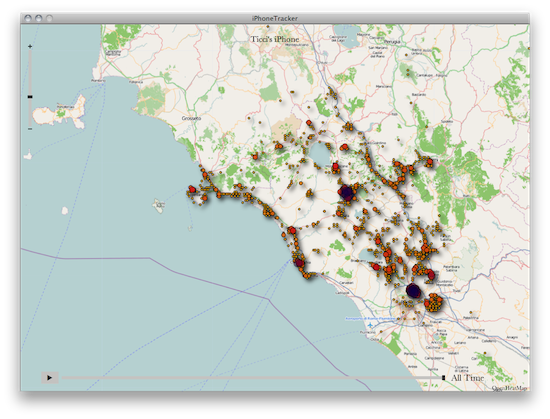
The commotion over that iOS log file, which can to some extent, track the movements of your iPhone or 3G iPad is definitally not fading away. Bloomberg, is today reporting that South Korea’s communication regulator is investigating the issue to see whether or not Apple is breaking South Korean law.

The Korea Communications Commission has issued Apple a series of questions over what information is collected and saved and whether users have a choice over whether it is saved or deleted. Furthermore it has asked Apple to clarify why such data exists and whether it is at all stored on the company’s servers. The Commission has also been formed to investigate how to increase privacy protection for smartphone users.

Earlier today we reported on an email from Steve Jobs in which he said of the issue “We don’t track anyone. The info circulating around is false.” It comes after US Senator Al Franken last week called for an explanation for the file, saying, “it raises serious privacy concerns”. The researchers who discovered the file demonstrated that the log file in question records an approximate location of an iPhone or 3G iPad based on cellular tower vicinity and is presumed to exist either for battery performance or as a reference for the device. Many believe that it is either a bug or oversight that the device does not periodically delete the log file.

[Via Bloomberg]


Rinse: An App for Cleaning Your iTunes Library

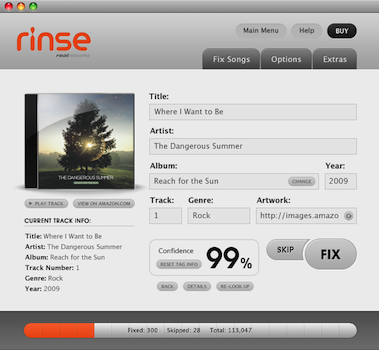
As a part of RealNetworks evolution, from a content provider to developer of management and distribution software for digital media, it has released Rinse – a $39 application that offers a promise that it will “seamlessly organize and repair your iTunes music library”.

Like other apps such as TuneUp and Equinux’s Song Genie and CoverScout, Rinse promises to correct any mislabelled (or not labelled) items in your iTunes library, add album artwork and remove those pesky duplicate items. It promises to be smarter than those other apps and that “Rinse’s intelligent database technology will find the matching artwork, remove duplicates and clean things up.”

Peter Kafka from AllThingsD had mixed results trying it out on his library, whilst Ben Brooks found it made quick work of cleaning up those duplicate tracks he had in his library. Rinse is available for OS X as well as Windows XP, Vista and 7 for the rather hefty price of $39.

[Via AllThingsD]


iPad App Takes You Behind The Scenes of Portal 2

The Final Hours of Portal 2 is a new iPad app that combines a 15,000 word article with lots of audio, video and other interactive elements (some never before seen) to tell the story of the development and evolution of Portal 2 - perfect for those of you who (like me) love Portal. It’s written by Geoff Keighley, who also wrote “The Final Hours of Half-Life” which kick-started his career in game journalism, and like that first insight, he was again given extensive access to Valve’s offices and employees.

It really is more than just a 15,000-word essay on Portal 2, the interactive elements and multimedia in the app is really done well, definitely exceeding what the Wired app does in its iPad editions. Some of the most interesting elements include user polls, failed experiments by Valve, insights into a shelved Portal prequel and early versions of that memorable end-credits song by Jonathon Coulton.

The Final Hours of Portal 2 is on the App Store for $2 and whilst it is only on available on the iPad at this stage, Keighley is open to expanding it onto other platforms and devices if the iPad app does well and there is demand for it.

[Via MacNN]


Samsung Counter Sues Apple For Patent Infringement

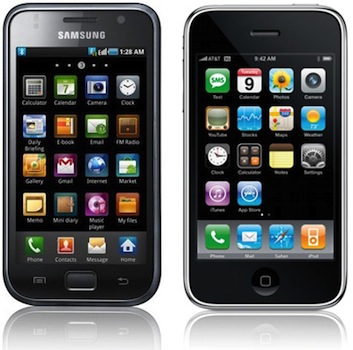
In a counterclaim to Apple’s lawsuit filed earlier this week, Samsung said today in a statement that Apple’s iPhone and iPad infringe on 10 of Samsung’s patents and has called for Apple to stop infringing the patents and pay Samsung compensation. Filed in the Seoul Central District Court, the patents involved largely cover technologies surrounding power conservation during data transmission, improving the 3G data transmission and various wireless data communication technology. In a press statement, Samsung said it was

responding actively to the legal action taken against us in order to protect our intellectual property and to ensure our continued innovation and growth in the mobile communications business

The litigation between Apple and Samsung is set to be a heated one and Apple is going after Samsung hard, with Apple earlier this week saying to the press “this kind of blatant copying is wrong, and we need to protect Apple’s intellectual property when companies steal our ideas.” Meanwhile, Apple will continue to be Samsung’s second largest client for various electronic components, which go into the very products that Samsung is alleged to have copied, and last year it brought in $5.7 billion of revenue to Samsung.

Author of a book on Samsung and professor at the National University of Singapore, Chang Sea-jin, said to the Financial Times that such legal spats are common and are unlikely to threaten the business relationship between the two companies, he believes that “Apple is just sending a warning to Samsung that they are watching them.” It has also been suggested that Samsung has in the past actively persuaded Steve Jobs that the electronic components sector of Samsung would not in any way leak or reveal information about Apple’s future component needs to the Samsung mobile unit.

[Via Reuters]


OpenFeint Gets Bought For $104 Million By Japanese Mobile Social Network Gree

Japanese company Gree which runs a mobile gaming social network yesterday revealed that it had purchased OpenFeint, which runs a very similar social network, for $104 million. The deal follows the $403 million acquisition of Ngmoco by another Japanese firm, DeNa, last October. However unlike that deal, Gree and OpenFeint will not be merging their social networks into one service, opting instead to unify their codebase so that developers can choose to use either Gree, OpenFeint (or Mig33 which Gree also has a deal with) depending on the specific market which the game is targeted towards.

The appeal for such a service that OpenFeint delivers is that mobile game developers can easily utilise a mature network that offers users a more social experience with leaderboards and challenges whilst also helping developers by easily allowing cross-promotion through the network.  Gree has been a big success in Japan with over 25 million users and a market value of $3 billion, but OpenFeint has gone gangbusters on iOS and Android with over 75 million users and is implemented by over 5,000 games.

OpenFeint’s current CEO, Jason Citron, will remain in his position and said in an interview that the deal will accelerate OpenFeint’s expansion globally, which he believes is a “multibillion dollar opportunity” in conjunction with the increasing dominance of smartphones and tablets. “We are beginning of a new age,” Citron further added. “The economic opportunity here is so tremendous and gaming is the killer app.” Meanwhile, Yoshikazu Tanaka, founder and CEO of Gree said “At Gree, we are socializing the next evolution of games and, as the best-in-class US-based mobile social network, OpenFeint is the ideal partner for us to offer the best mobile social games to the largest global audience.”

[Via VentureBeat]