Ryan Christoffel

991 posts on MacStories since November 2016

Ryan is an editor for MacStories and co-hosts the [Adapt](https://www.relay.fm/adapt) podcast on Relay FM. He most commonly works and plays on his iPad Pro and bears no regrets about moving on from the Mac. He and his wife live in New York City.

Apple Disables Walkie-Talkie App Due to Security Vulnerability

Matthew Panzarino, writing for TechCrunch:

Apple has disabled the Apple Watch Walkie Talkie app due to an unspecified vulnerability that could allow a person to listen to another customer’s iPhone without consent, the company told TechCrunch this evening.

Apple shared an official statement with TechCrunch:

We were just made aware of a vulnerability related to the Walkie-Talkie app on the Apple Watch and have disabled the function as we quickly fix the issue. We apologize to our customers for the inconvenience and will restore the functionality as soon as possible. Although we are not aware of any use of the vulnerability against a customer and specific conditions and sequences of events are required to exploit it, we take the security and privacy of our customers extremely seriously. We concluded that disabling the app was the right course of action as this bug could allow someone to listen through another customer’s iPhone without consent. We apologize again for this issue and the inconvenience.

Panzarino rightfully points out the parallels of this issue with the highly-publicized FaceTime bug from earlier this year. The one key difference: whereas with the FaceTime bug, when it was reported by a user, Apple didn’t respond or take action until the problem received widespread media attention; with this Walkie-Talkie bug, Apple followed up on a customer’s report and addressed the issue seemingly before anyone else knew about it. Hopefully this is the sign of improved processes inside the company for handling serious bugs and vulnerabilities.
Permalink


GoodNotes Transitioning Mac App to Catalyst

Today on its blog GoodNotes shared that the upcoming macOS version of GoodNotes 5 would be based on the iPad app using Catalyst:

Earlier this year, we launched our all-new iOS app GoodNotes 5. It has been rewritten from scratch with a much more stable and flexible internal architecture, paving the way for the future of GoodNotes. Rewriting the iOS app also meant that we had to rewrite the MacOS companion because the new GoodNotes 5 was no longer compatible with the outdated existing Mac app. A lot of people were disappointed that we didn’t launch a Mac app together with the iOS version because they still had to stick with GoodNotes 4 if a Mac version was crucial to their workflow. Thanks to the hard work of our Mac team, we released an early-access version shortly after the iOS launch. This beta version is available for everyone who signs up for access. We shipped updates with new features and improvements on a regular basis and were almost ready to launch it publicly when Apple officially announced the start of “Project Catalyst” during their annual developer’s conference in June. It’s a framework that allows developers to bring their iPad apps to the Mac, with a relatively low effort. It still requires a lot of work to create a great Mac app but at least developers don’t have to rewrite significant portions of the code, as it was the case previously.

We believe that it is a great opportunity for us to unify the GoodNotes experience between iOS, iPadOS, and MacOS and will launch the new GoodNotes for Mac using Apple’s new framework.

GoodNotes is a noteworthy Catalyst app not just because it’s a very popular iPad app, but because it already has an existing Mac app. Catalyst makes the most sense for iPad apps that don’t currently have Mac counterparts, but GoodNotes’ plans demonstrate the advantages offered to other apps too. By adopting Catalyst and moving toward a more unified codebase, GoodNotes ensure that users on the Mac will never be left behind again, because new features can be developed and shipped on both iOS and macOS with little added effort.

Our John Voorhees, in his recent Catalyst story, listed GoodNotes as an example of a Mac app that’s fallen behind its iOS version feature-wise, so it’s great to find out that will change in the near future. The only real drawback, as noted in GoodNotes’ post, is that Catalyst apps will require macOS Catalina to run, so users on older versions of macOS won’t be able to download the new GoodNotes 5 for Mac.

Permalink

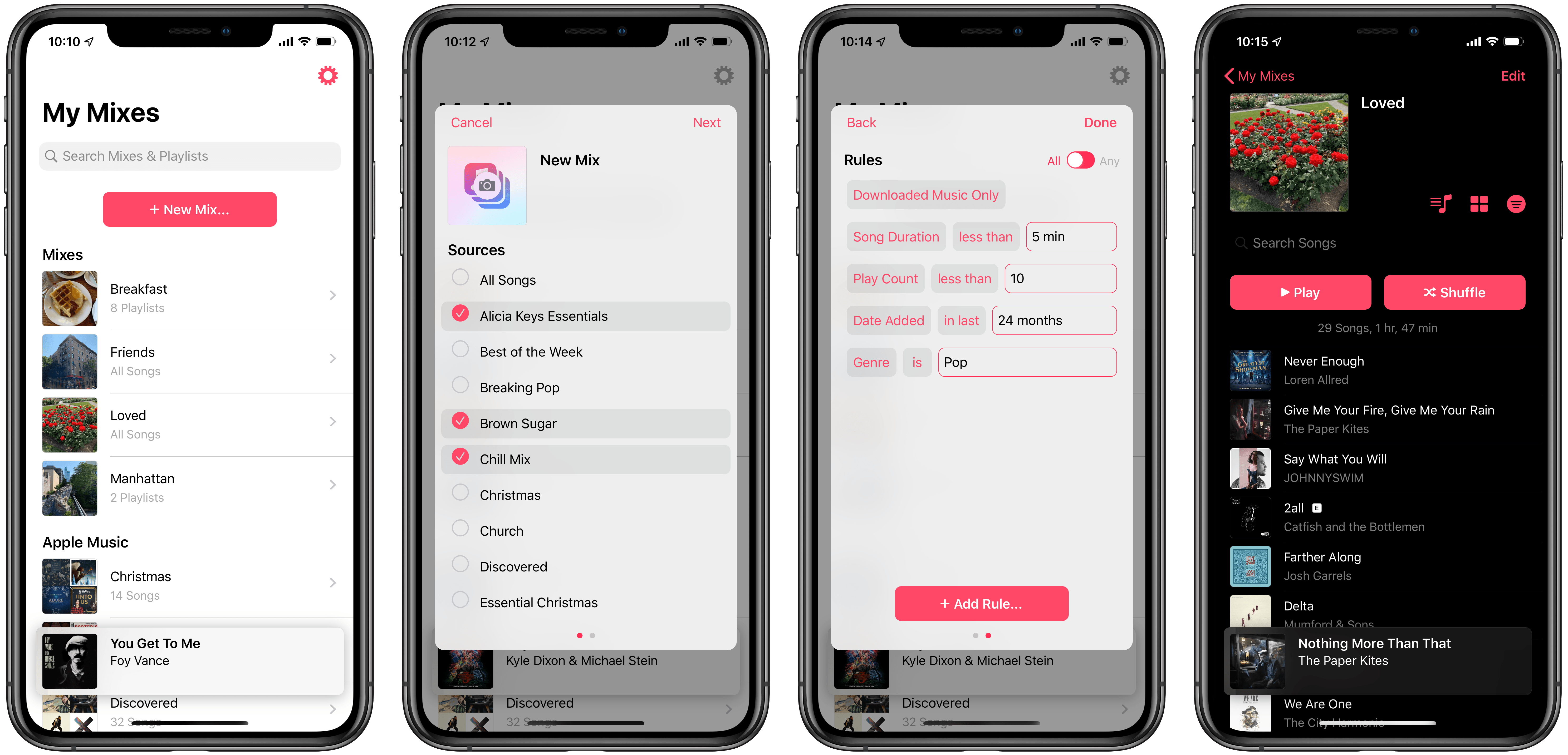
Miximum Review: Smart Apple Music Playlists on iOS

Leading up to WWDC last month, rumors indicated that iTunes on the Mac was being split into multiple apps, including standalone Music, TV, and Podcasts apps. It was expected that Apple might use its Catalyst technology (formerly known as Marzipan) to base the new Music app on Music for iPad, or vice versa. The hope among many iPad users was that the iPad might benefit from a more robust Apple Music client featuring power user features already available on the Mac, such as Smart Playlists.

WWDC came and went, and that wish was left unfulfilled. While macOS Catalina does introduce a new Music app, it wasn’t built using Catalyst, and as a result the iPad version of Music is light on meaningful improvements this year.

Filling the void left by Apple, however, is a new third-party app called Miximum, which is an Apple Music-integrated utility dedicated to smart playlist creation on iOS.

Read more


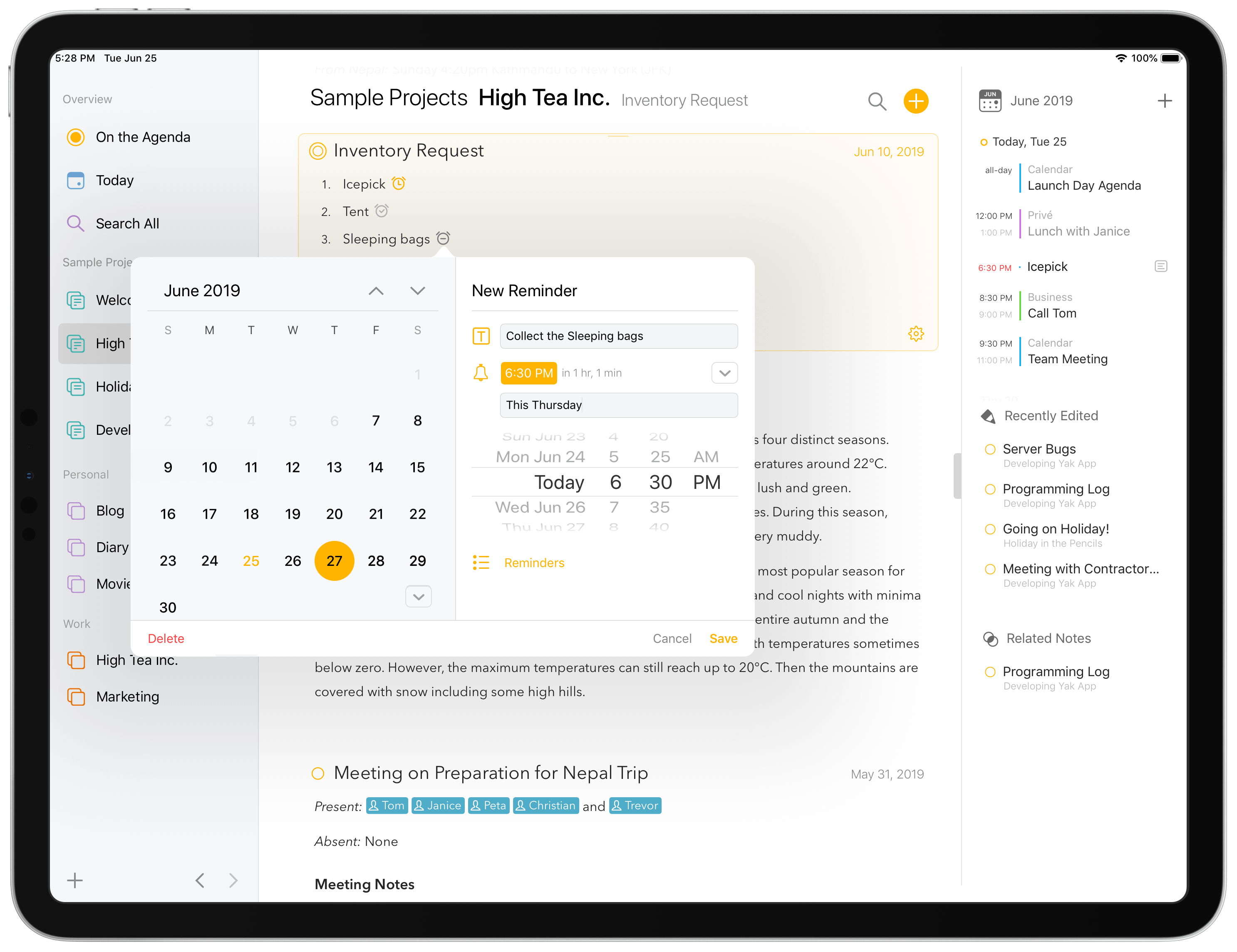
Agenda 6.0 Adds Full Integration with Apple’s Reminders

Apple has a big update coming to Reminders in iOS 13, and despite all that’s changing in the app, one important thing is not: developers will still be able to integrate with Reminders so you can create, check off, and manage your tasks from a third-party app. The latest app to take advantage of this is Agenda, the date-based note-taking app which launches full Reminders integration in version 6.0 today on both iOS and the Mac.

While some apps aim to be a complete Reminders replacement, such as GoodTask, Agenda’s approach is to use Apple’s built-in task system for two main purposes: creating to-dos linked to Agenda notes, and complementing the existing calendar integrations.

Read more


The End of the Genius Era

Excellent piece by Dieter Bohn at The Verge following news of Jony Ive’s coming departure from Apple:

While Apple might have a good story about having been founded in a garage, the true founding myth of Apple is the myth of genius. You know the fable, which has the benefit of also being true. When Steve Jobs was in charge, Apple made amazing things: the Apple computer, the Mac. Jobs not in charge: the very bad ‘90s with Scully and the Newton. Jobs back in charge: the renaissance, the iPod, the iPhone.

After Steve Jobs, that mantle was passed to Jony Ive. And he quietly (quite literally) took it. It was important to our concept of Apple that there be a single, discerning decision maker. Somebody uncompromising about quality. Somebody with very good taste. A capital G Genius.

Bohn makes the case, based on solid evidence from other sources, that Apple has operated for years without being driven by a singular “genius” but rather a collaborative, highly-capable team – and while that seems to have been more true than ever lately, to a degree it’s always been the case. In spite of the mythos surrounding Steve Jobs, responsibility for Apple’s best work falls not just on his shoulders, but on that of the team he was surrounded by.

Ive’s absence will certainly be felt, but the hole he leaves is likely much smaller than his “legend” would imply. As Bohn remarks, “we should stop thinking of Apple as the singular expression of one person’s genius. History has moved beyond the Great Man theory, and so too should our ideas about how Apple operates.”

Permalink