Ryan Christoffel

991 posts on MacStories since November 2016

Ryan is an editor for MacStories and co-hosts the [Adapt](https://www.relay.fm/adapt) podcast on Relay FM. He most commonly works and plays on his iPad Pro and bears no regrets about moving on from the Mac. He and his wife live in New York City.

Twelve South’s PencilSnap Upgrades Your Smart Keyboard with a Pencil Holder

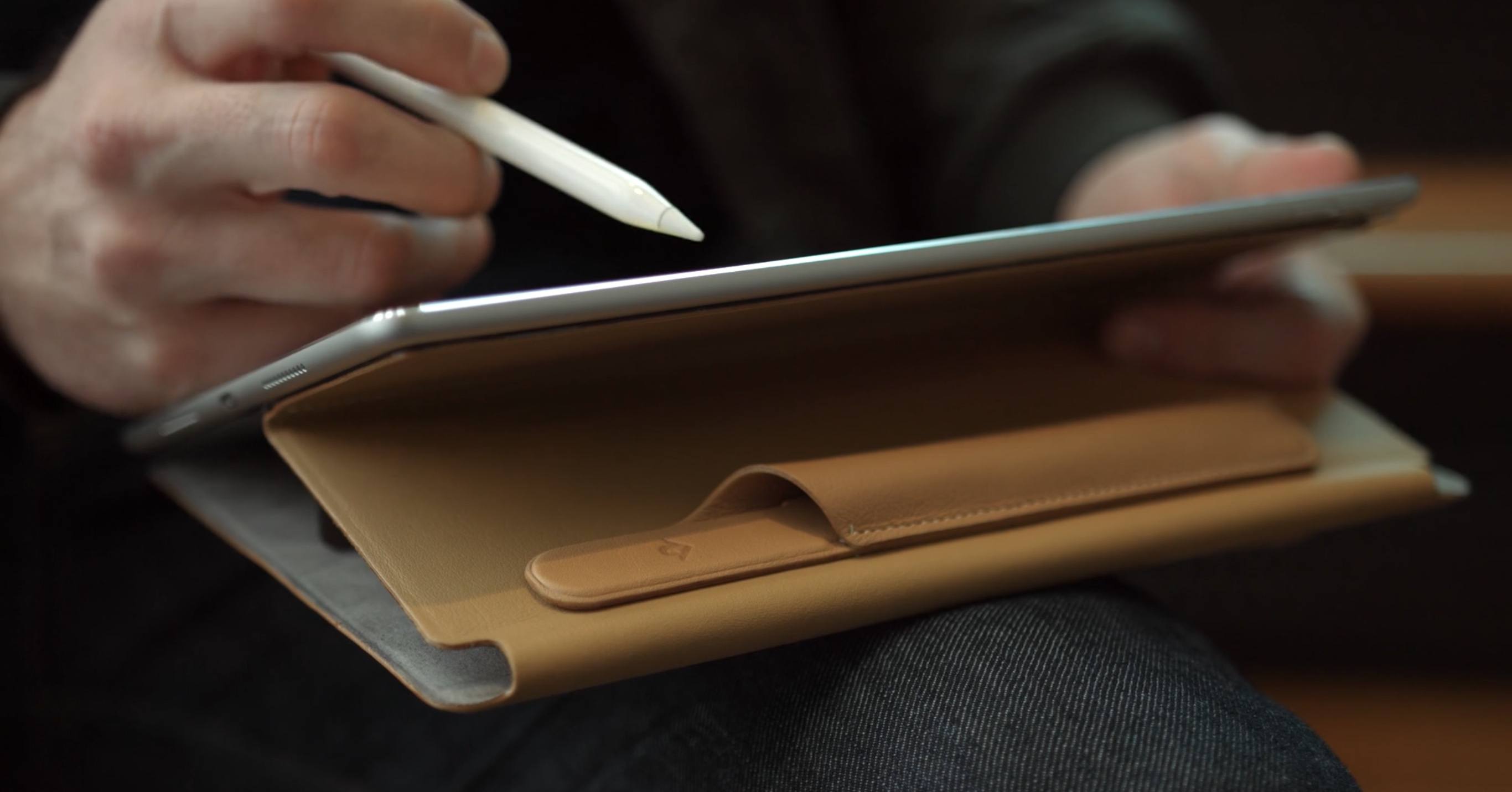
One of the longstanding frustrations with the iPad Pro’s Smart Keyboard is that it contains no place for holding the Apple Pencil. Last year Apple released separate accessories – the Leather Sleeve and Pencil Case – that could house the Pencil, but many iPad users still wanted something simpler: a Smart Keyboard with Pencil holder.

Twelve South, with its new PencilSnap accessory, appears to have made that possible.

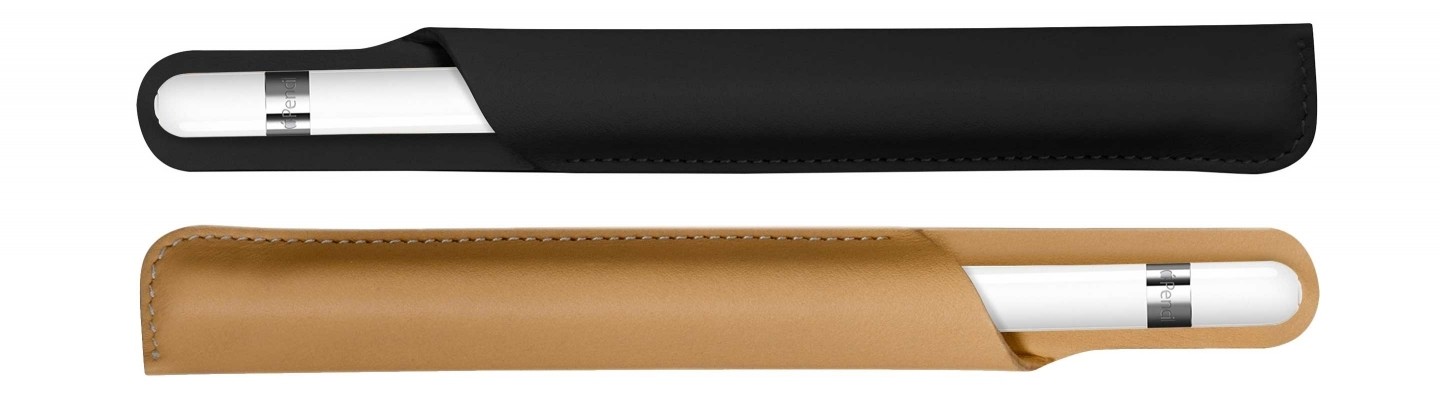
The PencilSnap is a small leather holster, very similar to Apple’s own Pencil Case, but with one significant difference: it includes magnets for attaching to other accessories, including Apple’s Smart Keyboard and Smart Cover, and Twelve South’s own SurfacePad. While we haven’t been able to test the product yet, Twelve South stresses the strength of the magnets and tight grip of the Pencil holder – in other words, they’re confident the PencilSnap won’t get easily disconnected from its attachment point, nor will the Pencil come loose when you don’t want it to.

PencilSnap is available for $29.99 in two colors: Black and Camel. If it works as advertised, it may well become the new go-to Pencil storage solution for iPad Pro users.

Permalink


Explaining the Roles of the iMac Pro’s T2 Chip

Jason Snell, writing for Macworld:

Before the iMac Pro was released, there was a lot of speculation that it was part of a trend toward creating a “hybrid Mac” that is driven by both an Intel processor and an Apple-designed ARM chip like those found in other Apple devices. The iMac Pro is definitely a hybrid of a sort, but probably not the one people were expecting. With the T2, Apple is using its chip-design prowess to take more control over parts of the Mac hardware that were previously outsourced to other controllers, and reaping the benefits of integrating them all together.

The iMac Pro isn’t running iOS apps, but it does get to take advantage of most of the work Apple has done to bolster the security of iOS devices and enhance the quality of photos and video taken by iPhone cameras. Apple will almost certainly continue to push this technology into more future Mac models, because it allows Apple to use the work it’s already done on iOS to improve the features and security of the Mac.

For years, the advancement of the Mac has been tied closely with the evolution of iOS. Many of the hallmark macOS features dating back to Lion originated on the iPhone and iPad, and came to the Mac – in part – to provide greater feature parity between the differing platforms.

While the iPhone’s influence on the Mac has previously played out primarily in the realm of software, that influence is clearly extending to hardware now. The 2016 MacBook Pro took the first step with its T1 chip powering the Touch Bar, but the T2 is another significant step forward. Though its benefits are largely invisible to the average user, Snell’s overview of the T2 and its extensive reach throughout the system makes clear that the Touch Bar was just the beginning of ARM-enhanced Macs.

Permalink


Apple Addresses Reported iPhone Slowdowns After Software Updates

There’s an age-old conspiracy theory that Apple intentionally slows down older iPhone models to compel upgrades to new ones. Every year around the time a new version of iOS releases – which also happens to be the time new iPhone models launch – users report that their old phones aren’t as speedy as before. While some of this felt downgrade is to be expected with new features introduced in major iOS versions, Apple today confirmed that there is in fact more to it than that – at least, in certain cases.

Earlier this week John Poole shared Geekbench results that seemed to indicate some level of throttling of iPhones after certain software updates. His charts showed that for an iPhone 6s, iOS 10.2.1 introduced a performance change, while for the iPhone 7, iOS 11.2 did the same. Seemingly in response to these tests, Apple has released a statement to Matthew Panzarino of TechCrunch that aims to make sense of the inconsistencies.

“Our goal is to deliver the best experience for customers, which includes overall performance and prolonging the life of their devices. Lithium-ion batteries become less capable of supplying peak current demands when in cold conditions, have a low battery charge or as they age over time, which can result in the device unexpectedly shutting down to protect its electronic components.

Last year we released a feature for iPhone 6, iPhone 6s and iPhone SE to smooth out the instantaneous peaks only when needed to prevent the device from unexpectedly shutting down during these conditions. We’ve now extended that feature to iPhone 7 with iOS 11.2, and plan to add support for other products in the future.”

Panzarino explains:

Basically, iPhones were hitting peaks of processor power that the battery was unable to power and the phones were shutting off. Apple then added power management to all iPhones at the time that would ‘smooth out’ those peaks by either capping the power available from the battery or by spreading power requests over several cycles.

While Apple’s lack of communication on this matter can certainly be viewed as a problem, ultimately the issue appears rooted in battery technology generally rather than in iPhones specifically. Lithium-ion batteries have certain limitations, which are exacerbated in certain conditions, and Apple made the decision to reduce peak performance in those conditions rather than leave users facing unexpected device shutdowns.

Permalink

Pokémon GO’s ARKit-Powered Release Coming Soon

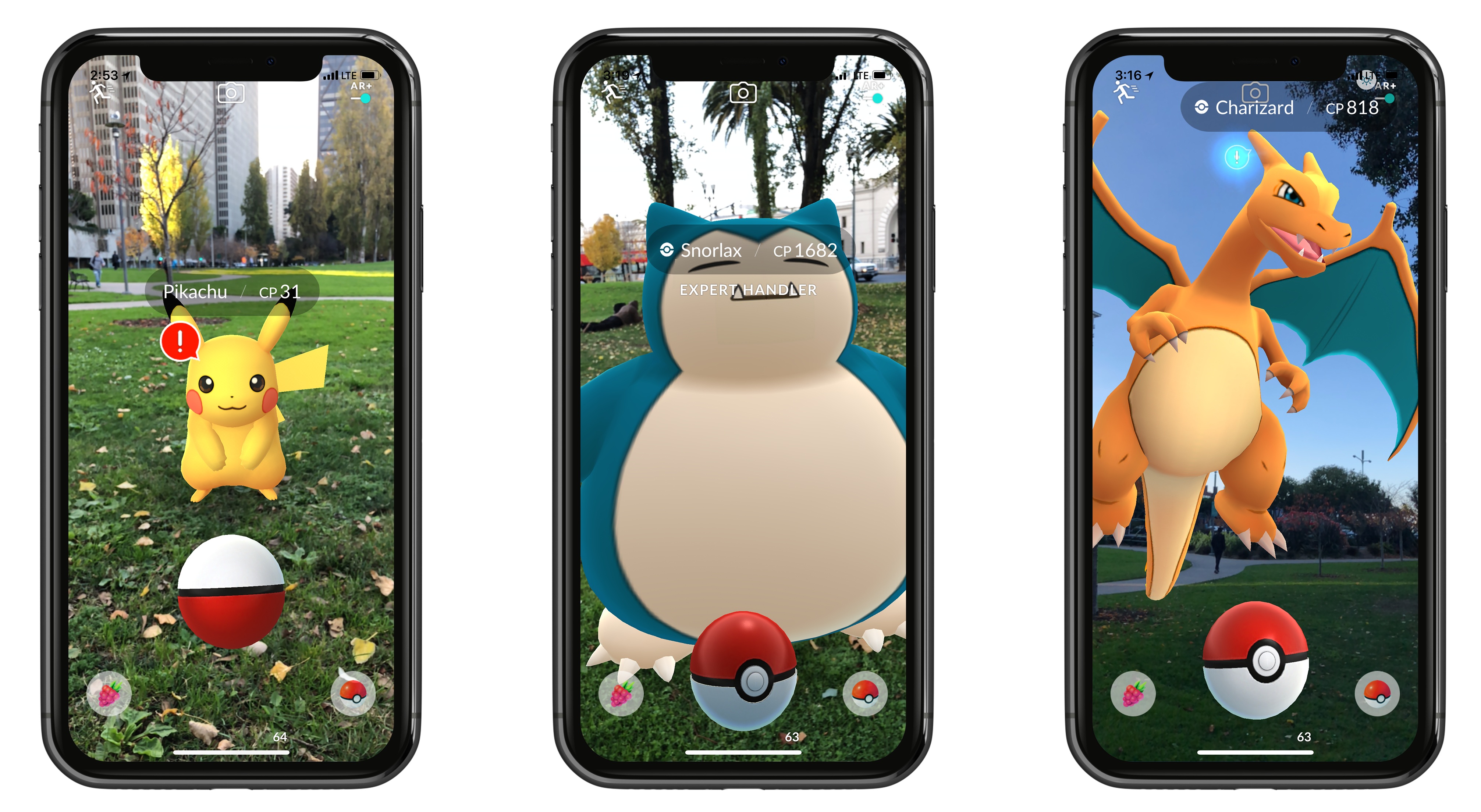
The most well-known augmented reality smartphone game will soon be better than ever. As was previously announced at WWDC, Pokémon GO is adopting Apple’s ARKit framework to provide a more true-to-life AR experience. The Pokémon GO website announced that this update, featuring what the post dubs ‘AR+’, is launching very soon.

AR+ will not only make Pokémon appear more accurately in space, but it also brings enhancements to actual gameplay. Because the game will be able to better measure distance and placement of objects, each Pokémon found in the wild will now have an awareness meter. The meter fills up as Pokémon grow more aware of your looming presence, and if the meter fills up completely, the Pokémon will run away. But if you sneak up carefully, not only will you prevent the Pokémon from fleeing, but you’ll earn some nice perks: an Expert Handler bonus that increases the amount of XP and Stardust you receive, and a better chance at earning Great and Excellent Throw bonuses. These additions are a clever way of using ARKit to not only improve the realism of the game’s visuals, but its mechanics too.

One either nice perk of AR+ is that, as a side benefit of being fixed to a precise point in space, Pokémon will display in an accurate scale, so you can walk up and see just how big or small a Pokémon truly is.

While Pokémon GO’s days as a worldwide phenomenon are over (at least for now), the game continues to receive important updates, and the adoption of ARKit appears to be a key one. The update’s exact release timeline is unclear, but by all indications it’s imminent.