

Spotify Spotify’s iOS app was updated earlier this week with a new feature not mentioned in the App Store release notes: an iMessage app. Similar to Apple Music’s built-in iMessage app, Spotify lets you share some of your favorite songs with friends straight from Messages. Anyone you send a song to can play a...
 Member Requests
Question: I’m working on the iOS 11 beta and took a bunch of photos. I saved them to an iCloud Drive folder because Dropbox wasn’t an option from the Photos app, but I want to move them to Dropbox so I can access them from a Windows PC. When I select all and click the...
Favorite September 12th Keynote Surprises
Free iTunes Movie Upgrades to 4K I don’t own a 4K/HDR TV, and likely won’t for several years, but I was pleasantly surprised by one announcement in particular related to the Apple TV 4K: existing iTunes HD purchases will be upgraded, for free, to 4K HDR versions. Coming into the keynote, The Wall...
Trello Launches Mac App with Custom Keyboard Shortcuts, Native Notifications, and More→

Today Trello introduced a new dedicated Mac app that includes features built for power users, such as customizable keyboard shortcuts, desktop notifications, and more.
Any serious productivity app on the Mac needs to include keyboard shortcuts, and the team at Trello clearly knows that. There are shortcuts for all the expected things like adding a new card, navigating between boards, and more. Where Trello impresses is that you can customize these shortcuts to your liking, making them easier to remember. One unique shortcut allows you to set a specific board to automatically open every time you start the app, saving an extra click.
Since it’s a native app, Trello includes native macOS notifications now, an improvement over the sometimes-janky Safari-powered notifications. It also enables opening boards in separate windows. Lastly, the app supports the Touch Bar for MacBook Pro owners.
Trello is available for download from the Mac App Store.
September 12 Roundup: All the Little Things
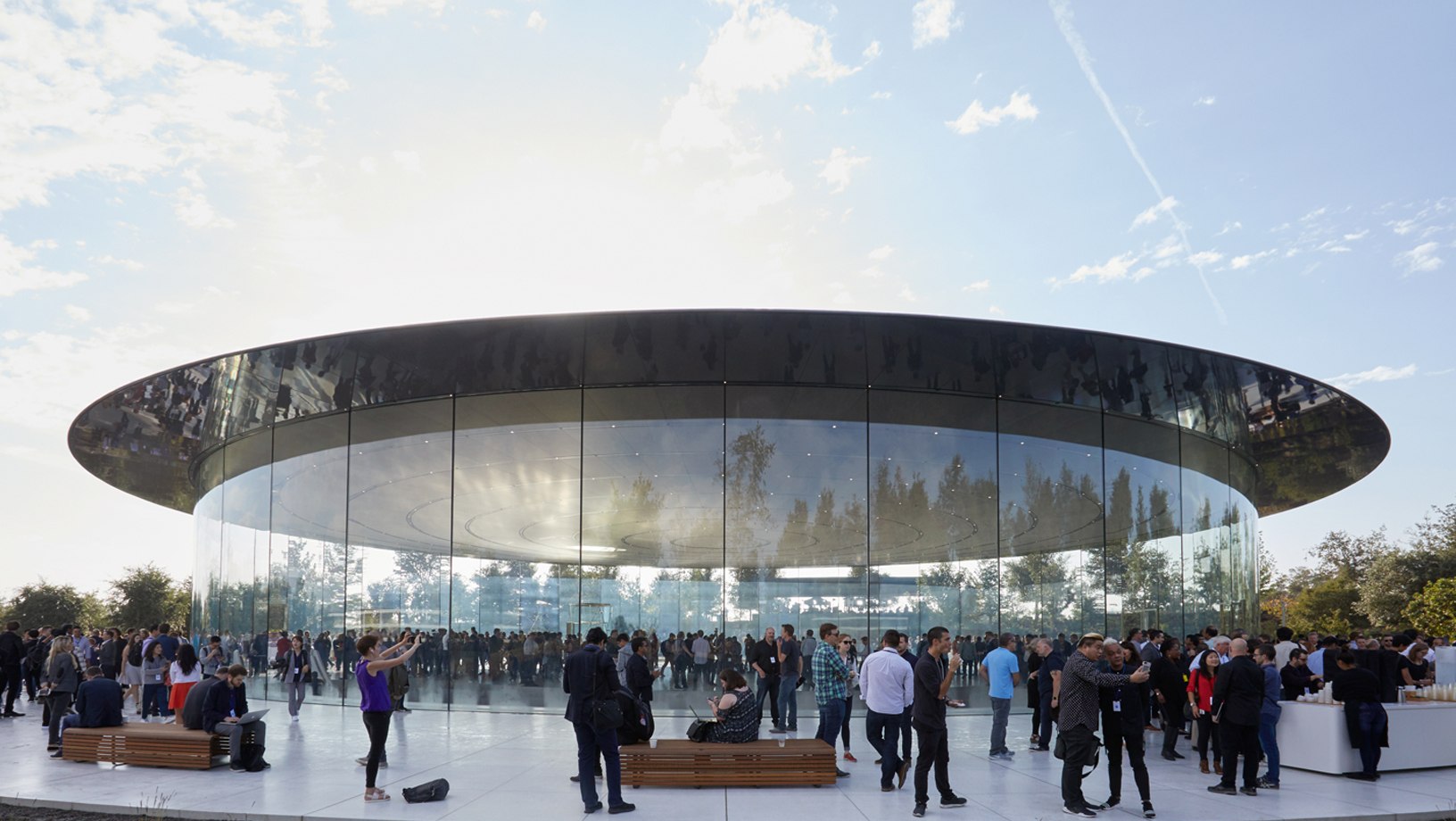
Yesterday’s keynote event at the Steve Jobs Theater featured the debut of several major new products, but there were a lot of small details revealed outside the keynote as journalists got their hands on the new devices. Below is a roundup of some of the most interesting extra details from the day.
Tim Cook Discusses Apple’s Convictions of Societal Responsibility in New Interview→

Fortune today published an interview Adam Lashinsky held with Apple CEO Tim Cook earlier this year. Their conversation centers on Apple’s attempts at societal contribution, covering topics like health, education, the environment, and more.
In the area of health, Cook acknowledged that while many of the company’s health initiatives are not directly profitable in any way, he does understand that from a financial standpoint health care is a key area for Apple to invest in. And they are investing. He says:
There’s much more in the health area. There’s a lot of stuff that I can’t tell you about that we’re working on, some of which it’s clear there’s a commercial business there. And some of it it’s clear there’s not. And some of it it‘s not clear. I do think it’s a big area for Apple’s future.
One other interesting piece from the interview surrounds Apple’s lack of interest in setting up a company foundation, breaking from the pattern of many other large corporations. Cook explained his reasoning:
When a company sets up a foundation, there is a risk, in my judgment, of the foundation becoming this other thing that is not connected to the company. It has a separate board of directors. They make reasonably independent decisions sometimes. It becomes a separate thing. I don’t want that for Apple. I want everybody involved…If we had a foundation, my fear was it becomes something that 10 or 12 or 20 or 50 people do. And all of a sudden for the 120,000, it’s just this separate thing out there. People work here to change the world. So I think that should be integral to what the company does. Not peripheral in a foundation.
It’s possible we’ll see announcements related to Apple’s work in the areas of health and the environment at its September 12 keynote event, with the former tied to Apple Watch announcements and the latter to the creation of Apple Park, where the event will be held.
App Store Sales for 32-bit Apps Less Than 1% of Total Revenue→
Oliver Yeh of Sensor Tower shares a revealing statistic regarding the current state of App Store revenue for 32-bit apps, which will no longer be available for purchase or download in iOS 11:
The potential revenue Apple stands to lose from eliminating 32-bit app support in iOS 11, expected to launch next week, will amount to less than 1 percent of its portion of quarterly App Store revenue, according to Sensor Tower research. Based on an analysis of our Store Intelligence data, we have estimated that these older apps, which will cease to function in the upcoming release, accounted for approximately $37.5 million in worldwide gross revenue last quarter, of which Apple’s cut—about $11.3 million—made up a mere 0.41 percent of its total revenue from in-app purchases and paid apps on iPhone and iPad.
While it should come as no surprise that 32-bit apps make up a small portion of App Store sales, this new data reveals just how inconsequential that portion has now become.
Member Requests
Question: I have PDF receipts that I want to convert to an image and insert into Ulysses. Is this possible with a workflow? What would be the easiest way? (Graham Berks, @fatlazycat)
A workflow can definitely accomplish this task. In building a solution, I started with the PDF to PNG workflow I shared a...
Anchor

Anchor is an iPhone app for making and sharing audio – but that’s underselling it. A more fitting description would be the team at Anchor’s own stated goal: “democratizing audio creation and making tools available to anyone and everyone with a smartphone.” It’s a big goal, but so far I think they’re clearly on...