Federico Viticci

10804 posts on MacStories since April 2009

Federico is the founder and Editor-in-Chief of MacStories, where he writes about Apple with a focus on apps, developers, iPad, and iOS productivity. He founded MacStories in April 2009 and has been writing about Apple since. Federico is also the co-host of AppStories, a weekly podcast exploring the world of apps, Unwind, a fun exploration of media and more, and NPC: Next Portable Console, a show about portable gaming and the handheld revolution.

Apple’s Privacy and Cloud Services

Thomas Ricker, writing for The Verge in response to Tim Cook’s speech on privacy and cloud services:

Arguably, Google Maps is better than Apple Maps, Gmail is better than Apple Mail, Google Drive is better than iCloud, Google Docs is better than iWork, and Google Photos can “surprise and delight” better than Apple Photos. Even with the risks.

If Apple truly cares about our privacy then it should stop talking about how important it is and start building superior cloud-based services we want to use — then it can protect us.

As John Gruber eloquently commented:

There’s much I would quibble with regarding Ricker’s piece, but his conclusion, quoted above, is spot-on. Apple needs to provide best-of-breed services and privacy, not second-best-but-more-private services. Many people will and do choose convenience and reliability over privacy. Apple’s superior position on privacy needs to be the icing on the cake, not their primary selling point.

This is a tricky scenario: is machine learning the only way to build intelligent services and client apps for the future? Google Photos is showing impressive results in recognizing places, objects, and people – but at the cost of letting Google’s cloud analyze your entire memories and visual history. It’s only natural for some people not to be okay with that today.

Will consumers start demanding that sort of intelligence going forward? Is there any way to build intelligence at scale without being creepy? Is privacy a product or a feature?
Permalink

Sunrise Launches on Apple Watch

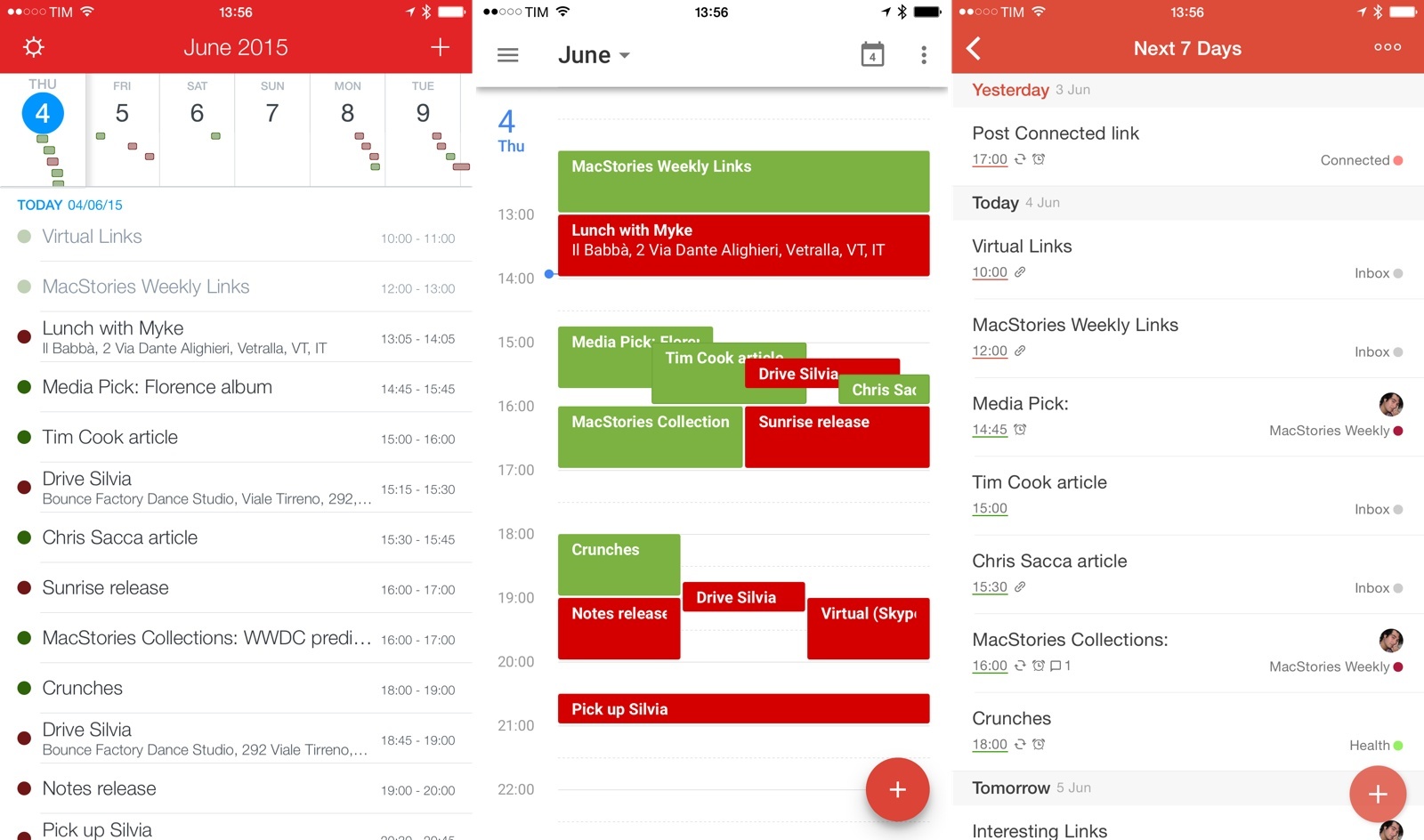
Sunrise, the calendar app/platform acquired by Microsoft earlier this year, has always been about integrating your schedule with as many devices and services as possible. Pierre Valade and his team wanted to build a calendar app that could go beyond a traditional representation of calendar events, and this meant opening up Sunrise to third-party services like Todoist, Wunderlist (now also part of Microsoft), Songkick, and more. Sunrise’s willingness to integrate deeply with users’ workflows can even be seen in Meet, a custom keyboard that brings Sunrise’s scheduling features to any app.

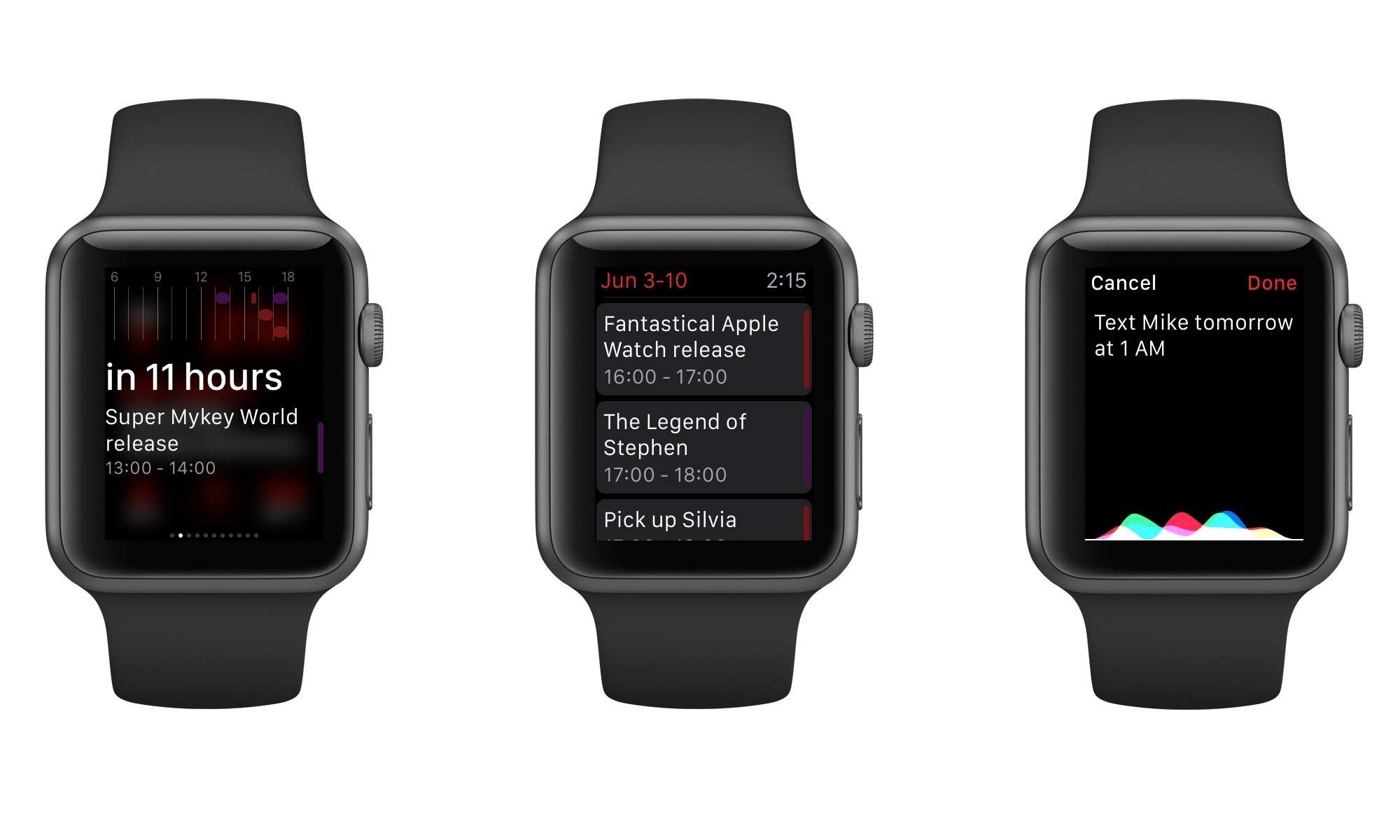
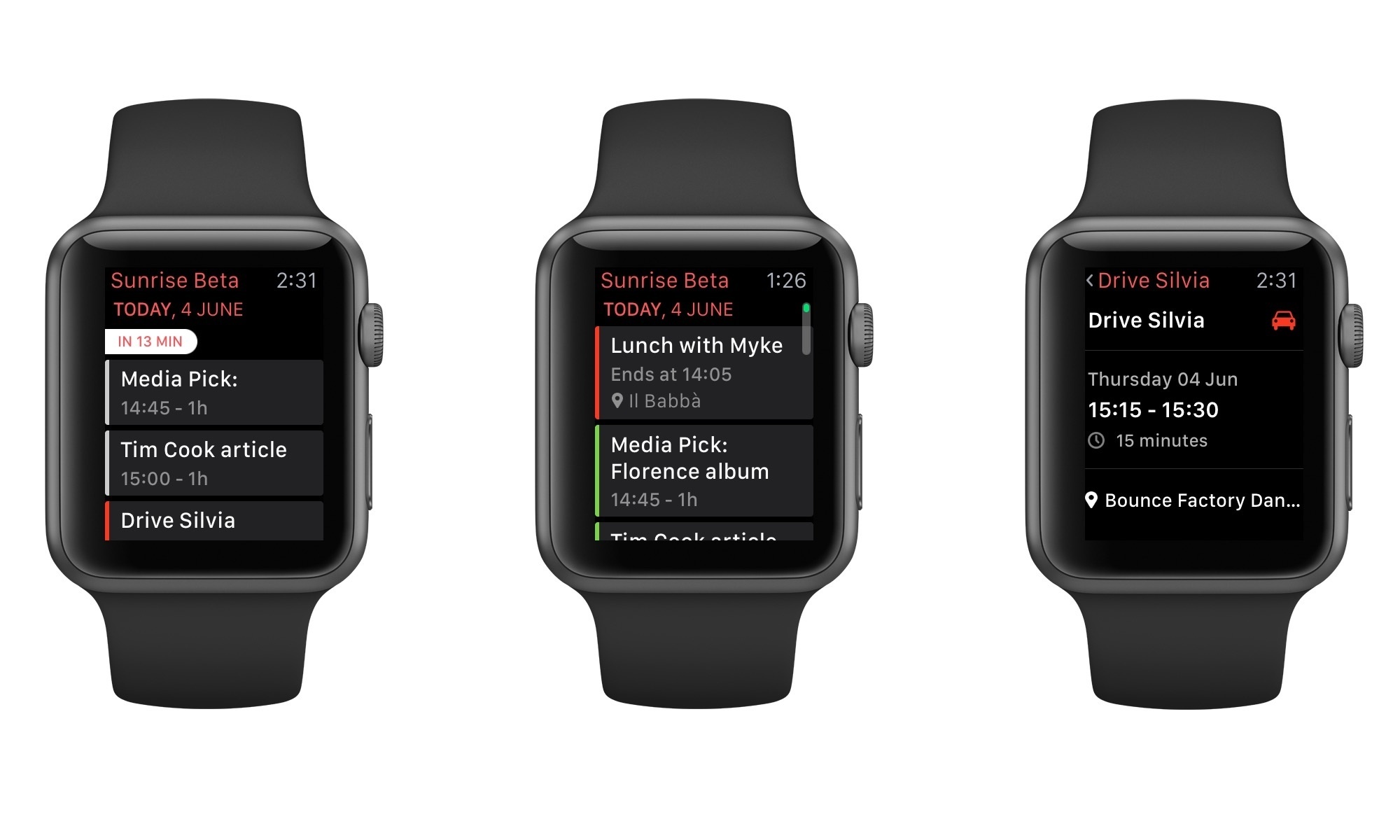
Sunrise is launching on Apple Watch today, with another integration that rethinks a core aspect of the app for a new device. Sunrise for Apple Watch, which I’ve tested over the past month, puts the focus on viewing what’s coming up, with an elegant UI and a glance that make it easy to check and act on upcoming events.

Read more


Todoist Launches PowerApp for Integrations with Google Calendar, Evernote, and GitHub

Todoist tasks as calendar events in Fantastical and Google Calendar.

Todoist tasks as calendar events in Fantastical and Google Calendar.

Todoist – my favorite task management service that recently also landed on Apple Watch – has never shied away from integrating with other services. The company has long supported automation through IFTTT and Zapier; it can mirror a user’s daily tasks to Sunrise; and, it can import files from Google Drive and Dropbox when you need to add attachments to a task. Today, Todoist is launching PowerApp, the next generation of the company’s integration system based on a new developer platform they’re also debuting today and opening up to third-party apps.

Read more


Apple Support Document on HomeKit and Apple TV

Following the launch of the first HomeKit devices yesterday, Apple has published an official page with a list of compatible products and a support document detailing the setup process for HomeKit.

In that document, Apple confirmed the long-rumored “hub” feature of Apple TV:

If you have an Apple TV (3rd generation or later) with software version 7.0 or later, you can control your HomeKit-enabled accessories when you’re away from home using your iOS device.

Sign in with the same Apple ID on your iOS device and Apple TV, and you’ll be able to use Siri commands to remotely control your accessories.

Earlier today, The New York Times reported that Apple won’t announce any new Apple TV hardware at its upcoming WWDC. Considering that HomeKit (which is rumored to get some stage time next week) can already work on the current-gen Apple TV, it’s no surprise Apple may prefer to sell the current model and wait to get the next generation just right. It’ll be interesting to see Apple’s plans for the Apple TV as a connected home hub unfold over the next few months.

Permalink

Clips 1.2

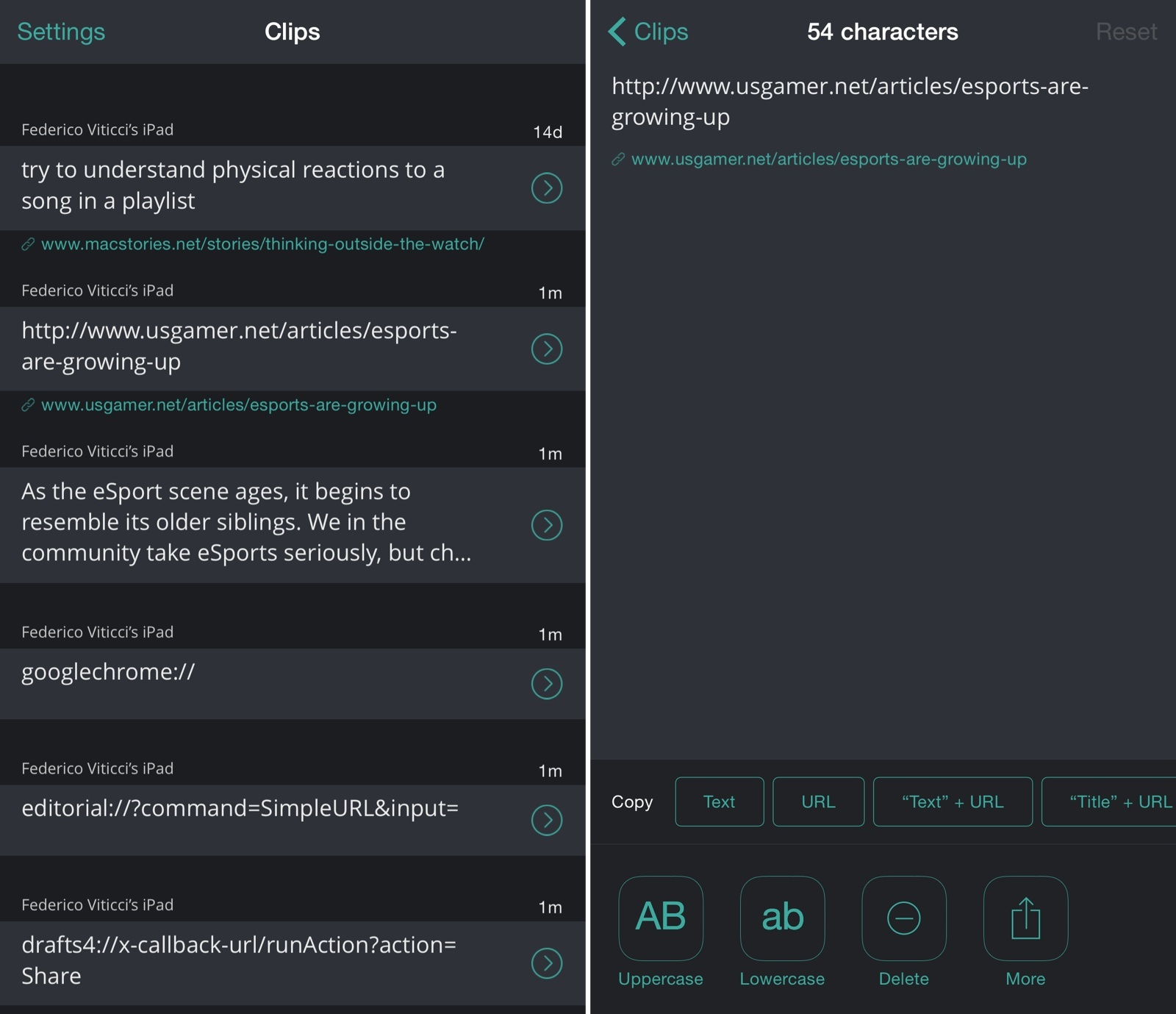
Clips, developed by Clean Shaven Apps, is an app I use on a daily basis to copy multiple bits of text and move them between apps using a widget, an action extension, and a fantastic custom keyboard – one of the few keyboards I keep on my devices, in fact. I reviewed the app when it came out last September, and I’ve been using it since.

Today, Clips 1.2 has been released with a refreshed design, Apple Watch support, and a faster keyboard. While I’m not sure why I’d want to use Clips on my Watch, I believe it can be useful to those who use the app to store text they access frequently and not as a temporary holding place for clipped items. I’m a fan of the new dark design and the increased contrast between URLs and plain text, and I continue to appreciate the time the app saves me when composing articles, researching topics, and collecting a bunch of notes from different apps with just a few taps. Clips is the epitome of iOS 8’s extensibility features for productivity apps, and it’s one of my must-have utilities.

Clips 1.2 is available on the App Store.

Permalink

ETA Brings Travel Times and Traffic Status to Apple Watch

I first covered ETA back in September, and I noted how the app simplified the process of getting travel times for favorite locations by taking advantage of a widget in Notification Center:

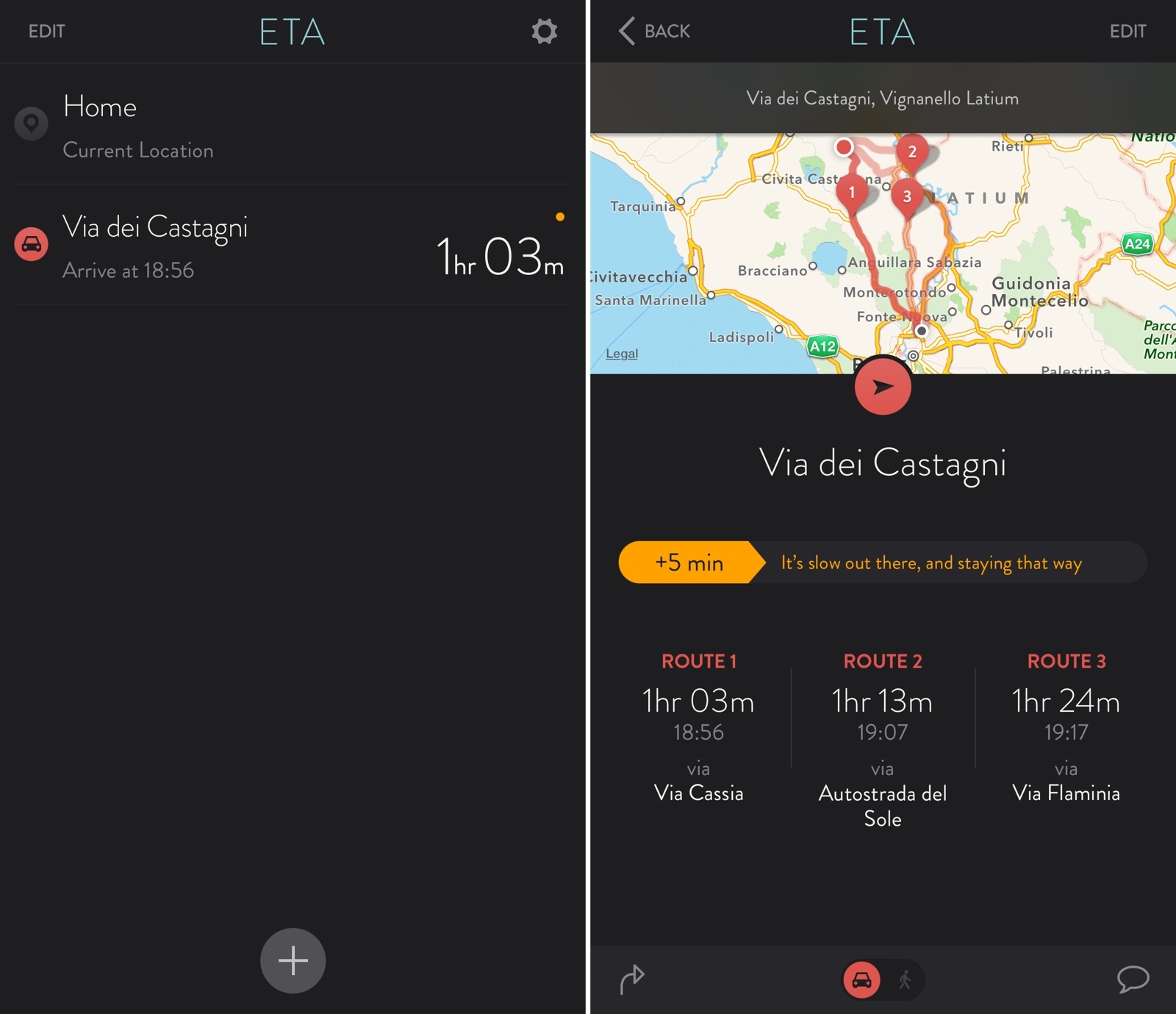
ETA’s best feature is actually a way to never open the app itself. Taking a clue from Apple’s Today Summary in Notification Center, Eastwood created an iOS 8 widget that lets you see driving times in the Today view and tap them to quickly load directions in your mapping app of choice (Google Maps, Apple Maps, or Waze). Your preferences for walking/driving directions and time of arrival are carried over to the widget, which is simple, elegant, and useful.

Today, ETA 2.0 has been released with a new design, the ability to show multiple routes and traffic information, and an Apple Watch app that lets you quickly view travel times and traffic directly from your wrist.

Read more


Pinterest Introduces Buyable Pins

Mike Isaac, writing for The New York Times:

Pinterest, the online social bookmarking site, has long claimed to be a way to help people discover new things in the real world. Soon you will be able to buy those things, too.

The San Francisco-based company announced Tuesday that it will now let users purchase things from inside of pinned items, in what is its first foray into bringing e-commerce to the platform. The new product, named “Buyable Pins,” allows sellers large and small to essentially stick a “buy” button on items that they post to the site.

Buyable Pins will launch in the United States initially, and the service will support on Apple Pay on iOS.

Considering how Pinterest reinvented the wish list on mobile, it only makes sense for them to jump into the e-commerce business in a mobile-first fashion. Pinterest says that items will be “handpicked” and that they won’t make money off transaction fees, relying on promoted pins (ads) to let advertisers promote their products on the service.

They also made a great promo video for the new feature, which you can watch below.

Permalink

Microsoft Acquires Wunderlist

In a blog post, popular task management service Wunderlist has announced they’ve been acquired by Microsoft. Wunderlist, like Sunrise, will remain an “independent” app for now, but it’ll likely be more closely tied to Microsoft services in the future.

Here’s Wunderlist CEO Christian Reber on the company’s blog:

Over the next few months as Wunderlist becomes a part of the Microsoft family, we’ll introduce a host of new features, continue growing the ecosystem of partner integrations and progress in delivering Wunderlist to billions of people. We are excited and can’t wait to share with you what we have been working on–watch this space!

The Microsoft blog has also motivated the acquisition and shared details about pricing going forward:

The addition of Wunderlist to the Microsoft product portfolio fits squarely with our ambition to reinvent productivity for a mobile-first, cloud-first world. Building on momentum for Microsoft Office, OneNote and Skype for Business, as well as the recent Sunrise and Acompli acquisitions, it further demonstrates Microsoft’s commitment to delivering market leading mobile apps across the platforms and devices our customers use – for mail, calendaring, messaging, notes and now tasks.

And:

Customers can expect the app to remain free in all of its existing markets. There will be no price changes for Wunderlist Pro or Wunderlist for Business customers and the service will continue to support a wide range of third-party apps and integrated services.

As I tweeted yesterday, I believe Microsoft has been doing some interesting acquisitions lately and Wunderlist meets the requirements for a cross-platform app that can integrate with other apps and services. Like Sunrise, Wunderlist has an API that allows other services and developers to plug into its platform to access a user’s tasks and projects – like Slack and Scanbot. Wunderlist wanted to build an ecosystem of apps for your todo list, and it’s easy to see how Microsoft could benefit from it.

More importantly, Wunderlist already integrates with Sunrise, allowing you to see tasks alongside calendar events natively.

I’m curious to see for how long Microsoft will keep these two apps as standalone services that don’t have the Microsoft brand or only work with Microsoft services. Sunrise, for instance, also supports Todoist, one of Wunderlist’s biggest competitors. Will Microsoft keep this third-party friendly approach as it keeps controlling more apps?

Permalink