Federico Viticci

10804 posts on MacStories since April 2009

Federico is the founder and Editor-in-Chief of MacStories, where he writes about Apple with a focus on apps, developers, iPad, and iOS productivity. He founded MacStories in April 2009 and has been writing about Apple since. Federico is also the co-host of AppStories, a weekly podcast exploring the world of apps, Unwind, a fun exploration of media and more, and NPC: Next Portable Console, a show about portable gaming and the handheld revolution.

Apple Pay and Europe

Kirk McElhearn makes some good points about Apple Pay in Europe:

On its website, Apple touts that fact that Apple Pay will save you time, by not forcing you to search for your wallet and then find the right card. These concerns, too, are specific to the United States. On average, Europeans carry only 1.46 payment cards (more than two thirds of which are debit cards). In the US, people have more than twice as many cards; 14% of Americans had more than ten cards in 2007. Credit cards are much less common in Europe (though adoption rates vary by country), and most people only have payment cards with their banks.

This is exactly why I’ve been struggling to get the excitement around Apple Pay. Sure, it looks cool, but Passbook was also cool and I never actually used it in a real life scenario in Italy. I’ve never owned more than one payment card in my life (the one supplied by my bank) and most people I know don’t have multiple cards. I’ve never understood the videos of modern payment solutions showing people fumbling to find their credit card – I have one, and it’s not that hard to find in my wallet. We still use cash every day for any kind of purchase, at least here in Italy.

I’m sure that Apple Pay will be easy to use and potentially more appealing than Passbook (especially for online payments). I’m just worried that it’s going to be another cool technology primarily meant for the United States.
Permalink

Bugs and People

Nick Arnott:

Software is buggy. Humans write and test software and humans are imperfect; as a result, so is software. This is the reality of software and should come as a surprise to nobody. What can be surprising are the kind of bugs we actually see make their way out into the wild.

This is a great article. A good reminder that there’s a difference between knowing that people make software and calling out individuals for the sake of page views.

Permalink

Apple Releases iOS 8.0.2

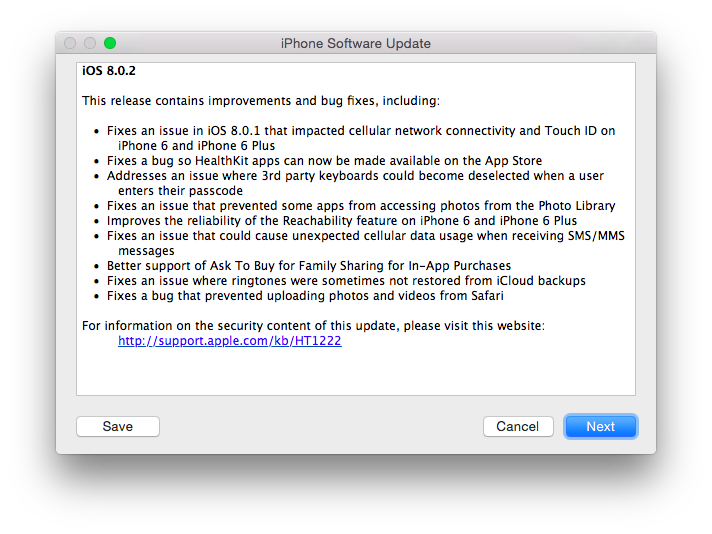
A day after releasing and then pulling iOS 8.0.1 due to bugs that caused cellular connections and Touch ID to not work on the iPhone 6 and iPhone 6 Plus, Apple has just released iOS 8.0.2. The new version carries the same bug fixes of Wednesday’s update and fixes the bugs that had been introduced by iOS 8.0.1.

iOS 8.0.2 fixes a number of bugs including an issue that prevented HealthKit apps from working correctly and a problem that caused custom keyboards to become deselected after entering a passcode. It also improves Reachability on the new iPhone 6, fixes a bug that disabled file uploads in Safari, and brings better support for the Ask to Buy feature in Family Sharing.

iOS 8.0.2 can be downloaded now from iTunes or software update on an iOS device.


Inside Apple’s iPhone 6 Testing Lab

Josh Lowensohn:

A few blocks away from Apple’s bustling campus in Cupertino is a rather nondescript building. Inside is absolutely the last place on earth you’d want to be if you were an iPhone. It’s here where Apple subjects its newest models to the kinds of things they might run into in the real world: drops, pressure, twisting, tapping. Basically all the things that could turn your shiny gadget into a small pile of metal and glass.

I’m starting to think that the iPhonegates Apple goes through every year may be worth it if only for the peek behind the curtain we get.

This time, in response to the so-called #bendgate, Apple invited the press to visit their secret testing lab for the iPhone 6. The Verge has fascinating photos and details; CNBC has a video report.

See also: a brief history of iPhonegates.

Permalink

Digging Digg

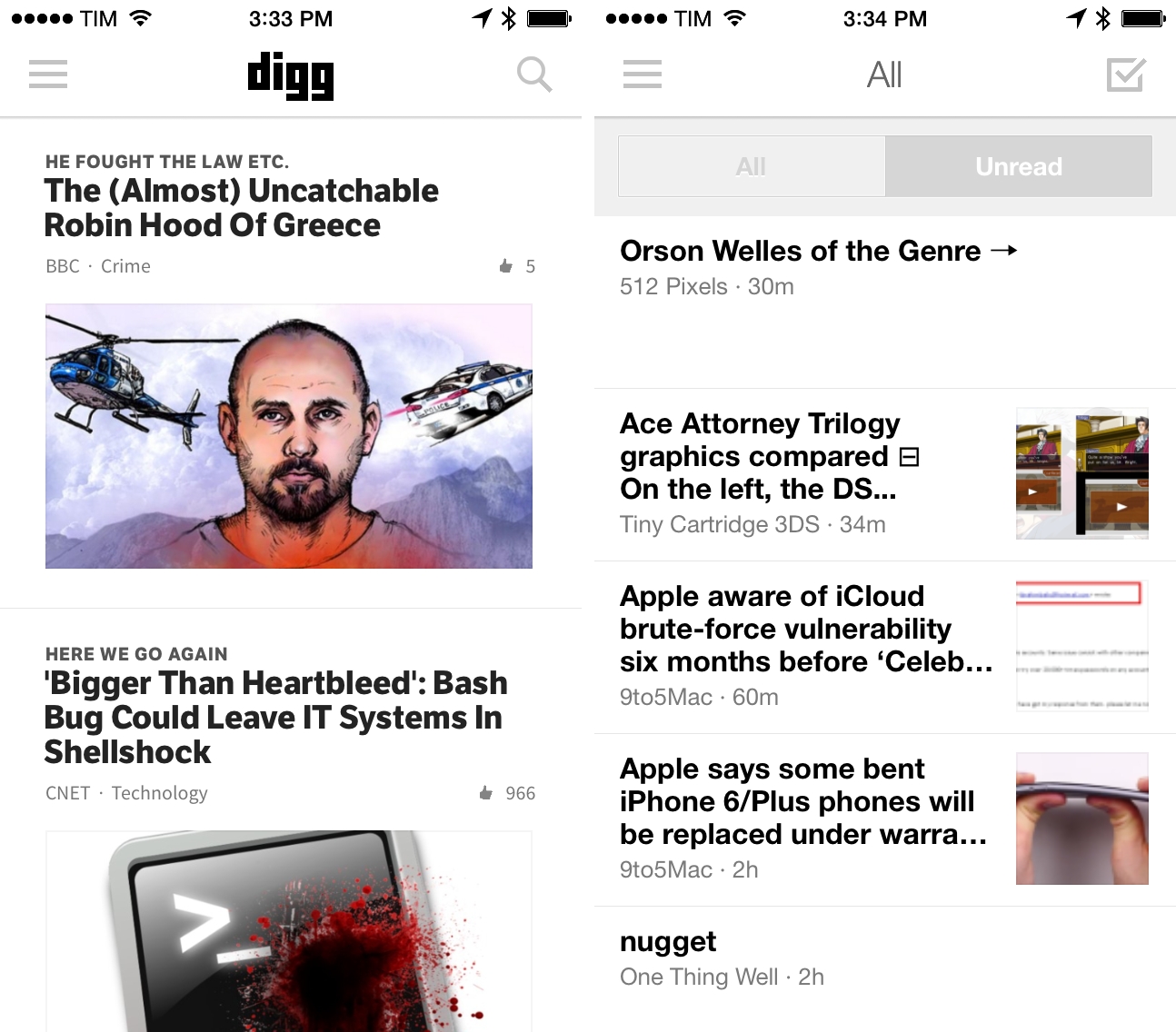
Late last week, I was looking for an RSS reader that had been updated for iOS 8. I couldn’t find any that I liked on the App Store, so I decided to give Digg a try. Yes, that Digg. I know that to many people that name may sound like a joke, but, as it turns out, the new Digg run by betaworks is a great service with a very good iOS app.

Read more


Virtual: The Wheels and Stuff

This time Federico and Myke discuss the new Final Fantasy trailers, Microsoft buying Mojang, the updates to the Steam Store and Myke’s trip to Italy.

Also on Relay, Virtual ep. 5 features some thoughts on Minecraft and Steam. And, we’re going to record another episode tomorrow.

Sponsored by:

  • Squarespace: A better web starts with your website. Use code INSERTCOIN for 10% off
  • Studio Neat: Get 10% off anything in their store using the code VIRTUAL
Permalink

Connected: The Divine Comedy of Homescreens

This week Federico expands upon his iOS 8 coverage and Myke talks about his new iPhone 6 Plus.

On this week’s Connected, more thoughts on iOS 8 apps and iPhone 6 Plus impressions by Myke, who also did something new to his iPhone.

Sponsored by:

  • lynda.com: An easy and affordable way to help individuals and organizations learn. Free 7-day trial.
  • Harry’s: An exceptional shave at a fraction of the price. Use code CONNECTED for $5 off your first purchase
Permalink

Apple Releases iOS 8.0.1 [Update: Pulled]

A week after the launch of iOS 8, Apple has released the first update to the new OS – iOS 8.0.1. Available now through software update, iOS 8.0.1 fixes a number of bugs including an issue that prevented HealthKit apps from working correctly and a problem that caused custom keyboards to become deselected after entering a passcode.

iOS 8.0.1 also improves Reachability on the new iPhone 6, fixes a bug that disabled file uploads in Safari, and brings better support for the Ask to Buy feature in Family Sharing.

iOS 8.0.1 can be downloaded now from iTunes or software update on an iOS device.

Update: Following reports of iOS 8.0.1 causing issues with broken cellular connections and Touch ID on some iPhone models, Apple has pulled the update and instructed affected users to restore through iTunes.


One Week After iOS 8, Developers Comment on App Bundles

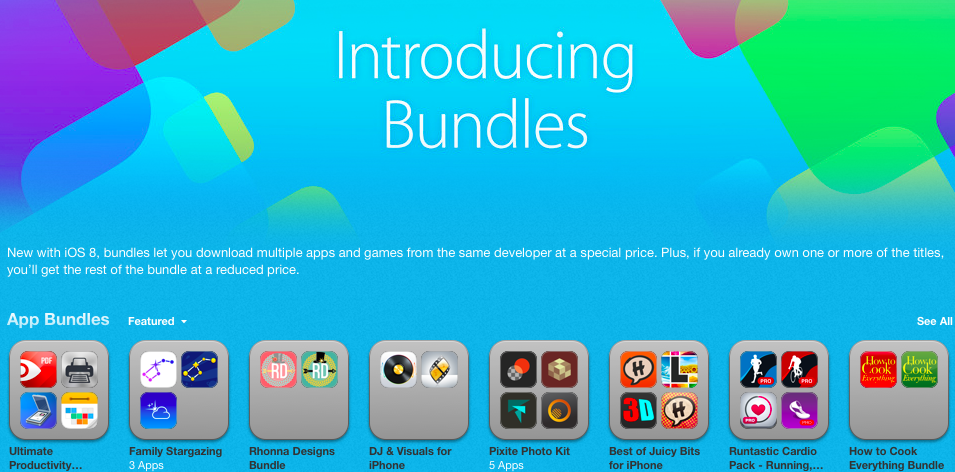
With the release of iOS 8 last week, Apple launched app bundles, a new way for users to buy up to 10 apps from the same developer with a single purchase at a discounted price.

Officially introduced at WWDC 2014 as a feature of the new iTunes Connect, bundles mark a significant change for Apple’s App Store since its opening in 2008: for the first time, developers can market their apps through discounts that can be configured in iTunes Connect rather than organize independent promotions based on price drops; from a user’s perspective, app bundles are reminiscent of Apple’s Complete My Album feature of the iTunes Store.

Shortly after the debut of iOS 8, Apple created a special App Store page showcasing popular bundles for apps, games, and apps for kids. Bundles are easy to spot on the App Store: like folders on iOS, a bundle’s icon is a container of apps inside the bundle, showing a preview of the first four apps included in the bundle; a special badge indicates the number of apps in the bundle; and, only paid apps from the same developer can be part of a bundle – you won’t be able to find games from EA and Ubisoft or apps from Readdle and Runtastic in the same bundle. Since last week, Apple has been heavily promoting productivity bundles from Readdle and Pixite, games from Square Enix and Disney, and apps by Toca Boca and Diptic.

Following the launch of bundles, I’ve been talking to several developers who collected some of their apps in bundles, gauging their reactions to this new feature of the iOS 8 App Store and their thoughts on Apple’s promotional push so far.

Read more