


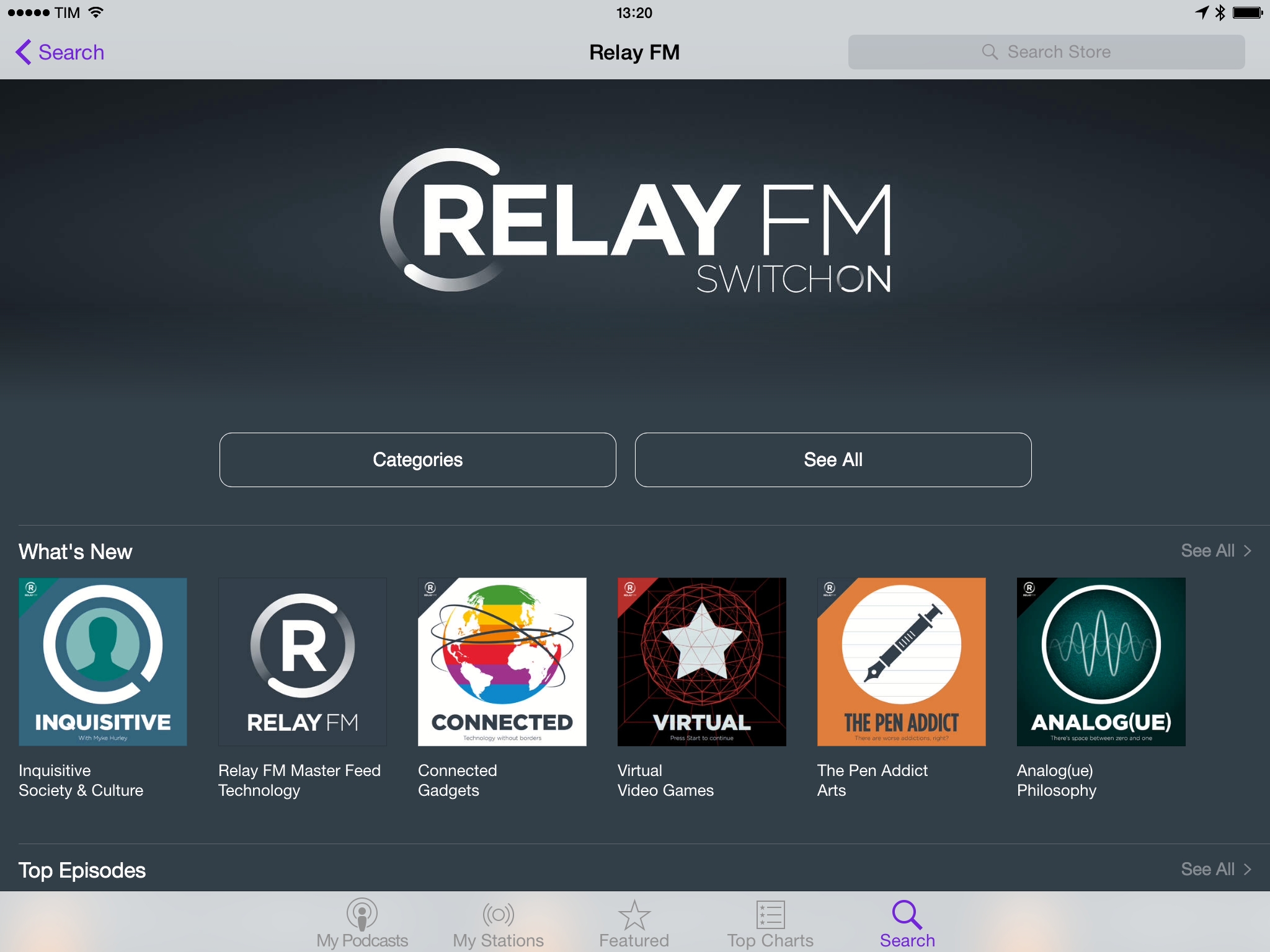
When I wrote about the end of The Prompt and Directional last month, I noted that I was “thrilled about the future”. Today, Relay FM has officially launched, featuring the first episodes of our new podcasts: Connected and Virtual.
The Mac Gamer→
A great retrospective on Mac gaming by Jeremy Parish:
Mac games were actually pretty weird and unique in the olden days, and I actually could see someone being a Macintosh-exclusive gamer in the ’80s. The platform offered (1) mouse-based controls and (2) no color, or at least no guarantee of color support until they stopped selling the Mac SE and pre-PPC PowerBook lines in the mid-’90s. Perhaps unsurprisingly, Mac games felt a little different from console and DOS counterparts. Another factor there came from the fact that Macintosh had system-level support for graphics, it using a visual interface and all, whereas other computers kind of needed to be tricked in various degrees before they’d display images.
I’d argue that the Mac App Store has helped in facilitating distribution of modern Mac games, although, from a gamer’s perspective, it’s still inferior to other services – especially for clarifying hardware requirements.
Shazam Rolls Out Beats Music Integration→
As noted by several users yesterday, Shazam has begun rolling out Beats Music integration in their app, allowing users to stream tagged songs off Apple’s service. Similarly, both 9to5Mac and Engadget report that Spotify integration is back in Shazam, as also confirmed by a support document. The feature mirrors Rdio integration for songs recognized in Shazam, launched last month.
With Shazam becoming Apple’s official partner for Siri in iOS 8, it makes sense for the dedicated Shazam app to offer more options to its users – hopefully, this time Shazam won’t decide to pull these integrations.
The Next Assistant from the Creators of Siri→
Steven Levy has a story on Viv, the next assistant from the creators of Siri:
Viv strives to be the first consumer-friendly assistant that truly achieves that promise. It wants to be not only blindingly smart and infinitely flexible but omnipresent. Viv’s creators hope that some day soon it will be embedded in a plethora of Internet-connected everyday objects. Viv founders say you’ll access its artificial intelligence as a utility, the way you draw on electricity. Simply by speaking, you will connect to what they are calling “a global brain.” And that brain can help power a million different apps and devices.
I’ve often argued that the ability to understand context between sentences and learn the true meaning of voice commands is one of Siri’s biggest limitations. Viv wants to go beyond that, offering intelligence as a “utility” much like WiFi or Bluetooth. That’s a bold statement.
If Viv lives up to its promise – check out the examples in the story to see what it should be capable of – other companies will have a lot to catch up to. The last image in Levy’s article is particularly impressive.
A Database of Intentions→
Speaking of Pinterest, I enjoyed this interview at The Atlantic with co-founder Evan Sharp:
And they are just getting started. They’ve got 30 billion pins now, half of them in the last six months. They’ve got 750 million boards. A full 75 percent of their traffic comes from mobile devices, and according to researchers, they’re the top traffic source to retailers’ websites and an important secondary source after Facebook for some media sites, like Buzzfeed.
In this wide-ranging interview, Evan Sharp talks here about what Pinterest is now, what it could become, the potential the company has to make money, and how Pinterest competes (or doesn’t) with Google and his old company Facebook.
I use Pinterest to collect videogame gadgets I want to buy, and I’ve been impressed with the discovery features powered by the enormous database of pins collected and categorized by users over the years. (YouTube videos and animated GIFs also look much nicer on Pinterest than other services.)
I can’t wait to see how the Safari extension for iOS 8 will make pinning even easier and more natural.
Dispatch 2.1 Adds “Export as PDF”, Bulk Edit, More App Integrations
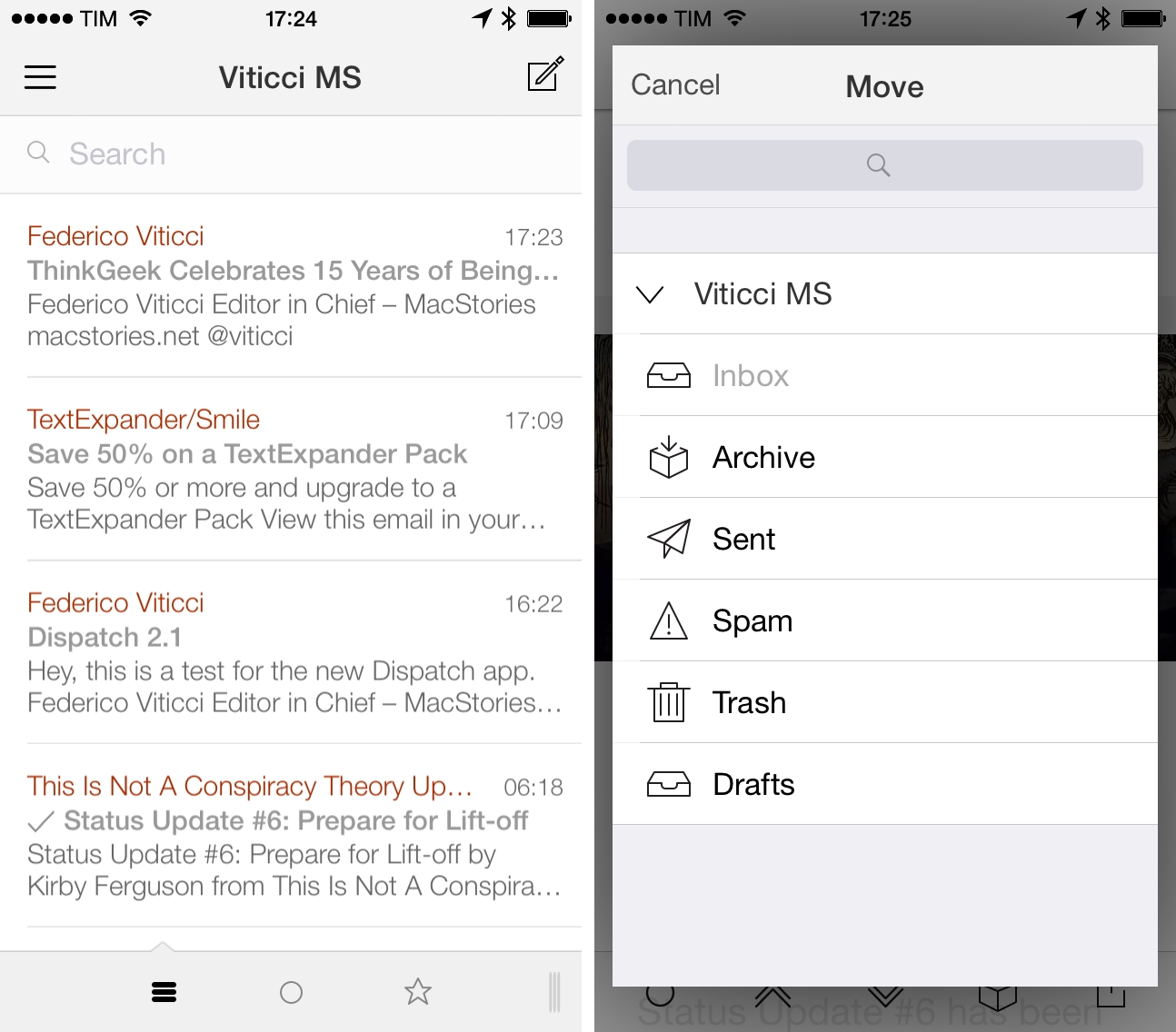
Dispatch, the powerful email client for iPhone with actions, snippets, and other handy shortcuts that I’ve covered on multiple occasions here at MacStories, has been updated today to version 2.1, which brings welcome improvements to mailbox navigation and message management, as well as more app integrations with the ability to export emails to PDF.
Finding Bluetooth Devices with an iPhone→
I was sent this article by Jeff Gamet about finding a lost Fitbit using your iPhone by my friend Stephen, and, while I don’t use a Fitbit, I thought it’d be interesting to try the recommended app for my Jawbone UP24. Jeff used BTLExplorer, a free app, to measure the signal strength of the Fitbit tracker and find it using his iPhone, but I didn’t like the outdated UI shown in the screenshot, so I went looking for similar apps on the App Store.
As it turns out, there are a lot of free apps to find BLE devices on the App Store. I ended up installing three of them, but I’m fairly certain you’d be fine with just one.
Bluetooth Smart Scanner shows device names, RSSI, and it can play sounds as it scans for nearby Bluetooth devices. It’s got a pretty basic iOS 7 design, it gets the job done, and I like the sound option.
LightBlue is similar to Bluetooth Smart Scanner, but it has a nicer interface with signal bars and lighter typography. It doesn’t have sounds.
BLE Discovery shows the same stats, but it comes with the ability to display a real-time graph for RSSI dBm and a three-second rolling average. You can tell it’s working by walking around a device you’re tracking and seeing the lines rise to “Strong signal” as you get closer.
This quick experiment taught me that there’s an abundance of BLE trackers on the App Store and that Jeff’s method works. To test the apps, I asked my girlfriend to hide my Jawbone UP24 while I was in the kitchen; when I walked into our bedroom, I started looking at numbers on the screen, which kept getting higher as I got closer to our dog. She had hidden the UP24 under a cushion the dog was sleeping on; he wasn’t pleased about my request to get up because I needed my fitness tracker back.
Integrating Women Into the Apple Community→
Brianna Wu, writing for Macworld last week:
But it’s very hard for me to reconcile this consumer-facing Apple with the development company that put no women on stage this year for either the 2014 Worldwide Developers Conference keynote or the more-technical State of the Union. It’s difficult to connect this Apple I know and trust with the endless sea of white, male faces I saw at Yerba Buena Gardens during this year’s WWDC Bash. Women buy Apple products. We develop on Apple hardware. But we’re still not yet well-represented in Apple’s developer community.
We, as a community, need to keep talking about this and then act on it, because the future needs to be better. Also from Brianna’s article:
Getting women into entrepreneurial positions is also critical. My own company, Giant Spacekat, has quickly risen as a powerful voice for women in game development. Not only am I in a position of industry credibility, I’m able to speak to my experiences, to hire women and advocate for other women. There need to be more Giant Spacekats in the industry.
Apple’s Diversity Stats and Message→
Tim Cook, writing on Apple’s Diversity webpage in regard to newly-published stats:
Apple is committed to transparency, which is why we are publishing statistics about the race and gender makeup of our company. Let me say up front: As CEO, I’m not satisfied with the numbers on this page. They’re not new to us, and we’ve been working hard for quite some time to improve them. We are making progress, and we’re committed to being as innovative in advancing diversity as we are in developing our products.
A short film is available here. See also: inclusion inspires innovation.