Federico Viticci

10804 posts on MacStories since April 2009

Federico is the founder and Editor-in-Chief of MacStories, where he writes about Apple with a focus on apps, developers, iPad, and iOS productivity. He founded MacStories in April 2009 and has been writing about Apple since. Federico is also the co-host of AppStories, a weekly podcast exploring the world of apps, Unwind, a fun exploration of media and more, and NPC: Next Portable Console, a show about portable gaming and the handheld revolution.

Everpix Shares Full Company Dataset

Everpix:

Building a startup is about taking on a challenge and working countless hours on solving it. Most startups do not make it but rarely do they reveal the story behind, leaving their users often frustrated. Because we wanted the Everpix community to understand some of the dynamics in the startup world and why we had to come to such a painful ending, we worked closely with a reporter from The Verge who chronicled our last couple weeks. The resulting article generated extensive coverage and also some healthy discussions around some of our high-level metrics and financials. There was a lot more internal data we wanted to share but it wasn’t the right time or place.

With the Everpix shutdown behind us, we had the chance to put together a significant dataset covering our business from fundraising to metrics. We hope this rare and uncensored inside look at the internals of a startup will benefit the startup community.

A comprehensive dataset that includes all kinds of metrics: besides user subcriptions, revenue, and monthly costs, you’ll also find metrics for latency between freemium trials and subscription purchases, user engagement, AWS cost breakdowns, and more. It’s sad that Everpix shut down, but the data they have open-sourced will certainly help anyone who’s building out a startup and never had access to this kind of documented data before.

Don’t miss the VC pitch decks and email exchanges. One of the investors’ primary concerns was that Everpix was difficult to explain to mobile users who just want their photos to “work”, and I think they have a point there. Apple needs to get their act together and streamline the way iCloud, Photo Stream, and the Photos app work. Everpix had built an impressive technology (check out their original plans for 2014 in the presentations) and, through the data, you can get a glance at the various reasons why it didn’t work out. Sections about their propretary image analysis tools have been redacted, which makes me even more curious to know who bought the company’s core technology.

[via Bradley Chambers]
Permalink

Terminology Workflows For Editorial

Greg Pierce:

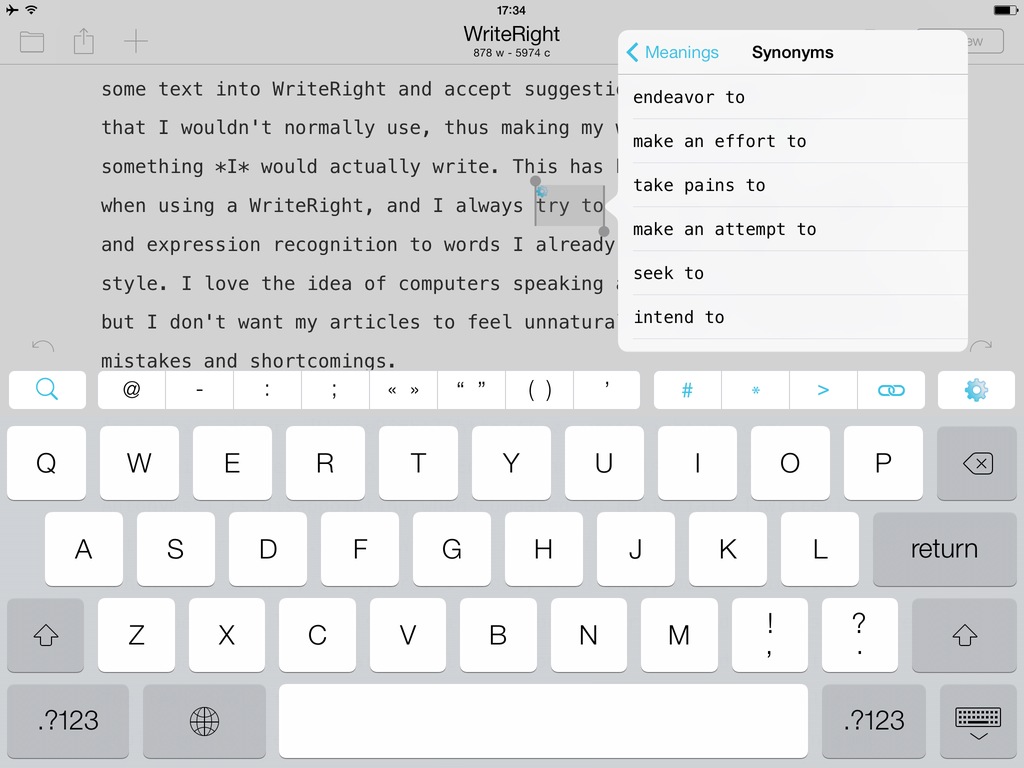
Terminology has always had great direct integration with our own apps, Drafts and Phraseology that allows you to easily lookup and select replacement words and have them directly replaced inline with your editing. You can see that integration in action.

In the latest version (3.0.6) of Terminology, I added a tweak to its URL schemes to allow it to integrate more easily with certain other apps, particularly Editorial, Ole Moritz’s excellent iPad text editor.

Terminology is my favorite dictionary app and I wish Editorial had a popover to replace Apple’s default dictionary, like Instapaper did. The workflows are the best alternative to that for now, and they work well.

It would be nice to have selectable synonyms and antonyms built into the system dictionary in iOS 8.

Permalink

Command-C: A Local Clipboard Sharing Tool for OS X and iOS 7

Command-C

Command-C

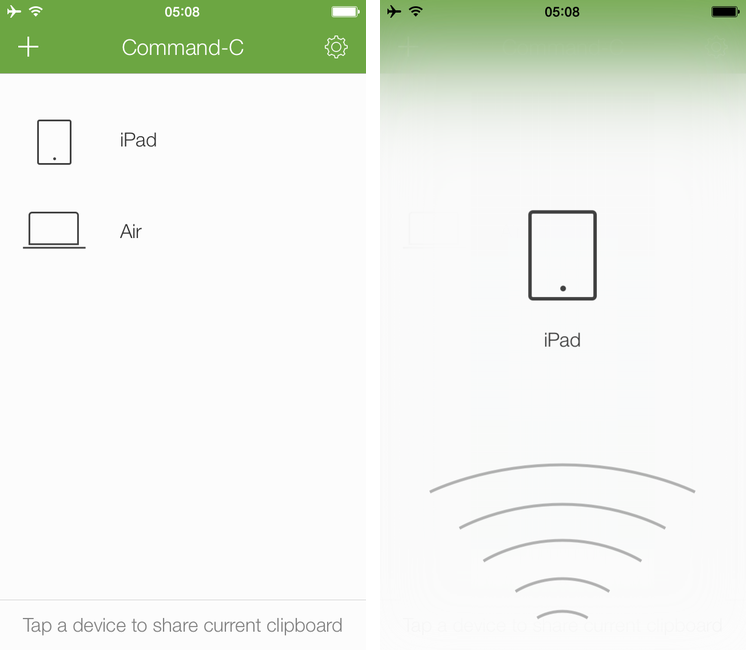
Even if my workflow these days primarily consists of reading and writing on the iPad, there are still times when I need to share content – either text or pictures – across my iOS devices, from my iPad to my Mac, or from OS X to iOS. While I can normally achieve inter-device communication using something like Evernote to keep my notes in sync everywhere, it’s not an ideal solution: why having to save and sync a temporary bit of text that simply needs to be acted upon once? Command-C, created by Italian developer Danilo Torrisi, is a clipboard sharing tool that I’ve been testing for the past couple of months and that has allowed me to eschew syncing services when I just want to quickly copy & paste between my Mac and iOS devices.

Read more


The Internet In Your Pocket

On the seventh anniversary of the original iPhone announcement, the boys take a look back at Steve Jobs’ keynote.

Seven years ago today, Steve Jobs introduced the iPhone at Macworld. We wanted to properly celebrate the iPhone’s seventh birthday with a special episode that would offer a look back at the rumors, excitement, and speculation that led up to Jobs’ keynote. I think that we did a good job, and you can find the episode here.

Permalink

Capturing The Now with Kennedy

Kennedy

Kennedy

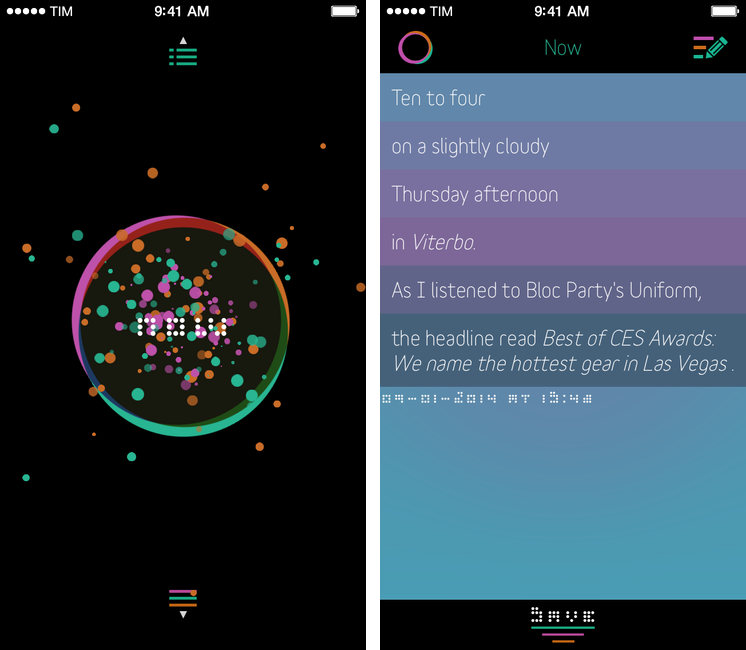
Developed by Brendan Dawes, Kennedy is an interesting new take on mobile journaling focused on “capturing the now” with a $1.99 iPhone app.

Kennedy is a data-oriented journaling app that can save your current location, date and time, weather conditions, what music you’re listening to, and even headlines from the news in individual collections of personal data points called Captures. When you open the app, you’re presented with a beautifully animated “Now” button that, once tapped, will start gathering data from built-in iOS services for location, time, and music; after a few seconds, the “Now” will become a list showing the data points that were captured by the app, such as “Ten past three, on a slighly cloudy Thursday afternoon in Viterbo”. When saved, Captures can be accessed by tapping a list button in the lower portion of the main screen; you can search for specific text in your Captures, as well as edit them at any time.

Read more


The Life Of A Porting House

They take a popular PC or console game - BioShock Infinite is the latest one - and develop and publish a Mac version, historically released months or years later (though that’s not often the case now), earning ridicule and celebration from a frustrated audience long condemned to second-class treatment.

Except these days they’re actually doing a pretty good job.

Eurogamer has a profile on Aspyr Media, the software house that’s well known for porting Windows games to the Mac (and recently iOS). I had no idea they’ve been around for more than 17 years. It would have been interesting to know more about Feral, too.

Permalink

Why Pull-To-Refresh Isn’t Such A Bad Guy

Nick Arnott:

Carr would like to see more developers experiment with new interactions for swipe down gestures, and I cautiously agree. Pull-to-refresh is one of those ideas that seems so obvious in hindsight, but took a talented engineer to think of it. The brilliance of pull-to-refresh is just how well it fit into the existing design. When users try scrolling past the top of a table cell view, they’re trying to view newer content. Pull-to-refresh intelligently extends that scrolling to have an app refresh the content to load any new data. A perfectly logical and intuitive extension of the existing functionality.

This, in response to an article by Austin Carr from December. I especially agree with Nick when he says that fast, reliable data connections that never fail aren’t a reality yet, though they have gotten better over the years.

Pull-to-refresh may seem simple and obvious today, but it was a great design challenge for its inventor back in 2010. Nick makes a lot of valid points about its existence and evolution.

Permalink


Sifttter: An IFTTT To Day One Logger

Sifttter takes the concept of Slogger and applies it to IFTTT by using Brett’s original TaskPaper script. Though it is essentially limited to current IFTTT channels, there is lots of flexibility through IFTTT itself, as well as the opportunity for individual input and customization. I’ve been using this for several months, and am happy to share it here for those who might be interested.

While I decided to avoid tools like Slogger for my Day One journal, I think that the solution Craig put together is fun and nerdy. Not for me, but a good weekend project.

Permalink