Federico Viticci

10804 posts on MacStories since April 2009

Federico is the founder and Editor-in-Chief of MacStories, where he writes about Apple with a focus on apps, developers, iPad, and iOS productivity. He founded MacStories in April 2009 and has been writing about Apple since. Federico is also the co-host of AppStories, a weekly podcast exploring the world of apps, Unwind, a fun exploration of media and more, and NPC: Next Portable Console, a show about portable gaming and the handheld revolution.

The Great Apple Lull

But where Apple has disappointed recently is in novelty, or surprise. Perhaps this is unfair, but it’s real. Apple became the company that delivered “new”.  People got used to hearing about new stuff all the time — iPod nanos, iPhones, MacBook Airs, iPads — and now it seems like it’s been a while. The more people got, the more they wanted. And then you have to work even faster.

What really happened? Steve Jobs spoiled us with two mind-altering substances in quick succession — the iPhone and iPad. Meanwhile, the majority of people who have ever owned Apple products likely bought their first (and second…) during this period. So all of a sudden, a bunch of people who didn’t really pay attention to Apple before — people who never had to boot up a Performa with Extensions off, or upgrade RAM in a Power Mac 8500 — are now expecting some crazy new toy to appear every few years, whether it’s realistic or not.

This is certainly an honest perspective by Dan Frommer. Being the “Apple guy” among my friends, I get regular questions about “what’s really next for Apple” or “when is the watch coming out”. There is a natural tendency for humans to want “new” – imagine by customers who got the iPhone and iPad in the past five years alone.

The software and products Apple released this year are great, but many of them (game controller API, Touch ID, and even iOS 7 itself) seem to suggest Apple is laying the foundation for interesting new things to come.

Permalink

Apple Q4 2013 Results: $37.5 Billion Revenue, 33.8 Million iPhones, 14.1 Million iPads Sold

Apple has published their Q4 2013 financial results for the quarter that ended on September 28, 2013. The company posted revenue of $37.5 billion. The company sold 14.1 million iPads, 33.8 million iPhones, and 4.6 million Macs, earning a quarterly net profit of $7.5 billion.

We’re pleased to report a strong finish to an amazing year with record fourth quarter revenue, including sales of almost 34 million iPhones,” said Tim Cook, Apple’s CEO. “We’re excited to go into the holidays with our new iPhone 5c and iPhone 5s, iOS 7, the new iPad mini with Retina Display and the incredibly thin and light iPad Air, new MacBook Pros, the radical new Mac Pro, OS X Mavericks and the next generation iWork and iLife apps for OS X and iOS.

For Q1 2014, Apple is providing guidance of revenue between $55 billion and $58 billion. Read more


Evernote, Penultimate, and the Adonit Jot Script

From the Evernote blog:

We believe that the best technology experiences happen when software and hardware are built together to achieve a shared goal. Penultimate was already a great handwriting app, but it needed a hardware complement that didn’t exist. In working closely with Adonit for the last 18 months, we’ve co-created the stylus we always wanted: the Jot Script Evernote Edition, the first true precision-point stylus on the market. Together, we’ve developed the first app and stylus combination that finally makes digital handwriting the experience it should be.

Does that sound familiar?

I wish that I was enough of an artist to truly appreciate apps like Penultimate and Paper and use them on a daily basis. The Adonit Jot Script seems like an interesting device, and the new features that have been added to Penultimate (zoom and drift) should make for a more natural handwriting experience. Maybe I should use Penultimate to create sketches site redesign ideas (I already keep website screenshots in Evernote).

Permalink

Logitech Unveils New Keyboard Accessories for iPad Air

From the Logitech blog:

The three keyboard products each feature a built-in Bluetooth keyboard with maximized key size for a fast and fluid typing experience. The Logitech Folio Protective Case offers tablet protection without a keyboard, and is Logitech’s thinnest and lightest folio for the iPad Air. It has a water-repellent skin for two-sided protection against bumps, scratches sand spills, and doubles as a stand, adapting to hold your tablet at the right angle for reading, viewing or playing games.

The FabricSkin Keyboard Folio looks nice. Personally, I’d just love if the old special keys started working again on iOS 7 with my Logitech tablet keyboard.

Permalink

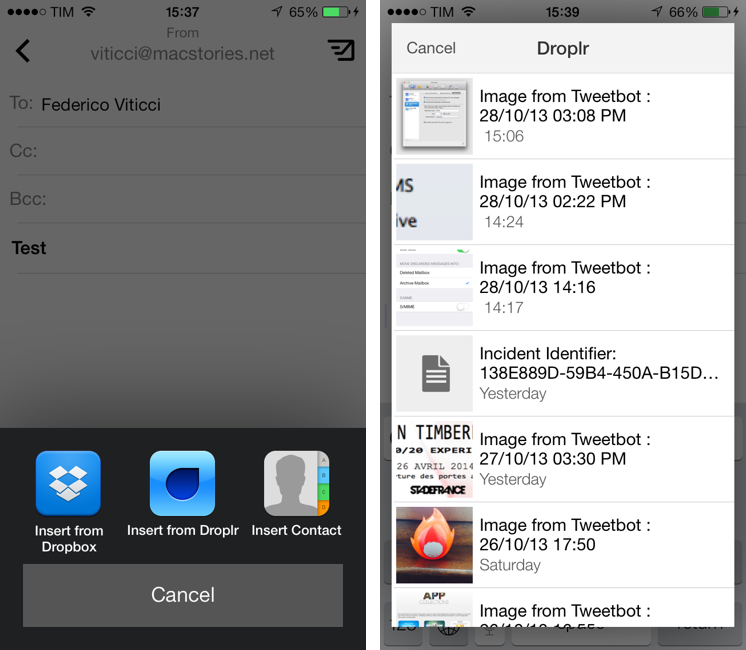
Dispatch 1.3 Gets Unified Inbox, Dropbox and Droplr Integration, Action and URL Scheme Improvements

Dispatch is my favorite third-party email client for the iPhone. Released in June, Dispatch stood out from similar apps as it implemented a powerful feature set that took advantage of native iOS apps to bring inter-app communication and snippets to mobile email. In September, the app was updated with iOS 7 background fetch, message search, and a change to individual message links that allowed iOS apps to open specific messages directly in Dispatch. Thanks other several minor features and details (such as custom salutations and link actions), Dispatch became a fantastic alternative to Apple’s Mail app for users who wanted more out of their iPhone email client.

With today’s 1.3 update, Dispatch gets even more powerful and versatile with the addition of a unified inbox: a feature that I had been asking for since the first version of the app, unified inbox is a new top-level item in the app’s sidebar and it groups all, unread, and starred messages from all your configured accounts’ inboxes. From the All Inboxes view, you can manage and respond to messages as usual, but you can also search and compose a new message without switching to an individual account’s view. Read more


iPad mini For Content Creation

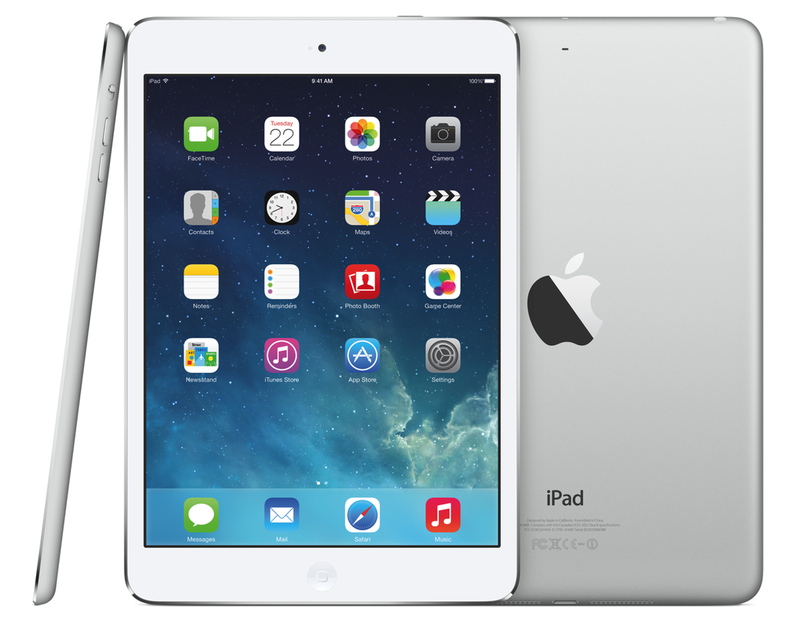
iPad mini

iPad mini

I’ve seen an argument being made in the past week: that the iPad mini is for “consumption”, whereas the iPad Air is for “creation”. This idea has been reinforced by Apple’s announcements: with both iPads now carrying the same hardware, the difference between the mini and the Air comes down to the fact that one is for consuming media and the other for creating content. I disagree. Read more


Serenity Caldwell’s Hands-On With The New iMovie

Apple’s new version of iMovie is sleek and sophisticated both on the Mac and on iOS devices. It retains a lot of advanced features from prior versions, but keeps its interface clutter- and confusion-free for newer users. And it’s added a new avenue for easily sharing movies to your computer and Apple TV. I could go on like this for awhile, but instead of writing a whole review here, I’m going to cut to the juicy parts and focus on twenty new and improved features in iMovie for the Mac and on iOS.

If you’re looking for an article that covers all the changes and new features in iMovie, Serenity has a great overview. I can’t wait to get an iPhone 5s to try the slow-motion editing.

Permalink

iWork and Automation

Peter Cohen:

But this whole issue unveils a more fundamental problem: by neglecting AppleScript support in iWork apps, Apple underserves customers who would otherwise use their products - not just big companies with IT departments, but freelance workers who want to save time, small and medium-sized businesses that benefit from workflow automation tools, and others. AppleScript may be techy, but it’s pretty democratic - anyone who wants to use it should be able to use it.

I don’t buy the idea that, because they are a “rewrite”, the new iWork apps can’t have AppleScript. As Peter says, an automation tool that freelancers and small businesses relied upon is gone, and Apple isn’t providing an alternative. Unless you keep the old iWork apps installed.

Permalink