Federico Viticci

10804 posts on MacStories since April 2009

Federico is the founder and Editor-in-Chief of MacStories, where he writes about Apple with a focus on apps, developers, iPad, and iOS productivity. He founded MacStories in April 2009 and has been writing about Apple since. Federico is also the co-host of AppStories, a weekly podcast exploring the world of apps, Unwind, a fun exploration of media and more, and NPC: Next Portable Console, a show about portable gaming and the handheld revolution.

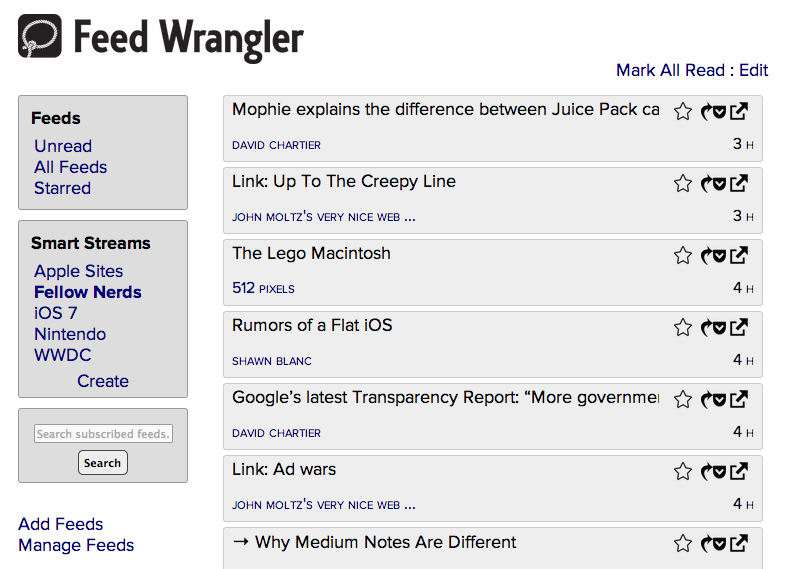
Feed Wrangler: A New RSS Reader With Smart Streams, Filters, Read Later Integration

Feed Wrangler

Feed Wrangler

“I wanted to take a slightly different take on the concept of what an RSS platform should do”, David Smith, independent developer and podcaster, told me about his new product, Feed Wrangler.

Soon after Google revealed they would discontinue their RSS service Reader this July, a slew of companies were quick to announce their existing news reading apps would either support “importing” features to let Google Reader users quickly migrate or, in some cases, be updated with APIs cloning the unofficial Reader one, allowing other developers to tweak their RSS clients for new API endpoints. This is what apps and services like Flipboard, Zite, Digg, and Feedly are doing. Instead, David Smith did something different: he announced he’d be launching an entirely new RSS syncing service, called Feed Wrangler, for an annual fee:

I believe the reason that Google turned its back on Reader and left its users hanging is that they were users not customers. I’m not interested in building a platform designed to attract as many users as possible and then work out how to sustain it later. I want to instead build something that is sustainable from Day 1. I want my customers to feel confident that they can expect this to be around long into the future. I want to build a relationship with them and make something they really, really love.

Feed Wrangler, open to the public today, comes with a website, a suite of native apps, and a $19 annual subscription. Read more


Happy Birthday iTunes Store

Good roundup of iTunes Store numbers (with subsequent inferences) by Horace Dediu.

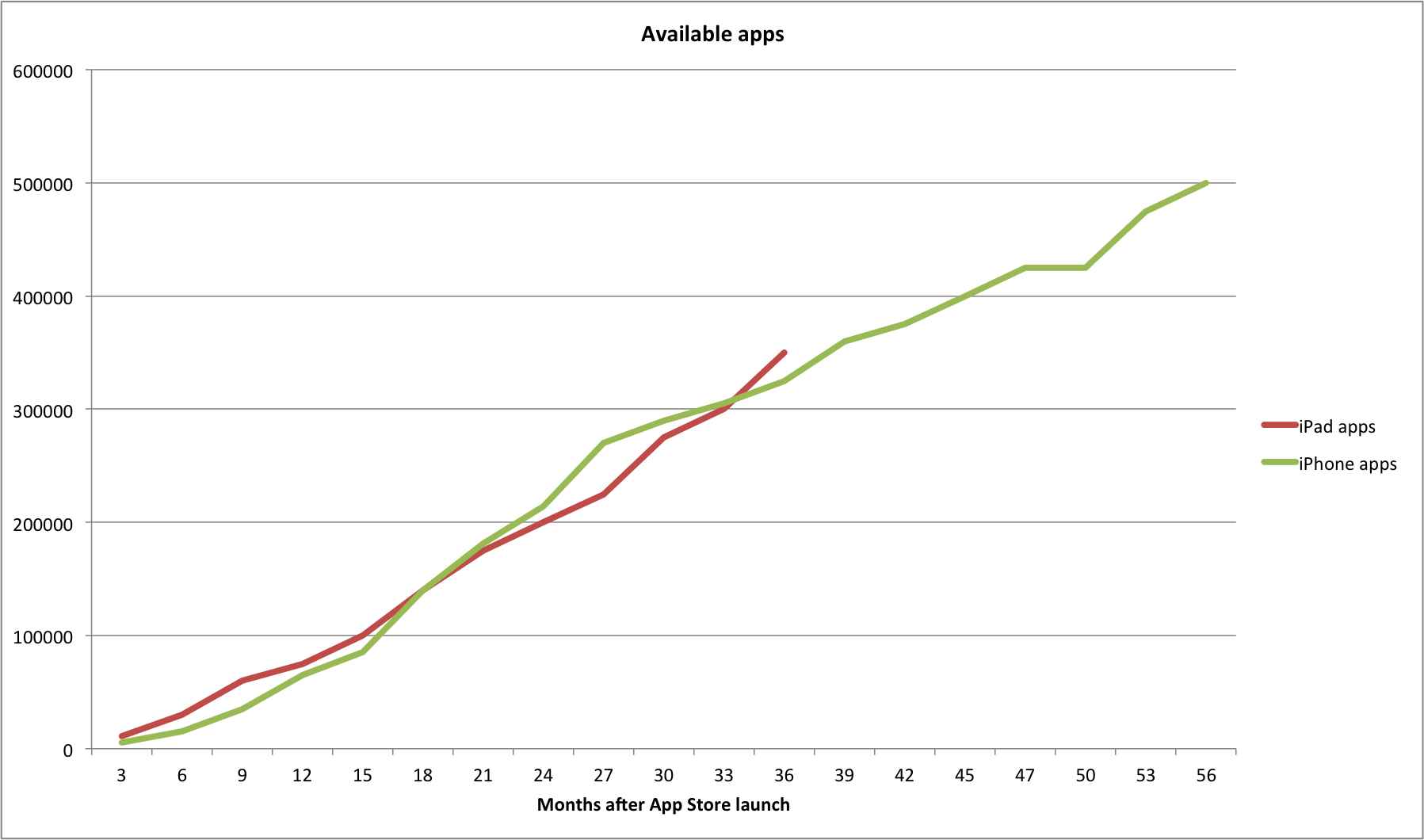
I meant to include the following chart in our Q2 2013 overview, but I didn’t have time to create it. Below, you can see how the 850,000 App Store apps Apple touted last week are divided across the iPhone and iPad after the launch of each device’s App Store (July 2008 for iPhone, April 2010 for iPad).

The increase you see after the iPad’s 30th month corresponds to October 2012 – when Apple unveiled the iPad mini.

(click for full size)

Permalink

Lessons From The Yahoo Weather App

Dan Frommer:

“Do we really need another weather app?” Actually, if it’s better, we do. Imagine if they’d stopped making new search engines after HotBot or new smartphones after the Samsung BlackJack.

I couldn’t agree more.

For free/inexpensive apps, the traditional rules of market saturation allow consumers to more comfortably try new apps; at the same time, annual OS updates enable developers to constantly experiment with more powerful technologies to fix problems consumers didn’t even think they had.

Apps are not refrigerators. With software, the diffusion of innovations is cyclic, and that’s why, as far as the App Store is concerned, editorial curation, smart recommendations, and new discovery algorithms will be key areas of improvement. We should never stop thinking about tomorrow.

Permalink

Google Now Comes To iOS with Search App Update

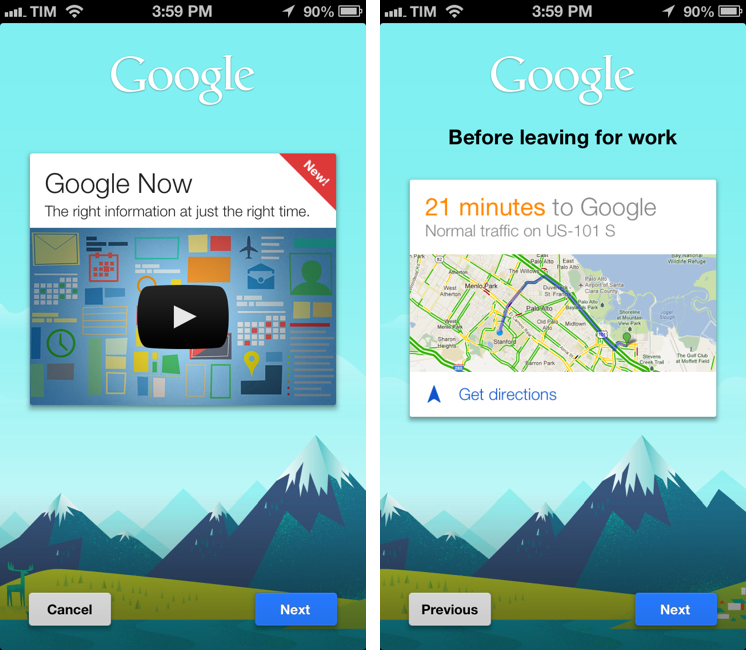
Last month, it was rumored that Google would release Google Now for iOS through an update to its existing Search app for iPhone and iPad. Version 3.0 of the app, released today on the App Store, indeed adds Google Now functionality by displaying weather and traffic data, updates on sports teams and “breaking news”, and more directly within the iOS app. Read more


Why Are Calendar Apps Dumb?

Smart piece by Jason Snell.

There are two key factors involved here: old interface patterns and constant data collection. New designs can be experimented with; parsing data introduces layers of complexity that go deeper than providing a new month view.

Google is working on this kind of technology with Now. It’s plausible to assume Apple is, too.

Permalink


Nebulous Notes 6.1 Gets MultiMarkdown Previews, Full Folder Sync

Nebulous Notes

Nebulous Notes

Nebulous Notes is, in my opinion, the most powerful iOS text editor the App Store has seen so far. Here’s what I wrote last August:

Combining Nebulous’ support for text substitution and cursor position macros has enabled me to achieve a powerful workflow when it comes to writing in Markdown. For instance, I can select words I want to turn into inline links, and have the app automatically wrap them between square brackets, and paste the contents of my clipboard (the link) to the right. To copy Markdown-ready links, I use my own bookmarklet. Or if I want to create a list, I can hit a button that inserts an asterisk and a space. Or again, if I need to create a text file with a format that OmniOutliner recognizes correctly, I can indent items with Nebulous’ $tab and $cursor macros.

I posted a follow-up in October showing the macros I use for faster Markdown editing, and then I noted in a separate post that Nebulous’s preview feature could use some work:

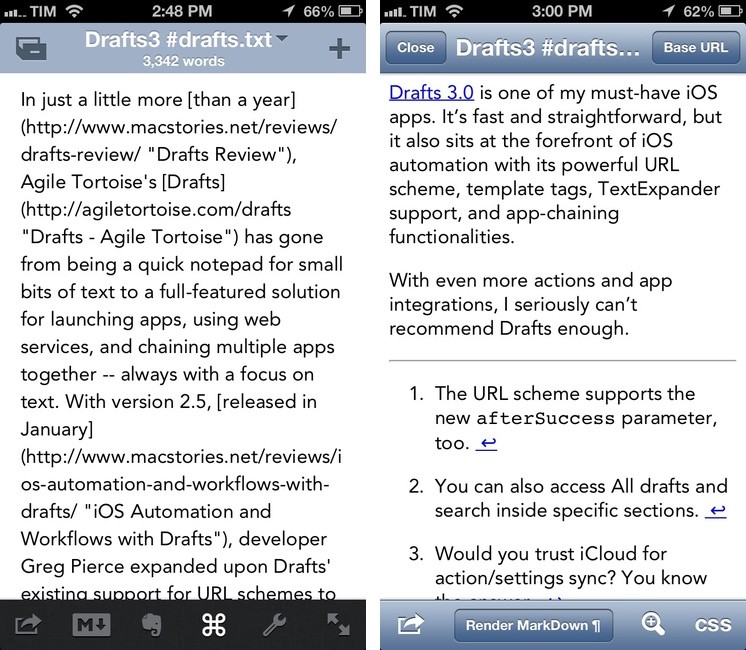
Nebulous Notes‘ own preview generator is far from ideal. You can use your custom CSS to make it prettier, but it still won’t handle footnotes (formatted as once suggested by John Gruber, though Markdown doesn’t officially support them) and the image isn’t centered.

Nebulous Notes 6.1, released today, brings a number of improvements focused on previews and sync with Dropbox. First and foremost, the app now comes with proper MultiMarkdown previews that render footnotes correctly: while images still won’t be resized and centered on screen (this, for me, is an issue on the iPhone’s smaller screen), this new version is undoubtedly a big step forward for those who rely on MultiMarkdown for their daily writing. With the addition of Avenir (in both regular and Next variations), Nebulous Notes previews are now MMD-ready and nice to look at.

The other noteworthy addition is full folder sync for Dropbox. It used to be that, per Nebulous’ own “syncing” mechanism, each text file would have to be manually refreshed to get the latest changes; in 6.1, an entire folder can be synced by tapping the refresh icon in the bottom toolbar. Nebulous Notes is still far from Byword’s no-manual-interaction-required sync, but the change is welcome.

There are other minor improvements and new features in Nebulous Notes 6.1. The iPhone app now has two new one-button toggles to lock the orientation and hide the macro bar; there are new $rline and $lline macros to jump to the end or start of a line; and last, you can now tag files with #hashtags, which I guess can come in handy if you want to search for specific groups of files in that way (I don’t).

Nebulous Notes still needs a complete overhaul in terms of search and sync (and an in-app browser for research purposes would be useful), but version 6.1 is a solid, much-needed update. You can get it now from the App Store.