Federico Viticci

10804 posts on MacStories since April 2009

Federico is the founder and Editor-in-Chief of MacStories, where he writes about Apple with a focus on apps, developers, iPad, and iOS productivity. He founded MacStories in April 2009 and has been writing about Apple since. Federico is also the co-host of AppStories, a weekly podcast exploring the world of apps, Unwind, a fun exploration of media and more, and NPC: Next Portable Console, a show about portable gaming and the handheld revolution.

An Ecosystem’s Uniqueness and Similarities

Over the past 24 hours I’ve seen a lot of words thrown around about Windows 8, ecosystems, operating systems, and what should Apple do in regards to Microsoft’s all-in-one attempt to deny the post-PC era altogether by unifying PCs and post-PC devices in a single OS.

There’s some great commentary about this already out there. What I’d like to briefly touch upon is this: does Microsoft’s approach with Windows 8 confirm a somewhat popular argument – that Apple is ultimately breaking, not unifying, the experience with the distinction between iOS and OS X?

It’s easy to look at the issue from such a perspective. If Windows 8 runs on all devices – let’s pass on Windows Phone 7 for smartphones – then that’s most definitely a real ecosystem, not Apple’s. As iOS and OS X are two different operating systems (different distribution methods, installers, frameworks, GUIs, native apps, names) running on at least three different form factors (the phone, tablet, and laptop), Apple’s “lock-in” strategy comes out defeated in the confrontation against Windows 8.

I don’t want to argue on which OS is “better” (a definition that doesn’t even make sense, right now) or which one will sell more copies; rather, I believe there are a few key areas that several early commenters of the Windows 8 Developer Preview failed to highlight.

In Apple’s vision, separate operating systems can live inside the same ecosystem. The single defining aspect of this vision is the Apple ID, which on iOS devices, Macs, PCs, and web browsers gives you access to:

  • Songs, Movies, TV Shows, Books, Podcasts;
  • Apps;

  • The Apple Online Store;

  • Your iOS device’s location (still free with MobileMe);

  • Email, Calendar, Contact and data sync with MobileMe;

  • Your desktop operating system (with Lion’s Apple ID support).

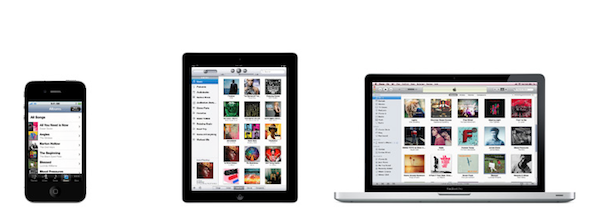
For as much as it’s difficult to keep this all together with a single Apple ID, that’s what it does. Soon, Apple will introduce iCloud to overhaul MobileMe’s syncing capabilities and turn them into seamless pushing of documents, data, and media across devices.

In fact, you may remember Steve Jobs demoted the Mac to just a device back at WWDC. Why? Because the Mac isn’t more “important” than an iPhone or iPad anymore. The ecosystem (and iCloud is a big part of that) is what matters now. Yet this vision doesn’t imply multiple OSes mean separate ecosystems: iCloud is one, and it works on iOS, OS X, Windows PCs, and the web.

Sign of Apple’s appreciation of a single ecosystem can be found in the iWork suite, the Apple Online Store, and even Ping.

In this context, Apple’s strategy isn’t too dissimilar from Microsoft’s. After all, Redmond has got its own set of web platforms, too, and Windows 8 will feature an App Store and other kinds of tablet/PC integration. But there is a key difference that some people, when comparing Windows 8 to “Apple”, surprisingly omit: based on what we’ve seen (that is, the first, incomplete, buggy Developer Preview), Apple’s ecosystem strategy is nothing like Microsoft’s.

Apple wants to build a single ecosystem by keeping its OSes separate. They want to do so because they believe the similarities that keep the ecosystem together are equally important as the uniqueness of each operating system – its strengths and virtues and hardware features.

Today I asked on Twitter: Would Apple fans applaud an iPad that runs both iOS and OS X? By far, the response was “no”. The reason’s simple: iOS was built with multi-touch in mind, whereas touching a Mac’s screen is still awkward (and doesn’t work). In its very own nature, OS X works with clicks and drags, not taps and swipes. Lion epitomizes Apple’s intention to enable some kind of deeper touch interaction with Macs sometime in the future, but the fact still holds true: you can’t touch OS X. iOS and Lion look similar in order to carefully transition the users from a platform to another in the ecosystem stream, but they’re unique and true to their own interfaces, interaction schemes, and destination hardware.

You will be able, however, to touch Windows 8 on a tablet. Or to scroll Windows’ Metro with a mouse wheel on a desktop PC. And here’s where I believe Apple and Microsoft, ultimately, diverge: Apple is creating an ecosystem that works with multiple OSes, provided these OSes run on the devices they belong to. For Microsoft, on the other hand, Windows itself is the ecosystem, and that has to be integrated on every device. There is a subtle difference between ecosystems and OS uniqueness, and you’ll be the judge of which strategy will win over the other two years from now.

There are several ways to build an ecosystem. I don’t know if I’ll like Microsoft’s one, but I’m sure there will be both subtle and key differences to consider when comparing it to Apple’s future strategy.
Apple Releases Mac mini, MacBook Pro EFI Firmware Updates

Two days ago we reported Apple was moving closer to the release and retail distribution of Thunderbolt Displays (announced in July) with an EFI firmware update for the MacBook Air, which improved performances in Lion Internet Recovery and added a number of Thunderbolt-related fixes. Today Apple has released two additional EFI firmware updates for the Mac mini and MacBook Pro.

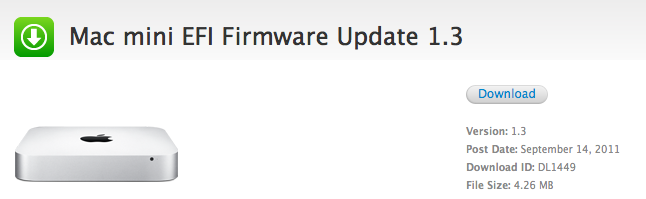
Mac mini EFI Firmware Update 1.3

This update includes fixes that enhance the stability of Lion Recovery from an Internet connection, and resolve issues with Apple Thunderbolt Display compatibility and Thunderbolt Target Disk Mode performance on Mac Mini (mid 2011) models.

Macbook Pro EFI Firmware Update 2.2

This update enables Lion Recovery from an Internet connection and includes fixes that resolve issues with Apple Thunderbolt Display compatibility and Thunderbolt Target Disk Mode performance on MacBook Pro (early 2011) models.

Notably, Apple has enabled Lion Internet Recovery in the new MacBook Pro models introduced back in February. Lion Internet Recovery debuted alongside Lion in July, but it was exclusive to the updated mini and Air models; the feature allows Mac users to reinstall Lion over the air from Apple’s servers.

Both updates are available on Apple’s website or through Software Update. Direct links below. The Thunderbolt Display, priced at $999, is shipping in 2-3 weeks from Apple’s website.


Epson Unveils “MegaPlex” Projectors with iPhone, iPad Support

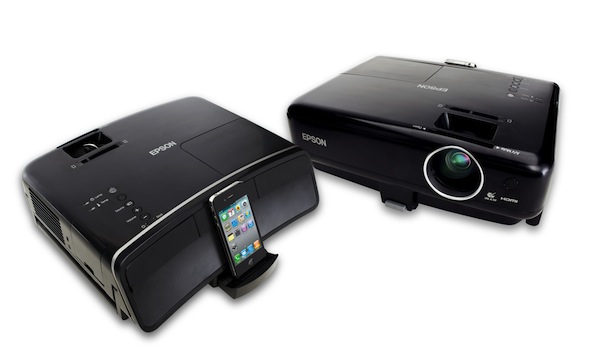
Earlier today Epson officially announced “MegaPlex”, a new line of projectors that are compatible with iOS devices, as well as computers, tablets and other smartphones thanks to standard HDMI, USB, and VGA ports. The MegaPlex MG-850HD and MegaPlex MG-50 come with a rear-facing dock for iPhones, iPods and iPads, enabling users to view their photos and videos and listen to music on a bigger screen. Epson says they want to make it easy for iOS users to browse and display content, charge a device, and share the experience with friends and family. Similarly, the MegaPlex projectors can accept media from a variety of non-Apple devices.

MegaPlex is the ideal big screen projector for the new digital lifestyle. Enabling consumers to share multimedia content from their iPod, iPhone, iPad and a wide assortment of other digital devices, MegaPlex is changing the way movies, gaming, slideshows, presentations, music, and more are viewed by eliminating the confinement of a smaller screen,” says Jason Palmer, product manager, Epson America. “With the high-quality, versatility and portability of Epson’s MegaPlex solutions, consumers can literally dock their iPad, iPhone or iPod, click and immediately share multimedia content on a big screen wherever they may be.

Both projectors are powered by 3LCD technology to deliver “vibrant colors”, though only the MG-850HD offers 720p video output at 2,800 lumens. The MegaPlex MG-50 will deliver 540p video and up to 2,200 lumens of color and white light output. Both systems feature two 10W stereo speakers, and a microphone.

The Epson MegaPlex MG-850HD and MegaPlex MG-50 will be available later this month through select retailers and Epson’s online store at $799 and $699, respectively.


News.me iPad App Drops Subscriptions, Goes Free

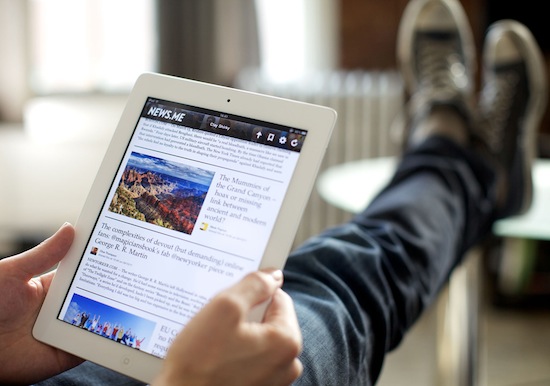
We first covered News.me, a “social news reader” developed by Betaworks, when it first came out in April, aiming to take on other “social magazines” for the iPad like Flipboard and Zite. Unlike its competitors, News.me was based on an interesting business model: the app would let you “see” what your friends were reading, at a price. Built with Apple’s subscriptions for iOS apps, News.me allowed users to subscribe to access the app’s social-reading functionalities. From our review:

Like I said it’s difficult now to say whether News.me’s smart filtering system really works or not, but I’ve noticed a couple of interesting factors that might increase the quality of the social aggregator. For instance, you can swipe right on a story in your timeline to “mute” it and tell the app to hide it forever, or check out a “people who read this story also read” section at the bottom of popular articles. This section aggregates stories from the same source that are linked to the one you’re reading, and should provide a meaningful way to discover news that might interest you. Another feature I love is the importance News.me gave to attribution: you can tap on a writer’s name to open a popover menu that allows you see his bio and follow him on Twitter. Unlike Flipboard, News.me got attribution absolutely right.

With an update posted today, the News.me team has announced the iPad app is now completely free (no subscriptions), and the company will be run separately under Betaworks.

Over the past year, News.me has been incubated within bitly. Today, we’re pleased to announce that News.me has officially spun out of bitly into an independent company under betaworks. As I wrote earlier this year, with News.me we are seeking to rethink and reinvent the way that people discover news; I’m very excited that News.me is now set up and running as a standalone company with the resources it needs to fully pursue that vision.

The new version of News.me for iPad (1.2) doesn’t seem to introduce any new feature aside from free access without subscriptions. There’s no doubt this new model will help the app gain more readers, so we’ll make sure to check back in a few weeks to see how user adoption can contribute to News.me’s social graph. You can get the app for free on the App Store.


iMessage for OS X To Be Integrated with iChat?

According a series of code strings found by MacRumors in the current version of iChat for OS X Lion, Apple may be building support for the new messaging system first announced at WWDC for iOS 5 devices inside its IM desktop application. The properties found in iChat’s code refer to “read” and “delivery” receipts, two iMessage features that inform users when a message has been read or simply delivered to another device, respectively. These code strings can’t be found in earlier versions of iChat, apparently, and MacRumors believes they can relate to iMessage support being built inside iChat for Lion.

The “timeDelivered” and “timeRead’ fields indicate the tracking of delivery and read receipts for instant messages. These features, however, are not supported in any of iChat’s native messaging protocols, while the same features are offered in Apple’s iMessage protocol. These properties were also not present in previous versions of iChat prior to OS X Lion. We believe the only reason Apple would have added these properties was to build in cross compatibility with their new iMessage protocol.

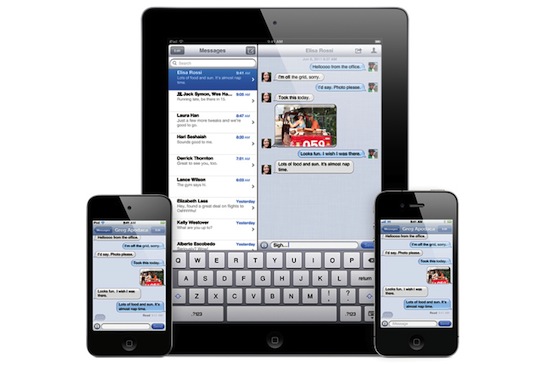
Ever since its introduction in June, many have wondered whether Apple could support iMessage, a free messaging protocol for iOS devices, on the desktop as well, allowing iOS users to send text messages to Mac users in their Address Book, and vice versa. Unlike FaceTime, iMessage works on both WiFi and 3G, but similarly to Apple’s video-calling solution it’s completely free of charge and works with email addresses and phone numbers – if an iOS user is already in your Address Book and he’s using the same phone number or email, iMessage will work. The service will be iOS 5-only when it launches this Fall, and Apple hasn’t revealed plans for OS X or Windows versions yet. iMessage has been compared to other free messaging solutions, like RIM’s BlackBerry Messenger, or Google’s Huddle.

A few code strings are no confirmation of Apple’s plans to build iMessage for Mac, but if history is of any indication, it would make sense for Apple to support its new app on multiple platforms. Whereas iChat as an app is still nowhere to be seen on iOS, FaceTime as a service was ported to the OS X and later built into every new Mac. For this reason, many are speculating iMessage could follow a similar trend, perhaps as a standalone app, or a service plugin for iChat.

In the past months, a number of fan-made mockups have tried to imagine what an hypothetical iMessage for Mac would look like. Just like the theories floating around, some imagined the service being supported in existing apps like iChat or Mail, others created videos showing iMessage working as a separate app for effortless Mac-iOS communication. Below, we’re embedding an iMessage concept by Jan-Michael Cart.

iMessage is currently available for iOS 5 beta testers, and it’ll publicly launch with iOS 5 and iCloud this Fall.
Read more


Apple Has The Thinnest Smartphone

Apple Has The Thinnest Smartphone

TechCrunch reports the UK’s Advertising Standards Authority has ruled Apple, and not Samsung, has the world’s thinnest smartphone with the iPhone 4:

The ASA ruled that since the iPhone’s thickest point is thinner than the Galaxy S II’s thickest, Apple has the right to continue claiming the title. Samsung likely isn’t too pleased — save for a single thick bit, their GSII is mostly thinner, and Apple gets to maintain their positioning (in the UK at least) as purveyors of slim, sleek design.

This is a minor detail in the sea of ongoing litigations and lawsuits between Apple and Samsung, but a curious piece of information design-wise. The Galaxy S II is thinner than the iPhone 4 on most of its surface (8.71mm at the thinnest points, versus the iPhone’s 9.3mm), but the thickest point at 9.91mm (see photo) makes sure that the iPhone 4 can still claim to be the thinnest smartphone. The ASA’s interesting choice is that they didn’t measure by average thickness, they simply looked at the thickest point of the device.

Apple has touted the iPhone 4 as the world’s thinnest smartphone in its commercials and magazine ads.

Permalink

New iPad Factory in Brazil Is “Ready”, Already Making iPads for December

According to a report by Brazilian website UOL, the Brazilian Minister of Science and Technology, Aloízio Mercadante, has confirmed during a hearing with the Commission of Economic Affairs that the new factory in Jundiaí is “ready”, and already making iPads that will begin shipping in Brazil starting this December.

At first many doubted, but it will be the first time that the company will produce iPads outside Chinese territory. We are taking a big step for digital inclusion in the country,” he said. Mercadante also said that the federal government will announce in the coming days to invest in a big factory of games in the Manaus Free Zone.

Originally scheduled for November, the availability of iPads made in Brazil is the result of a joint effort by the Brazilian government and Foxconn, maker of several Apple devices and peripherals including the iPhone and iPad. A first report from April suggested Foxconn would invest $12 billion in this new factory, with iPad production starting in late August / early September – the timeline seems correct. Additionally, it was reported in June Foxconn had already hired 175 engineers and sent them to China for training on how to build iPads.


Apple Developing “Scanner” iOS App with OCR?

9to5mac reports “a source at Apple” informed them the company is working on a native “Scanner” app for iOS devices, which would allow users to use an iPhone, iPod touch or iPad camera to scan documents or business cards on the go, and have them recognized & exported as PDF, or to other iOS apps like Pages and Contacts. The report says “it isn’t certain” when this app will be released and if it will be directly bundled into a future version of iOS, however the website suggests such scanning functionality would require a better camera other than the existing 5 MP one on the iPhone 4. The iPhone 5 is widely expected to have an 8 MP camera.

The user opens the app and holds the iPhone over the document or object they want scanned.  They then snap a picture of it.  Apple’s on-board software then resizes the image to ‘letter’ or business card, A4 or whatever depending on original document.  Resizing includes aligning edges that get skewed by a single scan point rather than traditional scanning methods.  The user can then manually change the size of the document or the use.

This “Scanner” app would also use either local / cloud-based OCR (optical character recognition) to separate images from text and make scanned text available for copying and pasting across iOS applications. Notably, iOS comes with an “Open in…” menu that enables third-party and native apps to communicate with each other’s supported documents and file types – 9to5mac does suggest the Scanner app would be capable of scanning a business card, and automatically add a new entry to the Contacts app.

There are a number of apps in the App Store that can turn iOS devices into portable scanners, some of them we’ve reviewed on MacStories before. Apple has also been granted a series of patents related to a possible scanning functionality for mobile devices.


iOS 5 Beta 8 on Friday, GM Next Week, France Telecom CEO Suggests iPhone 5 Launching October 15th

Two new rumors posted earlier today seem to suggest Apple is getting ready to release the last seeds of iOS 5 to developers, targeting an early October launch for the new OS, alongside the next-generation iPhone.

According to BGR, “a trusted source” claims Apple will release the eighth beta of iOS 5 this week, on Friday, with the Golden Master build to follow on or around September 23rd. Yesterday, a report claimed Apple will send a final version of iOS 5 to assemblers between September 23rd - 30th so that the iPhone 5 will come pre-loaded with iOS 5. It is believed iPhone assemblers in China are waiting for a final version of iOS 5 to install on the devices – as with new Macs released this summer with Lion pre-installed, Apple might want to release a new iPhone already running iOS 5 out of the box. BGR has a solid track record when it comes to pinpointing iOS beta releases, and the website also suggests Apple will requests “technical acceptance” of iOS 5 GM to carriers by October 5th. It is well-known carriers get exclusive versions of Apple’s iOS before the final release in order to test features like voice calling, texting, Internet browsing and perhaps even FaceTime on their networks.

Meanwhile, France Telecom CEO Stéphane Richard [Mac4Ever via MacRumors] has suggested that, based on what they heard, the iPhone 5 should launch on October 15th. October 15th is a Saturday – that would be unusual for iPhone releases, which usually happen on Thursdays or Fridays. Furthermore, previous speculation hinted at an iPhone 5 launch on October 7th - 14th – it is not clear whether Richard is referring to general date for the widely believed mid-October timeframe, or if he’s really heard something about an October 15th European launch.

It’s also worth mentioning that, if the iPhone 5 comes with iOS 5 pre-installed, the new OS would need to come out days ahead of new hardware alongside iTunes 10.5, currently in beta and required to sync iOS 5 devices with a Mac or PC. In the past, Apple released new versions of iTunes and iOS ahead of new hardware to get customers ready for the upgrade, and allow journalists/reviewers to restore the OS on a review unit if needed.

Hypothetically, based on this recent speculation, Apple could follow this timeline:

  • iOS 5 beta 8: Friday, September 16th
  • iOS 5 GM: Friday, September 23rd

  • iPhone 5 pre-orders: Friday, September 30th [link]

  • iOS 5 launch: October 5th - October 7th

  • iPhone 5 U.S. release: October 7th - October 14th [link]

For a timeline of iPhone 5 news and speculation, check out our rumor roundup and retrospective.

Update: AppleInsider is now reporting iOS 5 could come out on Monday, October 10th, based on information received from a source at AppleCare division.

Apple has reportedly informed its AppleCare division to expect an influx of iOS-related inquiries from customers beginning Monday, Oct. 10, perhaps signaling when the company plans to release iOS 5 to existing device owners.

For instance, one person familiar with the matter said his local AppleCare call center has been told to expect an eightfold increase in customer calls on that day, and that staff are being advised ahead of time for the increased traffic.

Assuming the October 10th date is correct, the iPhone 5 wouldn’t come out on October 7th, as some speculated. However, it wouldn’t be the first time Apple published a major iOS update on a Monday. Alongside iOS 5, Apple is also expected to publicly release iCloud, and OS X 10.7.2.