Federico Viticci

10804 posts on MacStories since April 2009

Federico is the founder and Editor-in-Chief of MacStories, where he writes about Apple with a focus on apps, developers, iPad, and iOS productivity. He founded MacStories in April 2009 and has been writing about Apple since. Federico is also the co-host of AppStories, a weekly podcast exploring the world of apps, Unwind, a fun exploration of media and more, and NPC: Next Portable Console, a show about portable gaming and the handheld revolution.

Steve Jobs, Not A Good Entrepreneur [Video]

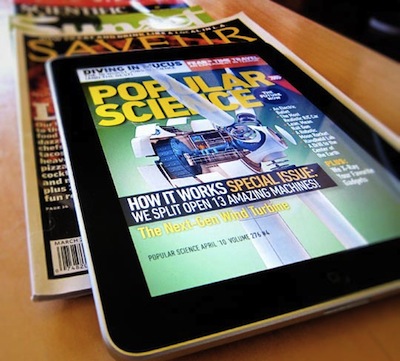
The BBC has this show, called Dragon’s Den, in which entrepreneurs pitch their business ideas trying to get multi-million investments from “Britain’s top brains”, investors looking for the next big thing to believe and spend money in.

Steve Jobs? He’s not good enough for the show. The BBC has created this fake video of Jobs pitching the iPad to the Den, with investors coming up with their reasons to “stay out” of Jobs’ business idea. It’s kind of hilarious, especially when an investors says “I’m out” and Jobs seems to be very sad about it. Check out the video below. [9to5mac via Youtube]


Google Planning Digital Newsstand, Apple To Launch Subscriptions “Early This Year”

According to the sources close to the Wall Street Journal, Google is in talks with major publishers like Time Inc., Condé Nast and Hearst Corp. to discuss the launch of a digital newsstand for magazines and newspapers that would run on the Android mobile operating system. The move, still in its early planning stages, would be Google’s direct answer to Apple, which has long been at the center of digital newsstand rumors and iTunes recurring subscription speculations. Google’s newsstand, either based on the existing Market or a new infrastructure, would allow Android users to read digital content on the go. Rumors point out to Google willing to share subscribers’ data with publishers. Read more


Ecoute 2.0 - Small, Powerful Alternative to iTunes

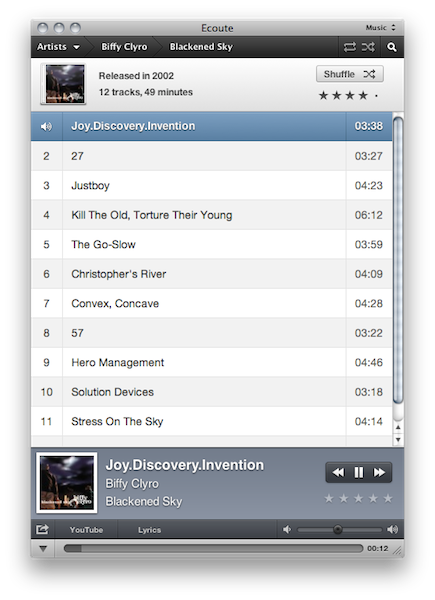
Just like any other alternative to iTunes on the Mac, Ecoute has been around for a while. Since Apple shipped its very own music player and digital hub years ago, many developers have tried to come up with original solutions for all those who couldn’t stand iTunes. And as iTunes grew bigger to accommodate apps, books, podcasts and just about anything you can put on an iPhone or iPod, thousands of users and even more developers started feeling the need of a minimal music player, again. What began as a hobby for a limited number of users (“let’s not use iTunes for music”) evolved into a real segment of a market willing to keep iTunes closed to listen to music libraries. And I understand the position of the users and developers that first thought about jumping out of iTunes: why would one need to stare at iTunes and all its features and options all the time, when you just need to listen to some music?

In spite of iTunes becoming many people’s less used music player over time, the apps that have surfaced in the past years that allow us to just play music are, in most cases, nothing but standalone iTunes controllers that strip away the clutter and focus on albums, artists and songs. They fetch a user’s library, take the music out of it and display it into a minimal, sometimes non-existent, user interface. Coversutra, Bowtie: they are two popular iTunes controllers for OS X that have gained support for other features such as last.fm scrobbling and iOS remote streaming. But in the end, they rely on iTunes.

So did Ecoute 1.0, and so does the just-released Ecoute 2.0. Ecoute is a well-known music player for OS X that plays music from iTunes, but doesn’t require you to keep iTunes running in the background. It automatically finds a user’s iTunes library file and takes content from there. It comes with a neat desktop widget for quick play / pause actions, but it’s also got its dedicated interface. Ecoute 2.0 depends on iTunes, but it adds great value while giving you a reason to stay out of Apple’s software at the same time. Read more


Monetizing The iPhone’s Photo Apps

Monetizing The iPhone’s Photo Apps

The Wall Street Journal has a piece on the difficulties faced by developers when trying to make apps like Instagram, Hipstamatic and PicPlz profitable. Speaking of Hipstamatic:

Since Hipstamatic’s launch in December 2009, the $1.99 app has been downloaded more than 1.7 million times. The app allows users to choose different lenses, films and flashes. The firm charges 99 cents for a package of add-ons such as infrared.

The company generates a third of its revenue from those extras, says CEO Lucas Buick, and is profitable. In September, it launched a service where users can send in photos and pay a fee for printed copies.

The app has been named “iPhone App of the Year” by Apple and it’s got lots of additional stuff and features to unlock with in-app purchase. The app is a one-time $1.99 purchase, but developers can keep the money coming in with updates and new items to buy. So far, it seems like this business model is working.

Permalink

Say “Cheers” With IKEA’s iPhone App

Feeling a little bit old with all that wooden furniture and lack of digital goodness, IKEA decided to develop apps for the iPhone. That’s right, but Swedish retail chain’s first attempt to enter the App Store market is far from being a furniture catalogue app. Instead, the developers at IKEA created an app to have a toast with someone and share the moment on Twitter, Facebook and the service’s online gallery.

The app, called IKEA Skal! (which stands for “Cheers”) lets you choose between different glasses (perhaps sold at IKEA?) and a drink you’d like to toast with (beer, wine, champagne). On screen, you’ll see the glass and the background captured by your iPhone’s camera – Skal works well with the iPhone 4 but it’s a little slow on the 3GS. As you’re ready with your glass and you like the background for your toast, find someone to share the moment with and toast with your phones. The app will play the sound of glasses, exchange contact information automatically and even snap a picture of the toast as it happens. You can then share the pic on Facebook and Twitter, send it to IKEA’s photo gallery and even browse other people’s toasts.

See? IKEA can make pretty cool apps. Skal is available for free here. Check out the promo video below. Read more


Turn Your iPhone Into A Vintage Polaroid

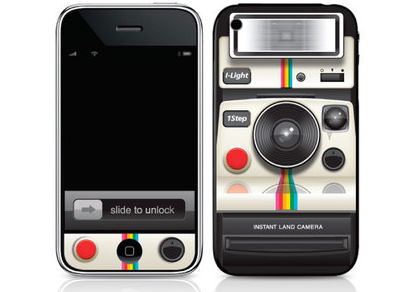
If your iPhone, besides being a phone, also happens to have become your best camera and you fancy some old-style gadgetry in your pockets, perhaps you’d like to consider Ryan Astle’s Photoroid skins.

Available in iPhone, iPad, Blackberry and Evo models, the skin costs $15 for the iPhone and $20 for the tablet. It’s made of 2 pieces of art for the front and back of the iPhone, it really resembles an old Polaroid camera and, personally, I think it’s got something that reminds me of the Instagram icon as well.

With all these apps that apply vintage effects to your photos (and videos, too), the Photoroid skin seems appropriate. [Gizmodo via Infectious]


The European Commission Has Decided: Universal micro-USB Charger For Smartphones

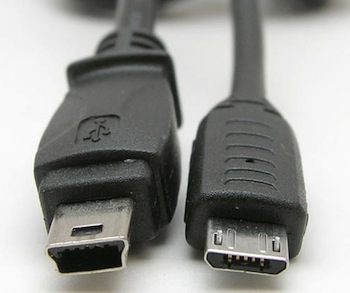
Back in August, the European Commission formally approved a policy that required all smartphones to adopt a standard, universal micro-USB charger instead of dedicated ones shipped by all major smartphones companies such as Apple, LG, Nokia and Samsung. Today, the European Standards Organization Cen-Cenelec-Etsi officially approved the request from the European Commission (Ansa news agency, italian) and published the standards that smartphones makers will have to adopt in Europe starting January 2011.

The European Commission is now expecting the first generation of standard micro-USB-enabled smartphones to become available “in the first months of 2011”. This includes devices from the 13 companies that signed the agreement in 2009: Apple, Motorola, LG, Nec, Nokia, Samsung and Sony Ericsson are among those companies.

Put simply, this change will allow users to charge their smartphones using a single, universal micro-USB connector. According to the European Commission, this will lead to a better user experience and less environmental damages thanks to the lack of multiple and different chargers.

It is unknown whether Apple will introduce a micro-USB charger in the next generation iPhone and iPad 3G (data-enabled devices are included in the new policy, too), although it seems likely at this point. Apple might as well delay the availability of universal chargers in its devices until 2012, but the European Commission seems to believe all major companies will agree to the policy and update their charging systems. If Apple will have to introduced a micro-USB charger in Europe, we speculate that the U.S. market will face a similar change as well.


Is Skype The Biggest Threat To Apple’s FaceTime?

Last night, Skype released a major new version of their iPhone and iPod touch client. Version 3.0 of the Skype app, released just in time for New Year’s Eve, adds video calling to all iOS devices with the possibility to run the app in compatibility mode on the iPad and receive video calls on screen. The iPhone app allows you to receive and initiate video calls both on WiFi and 3G, it’s compatible with iPhone 4 / iPhone 3GS and iPod touch 4th gen and, when on 3G, consumes around 3.4 MB of data per minute. Previous tests showed that Apple’s FaceTime technology also consume 3 MB per minute. Skype 3.0 also lets you call desktop users on Mac and PC and check on their computer screens (sounds useful for remote troubleshooting or networking), requires iOS 4 and supports both portrait and landscape modes.

The latest Skype update is, put simply, a huge win for the millions of Skype users out there who have an iOS device always connected to the internet. We could argue on the 24/7 internet availability on devices like the iPod touch and the iPad WiFi, but there’s no doubt the new Skype for iOS is the closest thing Apple ever had to a FaceTime competitor. Forget the 3rd party apps in the App Store that allow video calls: this is Skype. Which leads me to consider Apple’s position in regards to this update: Skype lets you see your friends wherever you are, no matter what kind of connection you’re on. Apple, due to technology limitations or AT&T’s pressure, only lets you FaceTime on WiFi. But looking at the big picture, that’s not really what Apple should fear. Read more


Update: A Minimal App For Simple Sharing

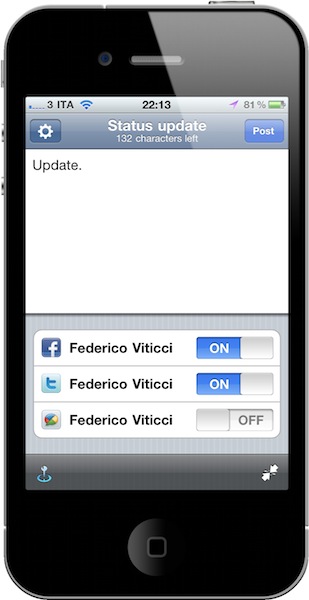
On our iPhones and iPads, we run Twitter clients. Be it Twitter, Twitterrific, Osfoora or some beta app no one knows about, many of us rely on these standalone apps to share links, thoughts and comments on Twitter. We do the same for Facebook (even if there’s no official app for iPad, third party clients are well known in the App Store), LinkedIn and other social networks. The problem: some would like to have the possibility to forward some status updates to other social networks they’re subscribed to (and likely have some friends on) without having to copy the message every single time in a new app. A few people I know use hashtags on Twitter to beam a tweet to Facebook or Google Buzz, but I don’t like the option. Next time I want to share the same message on Twitter and Facebook, what should I use?

Update is a neat $0.99 utility for iPhone which lets you do one thing: write down a status update and choose the social networks you want to send it to. Everything happens in one screen. That’s it. Once you’ve authorized the supported services (Twitter, Facebook, Google Buzz, LinkedIn and Hyves) in the settings, you’ll get a simple on/off menu in the compose window to choose the active services. Type, and share. You can tell the app to grab your location data or shrink URLs contained in the message. You can’t attach pictures, but I guess this is one of the non-features that make Update a great app: it’s simple and focused on text messages. If you need more, go download a dedicated client.

I like the developers’ approach with Update. It’s available at $0.99 in the App Store, and even if it’s not the app for everyone I surely appreciate its simplicity. Recommended.