Federico Viticci

10804 posts on MacStories since April 2009

Federico is the founder and Editor-in-Chief of MacStories, where he writes about Apple with a focus on apps, developers, iPad, and iOS productivity. He founded MacStories in April 2009 and has been writing about Apple since. Federico is also the co-host of AppStories, a weekly podcast exploring the world of apps, Unwind, a fun exploration of media and more, and NPC: Next Portable Console, a show about portable gaming and the handheld revolution.

A Cloud Over The Mac App Store

Wayne Dixon over at Macgasm, about how app data will be backed up with the Mac App Store:

So this leads me to wondering something: how does the application’s data get backed up? Right now within the iOS App Store, your data is backed up when you sync your iOS device and this information is then backed up again when you backup your computer (you do backup your computer, right?). But if your application data is just stored locally and you do have to do a re-install of your computer, even though you are able to download the software itself again, your data may not be easily placed in the correct location, even with backups.

When Apple announced the iOS-like model for the desktop we didn’t really wonder much about how the backup model was going to be carried over to the Mac. Is it going to be carried over at all? On the current version of OS X (and on previous iterations as well) each app stores its data in various folders on the hard disk. Usually it’s the “Application Support” folder inside a user’s library, but preferences, caches and databases may be stored somewhere else. Not to mention the possibility to manually select a different destination for the main database in some applications, think of 1Password, Candybar and DEVONthink. Is the Mac App Store going to change this? Read more

FaceTime In The Middle Now Possible With A Jailbreak Hack

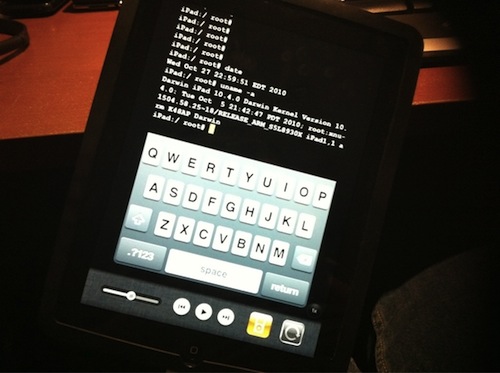
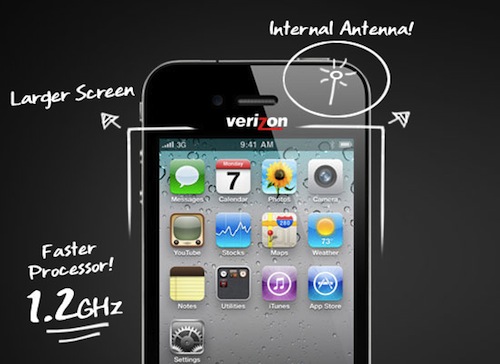
Whether it’s been blocked by carriers or Apple, FaceTime in the Middle East has been a highly discussed subject on tech blogs in the past weeks. First silently pulled from Apple’s website, then confirmed, then tested on Macs and iPods, the lack of FaceTime in those countries has pissed off quite a few users.

Now the story seems to be finally over with a hack available in Cydia that solves a problem caused by…we don’t know who caused it. The hack is called “FaceTime Hacktivator”, is developed by the iPhoneIslam team and it’s available for free in Cydia. Read more


Steve Jobs Is “Back to the Jet”

Steve Jobs is back in the air. Well not the Air (which apparently is doing great), but literally in the air with his private jet. Taking a look at Apple’s 10K form for fiscal year 2010, Fortune noticed a $93,000 reimbursement to Steve Jobs for private jet expenses in Q4 2010, namely fuel and pilot salaries.

Private jet expenses accounted to only $12,000 in Q3. Clearly Steve traveled a lot during the last quarter, and we can only speculate about the people he met and the deals he closed.

Read more


How To Setup A Home Surveillance System Using FaceTime

How To Setup A Home Surveillance System Using FaceTime

Run this script on your Mac when you leave the house, you can call your Apple ID from your iPhone 4 phone number. The script will auto answer the FaceTime call, allowing you to check in on things. When you hang up, FaceTime will quit, and the script will continue to listen for incoming calls. When you get home, stop the script and FaceTime will no longer auto-answer your calls.

Clever.

Permalink

Gmail Mobile: Snappier on iOS 4, Still Featuring Fuzzy Graphics

If you use Gmail as your default email client and you happen to use it on your iPhone browser as well (because quite frankly, it’s just better than Mail.app) you may have noticed that Google rolled out a few changes in the past weeks.
The Google Mobile team made Gmail snappier with a much smoother scrolling on iOS 4 and managed to fix that weird issue with scrollbars continuously moving when scrolling the page. Gmail mobile has fixed scrollbars now. Yay. Read more


The Early Edition 1.3: More Social, With More Multitouch

Four months ago, in my review of The Early Edition for iPad:

The concept behind The Early Edition is simple and effective: it’s up to you to build your personal newspaper, which unlike every RSS application out there doesn’t just give you a list of the latest news on the Internet. It really resembles a real newspaper, with titles, subtitles, summaries, pages and the layout you’d expect from a paper edition. The app comes with a set of built-in sources (ranging from Politics and Business to Technology and Apple) but you can specify the websites you want to read by importing feeds from Google Reader, single sources and OPML files.

The app hasn’t changed much since then, but it’s going to be a lot better soon. The Glasshouse Apps developers have been working hard on making The Early Edition a reading app capable of staying up to the game stepped up by Flipboard and Pulse, even though The Early Edition came out first. There’s no doubt Flipboard changed the landscape of reading apps on the iPad, and users’ expectations as well. Read more