This Week's Sponsor:

Turbulence Forecast

Know before you go. Get detailed turbulence forecasts for your exact route, now available 5 days in advance.


Posts tagged with "app store"

VLC for iOS Returns To The App Store

After a two-year absence, popular video player VLC is returning to the App Store with a new app for the iPhone and iPad. The new VLC for iOS will be available later today (it will start propagating at midnight in the various international App Stores) as a free download.

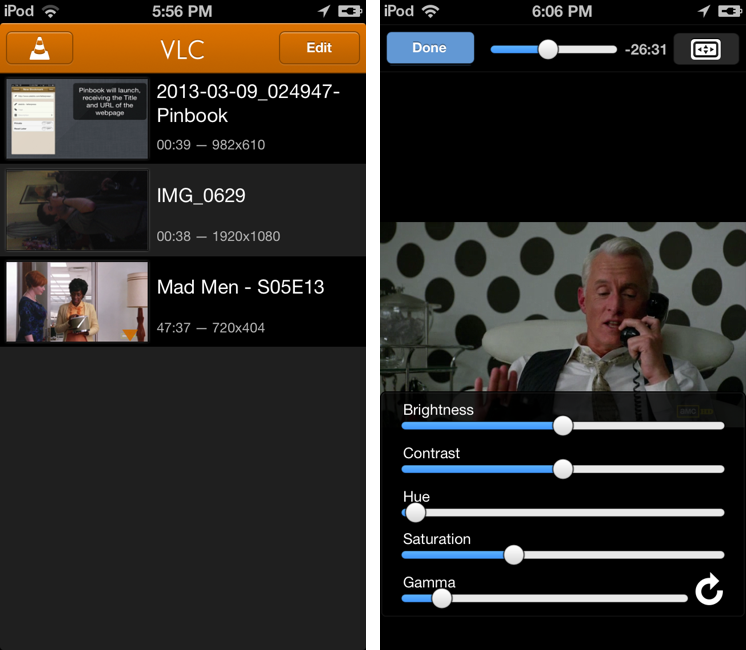
I’ve been able to test the new VLC for iOS for the past few weeks, and, in terms of visual appearances, the app isn’t too dissimilar from the old version that was available on the App Store in 2010. A main screen lists all your media with thumbnail previews, and you can tap on an item to start playback in a full-screen media player. However, in spite of a UI reminiscent of the old version, VLC has been completely rewritten to use modern audio and video output modules, multi-core decoding, and support for any file type supported by VLC on the desktop. In my tests, the app was able to quickly start playing any video file that I threw at it, such as .mp4 and .mkv files. Read more


Apple’s Answer on Upgrade Pricing

David Smith wonders whether today’s release of Logic Pro X as a new app sold at full price is the best explanation of Apple’s stance on upgrade pricing to date:

I’d say that this is the best indication of Apple’s intentions and expectations for the App Stores going forward. I wouldn’t expect anything like upgrade pricing to appear in the Stores. It seems like the message is to either give your upgrades to your customers as free updates or to launch a new app and charge everyone again. Neither approach is perfect but I am now very confident that this is the going to be the situation for the foreseeable future.

This is an issue that I’ve long debated with my teammates and developer friends. As someone who’s used to seeing upgrade pricing in Mac apps sold outside of the Mac App Store, I would welcome the addition of built-in upgrade pricing to the App Store. However, on the other end of the spectrum, our Gabe Glick neatly summed up Apple’s possible motivations last year:

Developers and longtime computer users may be used to the shareware, time trial, pay-full-price-once-upgrade-cheaply-forever model of buying and selling software, but regular people, the mass market that Apple continues to court first and foremost, aren’t. Adding demos (“I thought this app was free, but now it’s telling me I have to pay to keep using it? What a ripoff!”) and paid upgrades (“Wait, I bought this app last year and now I have to pay again to keep using it? Screw that!”) would introduce a layer of confusion and make buying an app a more arduous process, which would result in people buying fewer apps.

Today’s release of Logic Pro X is just another data point and it may not necessarily be conclusive, but I believe it further suggests how Apple sees the process of releasing major upgrades to Mac apps. It’ll be interesting to see if Apple will ever do the same for its (cheaper) iOS apps, though.

Permalink

The Next Five Years of App Store

Five

Five

A great man once said that we should look up at the stars, be curious, and keep asking questions. With the App Store now a five-year-old business, I would like – allow me to paraphrase that great man for a much more trivial endeavor – to look ahead and trying to imagine what the next five years of the App Store could look like. I already wrote my in-depth App Store retrospective last year, and I touched upon the changes introduced with iOS 6 back in September 2012. Now, it’s time to think about what’s next. The past can be functional to contextualizing the future, but eventually somebody has to think of that future. This is my humble, brief attempt.

The App Store will soon hit the impressive milestone of 1 million apps available for iPhone and iPad. In fact, I wouldn’t be surprised to know Apple is figuring out a way to time the announcement of 1 million apps with the release of iOS 7 (and possibly new iPhone hardware) this Fall. The App Store’s soon-to-be-millionaire catalogue pales in comparison to the iTunes Store’s music offerings, but it’s still impressive when considering that the modern concept of app was born only five years ago, whereas music goes, euphemistically, “a long way” back in human history.

I don’t think that the App Store’s growing catalog will ultimately change the nature of the Store itself: if you look back at the past 10 years of iTunes, you’ll see that, in spite of new releases and additions, the iTunes Store’s core mechanics haven’t changed much. Customers go to iTunes, they buy music, and they enjoy that content on their devices. With the App Store, I think we’ll keep seeing a front page, categories, charts, and a download/purchase mechanism that will go unchanged for the foreseeable future. Apple doesn’t need to alter the simplicity of the App Store model, but they must enhance it and modernize it.

I discussed many of my ideas for a better App Store in my piece from February, and I’ll revisit them today with a knowledge of the announcements Apple made with iOS 7. Read more


The Apps That Get Featured in the App Store

Over the past few months, I’ve been researching the kinds of apps that get featured on the iOS App Store home page for different countries around the world. I’ve posted my initial findings as an online report with dynamic graphs and analysis.

This is a fantastic report with lots of data points for any developer trying to get their apps featured by Apple. Dave Addey’s highly interactive regional graphs and notes are very well done. Be sure to check out Dave Addey’s other works on his main blog.

The most interesting data point involves free vs. paid apps. It’s not really surprising in hindsight, but there’s a much higher number of apps that were free when they were featured compared to ones that had paid features. The exceptions seem to be books and productivity apps.

Permalink

Apple Celebrates 5 Years of App Store With Free App Promotion, Timeline

Ahead of the App Store’s fifth anniversary on Wednesday, July 10, Apple has launched a new promotion that includes five “groundbreaking” iOS apps and five “landmark” iOS games; these apps will be available for free for a limited time to celebrate the first five years of App Store. Apple has posted an official page with links to download the apps and games on iTunes.

From the 500 apps available at launch in 2008 to the more than 900,000 at your fingertips today, it’s been a remarkably prolific five years for the App Store. To celebrate, we’re giving everyone five landmark games and five groundbreaking apps for a limited time. Plus, look back at the key moments that have made the App Store the world’s most innovative destination for apps.

The apps and games picked by Apple include Day One (a journaling application with an OS X counterpart that was named “Mac App of the Year” in 2012), award-winning game Badland, Infinity Blade II, Superbrothers: Sword and Sworcery EP, Over, and Traktor DJ. Read more


Apple’s Poster Celebrating 5 Years of App Store

Ahead of the App Store’s fifth anniversary on July 10, Apple has sent tech reports a celebrative poster with a timeline of the App Store from 2008 to 2013. The Financial Times’ Tim Bradshaw received a copy and posted a photo (via MacRumors).

Two things stand out to me: Apple’s focus on third-party apps and games in the poster, and how much quicker downloads have been growing in the past year. It’s also nice to see the original Instagram icon in there.

It’ll be interesting to see if Apple will post an interactive “5 Years of App Store” page as they did with iTunes (when they also sent celebrative items to the press).

Permalink

The Potential of iOS 7 Game Controllers

Chris Plante:

If Apple finds a way to standardize traditional controls, every iOS device will become a transportable console. In a year, both iPhones and iPads will approach the processing power of the current-generation devices. Companies will have the ability to port controller-based games for the mobile devices in millions of pockets — an install base far greater than they’ve ever had before.

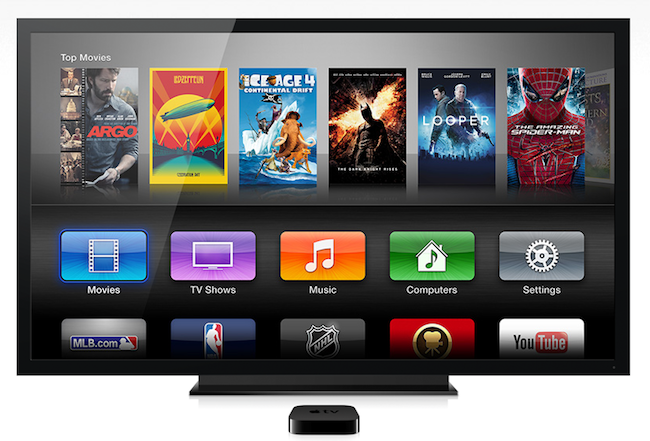
Today, using Airplay and an Apple TV, players can stream their games from their iOS device to their high-definition television. With controller support, players will be able to play more traditional, non-touch games.

I agree with Chris’ take: the new game controller APIs for developers have great potential, but, ultimately, it’s up to Apple to believe in this opportunity. What’s indisputable is that later this year, when controllers will be released by third-parties, games supporting them will already work with the existing Apple TV’s AirPlay streaming features. It’ll be interesting to see if Apple will publicly acknowledge this new scenario for gamers and Apple TV owners (as Tim Cook often notes, Apple doesn’t advertise the Apple TV aside from a product page on Apple.com).

We’ve already discussed how the potential of dual-screen AirPlay gaming is largely untapped, and I suspect the addition of physical controllers will allow iOS game developers to explore even more possibilities. Essentially, controllers that will attach to iPhones will create a DS-like experience – with the “top screen” being the Apple TV.

Today’s hardware, as recent ports show, isn’t yet capable of handling the same amount of power and definition of modern console games. The App Store needs improvements (especially for curation and discovery), but Apple has the advantage of having a solid platform where free-to-play is an established model and where everyone can develop games (with great new game-related APIs coming in iOS 7) as long as they are registered developers. With 575 million iTunes Store accounts with credit cards on file, Apple also has the largest user base – customers already buying software from the App Store. And, let’s not forget the iPod touch, Apple’s cheapest way into App Store gaming, which recently received an even cheaper option.

On the other hand, in the current state of App Store economics, it’s difficult to imagine how Apple could lure major console publishers to release AAA titles under $30 and that aren’t low-res ports, companion apps, or dumbed-down versions of console/PC games. Does Apple care about having the next Destiny on iOS first? The new Call of Duty? Will future iOS hardware be capable of running those kinds of games? Or is Apple just fine with attacking the market from the low end, taking more time to see how game developers will react to new iOS software and hardware in the next five years?

Will Apple ever develop a culture and appreciation for gaming as a medium, not just an App Store category? While others (namely Microsoft) are trying to add more media and entertainment layers on top of existing game infrastructures, Apple is in the opposite situation – running the largest media store and selling devices that are increasingly used as gaming machines, but that still lack the catalog and support of dedicated home consoles.

As far as third-party developers are concerned, things have changed since 2008. Five years ago, imagining a console hit like Metal Gear Solid 4 on iOS would have been absurd; today, we have a port (albeit low-res) of XCOM eight months after the original release. Compare this example to Metal Gear Solid Touch, “based on” Metal Gear Solid 4 and released nine months after the original game, in 2009. What’s the App Store going to be like in 2018? Can we imagine, two or three years from now, simultaneous and equal releases of AAA games across consoles and iOS? And if so, how will the App Store’s numbers play to Apple’s advantage against Sony, Microsoft, Nintendo, and Valve?

Apple is testing the waters (having to buy separate iOS devices, Apple TV, and third-party game controllers isn’t a simple message) and they seem extremely cautious with their Apple TV strategy, but it does look like some pieces of the gaming puzzle are slowly coming together. We’re seeing more full ports of console games nowadays, alongside, obviously, the brand new iOS gaming experiences that have shaped the modern industry. iOS 7 game controllers will likely make developers more comfortable with the idea of “serious” games on iOS (although Apple wants controllers to be optional…for now), and I’m curious to see which parts of Apple’s grand vision for TV will relate to games, the App Store, and iOS.


The iOS 7 App Store Opportunity

Marco Arment has a good take on what iOS 7 represents for developers: a huge opportunity to differentiate apps that will inevitably remain stuck on iOS 6 from those that will embrace iOS 7’s new modern approach later this year.

As I wrote today, it’ll be interesting to see how developers of existing apps will adapt to iOS 7’s dramatic reimagination of the OS. I do believe that many will try an in-between approach to a) keep their identity in the jump to iOS 7 or b) target both iOS 6 and iOS 7 with separate interfaces. I either case, I don’t think that’s a great solution. And, I am curious to see how long it’ll take designers and developers to exclusively target iOS 7 with different, custom interfaces – as many have done in the past five years.

I’m also thinking about how the App Store team will handle the transition from iOS 6 to iOS 7, which should coincide with Apple reaching the 1 million apps milestone (I was off by < 100,000 apps). Aside from App Store improvements that I mentioned in the past, I believe Apple should find a way to clearly promote and organize apps that have been built exclusively for iOS 7. The new OS isn’t just tweaking functionalities or refining some UI elements; I find it hard to envision an App Store that doesn’t make any distinction between “classic” and “modern” apps.

In the past, Apple launched App Store sections for apps taking advantage of new OSes or hardware features, and I’m wondering if, with 1 million iOS apps, differentiation between iOS 6 and iOS 7 should deserve another simple section or something more advanced like search filters, “made for iOS 7” badges, or new editorial efforts from the App Store team.

Properly promoting and organizing iOS 7 apps on the Store can benefit Apple, its users, and third-party developers. The App Store’s back catalog isn’t a new topic of discussion, but with iOS 7 and six zeros getting closer, it’s worth reconsidering it.

Permalink

iTunes 11.0.3 Brings New App Updates Screen


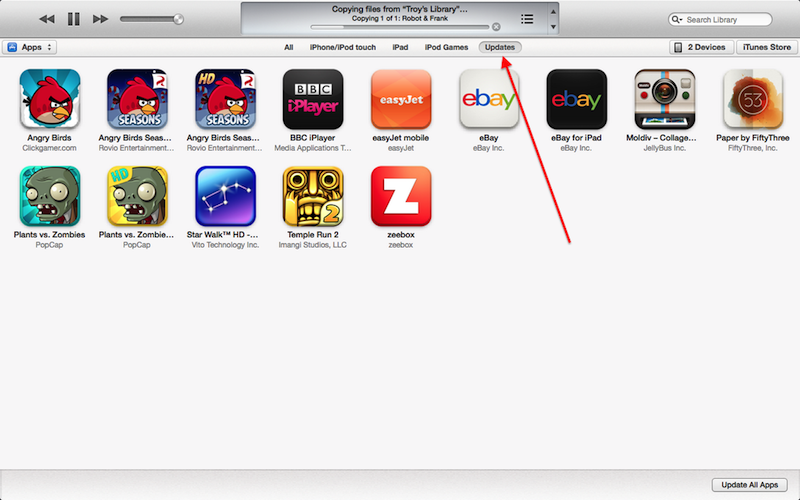
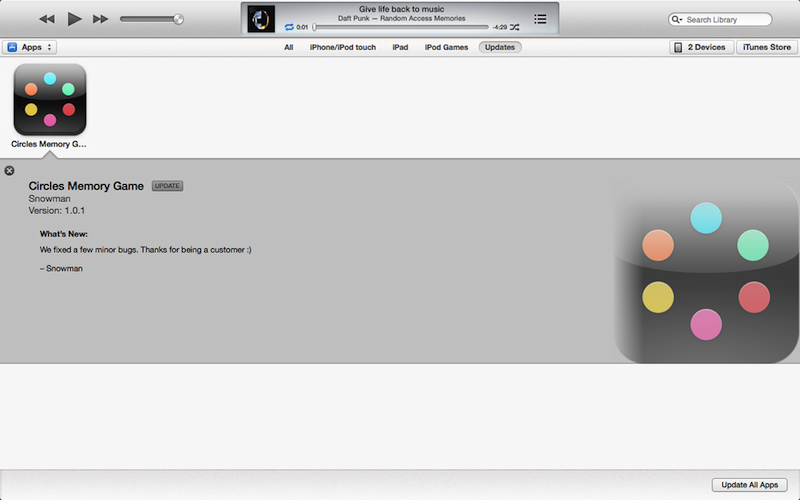
In the 11.0.3 update for iTunes released today, Apple included a new “Updates” area for iOS apps. As noted by MacStories reader Graham Robson, the Apps area of iTunes now comes with a new “Updates” tab that lists available app updates (if any); if there are no updates, the screen will say “All Apps Are Up to Date”. As with previous versions of iTunes, you can press Command+R to check for updates both in the main Apps area, as well as the new Updates tab.

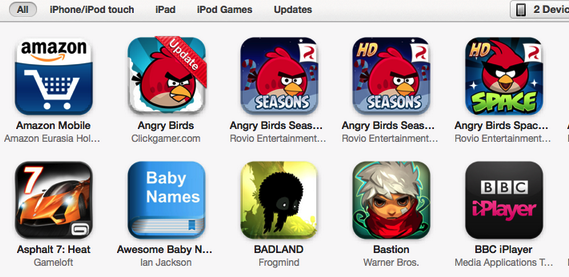
When updates are available, iTunes 11.0.3 will display a red “Update” ribbon on an application’s icon, similarly to how iOS displays a blue ribbon for “New” apps on the Home screen. In iTunes 11.0.3, updates are handled by the Updates area without requiring users to open the iTunes Store anymore.

After the launch of iTunes 11 in November 2012, the Updates screen remained surprisingly unchanged. The new app updates system is a welcome change – particularly because it doesn’t force users into an iTunes Store view anymore.

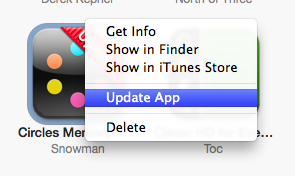
Update: Two more screenshots showing a contextual menu for apps that have an update, and the way iTunes 11.0.3 shows the changelog for an update with the same style of music albums.