This Week's Sponsor:

Turbulence Forecast

Know before you go. Get detailed turbulence forecasts for your exact route, now available 5 days in advance.


Posts tagged with "app store"

AppShopper Is Back On The App Store

Speaking of App Store discovery services, AppShopper is back on the App Store today (after last year’s removal) with a brand new iPhone app called AppShopper Social:

Our original AppShopper app was removed from the App Store due to a conflict with a new set of App Store rules introduced last year. Since that time we’ve been hard at work creating a new app to continue to provide useful functionality to our users and also remain in compliance with Apple’s rules. Today, we’re happy to announce that we’ve released AppShopper Social. The new version of the app still contains the core Wish List functionality that we’ve always had, but also introduces a social discovery portion to the app.

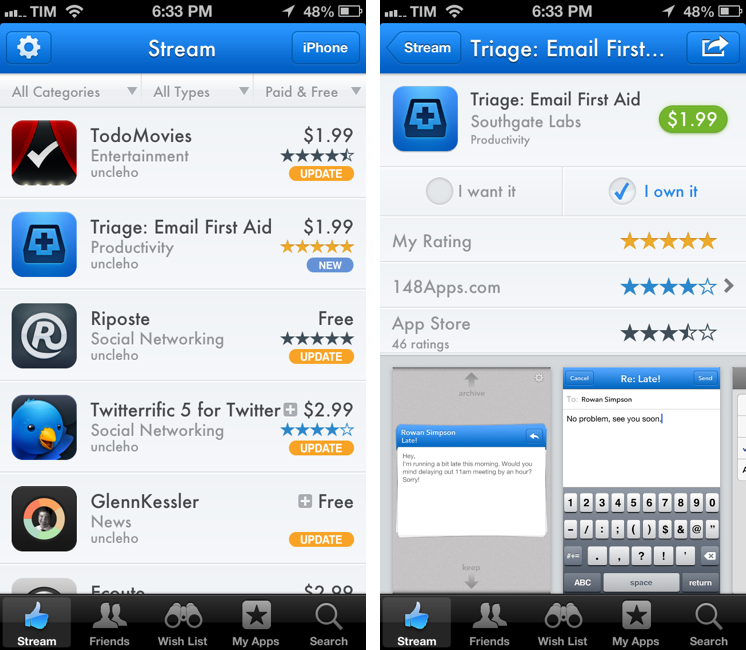
AppShopper is, by far, my favorite service when it comes to finding new apps and receiving notifications for updates and price changes. I have been beta testing AppShopper Social for the past months, and I think the new version makes a lot of sense: rather than offering a better interface for the App Store charts, the main area is now a Stream of app recommendations from people you follow. You can follow websites like AppShopper and TouchArcade, or log in with your Twitter account and find friends who are using AppShopper. When I say that App Store discovery needs more human curation, this is exactly what I mean (in addition to the work Apple itself is doing with sections and collections).

The new app resembles the old version of AppShopper, if only with a fresh coat of paint. In the Stream, you can view All/iPhone/iPad/Universal apps, filter by category, type of app, and paid/free/both. Tapping on an app in the list opens the usual single app page with “I want it/I own it” buttons (the Wish List is still there), screenshots, description, changelog & app activity, and ratings by websites with a link to their reviews. Presenting App Store ratings mixed in with reviews from writers who do this professionally is a very welcome addition in my opinion.

There are some things in the new AppShopper that could be improved: the process of adding friends from Twitter could be further developed with a screen showing how many Twitter friends are also using the app, and, currently, it’s not possible to view a user’s complete profile to show all the apps he/she is recommending to others. I like the refreshed design of the app pages, but I’d like to see a list of friends who have recommended the app in there as well. And, of course, the app isn’t Universal yet and essential features like What’s New haven’t still been enabled as the AppShopper team is figuring out how to get them past Apple’s review process. Fortunately, the team also says they’re working hard on improving the app, and I’m looking forward to the next updates.

The App Store doesn’t come with any social features (besides sharing) or connections to reviews from trusted sources, and I believe AppShopper Social fills an important gap in terms of app discovery and recommendations.
The AppGratis Removal

Jean-Louis Gassée has a solid summary of the whole story behind AppGratis’ App Store removal. If you missed it, here’s Apple’s official stance.

I did comment on the topic – six months ago:

Second, we should consider the manipulation of charts. While not specifically mentioned in the new rule, it’s easy to imagine Apple doesn’t want marketing and promotion campaigns to be capable of altering their ranking algorithm for the App Store. Apple has been rumored to dislike these promotion campaigns in the past, tweaking its ranking algorithm to reflect “real” popularity of an app among users. But maybe that’s not enough at this point, and Apple really does want to limit the relevance of this kind of services by, well, enforcing rules that would get them out of the App Store.

And:

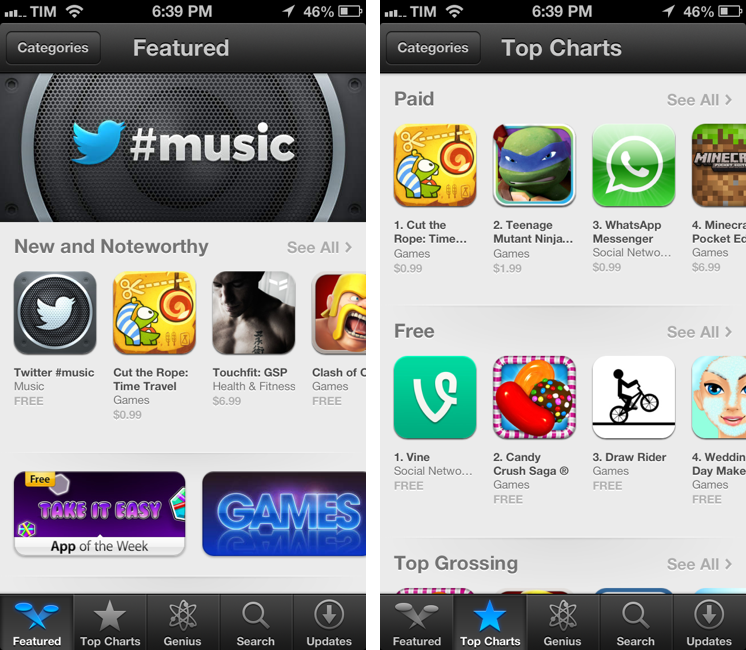
This is pure speculation on my side. But I’d consider this: Apple recently revamped the App Store homepage with its own Free App of the Week initiative (alongside a new Editor’s Choice). Would it be a surprise if they thought all these other “free app a day” and “free app download” services could be confusing to the user?

I also added this in regards to “gaming the system”:

But more importantly, rule 2.25 could be enforced for those marketing tools that get users “rewards” for downloading other apps for free — a technique that, consequently, also increases the popularity of the apps that get downloaded as part of the promotion. The problem is that users download those apps only for the rewards — they’re not really interested in them. For this reason, developers could — even slightly — game the system and, to an extent, trick Apple’s algorithm. I don’t see how that can be a good thing.

Back to Gassèe’s article:

Apple isn’t wrong to reserve the right to make such decisions. Although insiders may depict the company as obsessive control freaks, “normal” customers seem to appreciate Apple’s efforts to keep the App Store a Clean, Well-Lighted Place.

But maintaining a stony silence when imposing a judgment call is a bad choice, it distances developers, and it inevitably triggers controversy. A few words of explanation would invite respect for having courageously taken a difficult stance.

This is a fair point. Here’s what I wrote – again, in October 2012:

After talking to several developers today, my understanding is that rule 2.25 has been enforced on some cases, but that it’s not clear how much Apple will enforce it going forward. Apple has notoriously made exceptions in the past: there used to be a rule for apps that “duplicated” existing functionality, but then Apple started approving third-party browsers and, recently, email clients. For all we know right now, it is possible that rule 2.25 will never be seriously enforced and that it’ll slowly “fade away” with time. Or more simply, developers will find ways to work around the rule.

“It’s not clear”, I said. My sources were correct. Here’s John Paczkowski for AllThingsD:

Sources familiar with Apple’s thinking tell AllThingsD that AppGratis’ ouster was a first step in a broader enforcement action generally targeted at app-discovery apps that run afoul of clauses 2.25 and 5.6.

And:

If it has been confusing, it’s because Apple, while being quite clear in citing the rules it is enforcing, has been unclear and scattershot in their actual enforcement.

I don’t know if this BusinessInsider’s report is true. AppGratis CEO Simon Dawlat calls their business model “just regular advertising”; Jason Calacanis says this is “lame on Apple’s part” and that “this is not gaming, this is called forecasting”.

I didn’t link to the AppGratis story previously because, frankly, I thought Apple’s position on the matter had already been amply discussed last year. The way I see it, nothing has changed in regards to how Apple sees third-party apps that mimic the App Store’s appearance while simply linking to other apps. And I thought it was pretty clear that Apple didn’t appreciate developers who kept coming up with advertising models to circumvent the Guidelines and “connect” users with promoted apps in the top Charts. But, apparently, AppGratis’ ouster was publicized enough to make a French minister comment on the matter. Read more


The Cost of Launching a Mobile Game

Edge:

This is in no way atypical for some of the more successful game developers, and all of that is done in hopes that the new games get featured on a variety of app stores, causing that oh-so-important spike in early sales.

The post refers to Jessica Lessin’s article on The Wall Street Journal about the launch of ZeptoLab’s latest game:

Overall, ZeptoLab says it will spend around $1 million launching “Cut the Rope: Time Travel,” which traces the adventures of the green monster Om Nom as he meets versions of himself in time periods like the Renaissance and the Middle Ages. On top of that sum, which includes the costs of animation, the company is counting on some free help by promoting the game inside its other titles.

After nearly five years, the App Store is a huge market and game developers are throwing big money at it. In ZeptoLab’s case, add the fact that the game has also launched on Android – it doesn’t always happen, though – and you understand why large companies are capitalizing on the installed base of mobile devices.

There’s another side of the coin: indie developers with great ideas but limited budgets. Take this Polygon article about Ridiculous Fishing as an example:

We did everything…I literally didn’t sleep for three days before the launch, just working and making sure that every reviewer and every website and every person that I could send the game to had the game.

Different games, different needs. Vlambeer doesn’t have the same resources of ZeptoLab and they opted for a different pricing scheme.

Smaller indie developers aren’t “less important” than established, popular game companies: because of the freedom that generally comes with independent creation, indie games tend to explore concepts and game mechanics that larger studios are more skeptical about. With the rise and consolidation of app stores and digital delivery platforms, indie games have become a fundamental piece of any device’s catalogue. Ask Sony. Ask Nintendo. Take a look at Kickstarter, with well-funded game and hardware projects.

On our end of the spectrum, I’d say that Apple is doing a good job overall. The App Store’s front page is skewed towards free-to-play games from large studios and publishers, but, on the flip side, Apple has featured indie titles numerous times in the past, and it also differentiates between “big name publishers” and smaller titles in their curated sections.

And yet, for a successful Ridiculous Fishing, there are hundreds of indie games with solid, original ideas that don’t get the recognition they’d deserve, either for a lack on the developer’s side (poor marketing skills is a common culprit) or an obvious inability to get noticed on the App Store. Other times it’s because the market is simply saturated, but, again, indie games tend to innovate and explore new ideas.

There’s a variety of improvements Apple itself could consider to help indie game (and app) developers, many of which I elaborated upon last year. Let developers offer videos alongside screenshots for those game/experiences that are hard to grasp in a couple of images; give more prominence to human curation and weekly sections; protect game makers against scams and rip-offs that are still far too present on the App Store.

Launching mobile games is expensive, especially for large companies. I hope Apple will keep working on finding the right balance between “big name games” and indie gems on the App Store.

Permalink

The Market for Paid iOS Apps

Marco Arment:

I haven’t always used these particular apps to solve these problems, but it takes a lot to change my mind on one. If you make another RSS reader or Twitter client, there are certainly a lot of people who could use it, but you’ll need to compete with very mature, established apps. Competing in these categories isn’t about price: it’s about relevance and attention. If you can’t find enough customers here, it’s probably not because you’re charging $2.99 instead of $1.99 or $0 — it’s because your app isn’t convincing enough people that it’s worth using over the alternatives.

This is also the same problem I run into every time I’m sent new apps to review: is this going to be better than Tweetbot, Fantastical, or Drafts for my workflow? Should my readers know about this app even if I won’t use it every day? How do I balance the expectations of my readers, who want to know about new apps, with my personal opinions and workflow preferences?

I’ve thought deeply about this, and I concluded that, ultimately, my readers prefer honesty over quantity of mediocre app discoveries. When a new app comes around and it improves substantially on my workflow, they deserve to know about it. From my perspective, I have chosen to remain curious while having high standards for the apps I’m interested in.

From a developer’s standpoint, I agree with Marco’s article. The 2013 app market is fine if you have the right idea, executed well at the right time. In four years of writing this site – it was launched 9 months after the App Store – I’ve learnt this: people like new apps, but they expect a certain degree of quality and functionality from modern iOS apps.

Again, like Marco says, the bar is higher today. But it doesn’t mean developers can’t still raise it.

Today, the App Store has other problems.

Permalink

Pocket Introduces “Send to Friend” on First Year Anniversary

Pocket, Share to Friend

Pocket, Share to Friend

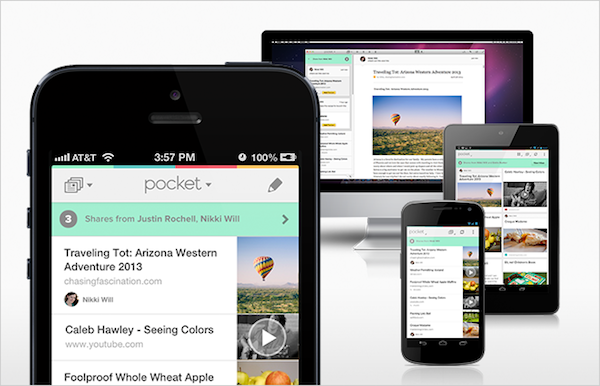
One year ago today, Read It Later was reborn as Pocket, transforming into a service that emphasized saving anything, not just articles, for later. For the past year, Pocket has rapidly iterated while landing on numerous devices between Android and iOS, even arriving on Apple’s desktops and laptops with a native Mac app. Recently, Pocket made it even easier to save stuff for later thanks to Feedly, WordPress, and HootSuite integration. With more than 8.5 million users who’ve saved more than 300 million articles in the past year, Pocket has also launched Pocket for Publishers, giving creators on the web an easy way to gain insights on the lifespan of their content.

Share to Friend Inbox

Share to Friend Inbox

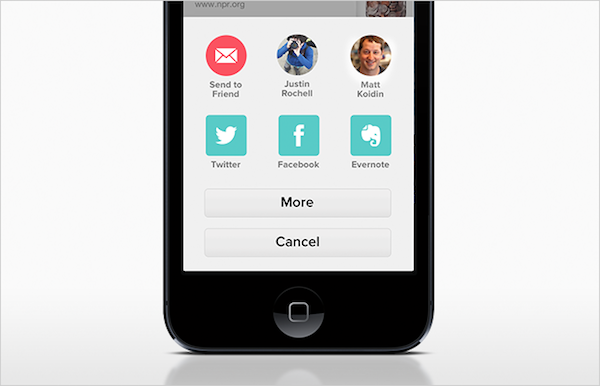
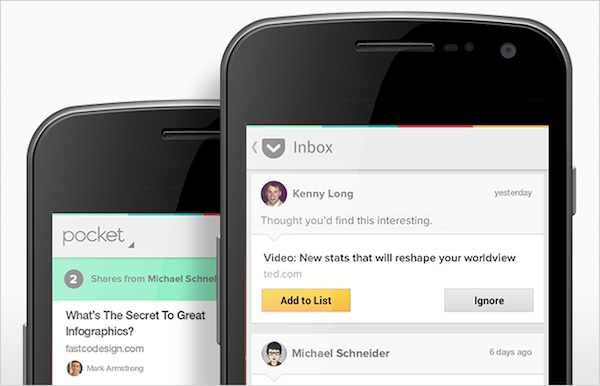
To celebrate their one year anniversary, Pocket is launching Send to Friend, a brand new feature that goes beyond sharing to Facebook, Tumblr, and Twitter. Send to Friend improves upon email sharing, which Pocket found people used more than twice as often as sharing to social networks. Send to Friend allows for better interpersonal sharing between friends and family. Content can be shared with a comment and a highlighted quote, and if the person receiving the shared link also uses Pocket, they’ll receive a Push Notification and the content in their inbox. Anyone who receives a link can save it to their list of stuff to view later, or simply ignore it.

Share Menu

Share Menu

Lastly, Pocket improves upon their Share Menu by automatically bubbling up icons and making more convenient shortcuts to often used services and friends that you share to. If you find yourself sharing to Twitter and to a couple of particular friends more often, the Share Menu will place shortcuts to them first. Of course, you can always get to seldom used services at any time.

Pocket with Send to Friend is available as a free download in the App Store.


TodoMovies 2: A Gorgeous Way to Keep Track of Movies You Want to Watch

Banner Image

Banner Image

Due in part to the frequency I can meet up with friends and get to a movie theater, I inevitably end up with a backlog of movies to watch since I often don’t see them until months after they’ve been released. It wasn’t until last weekend that I finally watched The Hobbit for example, both in part to try Vdio and get hands on with Taphive’s latest app.

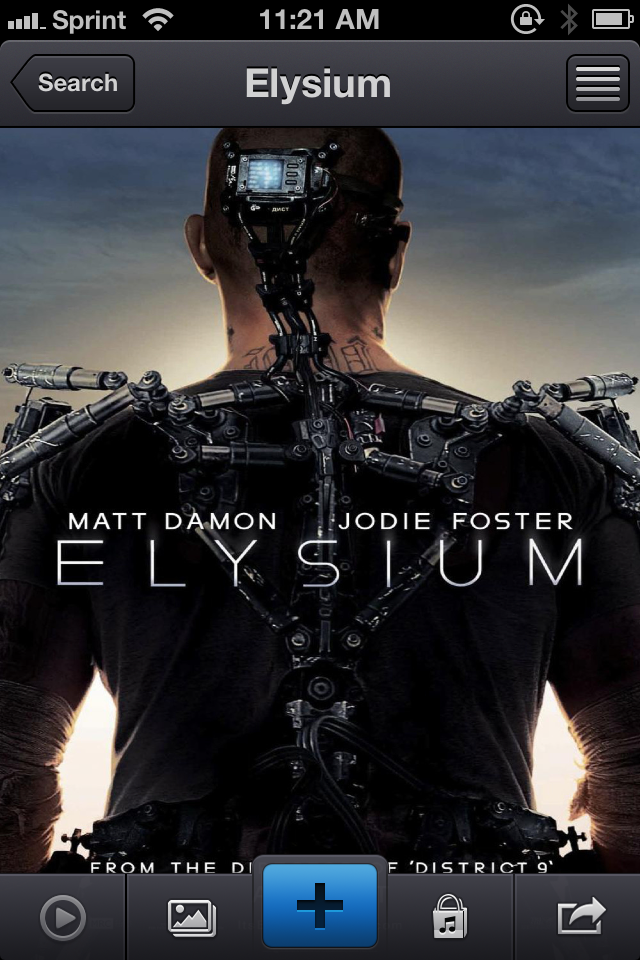
Where Apple’s Trailers showcases upcoming films and offers up information on where and when to watch them, TodoMovies 2 is your personal list of movies seen and not yet seen, keeping movies sorted in any preferred order while also offering trailers and additional links to associated goodies like soundtracks. Integrated with TMDb and additionally bringing in ratings from sites like Rotten Tomatoes and Netflix, TodoMovies 2 offers a quick glance at actors and actress, plot summaries, and ratings underneath gorgeous movie posters that shine on Apple’s Retina displays.

Read more


Twitterrific 5.2: Push Notification Rollout, Profile Banners, and Storify for Discussions

Push Notification Beta Alert

Push Notification Beta Alert

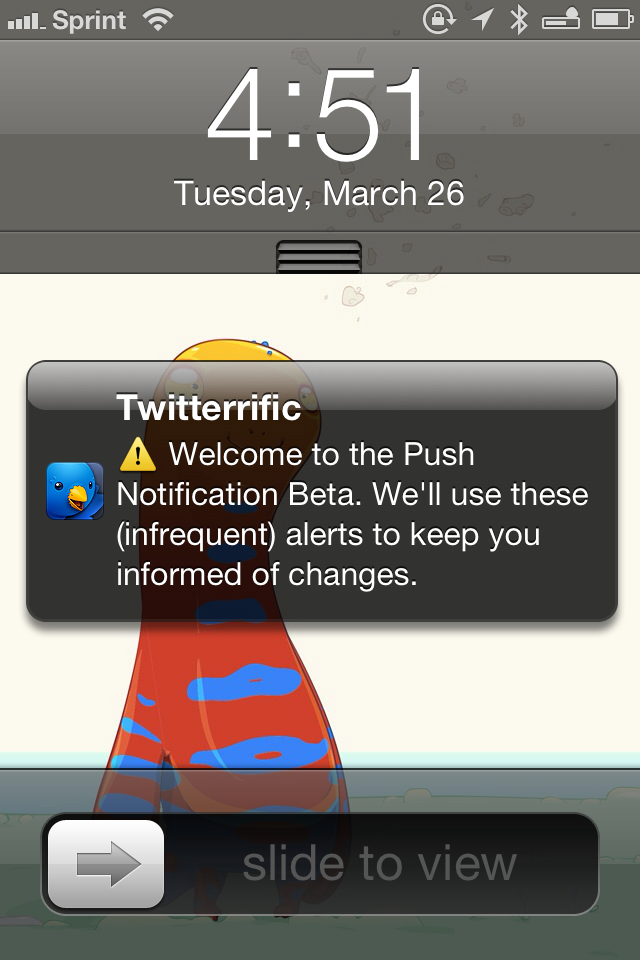
Redesigned from the ground up, Twitterrific launched last December with a fresh design that pleasantly surprised long time fans of the app. Breaking ground on the original iPhone, Twitterrific has relatively stayed the same for years, subtracting unnecessary features and focusing on delivering a robust core experience. Today, people expect more from their Twitter clients, such as the ability to mute hashtags and receive push notifications for follows and replies. The Iconfactory addressed the former through their last update with muffling, a simple way to shush users, hashtags, and domains on the timeline. Yesterday, The Iconfactory began addressing the latter by introducing push notifications in Twitterrific 5.2.

Read more


A Better Testing Process for App Store Developers

A Better Testing Process for App Store Developers

The Iconfactory’s Sean Heber, in a radar filed on Open Radar:

Allow developers to add “in development” apps to the App Store. Rather than having them go through review, they simply upload builds like normal but the builds are set as “in development” which then only go to registered testers associated with the app.

In his proposal, Sean goes through the steps a possible “beta portal” for App Store apps may require. While I’m not sure about the idea of putting available development builds in the Purchased section of the App Store (if only for the poor technical performances of that section), I do believe this is a good idea. The lack of any sort of deeper App Store integration is what helped the rise of services like Hockey and TestFlight, and it seems strange that Apple hasn’t done much in the area of testing development builds of apps. I would also add that it’s absolutely anachronistic how Apple is still forcing developers to associate builds with device IDs rather than Apple IDs of testers (device slots are limited, and many testers have multiple devices).

I’m also intrigued by Sean’s other idea – letting users pay for early access to betas:

Bonus points would be to actually allow the developer to put a price on an app - even for testers. Using a mechanism like this, the developer could gather a group of early adopters who are willing to pay for early development access - perhaps to help support the developer in their quest to build the next big game. The goal with this is to provide a way that the next Minecraft could actually happen on iOS. When Minecraft was first beginning, Notch allowed people to pay for beta “lifetime” access up front. Even when the game was barely a game or barely anything at all. That early access generated a lot of buzz and revenue for him allowing him to continue development.

Again, I’m not sure how it would work in practice, but I think the idea is fascinating and worth discussing. Imagine some sort of Kickstarter-like approach for App Store apps, managed and sanctioned by Apple, and directly controlled by the developer. The App Store needs many, more basic improvements, but this is still something Apple should consider.

Permalink

A Better App Store

Better App Store

Better App Store

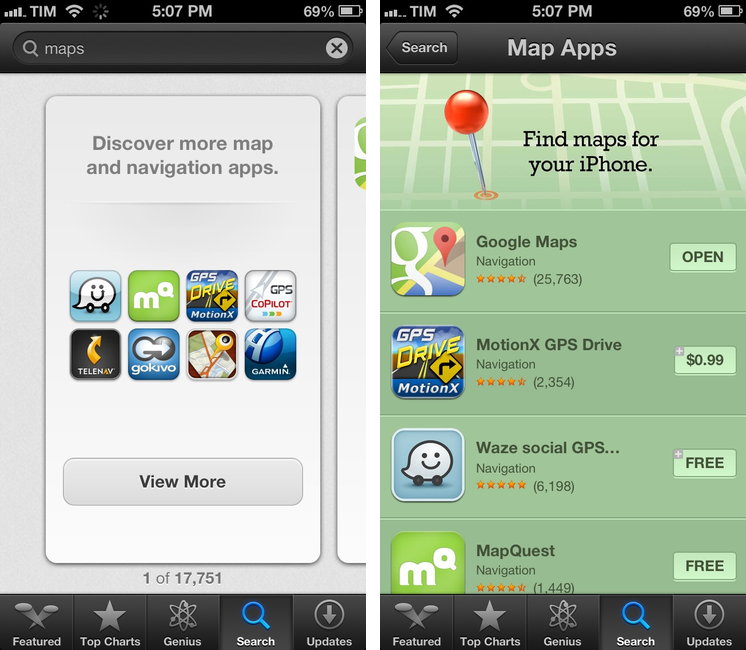
Marco Tabini has a good overview of how the App Store (both for iOS and OS X) could use some improvements now that the 1 million app milestone is in sight. I particularly agree with his points on curation:

Given the sheer volume of apps on the App Stores, Apple’s role in curating them is becoming more and more important. The company’s notoriously tight grip on its distribution channels is often the source of much controversy, but there’s no denying that, by and large, it promotes all apps on an even field: In any given week, the latest release from a giant like, say, Electronic Arts could share the “Editor’s Pick” spot with an app written by an equally talented—but much more wallet-impaired—team of independent developers.

App Store curation is a topic I have been covering on MacStories for the past year, so Marco’s observations resonate with me. Looking back at my Four Years of App Store article from May 2012, it’s clear that the App Store team has done a very good job in increasing “human curation” with custom sections and weekly features, but there’s still lots of work to be done. So, with the one-million app mark approaching, I thought this could be a good time to offer some suggestions for improvements (you’ve probably already seen a lot of these as tweets in my Twitter timeline).

Read more