This Week's Sponsor:

Turbulence Forecast

Know before you go. Get detailed turbulence forecasts for your exact route, now available 5 days in advance.


Posts tagged with "app store"

Apple Reveals Over 15 Billion Apps Have Been Downloaded From The App Store

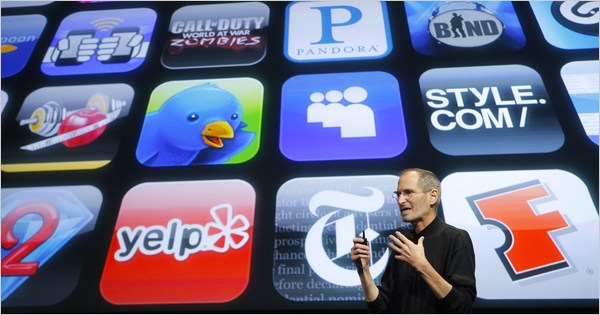
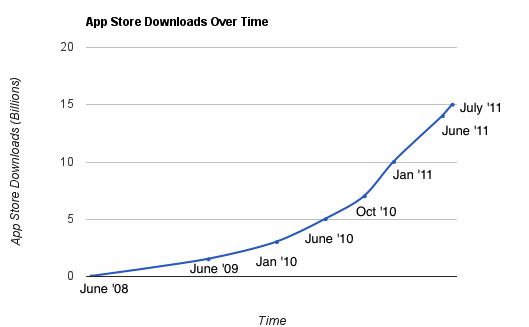
Apple just issued a press release that reveals over 15 billion apps have been downloaded from the App Store. Apple notes that it has more 425,000 apps, including 100,000 native iPad apps. It comes just six months after the App Store hit 10 billion downloads in January this year.

More than 15 billion apps have been downloaded from the revolutionary App Store and more than 425,000 apps are available, including more than 100,000 native iPad apps, to consumers in 90 countries. Users of the more than 200 million iOS devices around the world can choose from an incredible range of apps in 20 categories, including games, business, news, education, sports, health, reference and travel. Apple has paid developers over $2.5 billion to date.

In the press release, a few people who run some of the most popular apps are quoted singing the praises of the App Store and the opportunities it has allowed, including Ge Wang from Smule, Mark Rein of Epic Games and Nicholas Callaway of Callaway Digital Arts. Phil Schiller, Apple’s senior VP of Worldwide Product Marketing says in the press release:

In just three years, the revolutionary App Store has grown to become the most exciting and successful software marketplace the world has ever seen. Thank you to all of our amazing developers who have filled it with over 425,000 of the coolest apps and to our over 200 million iOS users for surpassing 15 billion downloads.

As Business Insider points out, these statistics reveal that, averaged out, each iOS device owner has download 75 apps - any way you cut it, that is an impressive figure. Similarly, AllThingsD notes that just last month at WWDC, Apple revealed that 14 billion apps had been downloaded, meaning roughly a billion apps have been download in just a month.
Read more


Judge Denies Apple’s Attempt For Injunction Against Amazon Over ‘Appstore’ Name

is reporting that a Californian judge has denied Apple’s attempt to quickly stop Amazon from using the term ‘Appstore’, which they have been using for their Android app download service. Apple had earlier this year filed a trademark lawsuit that claimed Amazon was improperly using the ‘App Store’ name in a way that will “confuse and mislead customers”. Amazon had claimed that the term was generic and therefore not protectable.

Whilst the full trial is set to take place in October of next year, this decision was in response to Apple’s request of an injunction against Amazon from using the name. In her decision, U.S. District court Judge Phyllis Hamilton said she did not agree with Amazon’s claim that it was “purely generic” but similarly found that Apple had not established “a likelihood of confusion” required to get an immediate injunction against Amazon’s service.

If the injunction had been successful, Amazon would have had to nearly immediately ceased using the name for their service. Neither Apple nor Amazon responded to Reuter’s requests for comment on the news on the injunction. This trial has attracted the attention of other players in the smartphone app market including Microsoft, Nokia and HTC, all of whom have filed complaints against Apple’s attempt to file a trademark for the term ‘App Store’.

[Via Reuters]


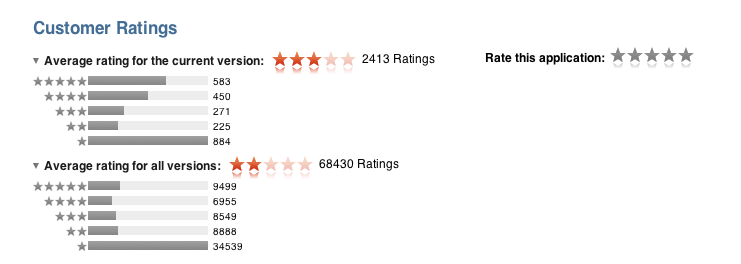
The WSJ iPhone App and Negative App Store Reviews

The WSJ iPhone App and App Store Reviews

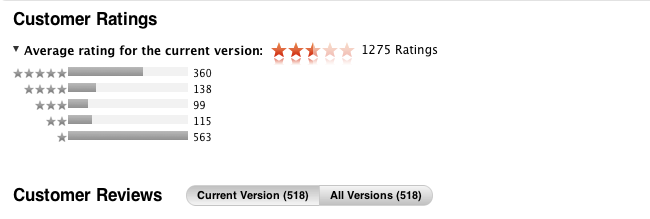
Jakob Nielsen at UseIt.com offers an interesting breakdown of the issues behind the design of the WSJ iPhone app’s initial login screen, which is causing customers to leave negative iTunes reviews as they think the newspaper is forcing existing subscribers to pay again to read content on the iPhone. That is not true (subscribers of wsj.com can access the app for free), but according to Nielsen a poorly designed login screen that puts the focus on new subscriptions and registrations, rather than login, is tricking users to believe that existing subscriptions don’t count against iPhone access.

Wildly persistent users might notice the much smaller Log In area at the bottom of the startup screen. However, they’re unlikely to press this button because their experience with the app so far has taught them that they must register (and pay extra) before being allowed to log in.

Those few users who do press Log In will finally see that they can use their existing www.wsj.com credentials to access the app. However, as the many negative App Store reviews attest, few users ever make it this far.

The full report with screenshots of the WSJ iPhone app and proposed mockups to address the issue is available here. Subscriptions and logins for existing subscribers have always presented usability problems for developers of mobile newspapers and magazine apps, struggling to find the best way to promote both new subscriptions and free access for existing, paying customers. Apple wants to improve the process with its native subscription system based on iTunes accounts, and indeed several publications are experimenting with the new APIs provided by Apple to offer web-based login screens that allow for new registrations and iTunes subscriptions, like The New York Times did in its latest app update.

Permalink


Instacast 1.3 Now Available: Chapter Lists, Download Waiting List, and Video AirPlay

Instacast is simply my favorite podcast player on iOS, and I’m delighted to say that Instacast has now reached version 1.3 and is available for download in the App Store. Instacast 1.3 brings lots of new features to the fold, including improvements for clearing out cached tunes, a download waiting list, chapter lists (super useful for podcasts like the Mac Geek Gab), video airplay for those Revision3 podcasts, and “group sorting” in the All Episodes list that bundles together similar episodes. There’s a lot to talk about, so let’s dive right in.

Read more


The iPad: Now With 100,000 Apps Available

At the end of March we ran a story on the iPad App Store reaching the 75,000 apps milestone in less than 365 days since the original iPad came out in April 2010. Considering the competition the iPad had to face in the past year (though some people say there really isn’t a tablet market) and the options given to developers when it came to choosing which platform to develop for, seeing iPad users gaining access to almost 100,000 apps in roughly 12 months was a surprise – looking back at those statements from tech pundits who claimed the iPad was “dead in the water”, the 75,000 milestone surely helped putting things in perspective.

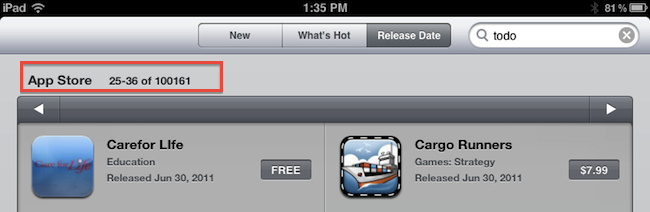
Yet Apple and third-party developers have set a new record: in 453 days since the original iPad came out on April 3, 2010, the App Store has more than 100,000 iPad-exclusive apps available. Either specifically targeting the tablet, or released as universal updates to existing iPhone apps, at the moment of writing this there are 100,161 iPad apps in the Store. How do I know? The App Store app itself on my iPad shows that.

Obviously, one could argue that the iPad’s development scene was “helped” by the success of the iPhone in the previous years. The original iPhone came out with no SDK in 2007, and developers were told to create web apps for it. Apple listened, and months later they released the first developer tools to create native apps for the iPhone. With the release of the iPhone 3G in 2008, Apple also launched the App Store, a unified marketplace to browse and download apps. The rest is history: a few graphical enhancements, sections, and 10 billion downloads later, the App Store is Apple’s crown jewel as far as digital downloads go. A success that has inspired the company to create an OS X version and name it Mac App Store which, unsurprisingly, is once again helping developers sustain their business because of the ease of use of the whole process. On the other hand, users love discovering and buying apps from the App Store because it’s simple, it’s full of apps, and it’s regularly updated. It’s a win-win scenario for Apple (who keeps a 30% cut off every transaction), the developers, and the users.

What’s next for the App Store and, more specifically, apps for the iPad? 100,000 is an important milestone, but don’t expect things to change dramatically in a short period of time. Considering how Apple rolls, the App Store will be slightly tweaked to accomodate new sections as it’s always been, more apps will be released in the next weeks, and users will keep buying apps and games. Don’t expect a revolution because Apple has reached 100,000 apps for the iPad. But that’s not to say the result isn’t remarkable or that new things aren’t coming: with iCloud going public this fall and Automatic Downloads already set in place, Apple wants to make the process of buying and syncing apps to iOS devices even simpler. With Lion approaching its public launch on the Mac App Store in July, it’s clear Apple is betting on the App Store brand as the de-facto solution for downloading software for iOS and OS X devices.

Congratulations, developers. Now onto 200,000 apps.


“One Time Exception” with Final Cut Pro X Refunds

As noted by The Next Web, amidst criticism surrounding the release of Final Cut Pro X on the Mac App Store (seen by several video professionals and customers as a consumer-level app lacking many of the “pro” functionalities of the previous version) Apple has begun issuing refunds to App Store customers who have bought Final Cut Pro X, Motion, or Compressor. In an attempt to do “damage control” after the criticized release, an alleged email to a customer outlines how the company is making an exception to issue refunds for FCP X, as opposed to their usual policy for iOS and Mac apps.

EOSHD reports the following email:

Moving forward, I understand that you are not satisfied with the app “Final Cut Pro”. I can certainly appreciate you would like a refund, and I would be more than happy to help you out with this today. In five to seven business days, a credit of £179.99 should be posted to the credit card that appears on the receipt for that purchase.

Please note that this is a one time exception because the iTunes Terms and Conditions state that all sales are final.

Apple has been known for not including refunds for apps in their sales policy, thus forcing customers to deeply consider each purchase before clicking the buy button. In a support document, in fact, Apple clearly states that “all sales are final”:

Subject to the iTunes Terms of Sale, all sales on the iTunes Store are final. When you agree to purchase an item by clicking the Buy button (using either 1-Click or Wish List), your Apple ID is charged and the transaction cannot be cancelled. See the iTunes Terms of Sale for additional information.

The same policy is corroborated by the iTunes Terms & Services, which outlines the “final” status of sales and rentals and indicates Apple doesn’t issue refunds for price reductions:

All sales and rentals of products are final.

Prices for products offered via the Services may change at any time, and the Services do not provide price protection or refunds in the event of a price reduction or promotional offering.

However, Apple has also been known for applying a different policy before: by filing a formal request on the App Store customer support website (usually within hours after a purchase) and providing an explanation of what went wrong with a purchase, Apple usually issues app refunds to unhappy customers who believe the software they purchased doesn’t function as advertised or has technical issues that prevent a correct usage. Indeed, this seems to be the most common explanation provided by Final Cut Pro X customers as a thread on Apple Support Communities confirms.

It’s not clear how exactly Apple is making an “exception” with FCP X – whether it’s because several days have passed since the release, or because they never had to deal with large-scale Mac App Store refund request – but it appears the company is moving forward to ensure customers who don’t find FCP X suitable to their needs will get their money back. Refunds are nothing new to the App Store, but this may be the first time Apple has to provide such extended support due to Final Cut Pro’s troubled launch.


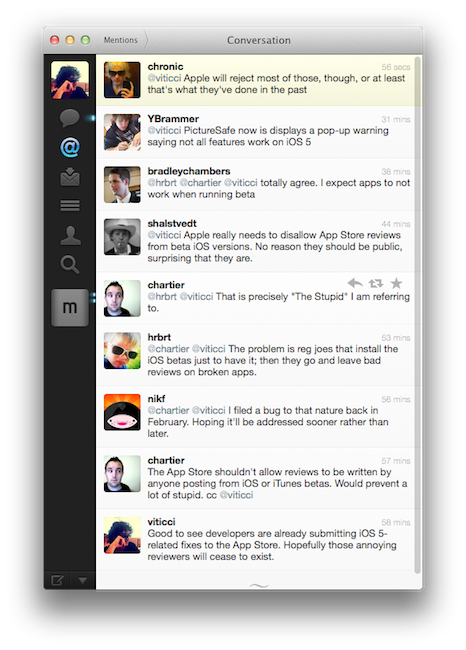
Don’t Be Stupid: Keep App Reviews To Yourself While Using an iOS Beta

These past few weeks of iOS 5 testing and casual talking with my fellow writers and Twitter followers had me thinking about the fact that some people really don’t get the difference between “public previews” and “developer-only betas”. I’m talking about those people who are leaving negative reviews in iTunes for apps that are allegedly “broken” under iOS 5, which reached the beta 2 status last Friday.

There’s an important difference between previews and developer betas. With previews, like iTunes in the Cloud, Apple feels confident enough to release a new piece of software with new features to the public and let everyone enjoy it until the final version (with more features) comes out. Example: automatic downloads and past purchases. In spite of Apple calling it a “beta”, this is in fact a public preview (that requires iTunes 10.3, also public) of the new iTunes in the Cloud system that will gain the additional Match functionality this Fall. So why is Apple letting regular users mess with a beta? Because it’s not really a “beta”, not in the sense we geeks are used to when seeing the beta label on Apple’s various Dev Centers. iTunes in the Cloud is a public preview of something that will grow even bigger in a matter of a few months. The company knows it’s stable enough for everyone to play with. All the systems are in place. No third-party support is required. All users can benefit from it now, and will get to use more functionalities once the faux beta label goes away. It’s a good deal. Read more


Instagallery Updates to 1.2.2: We Catch Up with all the New Features

There’s a pair of updates to Instagallery which we first briefly covered in March as an Instagram browser for your iPad, and they bring a ton of functionality to the $1.99 preview-based app that’s sure to excite many Instagram fans.

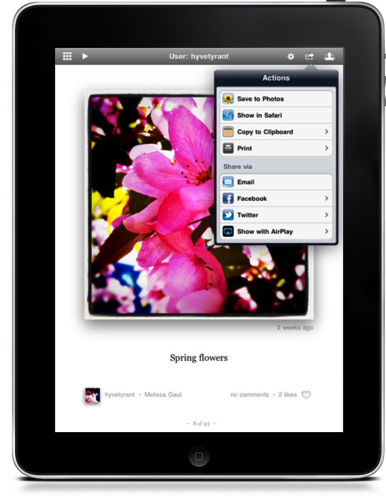
The update to version 1.2 delivered social sharing to Facebook and Twitter, the ability to open images in Safari, a grid view so you can browse photos quickly, AirPlay so you can get Instagram on your big screen TV, improvements to commenting and tagging, TextExpander support, a history view to browse recent photos, and printing to AirPrint enabled servers amongst of slew of other features.

Yesterday, Instagallery was updated to version 1.2.2 which added translations for foreign languages, author bio and website information, and lots of performance tweaks to keep browsing snappy.

Instagallery is available for $1.99 in the App Store, universally for the iPhone, iPod touch, and iPad.