Posts tagged with "apple"

Last.fm Co-Founder Doesn’t Like Apple’s Subscriptions

Just about everyone on the Internet now knows that some folks are really upset over Apple’s recently announced subscriptions for iOS apps. In case you missed the news, Apple is now allowing publishers to implement subscriptions for content-based apps using the same iTunes payment method customers rely on for their App Store purchases, but Apple keeps a 30% cut off every recurring subscription. As you can guess, several publishers think a 30% cut off a minimal monthly (or yearly) fee is too much, making it impossible to break even. In fact, music service Rhapsody has already announced it won’t offer subscriptions for iOS devices. And it looks like other publishers will follow if they think a business model can’t be built upon Apple taking its 30% on every transaction.

While the fact that Apple takes a cut on purchases made through its App Store doesn’t come as a total surprise, the 30% number does as many, including yours truly, initially thought subscriptions would feature a lower cut from Apple. Still, this is happening right now and what we can do is wait and see what publishers and content providers like Amazon and Netflix will do. But in the meantime, it appears that Last.fm co-founder Richard Jones isn’t really excited about these subscriptions, either. “Excited” is actually an euphemism, considering that in a private IRC chat posted by GigaOM he says “Apple just f****** over online music subs for the iPhone”.

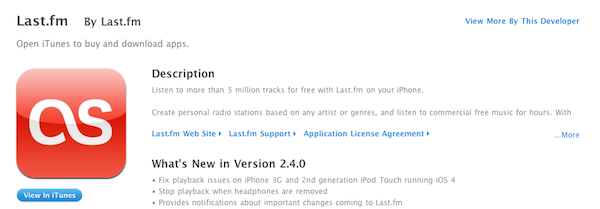
While we can’t verify on the authenticity of IRC chat, there’s more coming from Mr. Jones. He suggests Apple might have come up with these high terms to leave room for its own music streaming service later in the year, which will surely make some companies like Spotify and Rdio struggle to find their way between affordable consumer prices and Apple’s cut on subscriptions. Oh, and what about Last.fm? They announced their very own subscription-based service two weeks ago, and now if they want to keep their app in the Store it looks like they’re going to have to rethink the whole strategy. Or perhaps Last.fm will simply pull the app from App Store, as Jones believes “people on the iPhone will always subscribe using iTunes” because it’s easier.

So far, Apple’s subscription service hasn’t been a popularity success among publishers. But we believe we’ll hear the actual results of this new functionality in a few weeks, when customers will get used to the advantages of iTunes-based subscriptions and some publishers will (likely) see the first promising numbers coming in. If Apple will have to change its stance on subscriptions, you can bet they will. Now, we wait and see how the publishing industry reacts in the App Store.

Today In Apple Patents: Dense Lithium Cells, iOS Controls via Smart Bezels

Two patents uncovered today by AppleInsider and Patently Apple give us some insight on technologies and features Apple might implement in future MacBooks and iOS devices. Smart bezels (a subject we’ve covered before) make a comeback today in a patent that describes how tablets could benefit from losing physical buttons and delegating functions like volume and brightness adjustment to touch-sensitive hardware parts running around the screen of a device. Read more


Analyst: iPhone Nano Could Expand Apple’s Market By 6x

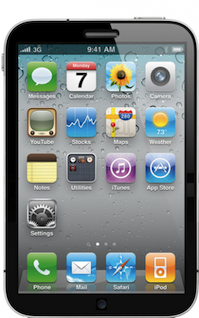
With recent rumors about a smaller, cheaper, streaming-only iPhone, it’s no surprise analysts are weighing in to offer their take on the subject. After the predictions of Apple’s promising 2011, a new iPhone model targeting “the masses” with a lower price point and possibility to run off-contract surely could deeply affect Apple’s market worldwide.

As reported by Forbes, analyst Toni Sacconaghi of Bernstein Research believes the so-called “iPhone nano” (or “iPhone mini”) could expand Apple’s addressable market by six times in terms of units:

Sacconaghi says his analysis suggests a lower price phone could expand Apple’s addressable market by 6x in terms of units and 2.5x in revenue. Based on the expected size of the 2011 market, and assuming the company captured 5% of the expanded market, he calculates that Apple would get an annual profit boost of $4.50 a share.

Read more


Windows Phone 7 Connector: Microsoft’s First Mac App Store App

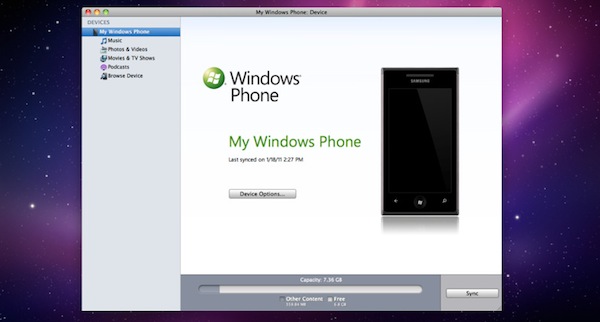
After being in public beta form since October, Microsoft’s Windows Phone 7 Connector application for Mac has lost its beta tag and is available in the Mac App Store – Microsoft’s first app to be in Apple’s new app store. The application gives Mac users the ability to sync music, photos, videos and podcasts to a Windows Phone 7 phone or a Zune.

Whilst Windows Phone 7 Connector is simplistic and not as full featured as the Zune software on Windows, it does feature iTunes compatibility and can also update the firmware on Windows Phone 7 phones. It is available for free in the Mac App Store.

[Via Engadget]


The Backlash Over Apple’s Subscription Service Begins

Less than a day since Apple unveiled it’s somewhat new subscription rules and unsurprisingly there is already some backlash from publishers and suggestions of possible antitrust investigations. The most prominent content provider that has spoken out so far is Rhapsody, effectively signaling that Apple’s 30% is not economically viable for them after paying music publishers and as a result will not be implementing the new subscription service and policy.

Rhapsody’s president Jon Irwin issued a statement and amongst noting that it would be “economically untenable,” he also noted that they will be “collaborating with our market peers in determining an appropriate legal and business response to this latest development.” This certainly gives the impression of possible legal action if that avenue is open to them and interestingly enough The Wall Street Journal contacted several law professors and reported that Apple’s new policy could potentially “draw antitrust scrutiny”.

Read more


“Apple Doesn’t Understand The Internet”

“Apple Doesn’t Understand The Internet”

Nadav Savio on the differences between Google and Apple:

It’s been said that Google doesn’t get ‘social’ and, though I think that is vastly overstated, there is truth there. Similarly, I’d say that Apple doesn’t understand the internet. Well I have a simple theory about it. There’s a cliché that everyone’s greatest strength is also their greatest weakness, and I believe that applies as well to organizations as to people.

Take Apple. They make amazing, holistic products and services and one of their primary tools is control. Fanatical, centralized control. Control over the design, over the hardware, over the experience. And that’s exactly the opposite of the internet, which is about decentralization and messy, unfiltered chaos.

It sounds good in theory, but the more I think about it, the more I don’t get the connection between the Internet and Apple as a company. Apple is not a web company. They make hardware and the software that runs on it. They make money out of hardware that, yes, is connected to the Internet. But the Internet as a service, not as a “population”. So where’s the line between “Apple doesn’t understand” and “unfiltered chaos”?

Maybe Apple doesn’t understand the people on the Internet, or they simply don’t care enough.

Permalink

iPad Magazines With Subscriptions Start Showing Up in the App Store

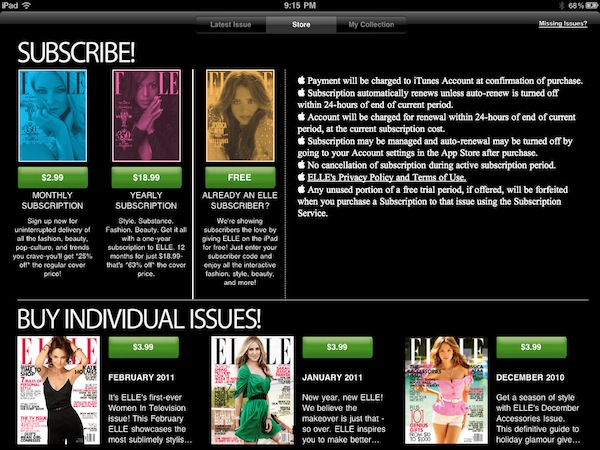
Well, look at that. Apple announced App Store subscriptions earlier today and, contrary to recent speculation, iPad magazines using the new billing system are already showing up in the App Store, before the public release of iOS 4.3. As noted by WSJ and AdAge, Elle and Popular Science are the first apps to come with the new Apple subscriptions, which rely on weekly / monthly / yearly payments and give customers the possibility to decide whether a publisher may access personal information like email and ZIP code or not. Read more


Publishers To Implement Subscriptions by June 30?

Following this morning’s news that Apple is officially launching App Store subscriptions for all developers, All Things Digital reports that a memo sent to publishers earlier this year indicates a June 30 deadline for developers to implement subscriptions in their content-based apps:

For existing apps already in the App Store, we are providing a grace period to bring your app into compliance with this guideline,” it reads. “To ensure your app remains on the App Store, please submit an update that uses the In App Purchase API for purchasing content, by June 30, 2011.

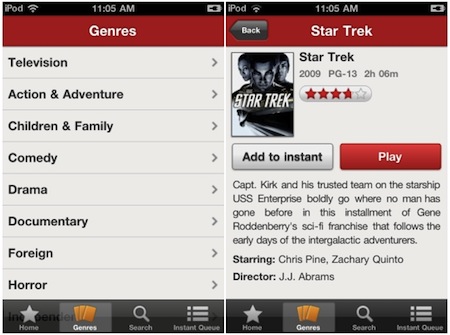
As John Paczkowski notes, this leaves 4 months to services like Hulu and Netflix to rebuild their apps to follow Apple’s rules and implement the new iOS subscriptions at the same price (or less) for all customers. Similar rules seem to apply to ebook reading applications: developers will need to update the apps to integrate Apple’s in-app purchases, where Apple takes its usual 30% cut. It is unclear, however, whether the memo refers to in-app purchases for single downloads (example: books in the Amazon Kindle books) or recurring subscriptions announced earlier today.


MobileMe Music Streaming: Keep It Simple

According to recent speculation, Apple is launching a complete overhaul of MobileMe this summer that will include a streaming option for media like music, movies, photos and videos recorded through an iPhone. Steve Jobs himself said in an email from last year that MobileMe would get “a lot better” in 2011. The fact that Apple is working on making MobileMe free in more sections, and more powerful and feature-rich when it comes to cloud-based access to files and media, seems pretty much obvious at this point.

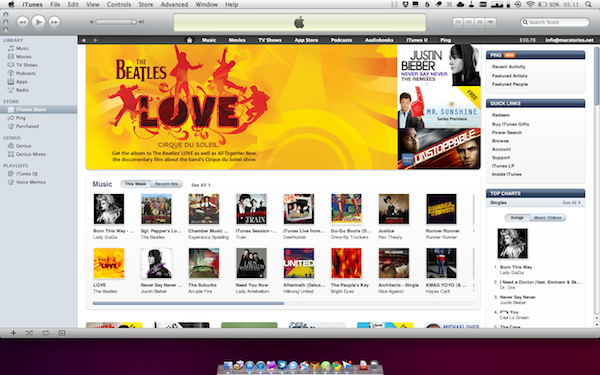
The problem is “how”. With the rumors floating around, all kinds of speculation have arisen lately: cloud storage for your entire iTunes library, through a subscription à la Dropbox; cloud storage through the existing MobileMe plans; cloud storage for free. The list of possible implementations goes on and on. Yesterday, The Loop’s Jim Dalrymple weighed in with an interesting theory about a user’s Mac as a the actual cloud behind MobileMe’s streaming:

Instead of trying to provide everyone with cloud storage, I believe Apple will use MobileMe as the brain of the cloud service. The actual storage will be on our individual machines. In effect, in the cloud.

MobileMe would handle the settings and streaming settings, the files would reside on our Macs. Jim further explains:

Here’s the thing — those songs won’t actually be on my iPhone until I tap to play them. As soon as I tap to play, it will download to my phone. You can scroll through your music library and choose something else and it will download and play.

In effect, what Apple’s doing is setting up a streaming service that you host. By using advanced caching and MobileMe as the brain behind the operation, you will always have access to your media.

Read more