Posts tagged with "apple"

Woz: Putting Color In The Computer Was One Of The Biggest Things Apple Ever Did

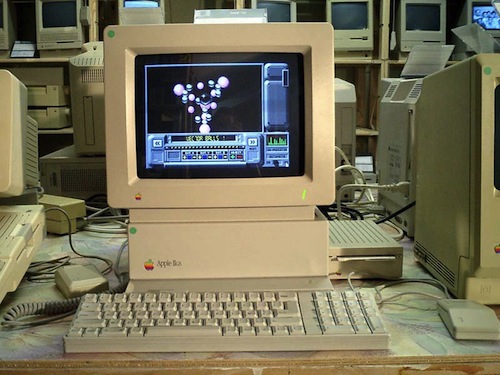
In an interview with FORA.tv called Creativity in the 21st Century, Apple co-founder and entrepreneur Steve Wozniak recalls an interesting moment in Apple’s history: the day when he came up with the idea to put color in a personal computer during a four-day and four-night coding / design session for Atari’s Breakout game.

“Putting color in the computer was probably one of the biggest things Apple ever did”, he says. “Nobody expected color to come into a computer because color machines cost a thousand dollars.” “I figured out a way to do it with one little $1 chip”. The Woz explains in those days he was tired, really tired, and his mind was in a “floating half-asleep state” due to the lack of sleep and too much work. He saw the technique Atari used to simulate colors on its first arcade games, and he thought it would be great to find a way to do real colors with pixels through a chip on a personal computer.

The Wikipedia entry for the Apple II explains:

Color on the Apple II series took advantage of a quirk of the NTSC television signal standard, which made color display relatively easy and inexpensive to implement. The original NTSC television signal specification was black-and-white. Color was tacked on later by adding a 3.58-MHz subcarrier signal that was partially ignored by B&W TV sets. Color is encoded based on the phase of this signal in relation to a reference color burst signal. The result is that the position, size, and intensity of a series of pulses define color information. These pulses can translate into pixels on the computer screen.

The Apple II display provided two pixels per subcarrier cycle. When the color burst reference signal was turned on and the computer attached to a color display, it could display green by showing one alternating pattern of pixels, magenta with an opposite pattern of alternating pixels, and white by placing two pixels next to each other. Later, blue and orange became available by tweaking the offset of the pixels by half a pixel-width in relation to the colorburst signal. The high-resolution display offered more colors simply by compressing more, narrower pixels into each subcarrier cycle. The coarse, low-resolution graphics display mode worked differently, as it could output a short burst of high-frequency signal per pixel to offer more color options.

Listen to the whole story of how color came to be into Apple’s computer below. A few years later, Steve Jobs experienced his first TV interview. Read more
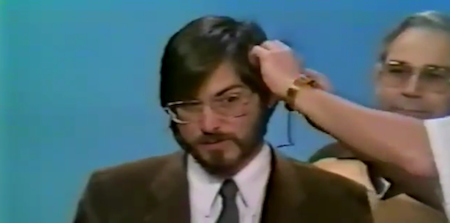

Found Footage: Young Steve Jobs’ First TV Appearance

Before the “Stevenotes”, the “magical” and “wonderful” products announced at conferences streamed live worldwide, there was a kid amazed to see himself on a TV monitor for the first time. In the video below, courtesy of Electricpig, you can see Steve Jobs in his twenties getting ready for an interview on national television.

It turns out – surprise – Jobs wasn’t always confident and “arrogant” as you’ve seen him in the past few years. He’s nervous, asks for some water before the show, people adjust his hair and microphone before the interview.

Ah, the good times. Check out the video below. Fascinating. Read more


Nokia CEO’s Leaked Memo Mentions Apple, iPhone Marketshare

Nokia CEO’s Leaked Memo Mentions Apple, iPhone Marketshare

An allegedly leaked memo of Nokia CEO Stephen Elop sets the record straight on Nokia’s position on a “burning platform” and the success of Apple in the past three years:

In 2008, Apple’s market share in the $300+ price range was 25 percent; by 2010 it escalated to 61 percent. They are enjoying a tremendous growth trajectory with a 78 percent earnings growth year over year in Q4 2010. Apple demonstrated that if designed well, consumers would buy a high-priced phone with a great experience and developers would build applications. They changed the game, and today, Apple owns the high-end range.

The first iPhone shipped in 2007, and we still don’t have a product that is close to their experience. Android came on the scene just over 2 years ago, and this week they took our leadership position in smartphone volumes. Unbelievable.

Awareness is the first step to build better products. Full memo available here.

Permalink

Apple Dominating Download-To-Own Video Market

When it comes to purchasing movies, iTunes (not Amazon) is still everyone’s de facto service according to iSuppli. With two thirds of the market under it’s control, Apple accounted for 64.5 percent for Internet video on-demand for 2010, competing with Amazon’s growing user base and Microsoft’s Xbox market.

“The iTunes online store showed remarkable competitive resilience last year in the U.S. EST/iVOD movie business, staving off a growing field of tough challengers while keeping pace with an dramatic expansion for the overall market,” said Arash Amel, research director, digital media, for IHS.

While Apple hasn’t maintained their lead of 74.4 percent market-share since 2009, the iPad and the Apple TV have played a large role in keeping Apple at the top of their game. We imagine that with the next iPad and future updates for the Apple TV (it can’t be much of a hobby driving that 64.5 percent market share can it?), Apple will continue to deliver a seamless market experience by staying competitive in both affordability and how content is delivered. Too, what if Apple ever launches that unicorn status Apple television?

[iSuppli via CNET]


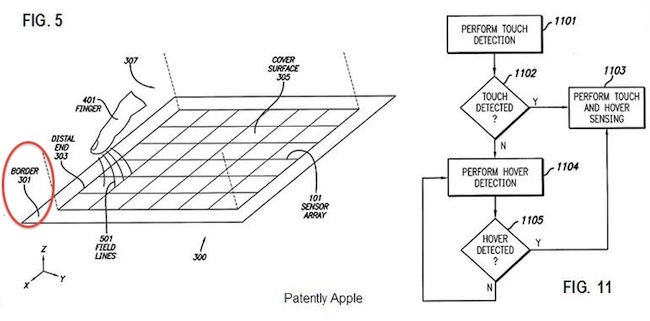
Another Apple Patent, Further Details on Touch Bezels

A few weeks ago, I published an article about the idea of “smart bezels” in iOS devices to avoid conflicts with third-party applications using multitouch gestures. With Apple playing around with the concept of “multitasking gestures” in the latest iOS 4.3 betas, it has become an issue for developers to find a way to enable 3,4 or 5 finger gestures without interfering with Apple’s own implementation:

The problem with the new gestures is that Apple decided to make them system-wide, activated with a preference panel in the Settings app. Once gestures are enabled, they override any other four or five finger gesture developers may have implemented in applications. Personally, in fact, I have experienced issues trying to use multi-touch gestures in Edovia’s Screens or other piano apps — software that makes extensive use of gestures above two and three fingers. Apple’s implementation overrides options set by developers, and there is no way to let the iPad know whether a user wants to perform an app-specific gesture or a system one, like “open the multitasking tray”.

Read more


Are iOS Game Prices Creating Culture of Disposability? Nintendo Boss Thinks So

The head honcho of Nintendo North America, Reggie Fils-Aime has criticized the price levels of apps in the iTunes App Store claiming that the low prices create a “mentality” for consumers that portable games should only be a few dollars. Fils-Aimes who is the Nintendo North American president and chief operating officer felt that such a mentality also breeds a culture that believes content is disposable because of the cheap price and that this was one of the gaming industries biggest risks today.

Whilst Fils-Aime’s is not the most independent commentator on this issue with his company’s Nintendo DS platform directly competing with the gaming aspects of iOS, his points do have some validity. Games on the App store have tended to be below $5 compared to DS and PSP games that are typically well above that range. The presumption is the Fils-Aime’s fears that the App store prices will spread across to all platforms and lead to more gimmicky, simplistic games rather than well though out, in-depth game experiences.

Read more


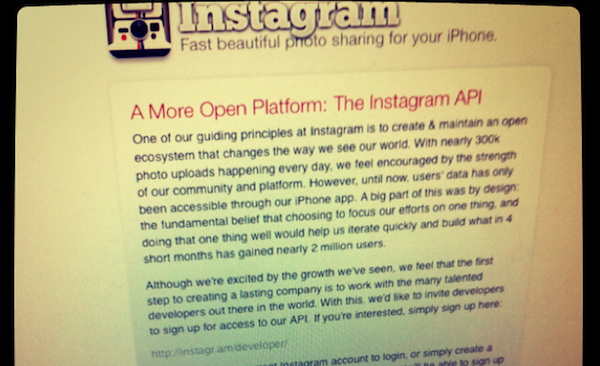
Instagram Shifting Focus to an Open Platform With API

Instagram has been a phenomenal success story gaining a user base of 2 million people in just four months that are now uploading 300,000 photos a day and now the developers are inviting developers to sign up for access to an Instagram API. In a blog post, Instagram CEO Kevin Systrom said that the guiding principle for Instagram was to “create and maintain an open ecosystem that changes the way we see our world,” opening up Instagram to other developers is their next step to fulfilling that principle.

The opening up of a developers API seems to indicate a shift by Instagram from one of giving users an app to edit photos and share, to one dominated by creating a social image sharing service. This could allow other apps such as Hipstamatic to hook into Instagram and let users share their Hipstamatic photo’s on through Instagram. The blog post doesn’t quite make it clear if this is their intention but it most definitely seems like the logical iteration.

Read more


Apple Planning Retail Store in Grand Central Terminal?

The New York Observer has a lengthy piece today on Apple’s rumored new location for a retail store in NYC: Grand Central Terminal. The Observer reports:

Sources tell The Observer that the maker of ubiquitous iGadgets—from computers to cell phones—hopes to open a store in the transportation and retail hub, though it has yet to begin the long approval process necessary for opening in a city landmark.

The publication also notes Apple and Grand Central’s leasing agent obviously declined to comment; Apple’s most popular stores in New York, the Fifth Avenue store and the one in Upper West Side, share a similar design approach with glass (Fifth Ave.) and stone walls (UWS). Recently, Apple has been rumored to be considering a revamp of the current Palo Alto retail store basing on the design guidelines from New York’s Upper West Side location.

As The Observer also notes, if the rumors are to be believed and Apple is indeed in the early planning stages of a Grand Central store, it will be interesting to see how Apple will manage to put a full-featured store in the famous retail hub. Although we think Apple’s shiny glass and minimal design philosophy would be a great fit for Grand Central.


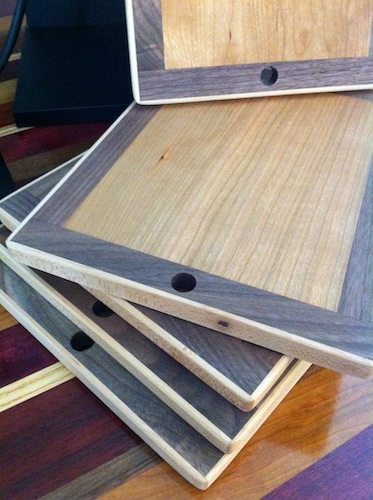
Apple: No More iPad Cutting Board

When Apple’s lawyers give you a call, perhaps you’d like to re-consider what you’re doing and, you know, just stop it altogether. That’s what happened to Dean Kaplan, creator of the iPad cutting board (not the one we featured here, which looked more like a giant iPhone).

From his personal blog:

A few months back we received a call from Apple lawyers and we were told to stop selling them. The reason given was based on “likeness” issues. A Wood cutting board. Lord have mercy on my soul.

Is Apple evil, or they just trying to protect a trademark? It was just a cutting board after all… [via AppAdvice]