Posts tagged with "apple"

By The End, He Was Drunk

There was less they could do to make sure the phone calls Jobs planned to make from the stage went through. Grignon and his team could only ensure a good signal, and then pray. They had AT&T, the iPhone’s wireless carrier, bring in a portable cell tower, so they knew reception would be strong. Then, with Jobs’s approval, they preprogrammed the phone’s display to always show five bars of signal strength regardless of its true strength. The chances of the radio’s crashing during the few minutes that Jobs would use it to make a call were small, but the chances of its crashing at some point during the 90-minute presentation were high. “If the radio crashed and restarted, as we suspected it might, we didn’t want people in the audience to see that,” Grignon says. “So we just hard-coded it to always show five bars.”

There are many good stories about the creation of the iPhone, but Fred Vogelstein’s article for The New York Times is something else. Vogelstein, who is working on a book to be released in November, talked to various former Apple engineers such as Andy Grignon and Tony Fadell and assembled a fantastic collection of anecdotes, memories, and details of Steve Jobs’ legendary iPhone keynote at Macworld 2007.

If you read one thing today, make it this one. Personally, I found it more entertaining (and possibly accurate) than several sections of Walter Isaacson’s book. Make sure to read what happened to Forstall’s chief of staff.

Permalink

Apple Announces iOS 7 Tech Talks

Following the release of iOS 7, Apple has announced new iOS Tech Talks. Taking place in 6 cities around the world, third-party developers will be able to get guidance from Apple engineers about creating software for iOS 7 in what are, essentially, “mini WWDCs” that last one day.

Get in-depth guidance about developing for iOS 7, learn practical coding tips and tricks, and obtain valuable one-on-one programming and design assistance in our lab. Choose which day is best for you — app developer day or game developer day. Apply now.

When WWDC 2013 sold out earlier this year in less than two minutes, Apple said that Tech Talks would be coming back. Notably, this year Apple is holding separate events for app and game developers (which is nicely in line with the company’s recent increased separation of apps and games on the App Store):

There will be two events per city, one devoted to app developers and the other focusing on game developers. You’ll choose to attend either the app developer day or the game developer day. You may only apply for one day at the iOS 7 Tech Talks.

The last time Apple “hit the road” was in late 2011 with the Tech Talk World Tour after the release of iOS 5. This time, Apple will hold Tech Talks in 6 cities instead of 9, and details are available here.

Permalink

Apple Updates iMac

This morning, Apple refreshed its iMac line with new CPUs, GPUs, faster WiFi, and faster PCIe flash storage options. From Apple’s press release:

Apple today updated iMac with fourth generation Intel quad-core processors, new graphics, next generation Wi-Fi and faster PCIe flash storage options. The updated iMac brings the latest technology to the stunningly thin design and gorgeous display of the world’s leading all-in-one desktop.

“iMac continues to be the example that proves how beautiful, fast and fun a desktop computer can be,” said Philip Schiller, Apple’s senior vice president of Worldwide Marketing. “Inside its ultra-thin aluminum enclosure, the new iMac has the latest Intel processors, faster graphics, next generation 802.11ac Wi-Fi and faster PCIe flash storage.

Aside from Intel’s new processor and graphics, the new iMacs come with 802.11ac support, which was also added to the company’s AirPort Extreme station earlier this year. According to Apple, this will deliver up to three times faster performance than the previous generation.

The new iMacs are available today from the Apple online store.

Permalink

USA Today Interviews Jony Ive and Craig Federighi

I found USA Today’s interview to be a much better read than Businessweek’s. Only Ive and Federighi spoke with USA Today’s Marco della Cava, but the interview is full of interesting tidbits, such as the fact that Apple’s teams “sat down” to work on iOS 7 in November 2012, or how Federighi describes the thinking behind the new OS:

“This is the first post-Retina (Display) UI (user interface), with amazing graphics processing thanks to tremendous GPU (graphics processing unit) power growth, so we had a different set of tools to bring to bear on the problem as compared to seven years ago (when the iPhone first launched),” he says. “Before, the shadowing effect we used was a great way to distract from the limitations of the display. But with a display that’s this precise, there’s nowhere to hide. So we wanted a clear typography.”

Naturally, Federighi omitted that iOS 7 was also released for the iPad 2 and iPad mini, which don’t have Retina displays.

A personal favorite of mine: what Jony Ive drinks during interviews.

Ive rocks excitedly, then leans forward. Could be the espresso he’s just set down.

Permalink

Businessweek Interviews Cook, Ive, and Federighi

On the launch week of iOS 7, the iPhone 5s, and iPhone 5c, Businessweek scored an interview with Apple’s top executives. The interview doesn’t focus on the new iPhones or thinking behind iOS 7, it’s not very long, and it dwells a bit too much on the implications behind Android’s market share and the old Apple-Microsoft war in the 90s.

But there are some good bits, such as this one:

The line against Apple is that its pace of innovation is off, but Ive and Federighi dismiss that. The two are keen to point out not just new features, but also the deep layers of integration that went into each one. Of the 5S’s fingerprint scanner, Ive says, “there are so many problems that had to be solved to enable one big idea.” Without mentioning competitors (Samsung), it’s clear the two executives think some of what passes for innovation is illusory at best. “We didn’t start opportunistically with 10 bits of technology that we could try to find a use for to add to our features list,” Ive says.

Federighi jumps in: “New? New is easy. Right is hard.”

Permalink

Apple Posts New “Designed Together” Commercial for iPhone 5c and iOS 7

Alongside the release of iOS 7 and a refresh of the App Store for newly updated iOS 7 apps, Apple has today posted a new commercial for the iPhone 5c and the new OS.

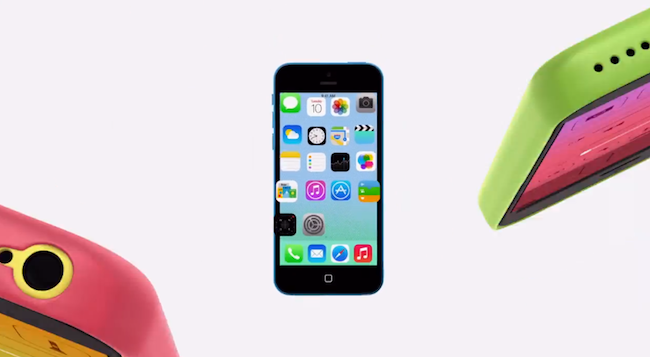
Called “Designed Together”, the commercial focuses on how the design of the iPhone 5c and iOS 7 complement each other in various ways. Apple’s message is that, with the iPhone 5c and iOS 7, the difference between hardware and software has been blurred, much like many aspects of its new operating system. There are playful animations that see iOS 7 features morphing into iPhone 5c hardware, and parts of the iPhone 5c’s colored shell becoming pieces of the iOS 7 interface.

The interplay between hardware and software is something that Apple has been remarking for the past week since the announcement of the iPhone 5c and iPhone 5s, and it’s no surprise that the company is now promoting the idea to the general public through a fun, delightful ad.

You can watch the embedded video below. Read more


Ohio Man Sues Apple Over Breaking Bad Season Pass

Jeff John Roberts:

An Ohio man has filed a lawsuit against Apple, claiming the company owes him and other Breaking Bad fans $22.99 for not including all 16 episodes in a “Season Pass” to the show’s final season, which was split into two parts.

In a class action suit filed in San Jose, California, Noam Lazebnik says Apple engaged in false advertising by providing only 8 episodes to consumers even though its “Season Pass” page explains that viewers will get “every episode in that season.”

Better call Saul?

Permalink

Nintendo Vs. Apple Pundits

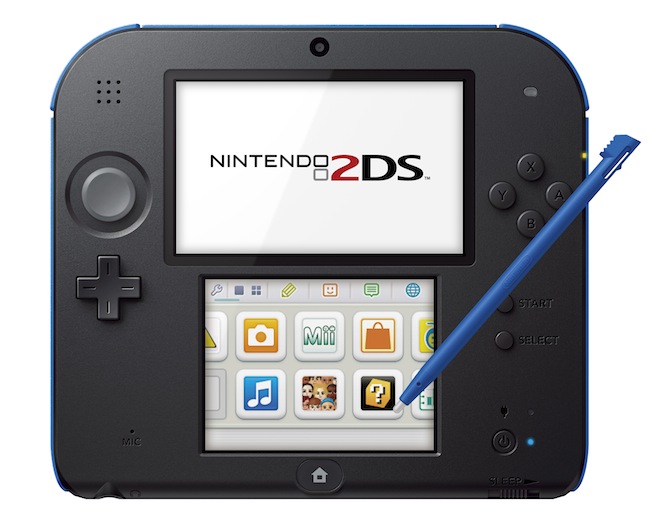
Yesterday, Nintendo announced a new portable console to play 3DS games that doesn’t actually support the 3DS’ 3D effect, a price cut for the Wii U, and various release dates for its upcoming holiday line-up. Unsurprisingly, several Apple-focused writers and bloggers suggested – again – that Nintendo is doomed; that they should start making games for iOS; and that Apple should just outright buy Nintendo.

I believe this notion – that in order to survive, Nintendo has to start making games for the App Store – shows a profound misunderstanding of how Nintendo works, operates, and, generally, plans its long-term future. I have discussed the topic with Myke last night on The Prompt.

Lukas Mathis has published an excellent post that aptly sums up what is wrong with the new “default narrative” about Nintendo:

Mac users should be familiar with the argument against this reasoning. Fantastic games like Super Mario 3DS Land can only exist because Nintendo makes both the hardware and the software. That game simply could not exist on an iPhone.

But there’s an additional problem with this argument: the premise is completely wrong. Nintendo is actually not doing poorly in the portable market. iPhones have not destroyed the market for portable gaming devices. The 3DS is, in fact, doing very well.

Nintendo and Apple may share some similarities (namely, tight integration of hardware and software), but their execution is profoundly different. Following Nintendo’s history and patterns through the years and just looking at the company’s numbers reveals a different approach and strategy.

Again, from Mathis’ piece:

The hypothesis that Nintendo needs to abandon the hardware market because the iPhone destroyed the market for portable gaming just isn’t consistent with reality.

The idea that Nintendo should make games for iOS is fascinating, easy to grasp and follow, but flawed. Nintendo doesn’t work like Apple. And, more importantly, Nintendo can’t – and doesn’t want to – be Apple. Nintendo is a mix of a toy company and a game company: consoles exist to support Nintendo’s crown jewels – the games and first-party franchises.

Nobody is denying that the Wii U is doing poorly: the console needs more quality first and third-party games, a better marketing message (same for the upcoming 2DS), and a clearer position in the market. But the overall numbers paint a different picture than what some Apple pundits are claiming: the Wii U is only slightly behind the point where the GameCube was at the same point in the console’s lifespan – and Nintendo did manage to turn a profit on the GameCube. The Wii remains the top-selling console of the current generation. The first 130 weeks of sales of the 3DS – as Mathis also notes – are comparable to those of the Nintendo DS – the second (soon first?) best-selling console of all time. Again, to understand this all you need to do is look at Nintendo’s numbers.

Mobile “casual” games are selling millions of copies (in many cases, in-app purchases) today, and Nintendo’s portable game sales are healthy, too. Here’s just one data point: Animal Crossing sold 1.54 million copies in the last quarter (a month ago, it was up to 4.5 million copies sold since its original release). Assuming that Nintendo makes around $30 in average revenue on first-party games, that would make for $46 million in revenue, in a single quarter, on a single game. Want more examples? As of March 2013, Luigi’s Mansion sold 1.22 million copies; Super Mario 3D Land moved 8.19 million copies; Monster Hunter 3 – a third-party, four-year old game – sold 2.10 million copies; also as of March 2013, Mario Kart 7 sold 8.08 million copies. Here’s what Nintendo’s upcoming line-up looks like, and add Pokémon X & Y to that (the series’ DS games, Black & White 1/2, sold 23.05 copies combined as of January-March 2013).

The 2DS is controversial and it may seem to lack any sort of practical sense, but it’s actually basic Nintendo 101 (do these other revisions ring a bell?). Except that, this time, the 2DS is aimed at addressing concerns of 3D games for children and the whole point is to sell the 2DS to kids for the holiday season, possibly alongside a copy of Pokémon.

Nintendo’s strength right now is that, once again, they can revolve around the fulcrum of portable hardware and game sales to sustain their operation, turn a profit, and buy more time to fix the mess that was the Wii U launch. Saying that Nintendo should shut everything down, go home, and start making games for iOS is an easy but flawed solution that just isn’t supported by the facts.