
This Week's Sponsor:

Turbulence Forecast

Know before you go. Get detailed turbulence forecasts for your exact route, now available 5 days in advance.


Posts tagged with "apple"

Apple Confirms: Media Event on October 23

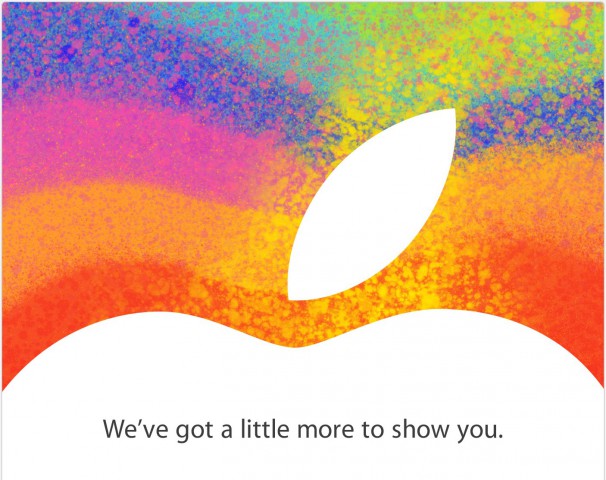
As first reported by The Loop’s Jim Dalrymple, Apple just sent out invitations to the press for a media event taking place on October 23 in San Jose. The invitations show an Apple logo with the tag line “We’ve got a little more to show you”.

Unlike other recent events that have been held at the Yerba Buena Center for the Arts in San Francisco, Apple will hold this event at the California Theatre in San Jose .

According to recent speculation, Apple will unveil a new, smaller 7.85-inch iPad at the event dubbed “iPad Mini”. The device has been long rumored to be a smaller version of the last-gen iPad 2, carrying the same 1024x768 non-Retina display in a thinner and lighter body with a smaller display. The core feature of the iPad Mini should be portability, as well as a reduced price for consumers.

Curiously enough, the invitation is somewhat reminiscent of the one sent for the original iPad event in January 2010.

As noted by Jason Snell, the last time Apple held an event in San Jose at California Theater was for the iPod photo announcement with a Bono/Edge live performance.

Based on more recent rumors, next week may also see the introduction of refreshed iMac, MacBook Pro, and Mac mini lines. Specifically, Apple is rumored to be planning a 13-inch version of the MacBook Pro with Retina display, a thinner iMac, and a new Mac mini model.

To get a sense of what a 7.85” (as opposed to 9.7”) iPad Mini would be like, check out our mockups from July.


Mapping The Entertainment Ecosystems of Apple, Microsoft, Google & Amazon

Please note: An update to this article is available here, it includes the December 2012 iTunes expansion (Music & Movies) as well as Xbox Music.


The choice of what phone or tablet to buy is one that often involves many considerations, chief amongst those is the physical device and the operating system that it runs. But I think there is a third fundamental consideration that is growing in importance: what services and entertainment ecosystems you’ll be able to access. You need only look back to the recent criticism of iOS 6, in which Apple replaced Google Maps with their own Maps app. Summing it up generally, Apple’s Maps app is sub-par to what it was replacing and that mattered to people - enough that Tim Cook felt the need to apologise for the frustration the switch caused.

Today I want to focus specifically on the entertainment ecosystems of Apple, Google, Microsoft and Amazon. I’m referring to the various digital content stores that are run by Apple, Microsoft, Google and Amazon - specifically their Music, Movies, TV Shows, eBooks and App stores. In my mind, there are four general aspects that make a good entertainment ecosystem:

  • Wide selection of quality content
  • Competitive prices
  • International availability
  • Interoperable on a user’s devices

I want to explore the third aspect in depth today, because it’s something that I feel is all too often downplayed by the technology press (which, coincidentally, is based predominantly in the US). I’ll also briefly discuss the fourth aspect as well at the end. Why are these two aspects so important? Well, smartphones and tablets are devices that have universal appeal, so for Apple or any of the other three to win the smartphone or tablet “race” - an entertainment ecosystem that is available across the world, not just in the US, isn’t just a cool extra feature, it’s a necessity. The US may be one of the biggest markets for such devices today, but is there any doubt that these devices will rival the prevalence of personal computers (which are everywhere) in years to come?

I’ve collected data on which countries each service is available in and then added in population figures to create many of the graphs and diagrams you’ll see below, mixed in with some of my own analysis and thoughts. Please note that the five HTML5 map diagrams are interactive, click on the logos of the four companies to compare their coverage.

Read more


Behind The App: MoneyWiz

Early this year, I set out to find an iPad app that I could enjoy using to manage my finances. After a couple of days of looking, I settled upon MoneyWiz from the developer SilverWiz. Its developers describe it as “beautiful, powerful and easy to use”, and having stuck with the app since late January I’m inclined to agree. In my reviews of the iPad and Mac versions my overall take was mostly positive (there is also an iPhone version, but that I have yet to use).

After exchanging a few emails with Iliya Yordanov, the founder of SilverWiz, I thought it would be interesting to have a Q&A with him and learn a bit more about the app, similar to what we’ve done in previous interviews here on MacStories, but this time, I decided to change things up a bit. For this interview I’ve assembled all the various stories about MoneyWiz and the SilverWiz company that Iliya shared with me into a single story that (hopefully) gives you a fascinating and unique look behind the app and company.

Disclaimer: At the time of publication SilverWiz is one of the advertisers on MacStories; however, this article was in the works before the campaign began. Advertising on MacStories is not handled by editors but by BackBeatMedia, and has no relation to editorial content whatsoever.

Read more


Apple’s Tribute To Steve Jobs, Yo-Yo Ma, And The Prelude From Bach

Apple’s Tribute To Steve Jobs, Yo-Yo Ma, And The Prelude From Bach

Camillo Miller of Italian website TheAppleLounge noticed an interesting tidbit about the brief tribute to Steve Jobs Apple published on its website today. The song that plays in the video, the prelude from Bach’s Cello Suite No. 1, sounds like F# major. The prelude, however, was composed in G major.

Why tuning down the prelude? It comes down to an important detail related to Steve’s tastes in classical music. The version that Apple is using on the website is played by American cellist Yo-Yo Ma. As Walter Isaacson writes in Steve’s biography, Yo-Yo Ma and Steve were close friends:

There was one classic musician Jobs revered both as a person and a performer: Yo-Yo Ma, the versatile virtuoso who is as sweet and profound as the tones he creates on his cello. They had met in 1981, when Jobs was at the Aspen Design Conference and Ma was at the Aspen Music Festival. Jobs tended to be deeply moved by artists who displayed purity, and he became a fan. He invited Ma to play at his wedding, but he was out of the country on tour. He came by the Jobs house a few years later, sat in the living room, pulled out his 1733 Stradivarius cello, and played Bach. “This is what I would have played for your wedding,” he told them. Jobs teared up and told him, “You playing is the best argument I’ve ever heard for the existence of God, because I don’t really believe a human alone can do this.” On a subsequent visit Ma allowed Jobs’s daughter Erin to hold the cello while they sat around the kitchen. By that time Jobs had been struck by cancer, and he made Ma promise to play at his funeral.

As it turns out, Ma plays the first four Bach suites tuning down his cello a full semitone, and there is a specific reason for doing so. In baroque times, instruments like cellos sounded a little different: the musical note A (A440) didn’t have a frequency of 440 Hz, but was more around 415 Hz – something known as the baroque pitch.

Among several modern ensembles, there is a consensus to play baroque music a semitone lower than A440. By tuning down the A to the baroque pitch,  the prelude from Bach sounds like F# major, while still playing it in the original G major; this helps achieve a more vibrant, “full” sound that is closer to the original and resonates beautifully.

The Cello Suites by Yo-Yo Ma are available on iTunes.

In many ways, Apple is still sweating the details.

Permalink

Tim Cook And Apple Remember Steve Jobs

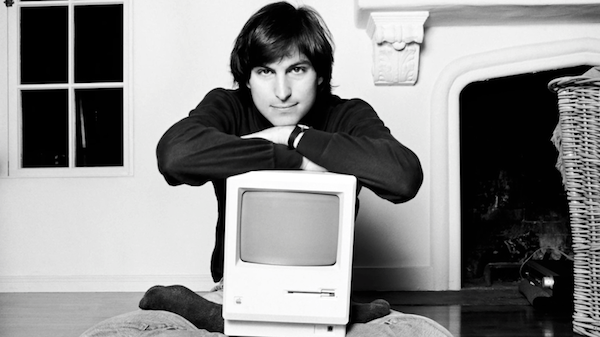
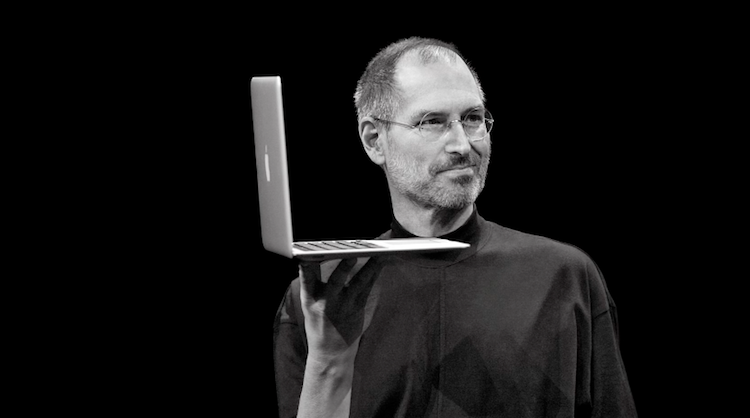
Apple has put together a short video to remember Steve Jobs, who passed away one year ago today. The video is a montage of pictures of Steve throughout his life, many of which show him holding the key milestone products in Apple’s history from the iMac to the iPod and iPhone. It’s narrated with audio from Steve Jobs speaking at various events throughout his life about Apple, its products and its culture.

The video is simply played when you navigate to Apple.com and once it concludes, there is a a short, sombre letter from Tim Cook, remembering and paying tribute to Steve.

A message from Tim Cook, Apple’s CEO.

Steve’s passing one year ago today was a sad and difficult time for all of us. I hope that today everyone will reflect on his extraordinary life and the many ways he made the world a better place.

One of the greatest gifts Steve gave to the world is Apple. No company has ever inspired such creativity or set such high standards for itself. Our values originate from Steve and his spirit will forever be the foundation of Apple. We share the great privelage and responsibility of carrying his legacy into the future.

I’m incredibly proud of the work we are doing, delivering products that our customers love and dreaming up new ones that will delight them down the road. It’s a wonderful tribute to Steve’s memory and everything he stood for.

Tim


Steve Jobs And The iPad 27 Years Before The iPad

Steve Jobs And The iPad 27 Years Before The iPad

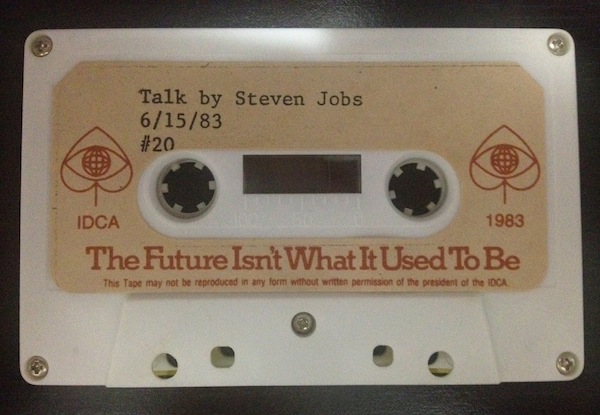
Matthew Panzarino has published a summary of a “lost” Steve Jobs speech from 1983 uncovered in its entirety by Marcel Brown. Brown was given a cassette tape with the full recording of a speech Steve gave at the International Design Conference in Aspen (IDCA) in 1983 (photo). During the speech, Steve shared some forward-looking ideas for the future of computing including what would become the App Store and, 27 years later, the iPad.

He says Apple’s strategy is to “put an incredibly great computer in a book that you can carry around with you that you can learn how to use in 20 minutes”. Does that sound like anything we are familiar with today? And they wanted to do it with a “radio link” so that people wouldn’t need to hook it up to anything to communicate with “larger databases” and other computers.

And about the App Store:

He thought that the software industry needed something like a radio station so that people could sample software before they buy it. He believed that software distribution through traditional brick-and-mortar was archaic since software is digital and can be transferred electronically through phone lines. He foresees paying for software in an automated fashion over the phone lines with credit cards.

When these tapes and old video recordings surface, it’s easy to dismiss them as “inevitable”. It was “inevitable” for Apple to come out with a tablet that looked like an iPad, and it was “inevitable” for software to be distributed digitally in an App Store-like marketplace.

Of course, progress itself is inevitable. But I don’t think it’s that easy – I don’t think we can dismiss innovations as “inevitable” or “obvious”. What supporters of the “inevitable” theory are missing is the work and vision and effort of dozens of people that it took to get there. In hindsight, it’s easy to look at any product and think it had to be in that way.

The speech uncovered by Marcel Brown is the perfect example of how some people, in this case Steve Jobs, have a vision that is only constrained by technology. A vision that, after years of research and design iterations, will become real and, at that point, “inevitable”.

Permalink

Enforcing Rule 2.25

Apps that display Apps other than your own for purchase or promotion in a manner similar to or confusing with the App Store will be rejected

Earlier today, a number of people noticed a change in the App Store Review Guidelines that took place back on September 12. Specifically, Keith Andrew at PocketGamer noted how the new rule 2.25 could pose serious risks for any app that promotes other apps with direct linking.

The wording is typically vague, but clause 2.25 appears to give Apple carte blanche to put any app that promotes titles from a different developer out of action. At the moment, we understand Apple’s likely prime targets are pure app promotion services, such as (but not necessarily including) FreeAppADay, AppoDay, AppGratis, Daily App Dream and AppShopper, amongst others.

Matthew Panzarino at The Next Web and Darrell Etherington at TechCrunch followed up on the news of the late “discovery” with more details on possible implications and comments from developers of apps that might fall under rule 2.25.

There seems to be a lot of confusion on Twitter in regards to the exact scope of this new rule. In particular, due to some poor sensationalistic headlines that are unfortunately published on a regular basis, some are speculating Apple will start banning all apps that promote other apps or any kind of “aggregator” that collects links to multiple App Store apps. That’s just silly and simply not true. Read more


Tim Cook Writes Open Letter To Customers, Apologizes For Maps ‘Frustration’

Apple has just posted on its website a letter from Tim Cook to Apple’s customers, apologizing for not delivering the best experience with its new iOS 6 Maps. In the letter, prominently link to from the front page of Apple.com,  Cook describes how Apple “strives” to make products the “deliver the best experience possible”, but that the new Maps app has fallen short of this standard, frustrating millions of customers.

He re-emphasises the previous Apple statement on Maps, by saying that as time goes on and more people use Maps (there have already been nearly half a billion location searches), that the Maps app will get better. But in the mean time, Cook suggests that users try alternative map apps, and actually names some third-party apps available in the App Store such as “Bing, MapQuest and Waze” or alternatively to use “use Google or Nokia maps by going to their websites and creating an icon on your home screen to their web app”. Whilst that is certainly far from ideal, it’s quite extraordinary to see Cook actively name and recommend third party mapping solutions.

Cook explains that since they first shipped the original iPhone, they’ve been wanting to add new features such as “turn-by-turn directions, voice integration, Flyover and vector-based maps”. Cook claims that they had to create a new version “from the ground-up” to achieve these - there is no mention of Google’s role in the letter.

Tim Cook’s full letter to customers:

To our customers,

At Apple, we strive to make world-class products that deliver the best experience possible to our customers. With the launch of our new Maps last week, we fell short on this commitment. We are extremely sorry for the frustration this has caused our customers and we are doing everything we can to make Maps better.

We launched Maps initially with the first version of iOS. As time progressed, we wanted to provide our customers with even better Maps including features such as turn-by-turn directions, voice integration, Flyover and vector-based maps. In order to do this, we had to create a new version of Maps from the ground up.

There are already more than 100 million iOS devices using the new Apple Maps, with more and more joining us every day. In just over a week, iOS users with the new Maps have already searched for nearly half a billion locations. The more our customers use our Maps the better it will get and we greatly appreciate all of the feedback we have received from you.

While we’re improving Maps, you can try alternatives by downloading map apps from the App Store like Bing, MapQuest and Waze, or use Google or Nokia maps by going to their websites and creating an icon on your home screen to their web app.

Everything we do at Apple is aimed at making our products the best in the world. We know that you expect that from us, and we will keep working non-stop until Maps lives up to the same incredibly high standard.

Tim Cook
Apple’s CEO


Bad Piggies Is Now Available For Download On iPhone, iPad and Mac

Bad Piggies, the latest game from Rovio, is now available for download on iPhone, iPad, Android and Mac. This latest Rovio game is a twist on the infamous Angry Birds series in which you now control the pigs and must pilot them safely to the bird eggs. Unlike the simple mechanic featured in Angry Birds in which you simply slingshot the birds into the pigs and their structures, Bad Piggies requires you to make “the ultimate flying machine” and steer them through the levels.

With more than 60 levels, and free updates coming up, you have hours and hours of pig-crashing, exploding, and flying fun! Get three stars on every level to unlock 30 more puzzles! HINT: Sometimes you need to play the level several times to achieve all the objectives – try building a new device or steering in a different way to earn all the stars!

The game currently features 60 levels, with another 30 unlockable by getting three-stars on levels and will, like Angry Birds, receive free updates that add levels. There’s also 4 sandbox levels in which you can really have fun with making some awesome flying contraptions with various fans, wings, motors, balloons and other objects. If you’re interested in reading a review, check out this one by Polygon’s Chris Plante:

Bad Piggies’ levels aren’t nearly as fast as Angry Birds. They require attention and patience as the pig slowly travels from one end to the other. Unlike Angry Birds, it’s not as easy to play on a subway or during a coffee break. The main game is a fine distraction, something to do with your hands while watching sitcoms or talking on the phone.

Download links:

Jump the break to watch the Bad Piggies trailer.

Read more