Posts tagged with "apple"

Adobe Sees 45% Growth Of Premiere Pro On The Mac, Credits Final Cut Pro X

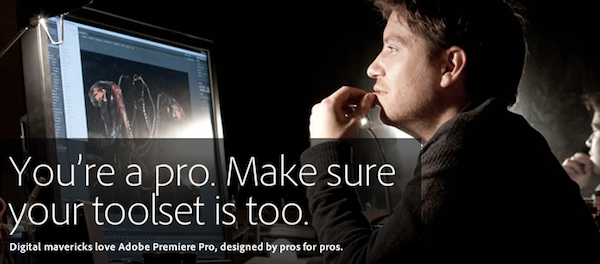
According to a report in The Loop, Adobe will today announce that sales of its professional video production tools have skyrocketed year-over-year. Which, in large part has been driven by growth on the Mac platform with disillusioned Final Cut Pro users moving over to alternative products after Apple released the controversial Final Cut Pro X version earlier this year.

As the backlash began from professional video editors, Adobe targeted them, giving discounts for Premiere Pro (Adobe’s alternative to Final Cut Pro) and publishing video tutorials and documents to ease the transition. This appears to have payed off with a 45% growth of Adobe’s video production tools on the Mac and total year-on-year growth across both the PC and Mac platforms at 22%.

In comparison to Adobe’s efforts, Apple hasn’t done much to quell concerns apart from release a Q&A article, refund customers for the purchase and only last week they began selling Final Cut Pro 7 again but at the standard $999 price.

[Via The Loop]


MacUpdate Bundle: A Fine Selection Of 11 Mac Apps For Just $50

Following Monday’s Bundlehunt package of 11 great Mac apps and various ‘design goodies’, today there is a new MacUpdate Bundle which also comes with a selection of top-notch Mac apps and utilities for just $49.99. The bundle includes some of MacStories’ favourite Mac apps including the excellent Fantastical (review here), the informative iStat Menus and the useful Printopia (review here). If you tried purchasing the included apps individually you’d be paying nearly $500, so if you’re looking to beef up your collection of Mac apps this is a terrific deal at just $49.99.

The MacUpdate Bundle includes:

  • Toast 11 Titanium - if you need to do more than the basic disc burning that the iLife software provides, Toast is an excellent option. It also has a solid set of video conversion tools as well as supporting the ability to burn copies of recorded video from EyeTV and copying CDs and DVDs with no fuss.
  • Printopia - only available to the first 10,000 purchasers of the MacUpdate Bundle, Printopia allows you to share your printers connected to a Mac (physically or over a network) with an iPad, iPhone or iPod Touch - allowing you to print from an iOS device to virtually any printer (as opposed to the limited selection of HP printers that are natively supported).
  • Data Rescue - this is an advanced piece of digital data recovery software for the Mac, allowing you to safely recover previously deleted files.
  • FX Photo Studio Pro - this Mac post-processing image editor comes loaded with over 150 image effects and comes with some substantial customizations options, allowing you to mix and match effects to perfect an image.
  • Fantastical - this is a powerful Calendar application that sits in your menu bar, working with existing calendars and comes with a powerful natural language engine that can create an event from a simple phrase (e.g. Lunch with Matt on Wednesday 1pm).
  • iStat Menus - monitor all of your Mac’s vital statistics with just one glance to the menubar, it supports monitoring everything from CPU usage to component temperatures to network usage and more.
  • Phoneview - access and export various pieces of data from your iPhone or other iOS device from call history, text messages, photos, voice memos and more.
  • Concealer - conceal important snippets of data in an encrypted archive - everything from license keys to diary entries can be concealed.
  • EarthDesk - replace a boring desktop background with a live-updating image of the Earth with real time movement of the sun and even cloud coverage.
  • Mellel - a powerful word processor that is appreciated by scholars, students and those writing technical documentation.
  • Bookends - for professionals and students this is an extremely powerful reference management application (and it integrates perfectly with Mellel)


Disclaimer: For every bundle purchased through MacStories, we receive a small kickback. If you’re interested in the bundle and supporting the MacStories crew, please use the link here or any of the affiliate links above.


Adobe Adds Full Support For Newsstand In Its Digital Publishing Suite

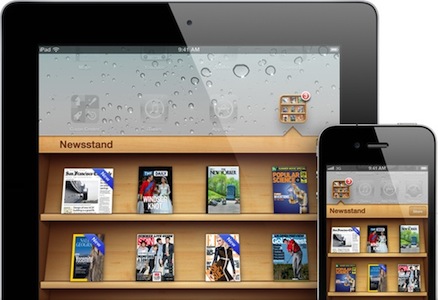
Adobe has today announced that publishers who use the Adobe Digital Publishing Suite will be able to create newspaper and magazine files that appear in Apple’s new Newsstand feature. Announced at WWDC and arriving in iOS 5 this Fall, Newsstand will allow new editions of Newspapers and Magazines to be automatically downloaded (in the background) as soon as they are made available - and storing them all in a pseudo-folder on a user’s home screen.

Today’s announcement by Adobe reveals that their Digital Publishing Suite will be able to create files that are compatible with Newsstand, allowing publishers to create and deliver new editions directly to users with little fuss. Todd Teresi, from Adobe’s Media Solutions department said the “support for Newsstand will provide Adobe’s publishing customers the ability to deliver engaging content directly to the digital doorstep of subscribers on their iPads”.

Applications built with Adobe Digital Publishing Suite and enabled for Newsstand will allow publishers to better merchandise their content with support for Newsstand push notifications and icon covers displayed on the Newsstand shelf, reflecting the latest issue of the magazine or newspaper.

This move by Adobe is quite a significant motion of support for Apple’s Newsstand feature because their Digital Publishing Suite is already used to create more than 600 titles, including high profile publishers such as Conde Naste and Reader’s Digest. With little effort, all these publishers can now add support for Newsstand.

[Via MacRumors]


Verizon Promotes The 3G iPad 2 In New Commercial

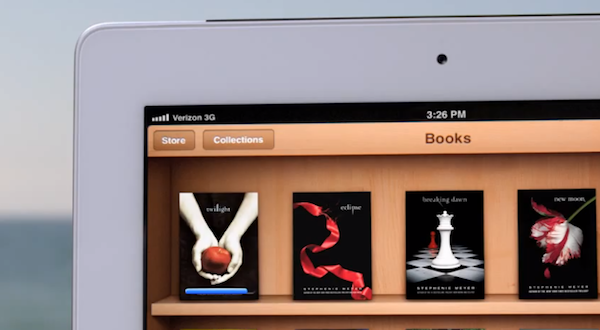
It certainly doesn’t have the flair and emotional connection of one of Apple’s iPad adverts, but Verizon has aired its own iPad 2 commercial, promoting the use of the device with their 3G network. It highlights a few specific iPad features that are made functional with Verizon’s network such as downloading a new book from iBooks at the beach and tweeting at a campsite. Consistent with other Verizon adverts, specific mention is also made towards the end of the advert of Verizon’s network coverage across the US, stating that it is “America’s largest and most reliable network”.

Salesperson: It’s faster, thinner and lighter and with the power of Verizon you can stay connected almost anywhere. Lets say you want to download a best-seller at the beach. Done. Or if you want to stay connected when your miles away from WiFi. No problem! You can even tweet when you’re nowhere near your followers… and you can post pictures too! So what do you think?

Customer: I’ll take it.

Narrator: The iPad 2, on America’s largest and most reliable network. Verizon.

Jump the break to have a watch of the Verizon iPad commercial for yourself, as well as one of Apple’s own iPad adverts, to see for yourself some of the differences. [via 9to5 Mac]

Read more


Ronald Wayne’s “Adventures of an Apple Founder” Now On iTunes

In the history of Apple, Inc. the role of the company’s third co-founder, Ronald Wayne, is often overshadowed by the genius of Steve Jobs and Steve Wozniak, who built the very first Apple I personal computer and unveiled it at the Homebrew Computer Club. Ronald Wayne was the “adult supervisor” in the early days of Apple, the middle-man between Jobs and Wozniak whom they could trust in case of any disagreement. Wayne contributed to the first Apple logo, and drafted the initial partnership agreement to establish the company. He was given a 10% stake in Apple which, however, he sold for $800 after a few weeks. He later received an additional $1500 for giving up on any claim of ownership in Apple, thus bringing his original 10% to $2300 worth of “profit”, whereas if he stayed on Apple until today his 10% would be worth $35 billion.

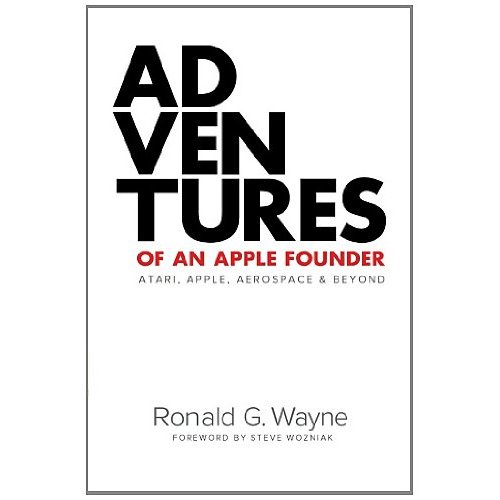
Today’s Ronald Wayne says he doesn’t regret his decision, made “with the best information available at the time”. This, and another anecdotes from Wayne’s past and subsequent ventures are detailed in Adventures of an Apple Founder, an autobiography available for $9.99 on the iBookstore, as well as Amazon in paperback format. From the iTunes description:

In the spring of 1976 while working as chief draftsman and product development engineer at the video game maker Atari, Ron assisted a co-worker with the subtle intricacies of forming a small business.It was with Ron’s natural sensibilities, experiences, and skills honed over a lifelong career in many disciplines that he offered himself openly as a resource to two much-younger entrepreneurs: Steve Jobs & Steve Wozniak. These same traits would drive Ron’s decision to leave a short time later.

Adventures of an Apple Founder offers insight into the experiences that define the man whose passion for engineering and design spans over three quarters of a century, half a dozen industries, and a lifetime of adventures!

Wayne recently appeared in an interview alongside Steve Wozniak following Steve Jobs’ resignation as Apple CEO. As a side note, Steve Jobs’ official biography by Walter Isaacson recently got a classic cover and it will be released in November 2011, including details on the resignation. [via setteB.IT]


Apple Hunting For People To Beef Up ‘New Product Security’

Following last week’s news that Apple had lost another iPhone prototype, PC Mag has discovered that Apple is now hiring for two positions that are titled “New Product Security Managers”. Curiously, the positions became available just a day after CNet reported that an iPhone 5 prototype had been lost at a San Francisco bar.

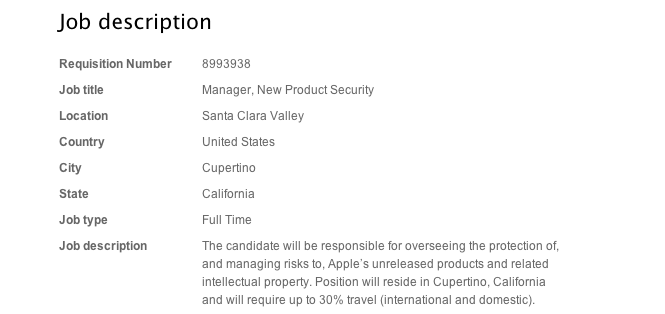
That’s probably somewhat of a coincidence, but it’s clear Apple wants to step up its efforts in safeguarding future products and its intellectual property, describing the new jobs as follows:

The candidate will be responsible for overseeing the protection of, and managing risks to, Apple’s unreleased products and related intellectual property. Position will reside in Cupertino, California and will require up to 30% travel (international and domestic).

The individual will collaborate with other security managers by contributing to, and managing execution of, strategic initiatives set forth by Director, Global Security.

That ‘Director of Global Security’ is David Rice, a former NSA vulnerability analyst and author of ‘Geekonomics’, a book that discused “the astonishing lack of consumer protection in the software market and how this impacts economic and national security”. He was hired by Apple back in January of this year, after Apple also hired Window Snyder as Apple’s senior security product manager in March of 2010.

[PC Mag via CNet]


3G iPad 2s Receive Regulatory Approval In China, First Hong Kong Apple Store Opening Soon

The Wall Street Journal is today reporting that the 3G models of the iPad 2 may eventually be launching in China after the Chinese ‘Telecommunication Equipment Certification Center’ approved the device. Although a specific launch date is not yet known and China Unicom declined to comment to the Wall Street Journal.

Based on the information contained in the Wall Street Journal report, the model (A1396), is the same as the US model that went on sale in March. Those in China have been able to purchase the WiFi models of the iPad 2 since it launched on May 6th but the 3G models were forced to go through additional regulatory approvals.

According to China’s Telecommunication Equipment Certification Center, a device by Apple with third-generation high-speed wireless data capabilities was issued the network access license needed for the company to begin official sales in China. The device, listed under model number “A1396,” is compatible with the 3G standard WCDMA, and would work with the cellular network operated by Apple’s local iPhone partner, China Unicom (Hong Kong) Ltd.

Interestingly, the 3G versions of the iPad 2 mysteriously appeared yesterday, and promptly disappeared, from the official Apple website. Penn Olson managed to take a screenshot of the page which details prices starting at 4,688 RMB for the 16 GB version, 5,488 RMB for the 32 GB version and 6,288 RMB for the 64 GB version - all of which had estimated shipping times of 2-3 weeks.

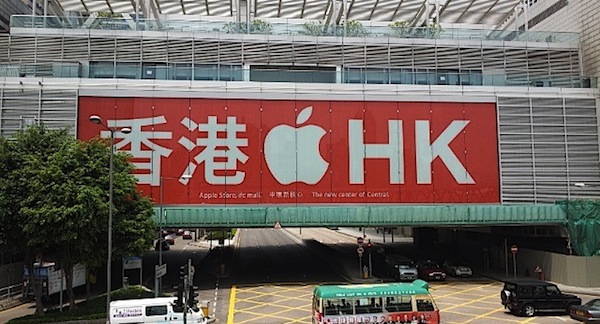
Meanwhile in Hong Kong, Apple has confirmed that they will be officially opening this quarter, with Engadget China claiming a September 24th date. The store is located in the International Finance Center’s IFC mall and is currently covered up in large, striking red banners with the slogan “The new center of Central”.

[Via MacRumors]


The “Apple TV Set”


Jean-Louis Gassée notes how the “Apple television” that’s been long rumored among Apple fans and the tech press will have to face two problems: architecture and implementation.

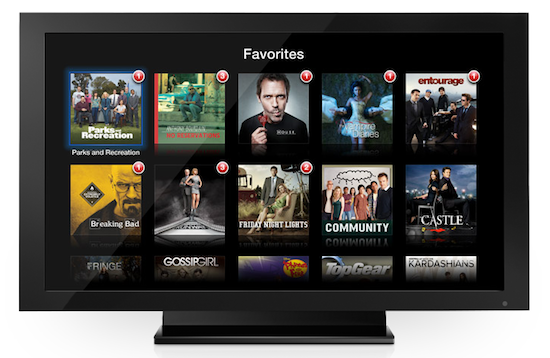
As many imagined, the device would look something like this:

Imagine a true plug-and-play experience. One set with only two wires: power and the cable TV coax. Turn it on, assert your Apple ID credentials and you’re in business.

But then it would come down to getting cable channels into the set:

Large carriers, such as Comcast, are known as Multiple System Operators, MSOs, with an emphasis on the “M”. They’re a patchwork of acquired systems that have never needed to be compatible. This would either restrict the TV set to a small number of carriers, or make the product more complicated and prone to more bugs — and more field tech visits.

And on top of that, Apple would have to solve the problem of easily troubleshooting a 50-inch screen, or simply figure out a way to get people to upgrade to newer models of “Apple TV set” every couple of years:

We’re willing to upgrade our laptops, smartphones, and tablets every year or two because Moore’s Law keeps improving the CPU and other electronics at the rapid rate that made the computer industry’s fortunes. An integrated Apple TV set wouldn’t benefit from better electronics as naturally as an iPhone does…unless, of course, the tiny iOS computer is implemented as an easily accessible plug-in module.

I’d argue that the television market is so variegate, and potentially lucrative, that there’s more to figure out and correctly implement than U.S. cable providers and MSOs. Looking at Apple now, it’s hard to see a company willing to disrupt a market with a brand new, premium device…available exclusively in the United States. Even the Apple TV, “not part of the stool” and still considered a hobby, was released in the United States and Europe last year. Then look at the iPhone. It took almost four years to get there, but as it turns out the majority of profits now come from regions outside Americas (and iPhone is “key driver” of Apple’s revenue in Greater China – more context here and here).

The problem with the Apple TV set isn’t an “American cable company” (you name it) – it’s the television market as a whole. If we take in account the segments and population that can afford an HDTV nowadays – assuming it falls somewhere in between the $500 - $3000 range – it’s easy to see how Apple will have to make a product that ultimately just works with any television content provider in the United States, Europe, and Asia. Why would they ignore those markets?

There are greater issues to solve and differences to consider in the international TV market. Just a few examples: Italy still switching from analog to digital TV, satellite’s popularity in many areas of Europe, or some ISPs’ offerings with Internet/ TV packages. Supposedly, Apple will have to come up with a solution to work around these, in several countries. Italy may not be Apple’s finest source of revenue, but Europe/Japan/Asia-Pacific combined made for $14.94 billions of revenue in Q3 2011. I’m just assuming some of these Apple customers would also be interested in a TV set from Apple.

We don’t know what Apple has in mind, we can speculate on the company’s margins for such a device – we can only imagine that there is a market to disrupt because the current television sets are too difficult to configure and troubleshoot, with different user experiences and fragmented interfaces, store fronts, or even remotes.

I believe the question isn’t what will the TV set from Apple look like, as we can make a pretty accurate guess about that. Rather, I’d speculate on how many markets Apple is willing to enter at once, and its timing.


Report: Apple Considering USB 3.0 For Macs

According to VR-Zone Apple has been investigating third party USB 3.0 host controller chips and may be considering to add support for the latest USB standard in upcoming Macs. Many had presumed that with Thunderbolt Apple may not opt to support USB 3.0, but given that USB 3.0 chips have negligible cost (below $3) it may be seen that Apple embraces the standard as a complement to their Thunderbolt ports.

Intel has yet to add support for USB 3.0 on their chipsets and support is not expected until next Spring, which may explain why Apple is reportedly talking to other manufacturers. Compared to USB 3.0, Thunderbolt controllers are much more expensive at $10 to $15 per chip with corresponding chips on the device also required. This cost associated with Thunderbolt is an inherent limitation in the technology that could be compensated by supporting USB 3.0. As Electronista explains “USB 3.0 would, as a result, still be useful as a catch-all for faster devices that don’t need Thunderbolt in addition to the USB 2.0 devices it would inherently recognize.”

Apple may be aware of Thunderbolt’s current obstacles, the sources added. Apple is supposedly talking directly with some of its hardware partners, most likely early Thunderbolt supporters, to have them develop external drives more suited to the home or to small companies. [Electronista]

[VR-Zone via Electronista]