Posts tagged with "apple"

iCloud Detailed: Initially Free with iTunes Purchase, $25 a Year Subscription

The Los Angeles Times details the undisclosed features of iCloud, which has been reported by Apple to be a significant staple in Monday’s WWDC keynote. The LA Times reports that iCloud will initially be offered free with a purchase from the iTunes Store, meaning a digital download may fetch you free online storage or perhaps a free subscription, similar to Amazon’s current offering where they offer free cloud storage for a year with an album purchase (many took advantage of Lady Gaga’s $.99 album for this additional deal). Users will want to build their libraries relatively quickly, and the subscription is said to be available at as little as $25 per year. CNet previously suggested that the service wouldn’t be free, but could be around $20 a year. This looks like it’ll be a little of both as Apple introduces users to the service.

The LA Times says Apple initially plans to allow consumers to store their data on Apple’s servers, and would like to offer much more than music in the realm of movies, television, and and other digital content through iCloud’s publishing platform. Whether that storage involves uploading your own media or having iTunes scan your library is currently unknown, but we’re hoping for the latter.

The agreements, finalized this week, call for Apple to share 30% of any revenue from iCloud’s music service with record labels, as well as 12% with music publishers holding the songwriting rights. Apple is expected to keep the remaining 58%, said people knowledgeable with the terms.

The report comes when Apple’s network devices are reported to be ready for an upgrade, perhaps providing some form of iCloud caching for media playback. Apple just sealed the deal with Universal Music Group, and now with iCloud details leaking (as well as iCloud branding), it’ll be hard to keep the Lion in its cage over the weekend.

[via Los Angeles Times]


Apple Seals the Deal with Universal Music for iCloud

Greg Sandoval on CNet reports that Apple has sealed the deal with Universal Music Group this afternoon, which gives the Apple the biggest selection of content from their previous deals. With Universal on board, Apple now has all four of the major record labels including EMISony and WMG,  available for its upcoming iCloud service, and all that’s left is to pull the trigger on the upcoming service. Universal Music contains many popular artists such as Kanye West and Lady Gaga, and while Apple still has some work to do when it comes to publishers, they’re all but guaranteed to be offering a huge music selection in the cloud. As Peter Kafka explained earlier, publishers own various compositions, and require different terms and payment in terms of online distribution.

[via CNet]


App Stores and iTunes Showing Trouble Worldwide [Update: Back Online!]

If you wanted to download Angry Birds, take a gander at Apple’s new WWDC app, or download Lady Gaga’s newest album, you may have noticed that iTunes and the App Store ecosystems are failing to download or accept purchases worldwide. While content may still be accessible to browse, Engadget first noticed that the podcast section of iTunes has gone offline, followed by failure by many to download apps from the iOS and Mac App Stores. The most common issue right now is that users can’t download apps from the iPhone or iPad, with symptoms of slow loading times, download failures, and general errors popping up in several countries worldwide. Several users are reporting problems, so either Apple is working on the backend (perhaps this service disruption as something to do with iCloud), or a server or two have decided to bite the dust at the wrong time. Apple Discussion forums such as this one are starting to crop up during this moment of inconvenience, and we’ll keep you updated as the afternoon progresses.

[Updating…]

Read more


Tim Cook: Tablets To Outsell PCs Over The Next Several Years

In a report by Goldman Sachs analyst Bill Shope, Tim Cook speaks some pretty bold words about the future of the tablet market and the PC market. Speaking with Shope, he says “he sees no reason why the tablet market shouldn’t eclipse the PC market over the next several years”.

Shope notes that Apple, in the statement is more “overtly optimistic” on the long-term prospects of the platform than they have in the past. In the report itself, Shope suggests that Apple will sell 8.1 million iPads in the June quarter, compared to last year it would be 72% increase.

Apple executives were also touting the fact the iPhone is now officially available from 200 carriers worldwide, and that ten years since opening, its retail stores are doing well.

[Via BusinessInsider]


Backflip Studios Hits Milestone With 100 Million Downloads Of Its Mobile Games

Backflip Studios, the developer behind the popular iPhone games of Paper Toss, Ragdoll Blaster 2 and Strike Knight today announced that their mobile games have been download more than 100 million times - as a comparison, Angry Birds has been downloaded over 200 million times. It notes that roughly 80% of the downloads have originated from the iPhone, with about 20% from Android.

Backflip has around 25 million monthly active users, which is already up from 20 million in December last year, even more impressive is the 2.5 million daily active users that Backflip entices across its entire network of games. Roughly a third of the company’s revenue comes from App Store sales whilst another third comes from advertising (last October advertising was worth half a million dollars per month for Backflip) and another third from in-app purchases. Backflip’s success isn’t slowing down either, its revenue and user growth is between double and triple what it was just a year ago and its free games generate more than a billion impressions a month.

The Backflip team, which is self-funded and has 23 employees, is ramping up for a number of game releases coming this summer. Launching today was Strike Knight HD, the iPad version of the popular bowling game, and then there will Shape Shift, Backflip Solitaire and Boss Battles. Most, if not all, will initially be offered for free, following the success of Backflips ‘Summer of Free’ promotion that drew the company a huge success.

[Via VentureBeat]


Patent Hints At Apple’s Traffic Service for Calendar Alerts

When Apple posted the location tracking Q&A to address the questions raised after two researchers discovered iOS was keeping a database of cell towers and WiFi hotspots iPhones and iPads used in the past stored unencrypted on a user’s computer, the company also revealed that, besides crowd-sourced WiFi hotspot and cell tower data, they were also collecting crowed-sourced traffic data to build an improved traffic service to launch in the next couple of years. Much speculation led to believe Apple was finalizing work on its own maps service after the acquisition of poly9 and Placebase, though a report from last week and a tidbit from Google’s Chairman Eric Schmidt confirmed the upcoming iOS 5, which will be unveiled on Monday, will keep using Google Maps.

Whilst Apple’s mapping technology and traffic service seem to be in the works for a future version of iOS, perhaps iOS 6 in 2012, a new patent uncovered by AppleInsider today gives us a glimpse at how Apple could use traffic data, GPS signal and the Calendar application to build a service that keeps users informed on appointments and meetings and how long it would take to get there, with real-time information. The patent, entitled “Dynamic Alerts for Calendar Events”, was filed in 2009 and published by the U.S. Patent and Trademark Office recently. According to the application, Apple is envisioning a system where an iPhone can send a calendar alert based on location and time required to get to a specific location; by analyzing upcoming events and appointments, the operating system would be able to look at the location, consider external factors such as weather and traffic, and calculate how much time it would take to get to the destination. The user would be alerted with a popup on screen, which in the patent design shows “map” and “routes” options as the system would also provide a way to find the best route based on road conditions, traffic, and so forth.

Location-based alerts and scheduled reminders are currently possible in a variety of iOS applications – however, a centralized system developed by Apple would rely on years of crowd-sourced data collection to bring extensive information and, perhaps, accurate predictions on traffic and road conditions. Apple is expected to preview iOS 5 at the WWDC keynote on June 6, though such traffic service won’t likely find its way in the new OS.


Pixelmator 2.0 Announced And Teased, Coming This Summer

The Pixelmator team has today revealed details of what is coming in Pixelmator 2.0, the next major version of Pixelmator. The popular Mac image editor will bring big new features in the 2.0 version, including Content-Aware fill, a healing tool, new and improved retouching tools and a smudge tool – many of which are advanced features included in (the much more expensive) Photoshop application from Adobe.

Drawing tools will be completely revamped in the 2.0 version, currently codenamed Chameleon, and allow users to create and edit vector shapes with precise tools. The drawing tools will include the Pen, Freeform Pen, Convert and Path Selection tools as well as tools to include pre-drawn shapes too. The full-featured drawing tools mean that there are fill, stroke and shadow options for shapes – all in all the Pixelmator teams say the new drawing tools will be very useful for creating web page elements and illustrations and various other items.

The Content-Aware Fill technology in Pixelmator 2.0 promises to “magically get rid of unwanted elements in images”, any of the selection tools or the Healing Tool will let you select a region of the picture and Pixelmator will “smartly and seamlessly” fill the area with nearby image content. Also in the retouching field, the new Sponge Tool will let users add or take away color from areas of an image, Burn and Dodge will let users alter the brightness and the Red Eye Tool will get rid of those pesky red-eye effects.

Other notable new features are the Smudge Tool for “smearing paint” which could be used by users to rub out blemishes and a cleaner user interface. If you are interested, be sure to jump over to the Pixelmator 2.0 ‘Sneak Preview’ page, which runs down a whole list of new features and shows off some screenshots. Pixelmator 2.0 will be available exclusively to the Mac App Store at a cost of $59 later this summer. However, if you purchase the current version of Pixelmator for $29, you will get a free upgrade to Pixelmator 2.0 when it is released.

Read more


Apple Doesn’t Change Stance on Pay-Per-Install Apps

GigaOM has posted an interview with Tapjoy CEO Mihir Shah, detailing how Apple is still not accepting new and updated applications that rely on pay-per-install networks like, indeed, Tapjoy. Back in April we reported Apple, after altering its App Store algorithm to better promote apps based on active usage and quality rather than download numbers, started rejecting apps powered by “pay-per-install” systems and offer-walls – basically in-app links and buttons that allow users to gain free virtual currencies and other goods by downloading another app from the App Store. Developers get paid, users get free goods only by downloading an app they can decide to never open and, on the other side of the spectrum, Tapjoy and other companies manage the entire system by giving developers the tools to implement these functionalities.

As Apple started tweaking the algorithm, it was reported the company didn’t like offer-walls and pay-per-install networks anymore as they saw them like a way to cheat the App Store charts and make some apps rank higher because of the downloads and promotions. Tapjoy then started capping downloads through it networks to comply with Apple’s new rules, but CEO Mihir Shah says he’s “confused” as that’s proven to not be enough for Apple, with the App Store team also saying they had no time to discuss the proposed solutions.

Tapjoy, whose app promotion campaigns have been halted by Apple in new and updated iOS apps, has come up with a new solution that it hopes can help it avoid Apple’s recent ban. The company has proposed a simple fix that allows Apple to identify app referrals from Tapjoy’s ad network so it can prevent those downloads from being counted by the App Store ranking algorithm.

Tapjoy CEO Mihir Shah said he reached out to Apple three weeks ago and offered to include a referral URL for the App Store when a user chooses to download an app in exchange for virtual goods. That would allow Apple to identify that the download came from Tapjoy and not count it in the App Store ranking algorithm. Shah said Apple wrote back a couple days later saying it had no time to discuss the issue.

Tapjoy is seeing an obvious decline in revenue and traffic on iOS devices, though they’re making up with growth on the Android platform. Many suggest Apple does no longer accept this kind of offer-walls because they want to promote iAd for developers among advertisers; however, Apple’s review guidelines for App Store apps explicitly mention that ”developers who attempt to manipulate or cheat the user reviews or chart ranking in the App Store with fake or paid reviews, or any other inappropriate methods will be removed from the iOS Developer Program.”


New Mac Defender Variant Bypasses Apple’s Security Update

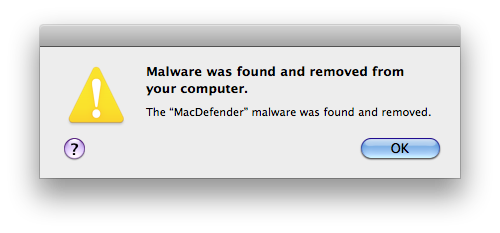
Last night, we reported Apple issued a Security Update for Snow Leopard users to update the OS X malware definitions, enhance File Quarantine’s functionalities and, more importantly, automatically find and remove known variants of the Mac Defender malware that’s been spreading among Mac users in the past month. By enabling OS X to update definitions daily in the background with a new daemon, Apple is taking the necessary measures to make sure new versions of Mac Defender and, overall, malware targeting Mac machines in the future can be removed safely and quickly a few hours / days after they’re discovered. As reported by Ed Bott at ZDNet, a new variant of Mac Defender coming with a new installer package has already been released, and it’s capable of circumventing Apple’s new security update and work exactly like Mac Defender and Mac Guard used to until yesterday.

The bad guys have wasted no time. Hours after Apple released this update and the initial set of definitions, a new variation of Mac Defender is in the wild. This one has a new name, Mdinstall.pkg, and it has been specifically formulated to skate past Apple’s malware-blocking code.

The file has a date and time stamp from last night at 9:24PM Pacific time. That’s less than 8 hours after Apple’s security update was released. On a test system using Safari with default settings, it behaved exactly as before, beginning the installation process with no password required.

Bott suggests this “cat and mouse” game is just the beginning, and Apple will have to begin addressing new variants that are discovered every day. The system put in place by Apple to provide updated definitions for easy removal of malware should allow users to prevent computer infections by automatically finding suspicious packages downloaded from the Internet. [via MacRumors]