This Week's Sponsor:

Turbulence Forecast

Know before you go. Get detailed turbulence forecasts for your exact route, now available 5 days in advance.


Posts tagged with "apple"

OmniVision Introduces 5 MP Sensor With 1080p Video Recording

Earlier this morning we reported on some rumors from DigiTimes regarding the production timeline of the upcoming iPhone 4S and rumoured components that it would include. In their report, DigiTimes claimed that it would contain an 8 MP camera from OmniVision Technologies, and to some degree it makes sense. Sony’s CEO in April made a fleeting comment suggesting that it would be supplying Apple with an 8MP camera for the next iPhone. However, those same comments were later suggested to have been largely “invented” by bloggers attending the event.

OmniVision today introduced a new 5MP image sensor, the OV5690, that was developed to produce the “best-in-class image quality” whilst being an effective solution for slimmer mobile devices such as smartphones and tablet computers by reducing the size of the camera module. With contradicting reports on whether the next iPhone will contain a 5 MP camera or an 8 MP camera, this new product certainly lends weight to the suggestion that it could have a 5 MP camera. In recent times Apple has been ferocious in crafting its devices to be as thin and light as possible, and this latest component by OmniVision could enable Apple to deliver on that goal with improved image quality (and 1080p video recording at 30 fps) whilst fitting into a smaller package.

With industry sources placing 5-megapixel CMOS image sensors at more than 15 percent of the overall sensor market today, we view 5-megapixel sensors as occupying as a sweet spot in the market. (Emphasis Added)

The iPhone 4 currently sports an older OmniVision camera component that is also 5 MP but only records video in 720p. Apple may well choose to stick with OmniVision and deliver a slightly improved camera in its next iPhone – which may be in line with reports of just small, evolutionary, improvements for the next iPhone. Although interestingly, OmniVision also revealed in early January that it had introduced a 10MP camera sensor that would similarly enable 1080p video recording at 30fps.



Former LG Executive Takes Over As Apple’s Korean Boss

The Yonhap News Agency is today reporting that Apple has recently hired Dominque Oh as its new head of South Korean operations. Oh will move to Apple after working at LG in a number of positions, including most recently as their Vice President of the Smartphone business for the past 13 months. Prior to that he worked as VP of Product Planning and Europe Mobile Business at LG.

Oh has extensive experience from his jobs within LG, where he was required to establish relationships with various operators and partners from across the world and overlook LG’s Android and Windows Phone 7 products, which will no doubt be beneficial in his new job with Apple. Oh will replace the current head of Apple’s South Korean operations, Andrew Sedgwick who held the post for over a decade.

The news comes from a number of “industry insiders” who requested anonymity, but Oh has yet to update his LinkedIn profile, still listing his VP of Smartphone Business at LG as his current job.

[Via TheNextWeb]


iPhone 4S To Go Into Production In August, Apple Reducing iPhone 4 Shipments

Two reports out of DigiTimes today reveal that the next generation iPhone, which they call the iPhone 4S, won’t have LTE capability and will go into production in August. DigiTimes claim that the iPhone 4S was originally planned to be LTE capable but was recently scrapped after it was revealed that Qualcomm was facing problems in producing the chips in large enough quantities for the iPhone.

Instead, LTE capability will likely make its way into the following (sixth generation) iPhone in 2012. A number of carriers, including three top Chinese telecommunication companies will be disappointed after expressing interest in selling an LTE capable iPhone. Despite this, China Mobile, which will have 27 million users by the end of this year, is expected to reach an agreement with Apple to sell the iPhone 4S when it is expected to launch in September this year.

With plans to begin production of the iPhone 4S in August, and nearly 2 million iPhone 4s in inventory according to sources, Apple has reportedly lowered its expected shipment volumes for the iPhone 4 (for Q2 2011) to 17.5-18 million units, a reduction of about 2 million units. Around 2 million are expected to be the CDMA version whilst around 16 million 3G models. Apple is however expecting shipments of iPad 2s to increase substantially from 7-8 million units to 10-10.5 million units in Q2, 2011.

The iPhone 4S will reportedly include 3G and CDMA chips from Qualcomm, a rear 8MP camera from OmniVision Technologies and Largan Precision to produce image sensors and the lens. Prior rumors had suggested that this years iPhone would feature some slight design modifications and the support for HSPA+ because of the lack of readiness of 4G chips as DigiTimes is today reporting. It was also rumored that it would also contain an 8MP camera, but from Sony, not OmniVision and Largan Precision.

[Via DigiTimes (1) (2)]


Survey Reveals How Consumers Use Their iPad

When the iPad went on sale just over a year ago, many were unsure of what people would use it for and the uncertainty has largely continued to today, where it is still a little vague as to how a tablet fits into people’s lives. Yesterday however, Business Insider published some fascinating data on a whole range of questions that surround the iPad and how it is used. The data was collated after Business Insider issued an extensive survey, on a wide variety of issues and questions, to more than 850 people.

Their survey revealed that for about 70% of respondents, there was only 1 iPad in their household and only about 23% has 2 in the one household – less than 7% had 3 or more iPads in their household. Nearly 40% had downloaded between 20 and 50 apps, whilst 30% had downloaded more than 50 apps – with few paying for more than 20 of those apps and only 6% paying for none. Below are some of the other more interesting results but jump over to The Atlantic for all the results.

  • 87.4% did not even consider an Android tablet before buying an iPad and 90% would not consider a BlackBerry PlayBook or HP TouchPad
  • The number of people with WiFi-only or the 3G iPad is fairly evenly split (52% to 48%)
  • Only 49% subscribe to a monthly 3G data plan (of those who have a 3G iPad)
  • 40% use the iPad as their primary computer
  • The most cited reasons for use of the iPad are; web browsing (35%), using social or communication apps (22%), watching video (12%), playing games (12%) and using all other apps (20%)
  • For consuming news, 38% would use the iPad’s web browser, 34% would use a news site’s app and 28% would use an aggregator like Reeder or Flipboard.
  • 72% read e-books on the iPad, mostly on iBooks but Kindle is a close second

Reposado, An Open-Source Update Service Independent of OS X Server

Hosting an internal Apple Software Update service involves having to rely on Mac OS X Server to update you various testing machines if you want to test software against various releases of Leopard and Snow Leopard across hardware. Walt Disney Animation Studios, however, have released Reposado, an open-source project founded upon Python that eliminates the need for OS X Server while alleviating some previous limitations.

The open-source benefit of this project is immediately applicable for small businesses. As TUAW’s Chris Ward points out, running your own update solution for businesses allows administrators to economize on bandwidth by downloading the update once, and distributing it internally. For both developers and IT administrators, Reposado takes this a bit further by leveraging what a company is likely to already have available in equipment. It’s a cost effective solution that’s currently available for download via GitHub.

All you need available is a box running an Apache 2 web server and the ‘curl’ binary tool, and provided you already have an old Mac around (such as a Mac Mini), utilizing these tools is incredibly easy. Replicating Software Update catalogs and updates, Reposado is powerful in that it supports deprecated updates. Apple’s course of action only offers and encourages admins to download the latest software, yet testing environments require that software be compatible across multiple iterations of software. With Reposado, you can branch any update to various machines on your schedule, giving you time to test new software before deploying it.

[Managing OS X via TUAW]


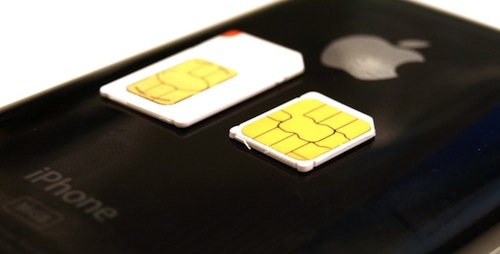
Apple Proposes Standard To Make SIM Cards Smaller

According to Reuters, an executive of Orange has confirmed the French carrier is backing Apple’s plans for a new standard to make SIM cards smaller in order to use them in future thinner mobile devices. The proposed standard aims at reducing the size of SIM cards, which are currently implemented as “micro” models in the iPhone 4 and iPad.

We were quite happy to see last week that Apple has submitted a new requirement to (European telecoms standards body) ETSI for a smaller SIM form factor – smaller than the one that goes in iPhone 4 and iPad,” said Anne Bouverot, Orange’s head of mobile services.

“They have done that through the standardization route, through ETSI, with the sponsorship of some major mobile operators, Orange being one of them,” she told the Paris leg of the Reuters Global Technology Summit.

Reuters claims the approval process for such a new standard would take time, with new devices carrying the new SIM models not coming out at least until next year. A rumor surfaced last year indicated Apple was working closely with Gemalto to develop an integrated SIM card that would be embedded in every iPhone to enable users to quickly switch between carriers without restrictions and obligations, but this new report seems to suggest Apple is simply aiming for a smaller chip, perhaps following the opposition from carriers to an embedded SIM that would cut mobile operators out of the retail game.


Apple “Investigating” Lodsys Claims, Official Response Later This Week

Following Lodsys’ response to the debate surrounding the patent infringement claims they sent to a number of iOS developers last week, The Guardian reports Apple is “actively investigating” these claims, with an official response expected to come from the company later this week.

Apple’s legal department is understood to be “actively investigating” claims by Lodsys, a patent holding company based in Texas, to have a claim against iPhone and iPad developers who use in-app purchase systems. So far Lodsys has served papers on about a dozen iOS developers who it says are infringing its patent 10/732,102, which it bought in 2004 from the inventor, who filed it in the 1990s, covering user interaction over a network.

Apple is not expected to respond to the claims, which have been passed to it by affected developers, until later this week.

Last week, Lodsys sent legal notices to some iOS developers who were using in-app purchases and upgrade buttons in their iPhone and iPad applications, claiming the implementation of this kind of upgrade process was patented and subject to licensing fees. The debate the followed the blog posts and tweets from developers who didn’t understand how it was possible to infringe a patent while using Apple’s own SDK quickly made Lodsys write a series of blog posts detailing how the company was already licensing the patent to Apple and Google, but not to indie developers. Lodsys is asking for a 0.575% fee of US revenue over the period the technology was implemented, giving developers 21 days to decide whether or not they want to license the patent. Lodsys also explained that Apple can’t extend the rights of the patent to third-party developers, in spite of its intention to build a eco-system revolving around a single SDK to write software for iPhones and iPads. This left many developers wondering whether in-app purchases were still a feasible option, considering Apple’s 30% cut off every transaction and the newly discovered legal implications.

In the meantime, Lodsys is sending more legal notices to other developers, with The Iconfactory apparently receiving one this morning as tweeted by co-founder Talos Tsui and James Thomson, the first developer who got hit with Lodsys’ patent claims. Notably, The Iconfactory has the popular Twitter client Twitterrific for iPhone and iPad available in the App Store, featuring an upgrade button to remove advertising with in-app purchase.


Apple Stores Installing NFC Payment Systems?

According to BGR, several sources have suggested Apple may be gearing up to install new payment systems in its retail stores, quite possibly implementing the NFC technology that’s also been rumored to be one of the key features of the iPhone 5, in spite of recent reports claiming the opposite. The website reports Apple’s POS system (based on iPod touches) recently went offline for an entire day causing employees to not be able to process payments, and new tables (different from the standard ones) with cash wraps have also been installed in some retail locations, leading to speculation as to whether Apple is looking to renew its payment system.

Additionally, we have been told that there were recently multiple “overnights” in Apple retail locations, which required store employees to “assist in installing TBD devices” throughout the stores “as the retail segment of Apple grows.

We have a feeling Apple’s 10th anniversary plans might put a few pieces of the puzzle in place, but one of our sources also believes that NFC payment processing capabilities are among the enhancements that will be brought about by the new gear.

It’s unclear from the report whether Apple is planning on updating their POS technology with NFC to enable compatibility with future devices that will feature the technology on a consumer level, or if retail stores are simply installing new hardware for internal usage, not necessarily implying new iPhones with NFC are on their way. Multiple reports in the past months had pegged Apple was considering NFC for future iPhones and iPads, but recent speculation from different sources has suggested NFC simply isn’t ready for mass adoption, with Apple saving the implementation of Near Field Communication for another generation of devices.


Samsung and Toshiba Awaiting Apple’s Approval on sub-30nm NAND Chips

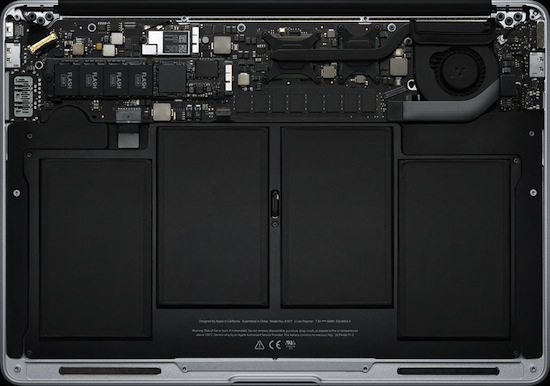
As reported by Digitimes today, several NAND chip manufacturers including Samsung and Toshiba are still waiting for Apple’s approval on their new production processes below 30nm. As Apple is the biggest buyer of NAND flash memory with popular products like the iPhone, iPad and MacBook Air (the first line of Mac desktop computers to come with flash memory by default), manufacturers want to make sure mass production is “feasible” while waiting for the company’s consent to move forward with the new process that involves sub-30nm chips, with Samsung operating at 27nm and Toshiba at 24nm.

Both Samsung Electronics’ and Toshiba’s 2Xnm-made products have not yet been certified by their biggest customer Apple, the sources claimed.

Micron Technology and Intel were ahead of peers in volume producing chips using their jointly-developed 25nm technology in the first half of 2011, followed by Samsung’s ramp-up of 27nm, Toshiba’s 24nm and Hynix Semiconductor’s 26nm. This marked the beginning of a race among major NAND chip suppliers to transition to 20nm-class processes, the sources said.

The website notes certification times for new manufacturing process have extended to up to 9 months from 6 to ensure greater “product performance, quality and reliability.” In terms of consumer products, manufacturing process below 30nm result in higher memory density in NAND chips, thus leading to faster devices with more capacity. Smaller processes are also linked to lower costs. Put simply, adopting new production standards for Flash memory will bring devices and computers with more storage on board and lower production costs for Apple in the next years, though Samsung and Toshiba have to wait for now. [via AppleInsider]