This Week's Sponsor:

Turbulence Forecast

Know before you go. Get detailed turbulence forecasts for your exact route, now available 5 days in advance.


Posts tagged with "apple"

Intel To Support Both USB 3.0 and Thunderbolt with Ivy Bridge

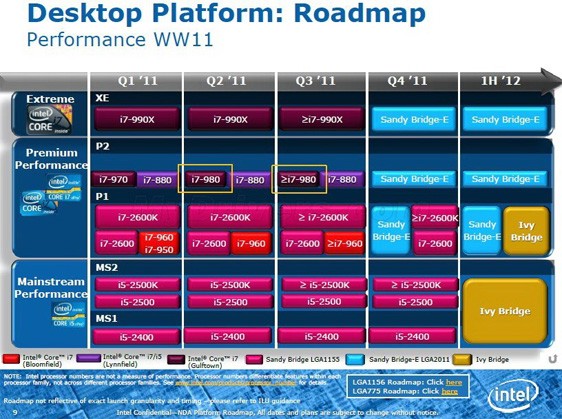
Yesterday, Intel confirmed they will support both USB 3.0 and the recently-introduced Thunderbolt technology in 2012. USB 3.0 – evolution of a widely adopted standard in PCs, mobile devices and tablets – failed to gain support by chipset maker Intel in 2010 and early 2011 as the company only enabled it in desktop motherboards powered by a NEC chip, thus focusing on finalizing the development of Light Peak instead, now known as Thunderbolt. USB 3.0 promises data transfers 10 times faster than USB 2.0, but it can’t reach the 10 Gbps capabilities of Thunderbolt – implemented by Apple and Intel in the latest MacBook Pros, and expected to come to more OS X computers and desktop peripherals in the near future.

Intel is going to support USB 3.0 in the 2012 client platform. We’re going to support Thunderbolt capability. We believe they’re complementary,” said Kirk Skaugen, a vice president at the Intel Architecture Group, speaking at Intel’s developer conference in Beijing today. The event was streamed over the Web.

With the 2011 MacBook Pro refresh, Apple used Intel’s Sandy Bridge processors to increase the performances of the new line and implement Thunderbolt, which allows for multiple connections (daisy-chaining) and high-speed data transfers with a variety of external devices. A report published a day before Apple launched the new MacBook Pros with Thunderbolt and Sandy Bridge processors suggested the 2012 refresh would be a big milestone release for Apple, with a completely new design and breakthrough features. If Intel will manage to get Ivy Bridge chipsets available in the market by the first quarter of 2012, some speculate Apple might consider supporting both Thunderbolt and USB 3.0 as well – it’s worth noting that Intel is indeed telling developers and manufacturers to support both standards. [via Cnet, Engadget]


Sydney Hotel Deploys iPad 2s In Every Room

After the deployment of iPads in The Plaza hotel and others, The Establishment Hotel in Sydney Australia has become the world’s first to provide iPad 2s in every guest room of their hotel. The hotel, located in the financial district of Sydney, acted quickly to purchase enough iPads for their more than thirty rooms as they went on sale in Australia on March 25th and has since implemented them earlier this month.

The iPads, which are provided free of charge to all guest rooms, include a selection of music, movies and apps. In particular the hotel includes a welcome video to the hotel, a broad selection of international newspapers on the iPad, travel applications such as Trip Advisor, a Merivale bar and restaurant guide and of course Angry Birds. The hotel also features unlimited free WiFi for all guests and an Apple TV with surround sound system in each of their rooms, letting guests AirPlay content from the new iPads to the TV or sound system in their rooms.

Merivale CEO Justin Hemmes has said that they are looking at what they can do next and how they can bring “innovation to our guests”;

Now that we have the hardware, we are only limited by our own imagination. Well, maybe also by the software developers’ abilities but seriously, we will be looking at ways in which we can integrate this technology further into the whole guest experience


Apple To Begin Assembling Products In Brazil? [Updated]

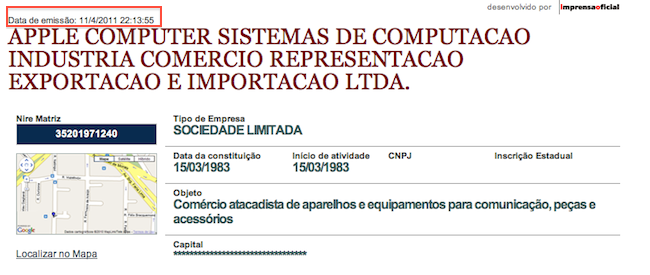
As noted by 9to5mac, a local Brazilian report claims Apple has filed documents at the Jucesp (Junta Comercial do Estado de São Paulo) to begin assembling “products” in Brazil. It is unclear what kind of products Apple is willing to assemble in the country, but the report goes on to specify that a previous rumor suggested governor of São Paulo Geraldo Alckmin would announce Apple’s new factory in Brazil on April 22nd. UOL Technologia also claims other tidbits in the past weeks indicated Apple was shipping containers full of components from Asia to Brazil; furthermore, the city of Jundiaí was rumored to be among the candidates selected by Foxconn to build a new facility in Brazil – although this might not be strictly related with Apple’s plans.

From a rough Google Translation of the original report, it appears there might also be tax exemptions involved in the process:

With the installation of a factory in Brazil, Apple may benefit from tax exemptions offered by the government Rousseff for tablets, which will reach 9.25% for PIS and when the classification of the device to switch to “computer”. The arrival of Apple to Brazil could accelerate the adoption of this exemption - and would benefit from other manufacturers such as Samsung, which already produces in the country Galaxy Tab.

There is still no information whether Apple will use its own plant or at Foxconn, assembly line installed in Jundiaí.

The documents filed at the Jucesp can be viewed here. UOL Technologia says it’s also unclear whether Apple will deploy its own facility or use a Foxconn one built in Brazil, but it seems like the main intention is that of moving some parts of Apple’s production line out of China and all the way down to South America. On a side note, back in November we reported Eike Batista – Brazilian billionaire and the eighth richest person in the world – wanted to invest in a $1.6 billion construction project to bring an Apple facility to Brazil to “create job positions, generate revenue and lower costs of Apple products for Brazilian customers.”

Update: MacMagazine [Google Translation] reports a “contact at Apple Brazil” informed them the updated Jucesp records weren’t created by Apple. Apparently this is the only official Apple Jucesp record in Brazil, and the new one was probably created by “a squatter.” Speculation about the facility still persists, but Apple is denying the rumors.

[Thanks Newton Mota]


New Thunderbolt Products Are Coming: Announcements from NAB

Since the introduction of the new MacBook Pros in February, many have wondered how long it would take for third-party manufacturers to ship the first Thunderbolt-compatible products. Developed by Intel and brought to the market by Apple, Thunderbolt is a brand new I/O technology that allows for multiple data transfers at 10 Gbps connection over a cable, with an additional 10 Watt feed to power external devices with the addition of “daisy-chaining” one peripheral to another. You can read more about Thunderbolt in our initial roundup.

At the NAB trade show that’s currently ongoing in Las Vegas, several companies have unveiled their first Thunderbolt products that will ship later this year starting in July. As reported by MacRumors these products are aimed at video editing / movie professionals, but they show the industry is clearly interested in supporting the new technology that’s rumored to be implemented in upcoming refreshes of the iMac and Mac mini lines as well. AJA, Blackmagic, and Promise have all announced Thunderbolt-enabled peripherals for audio capture and playback device (Blackmagic’s UltraStudio 3D) or “high-framerate 2K 3D, 4K and 5K workflows, and portable HD connectivity” (AJA). Promise had already announced its Pegasus storage line with Thunderbolt back in February.

Early reports coming from the NAB show floor indicate the Thunderbolt enclosures from Promise “scream” with the updated CS 5.5 suite, and hopefully we’ll have the chance to check out demo videos and benchmarks in the next few hours.

Meanwhile, we’re all waiting for the Final Cut announcement rumored to be scheduled for tomorrow at the tenth annual SuperMeet at the Bally’s Event Center. According to people familiar with the matter, the new Final Cut will take advantage of Thunderbolt and feature iPad integration, as well as file based workflows.


The iPad 2 Dock Review

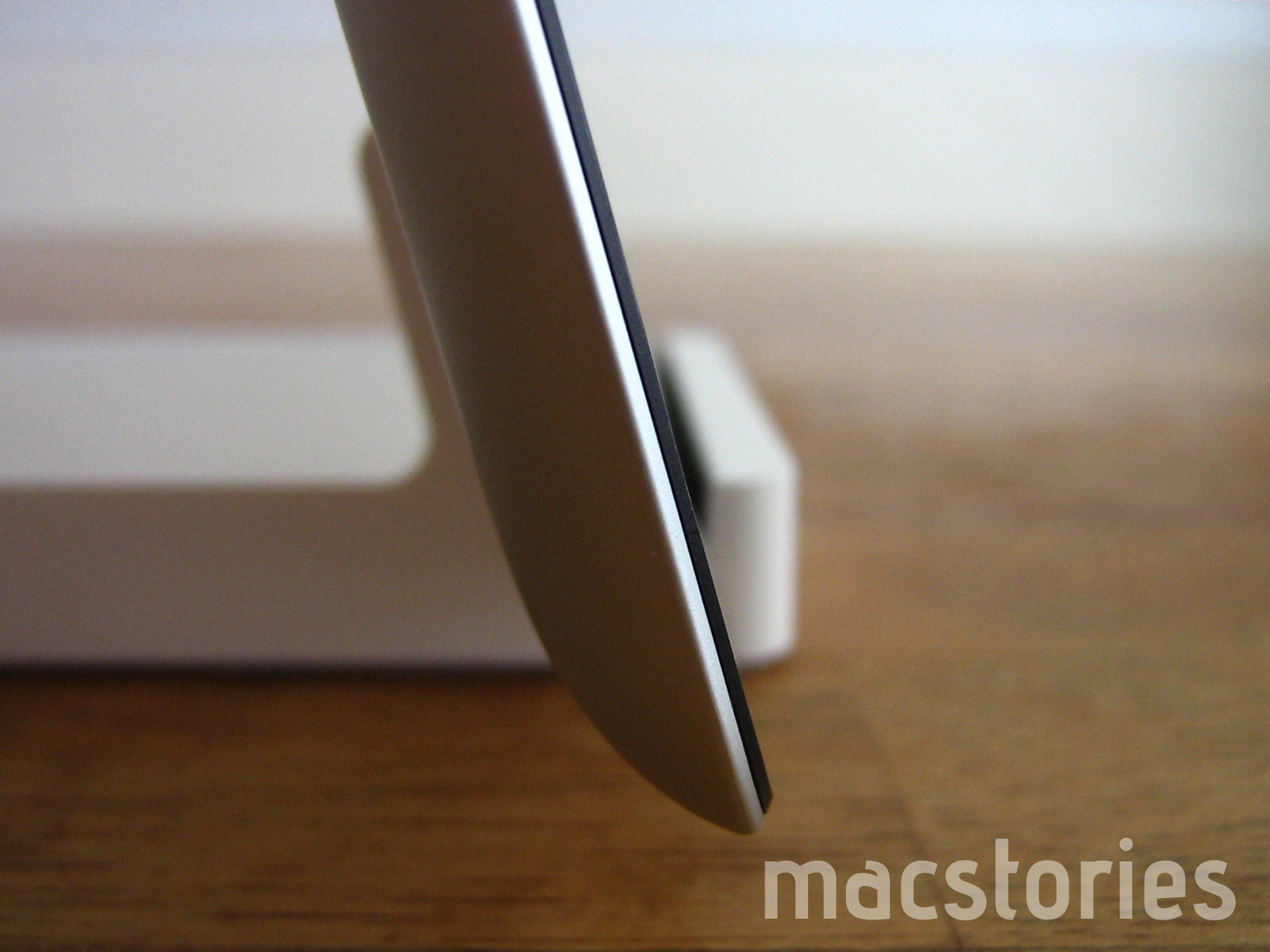
The iPad 2 Dock is by far the accessory people ask about when getting a new iPad 2. Apple’s iPad Camera Connection Kit and their Digital AV Adapter are clear in purpose; both products add utility to the iPad when used with a camera or television. The iPad 2 dock, however, is a questionable purchase. What utility or benefit will it provide me, and should I pay a pricey $29.00 for a plastic stand that comes with no cable and only provides audio out? The portrait only dock is an additional expense many owners are unsure about, and today we’re taking a look at whether one of these guys can be of benefit to you now that customers are receiving the first batch of shipments in the United States.

Read more


Apple Hires Carbon Fiber Expert As Senior Composites Engineer

It was yesterday discovered that Apple has discreetly hired Kevin Keeney as a Senior Composites Engineer. What makes this hire interesting is that Keeney is the CEO of a carbon fiber bike designer, Kestrel Bicycles, and has previously worked with Apple on a carbon fiber shell patent in 2009.

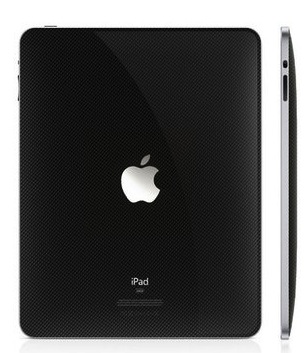
There is potential that by making Keeney’s position a permanent one, Apple may be ramping up an effort to produce Apple products with carbon fiber. Like the evolution of using aluminum, which has become a staple in Apple products, the use of carbon fiber could further push its products to even lighter and thinner levels whilst maintaining the strength of aluminum. There are some issues that need to be resolved however, mainly dealing with the cost of carbon fiber compared to aluminum and the reduced ability for heat absorption, which could prove troubling.

Keeney has extensive experience with his 20 years of design work and supply chain management, both of which would be beneficial in any potential job of rolling out a mass-production of carbon fiber based products. It had been falsely rumoured in February that the iPad 2 could potentially replace the aluminum backing of the original with a carbon fiber based one.

[Via 9to5 Mac]


Cracked AirPort Express Key Could Allow AirPlay Streaming To Any Device

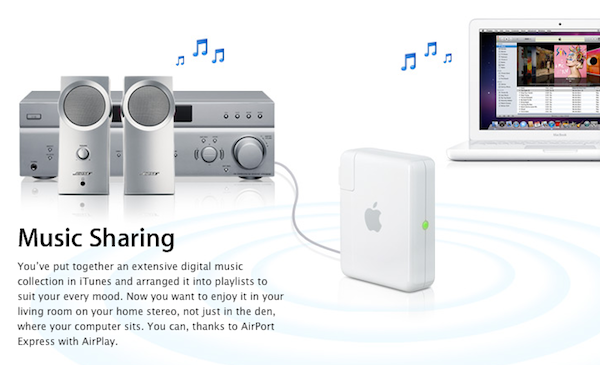
When Apple introduced AirPlay with iOS 4.2, they brought wireless streaming for music and video to iOS devices, as well as iTunes on the desktop thanks to the old AirTunes technology that allowed music streaming to an AirPort Express station connected to speakers with a simple audio jack. After the unification of streaming under the AirPlay name, several hacks in the past months allowed iOS and Mac users to enable streaming on unsupported devices such as iPhones or Macs. Developer James Laird, however, has achieved a different goal than simply activating audio and video receiving functionalities: by reverse engineering the AirPort Express (and thus AirTunes) private key used by Apple to stream audio to external music speakers, he released ShairPort, an open source AirPort Express emulator.

My girlfriend moved house, and her Airport Express no longer made it with her wireless access point. I figured it’d be easy to find an ApEx emulator - there are several open source apps out there to play to them. However, I was disappointed to find that Apple used a public-key crypto scheme, and there’s a private key hiding inside the ApEx. So I took it apart (I still have scars from opening the glued case!), dumped the ROM, and reverse engineered the keys out of it.

The concept behind ShairPort is very simple: instead of enabling streaming from an app to an official AirPlay device from Apple or third-party vendor, Shareport can turn any software or hardware into a wireless music receiver thanks to the cracked private key used by Apple. Being the project open source, virtually anyone could build a hardware receiver or application that streams music just like the AirPort Express station does through the AirTunes protocol.

While it’s very unlikely that manufacturers will adopt this hack to turn their devices into AirPlay receivers (why using the hack when you can just become an official AirPlay partner?), I’m sure we’ll see interesting things on the software end this week. ShairPort can be installed anywhere, opening to the possibility of gaming consoles, computers, or mobile devices gaining AirPlay functionalities previously reserved to the AirPort Express.

Go download ShairPort here. [via MacRumors]


Authorized Biography of Steve Jobs Coming Early 2012

Publishing firm Simon & Schuster yesterday revealed that a biography of Steve Jobs is currently being written with an expected release date of early 2012, and unlike previous biographies of Steve Jobs this one has the blessing of Jobs himself. Being written by former Time executive Walter Isaacson and titled ‘iSteve: The Book of Jobs’, it will likely prove to be a fascinating and unprecedented look into the life and mind of Jobs.

Isaacson, who has also written biographies on Benjamin Franklin and Albert Einstein, has interviewed Jobs as well members of his family, co-workers and competitors for the book and was supposedly invited by Jobs for a tour of his childhood home. In a statement the publisher of Simon & Schuster, Jonathon Karp, said that “This is the perfect match of subject and author, and it is certain to be a landmark book about one of the world’s greatest innovators.”

A previously unwelcome biography, ‘iCon Steve Jobs: The Greatest Second Act in the History of Business’ led to Apple banning and removing all books by its publisher, John Wiley & Sons, from Apple’s retail stores.

[Via MacRumors, AppleInsider]


Adobe To Launch 3 New iPad Apps That Highlight Potential of Photoshop Touch SDK

Adobe today announced that it will release Creative Suite 5.5 (a “mid-cycle update”) on May 3 along with three new iPad apps that will complement the full-featured desktop version of Photoshop. The three apps are actually designed as a demo of how developers can take advantage of the new Photoshop Touch SDK (which was released today) and create their own apps that complement and add additional functionality to the desktop version of Photoshop but through an Android, BlackBerry or iOS app.

The three iPad apps; Adobe Color Lava, Adobe Eazel and Adobe Nav will all arrive on May 3rd on the same day as Creative Suite’s 5.5 update goes live.  Adobe Color Lava (priced at $2.99) is in simple terms a digital paint palette that will allow you to mix paints and generate a five-color palette that can be sent to the Photoshop color chip or swatch palette. Adobe Eazel ($4.99) is essentially a basic drawing program (similar to Brushes) that features a unique interface in which by placing 5 fingers on the screen a pop-up menu will appear above each finger, sliding up with the relevant finger will select that menu which will then let you to alter the relevant value (such as color or brush size) . Finally and perhaps most useful is Adobe Nav ($1.99), this app turns the iPad into a dedicated control that has the various tool palettes displayed, selecting a particular tool will select that tool on the desktop version of Photoshop, the app will also let you easily cycle between the various files you may have open in Photoshop.

UPDATE: Shawn Welch has already shown off his third party app that takes advantage of the new Photoshop Touch SDK. His app, Photoshop Remote, allows users to view a live preview thumbnail of any image that is open on a network connected Photoshop client and it can handle multiple clients at once. It even adds a dashboard that replicates a lot of the functionality of the Adobe Nav application including; “tool selection, color selection, filters, adjustment layers, and more.” Jump the break for his video demonstrating the app.

Also after the break is a video demonstrating Adobe Eazel and Adobe Nav apps and jump over to CNet where they wrote a short review of each of the 3 apps, also if you are a developer that is interested in implementing the Photoshop Touch SDK make sure to visit the Adobe Developer Center.

Read more