 App Debuts
...

 App Debuts
 Apple announced today that it will be the exclusive U.S. broadcaster for Formula 1 racing. The five-year deal begins next year and will also include integrations with Apple News, Maps, Music, and Fitness+.
Eddy Cue, Apple’s senior vice president of Services, said of the deal:
We’re thrilled to expand our relationship with Formula 1 and offer Apple TV subscribers in the U.S. front-row access to one of the most exciting and fastest-growing sports on the planet. 2026 marks a transformative new era for Formula 1, from new teams to new regulations and cars with the best drivers in the world, and we look forward to delivering premium and innovative fan-first coverage to our customers in a way that only Apple can.
Apple says that its streaming subscribers will have access to all practice, qualifying, Sprint sessions, and Grands Prix and that certain races and practice sessions will be available for free in the TV app. Apple TV subscribers will also have exclusive access to F1 TV Premium, F1’s premium content service, at no extra cost. Apple says it will release more information about F1 product integrations in the coming months.
This deal has been rumored for a long time and makes a lot of sense for Apple, which has been working to add internationally popular sports to its lineup for some time. Along with MLS and select weekly baseball games, the company has a much more robust sports package than ever before, which should make Apple TV attractive to a broader audience.
The MacBook Pro wasn’t the only Apple computer to receive an M5 update today. Both the 11” and 13” iPad Pros were updated with the company’s latest chip, too.
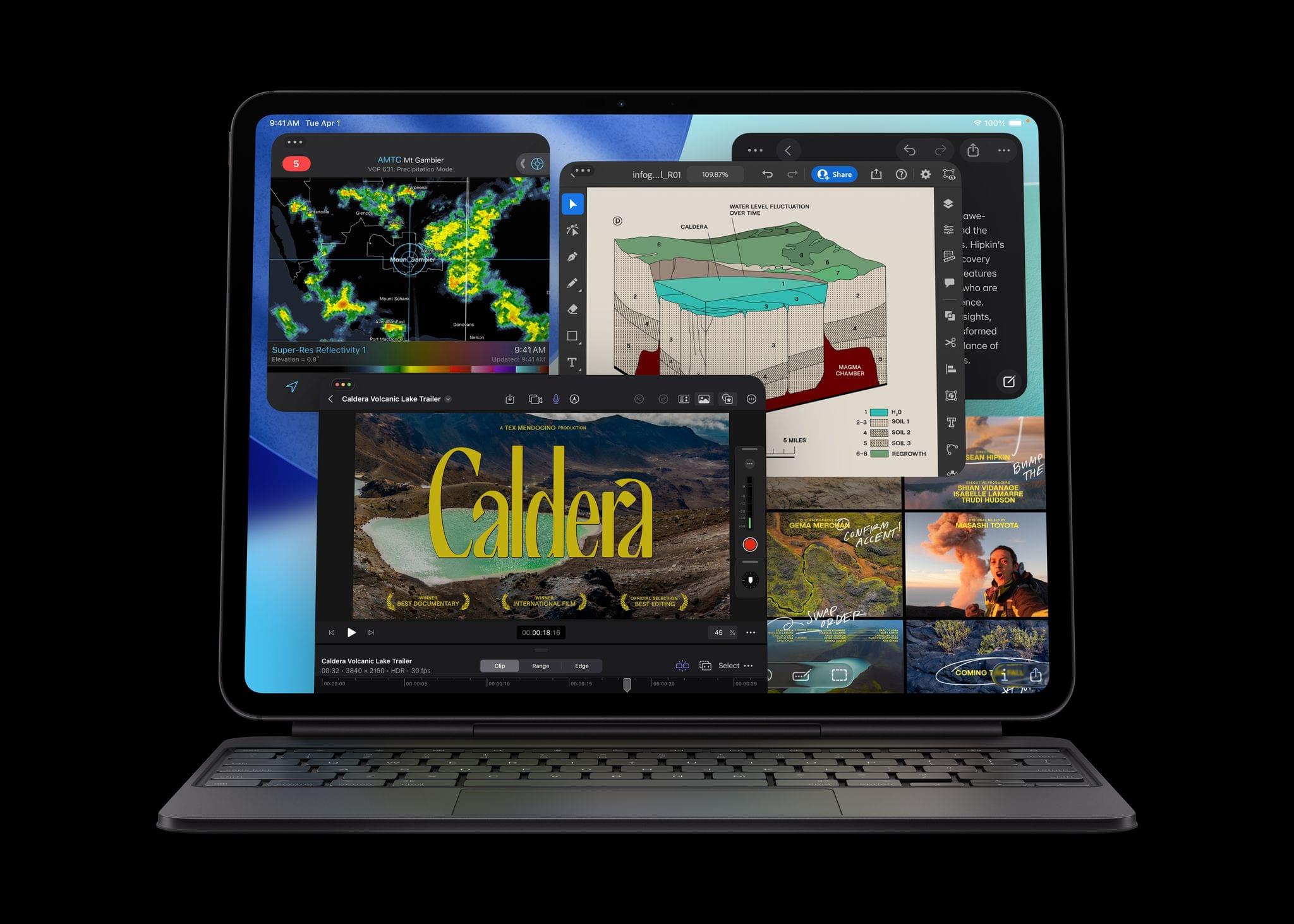
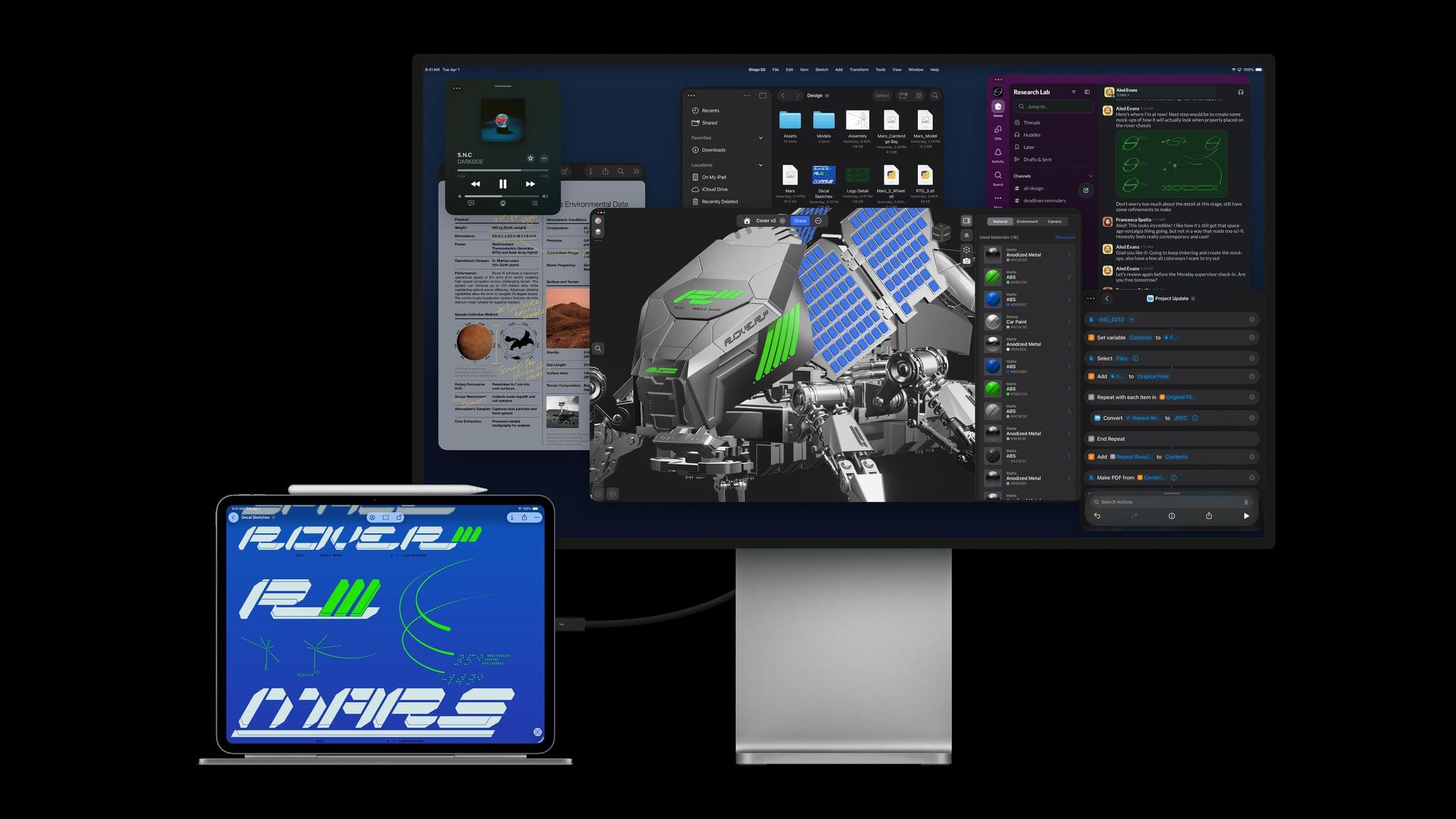
As you’d expect, the performance boosts to the iPad Pro line closely resemble the enhancements to the 14” MacBook Pro, with up to 3.5× performance gains on AI workflows compared to the M4 iPad Pro and 5.6× the performance of an M1 iPad Pro, which is slightly less than the bump from an M1 Mac to the M5 MacBook Pro. The base RAM configuration has been increased to 12GB, too, and the M5 chip enables the iPad Pro to run external displays up to 120Hz with Adaptive Sync.
The new iPad Pros also feature Apple’s N1 networking chip, which supports Wi-Fi 7, Bluetooth 6, and Thread and was first seen in this year’s iPhone updates. For users who buy a cellular-capable iPad Pro, that feature is now powered by Apple’s C1X modem, which the company says is up to 50% faster and more power efficient.
Like with the MacBook Pro introduced today, the M5 is the star of this update. The chip features a 10-core GPU architecture that has dedicated Neural Accelerators for each GPU core. The 16-core Neural Engine, unified memory bandwidth, storage, and charging are faster too.
According to Apple that equates to substantial real-world performance enhancements:
- Up to 6.7x faster 3D rendering with ray tracing in Octane X when compared to iPad Pro with M1, and up to 1.5x faster than iPad Pro with M4.
- Up to 6x faster video transcode performance in Final Cut Pro for iPad when compared to iPad Pro with M1, and up to 1.2x faster than iPad Pro with M4.
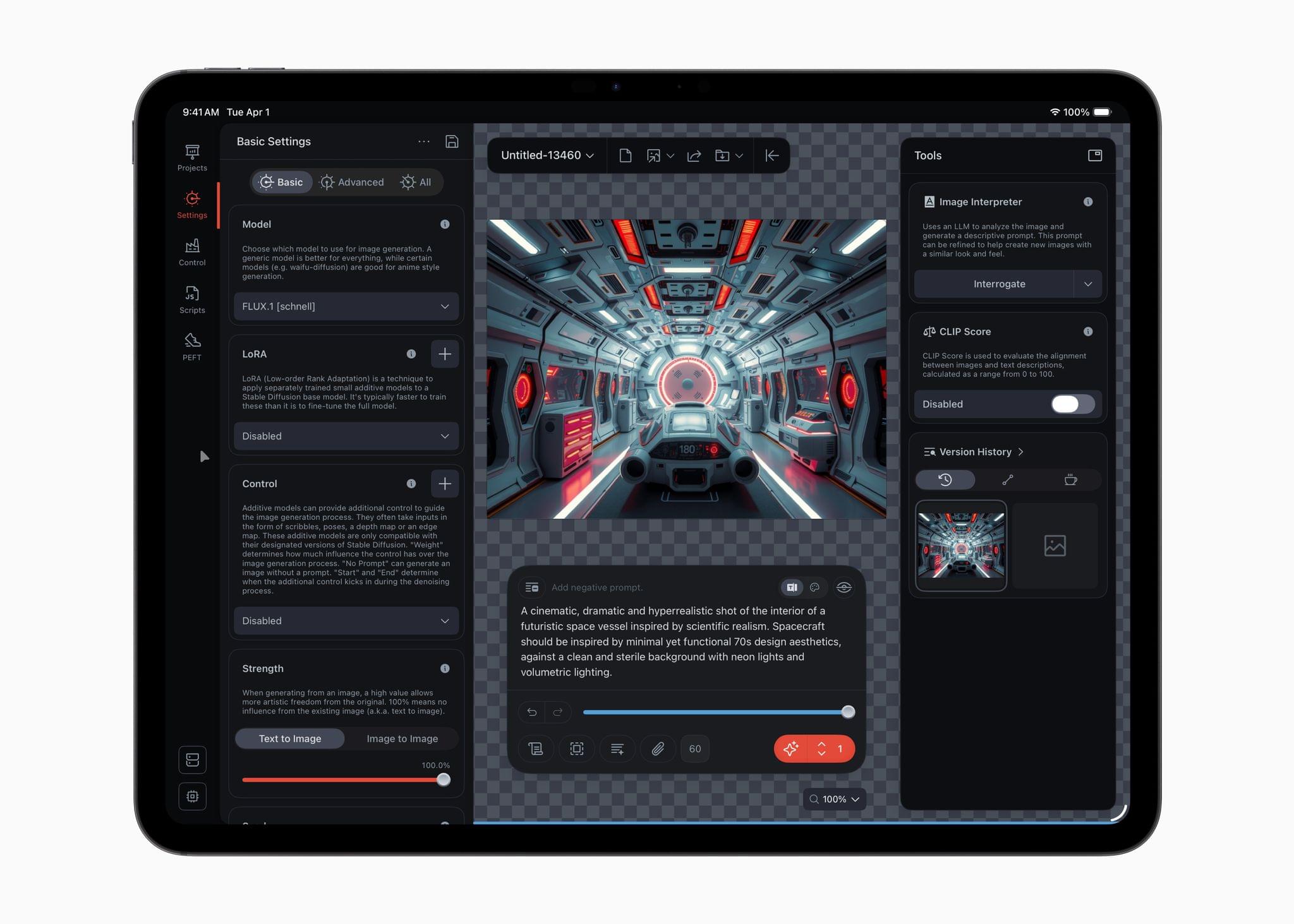
- Up to 4x faster AI image generation performance in Draw Things for iPad when compared to iPad Pro with M1, and up to 2x faster than iPad Pro with M4.
- Up to 3.7x faster AI video upscaling performance in DaVinci Resolve for iPad when compared to iPad Pro with M1, and up to 2.3x faster than iPad Pro with M4.
(See the press release for footnotes regarding testing details).
The iPad Pro line’s new M5 chip should be a meaningful performance boost for users coming from older models, though less so for M4 iPad Pro users. Regardless, it’s good to see Wi-Fi 7 continue to spread across Apple’s hardware lineup. Between multi-windowing and the M5, users will undoubtedly be pushing the iPad Pro further than ever, which often means large files that will benefit from a faster chipset, Wi-Fi, and internal storage.
The new 11” and 13” iPad Pros come in Space Black and Silver and start at $999 for the 11” Wi-Fi model and $1,299 for the 13” Wi-Fi model, with cellular models costing $200 more. Education customers can save $100 on each model, too. Pre-orders can be placed today, with deliveries and in-store availability beginning October 22.
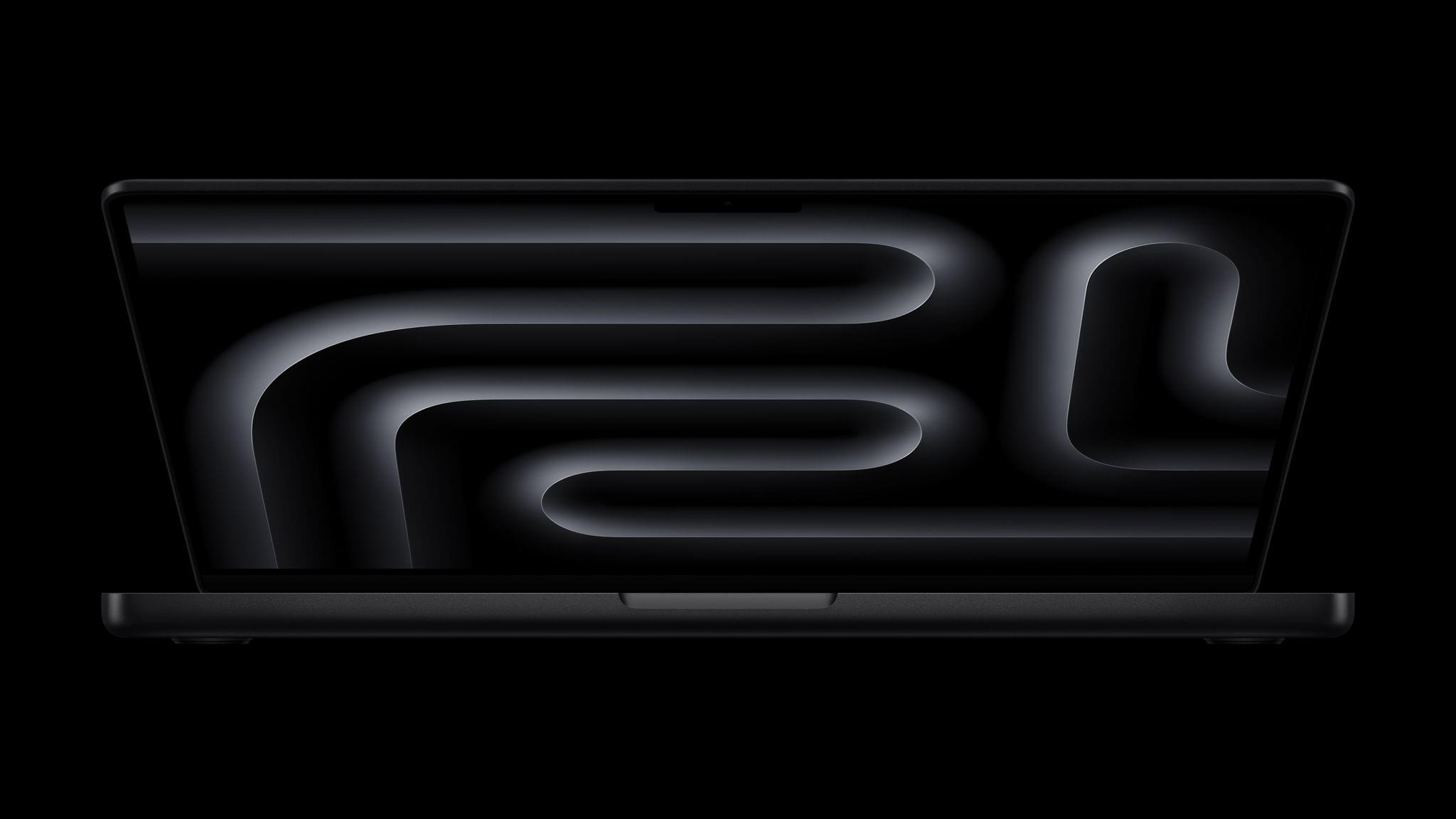
Today, Apple debuted the new 14” MacBook Pro with its latest M5 chip, which is available for purchase now alongside the existing M4 Pro and M4 Max MacBook Pro models.
According to John Ternus, Apple’s senior vice president of Hardware Engineering:
MacBook Pro continues to be the world’s best pro laptop, and today, the 14-inch MacBook Pro gets even better with the arrival of the M5 chip. M5 marks the next big leap in AI for the Mac, and delivers a huge boost in graphics performance accelerating demanding workflows for everyone from students to creatives, developers to business professionals, and more. With its amazing performance, extraordinary battery life, and unrivaled display, M5 takes the new 14-inch MacBook Pro to another level.
Apple’s new M5 processor is the star of today’s MacBook Pro update. Apple says that the chip, which is only available in the 14” MacBook Pro configuration, is faster at AI workflows and file transfers and can last 24 hours on a single charge. The M5 chip includes an all-new GPU with a Neural Accelerator in each GPU core, which Apple claims speeds up AI workflows up to 3.5× compared to the M4 chip and 6× compared to the M1 chip. The new MacBook Pro’s performance is also enhanced by a new 16-core Neural Engine and SSDs that are up to 2× faster and can be configured up to 4TB, which will make managing large files easier.
Although Apple makes a big deal of the 14” MacBook Pro’s AI performance, the new M5 chip will enhance all kinds of resource-heavy tasks, including these spotlighted by Apple in its press release:
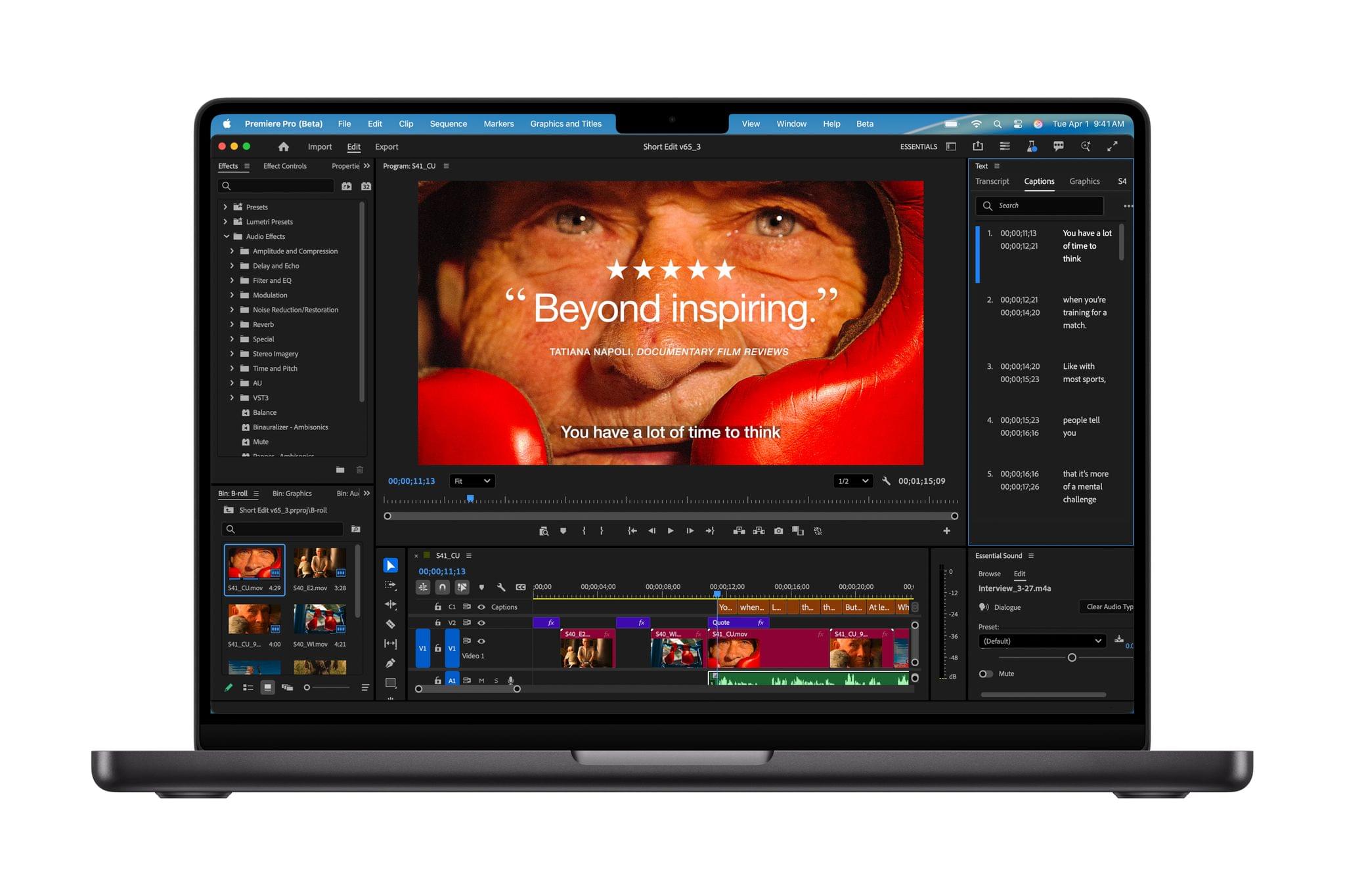
- Up to 7.7x faster AI video-enhancing performance in Topaz Video when compared to the 13‑inch MacBook Pro with M1, and up to 1.8x faster than the 14-inch MacBook Pro with M4.
- Up to 6.8x faster 3D rendering in Blender when compared to the 13‑inch MacBook Pro with M1, and up to 1.7x faster than the 14-inch MacBook Pro with M4.
- Up to 3.2x higher frame rates in games when compared to the 13-inch MacBook Pro with M1, and up to 1.6x faster than the 14-inch MacBook Pro with M4.
- Up to 2.1x faster build performance when compiling code in Xcode when compared to the 13‑inch MacBook Pro with M1, and up to 1.2x faster than the 14-inch MacBook Pro with M4.
(See the press release for footnotes regarding testing details).
Although I’m impatient to see what an M5 Pro and M5 Max MacBook Pro are capable of, and I’m dying to see a Mac Studio configured with the M5 generation of chips, I’m glad Apple didn’t wait to release the M5 in the 14” MacBook Pro. If the chip is ready, why not? Pro workloads, including running AI models locally, are only becoming more demanding, so getting the M5 into more hands as early as possible makes sense. Plus, for anyone coming from an Intel-based setup or an early-generation Apple silicon Mac, this update should be significant.
The new 14” MacBook Pro comes in Space Black and Silver and starts at $1,599 but can be configured to over $3,330. Pre-orders can be placed now, with deliveries and in-store availability beginning October 22.
Daft Music asks a question that’s been on my mind for a long while: what if Apple Music started over with a new Mac app? As a service, I love Apple Music. I’ve been a subscriber since day one. But I’m less enamored with the Music app, especially on the Mac.
Music on the Mac has a long history dating back nearly 25 years to Apple’s acquisition of SoundJam MP, which became iTunes, an app for organizing your music collection, syncing it to your iPod, and, later, buying music. Over the years, iTunes expanded to encompass TV, movies, books, apps, and even courses, which was too much for one app. So Apple began dismantling iTunes, with the final blow coming in 2019 with the release of macOS Catalina. The update retired iTunes, replacing it with Apple Music and dedicated apps for other types of media.
Music was a significant break from the design of iTunes, but as a long-time user of both iTunes and Music, what didn’t seem to change as much was the app’s underlying code. That’s consistent with reporting at the time that Music was an AppKit app built on the bones of iTunes. The choice to build Music for macOS on top of the iTunes foundation had the advantage of allowing Apple to preserve iTunes features that the Music app lacked on other platforms. However, the decision had a big downside, too. Built on what was already a nearly 20-year-old code base, Music inherited iTunes’ bugs, which have hung around unfixed for years.
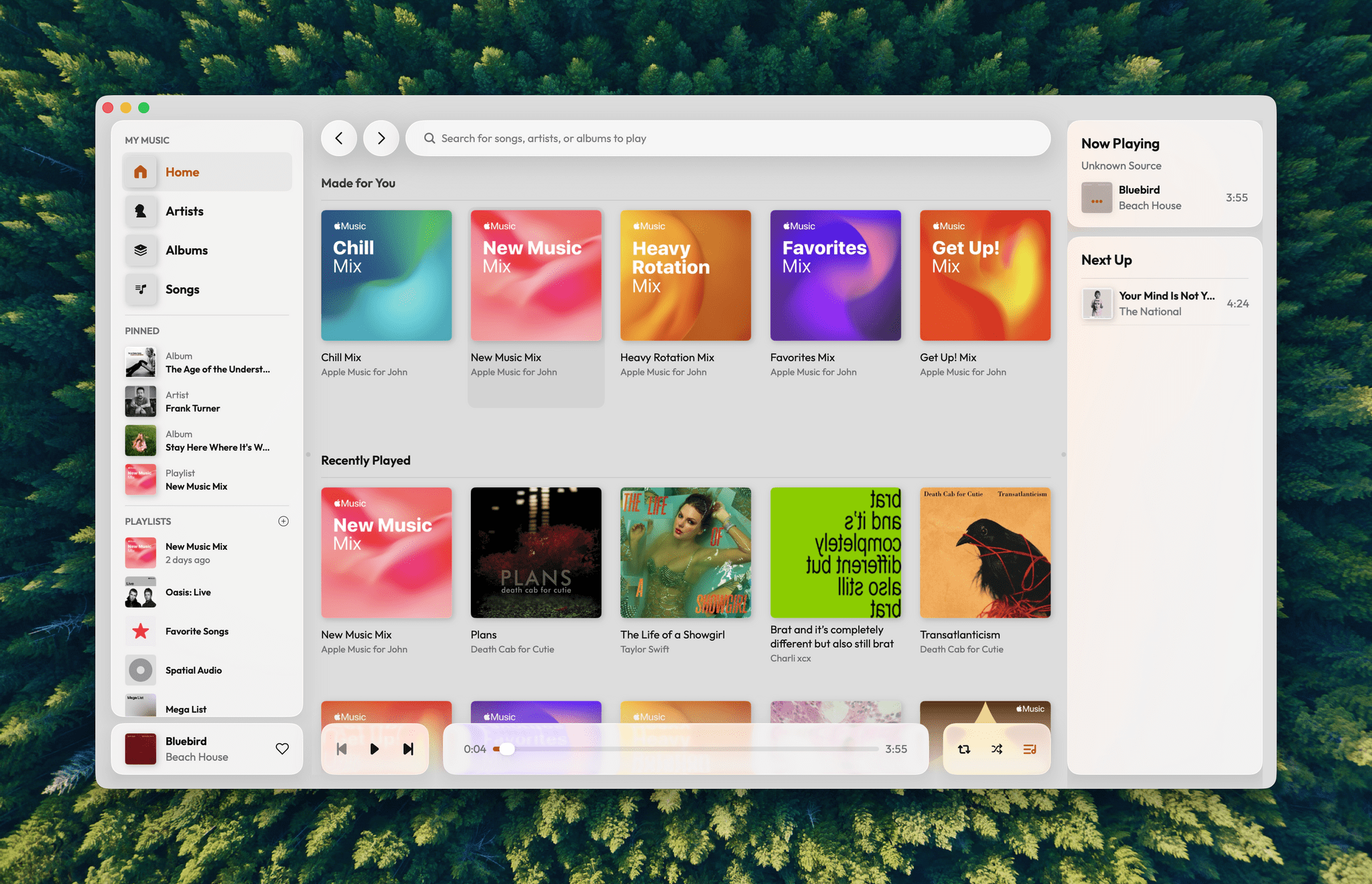
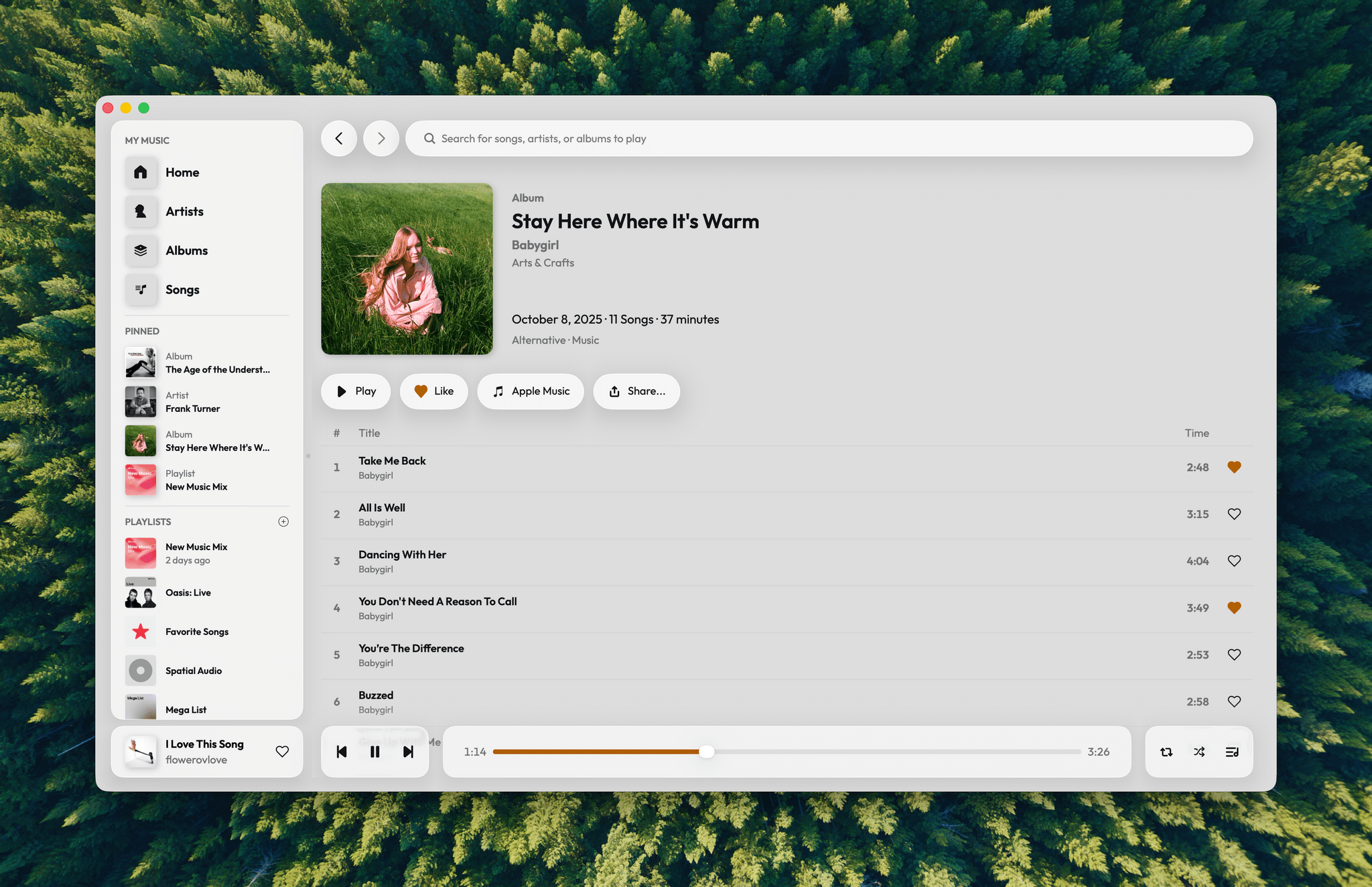
That’s where Daft Music by Dennis Oberhoff comes in. It’s a simple, elegant Apple Music “do-over” that also happens to be the first Mac app I’ve tried that was built from the ground up for Liquid Glass. There’s a lot to cover, so let’s dig in.
 What Else Do We Want from Apple in 2025?
 This week, with rumors of more products in the pipeline, Federico and John share what they want most from Apple before the end of the year.
On AppStories+, Federico experiments with lightning fast inference and iteration using Cerebras for scripting.
We deliver AppStories+ to subscribers with bonus content, ad-free, and at a high bitrate early every week.
To learn more about an AppStories+ subscription, visit our Plans page, or read the AppStories+ FAQ.

macOS Tahoe Spotlight Tips
Interesting Links
Gadget Grab Bag 

 Federico
](https://cdn.macstories.net/banneras-1629219199428.png)