

Timepage The excellent calendar app, Timepage, contains a whopping four different widgets to choose from: Countdown, Month, Today, and Weather. Each widget is beautifully designed and offers valuable information. Countdown is simple, displaying a countdown to a specific event that you’ve chosen to add to the widget. Currently I have WWDC as my...
Microsoft Releases Social Scheduling iMessage App, ‘Who’s In’
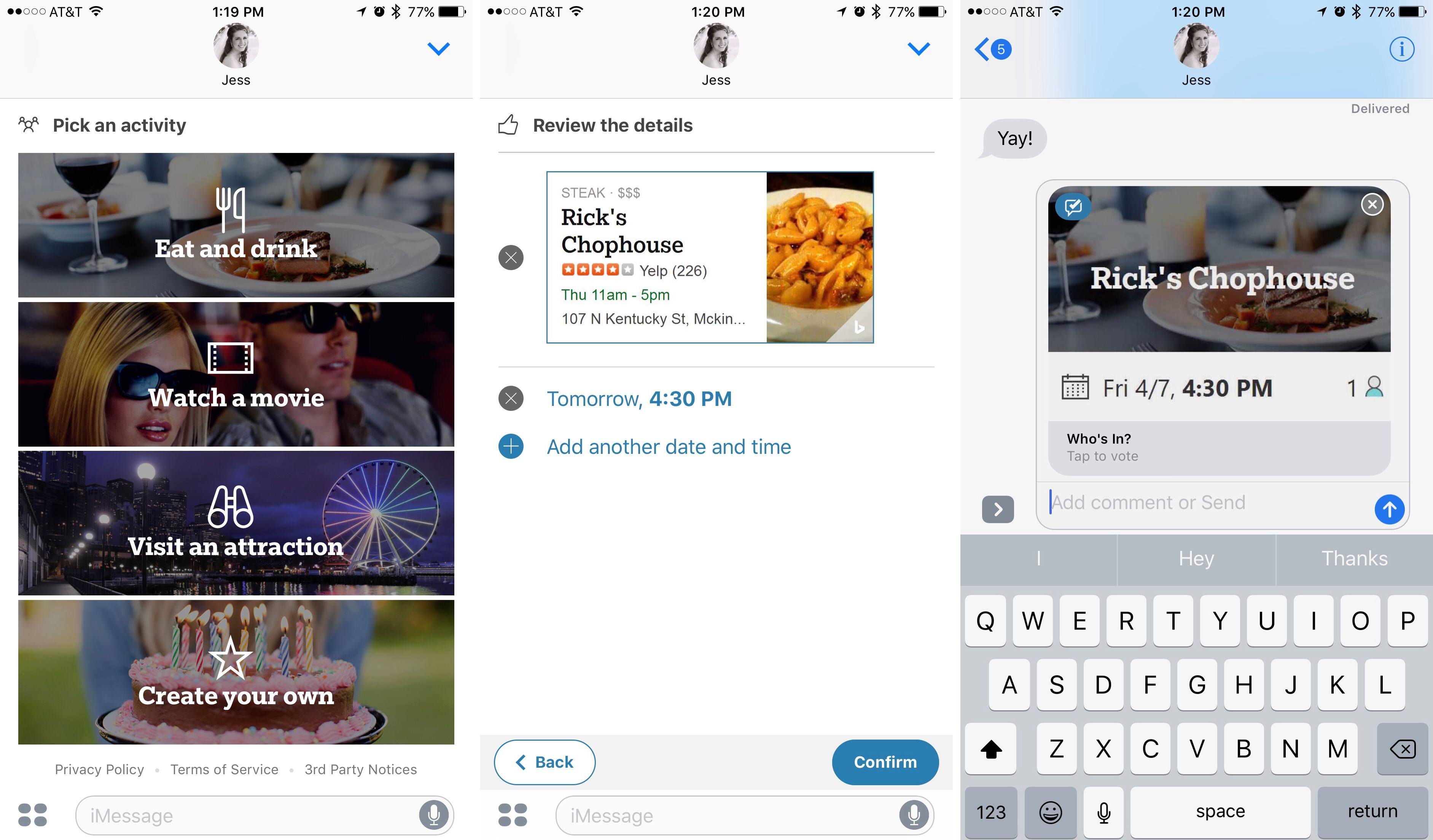
Microsoft has introduced a new app called ‘Who’s In’ to the iMessage App Store. The app is designed to help friends plan social events together without ever leaving the iOS Messages app.
When you want to coordinate an event with friends, opening ‘Who’s In’ will present several types of activities to choose from:
- Eat and drink
- Watch a movie
- Visit an attraction
- Create your own
After making your selection, a Bing-powered list of relevant options will be presented such as restaurant names, movie titles, etc. These are sorted based on your location, and once you’ve picked one, you’ll be asked to specify a date and time for the event to take place. These details are all compacted into an iMessage card that gets saved into your message body so you can send it to friends. When they receive your message, they can vote on whether they’ll be attending or not.
In many ways ‘Who’s In’ resembles the scheduling app Doodle, but with a more narrow focus on the specific activities featured in the app.
‘Who’s In’ is available for download from the iMessage App Store.
Apple Launches Clips Video App for iPhone and iPad
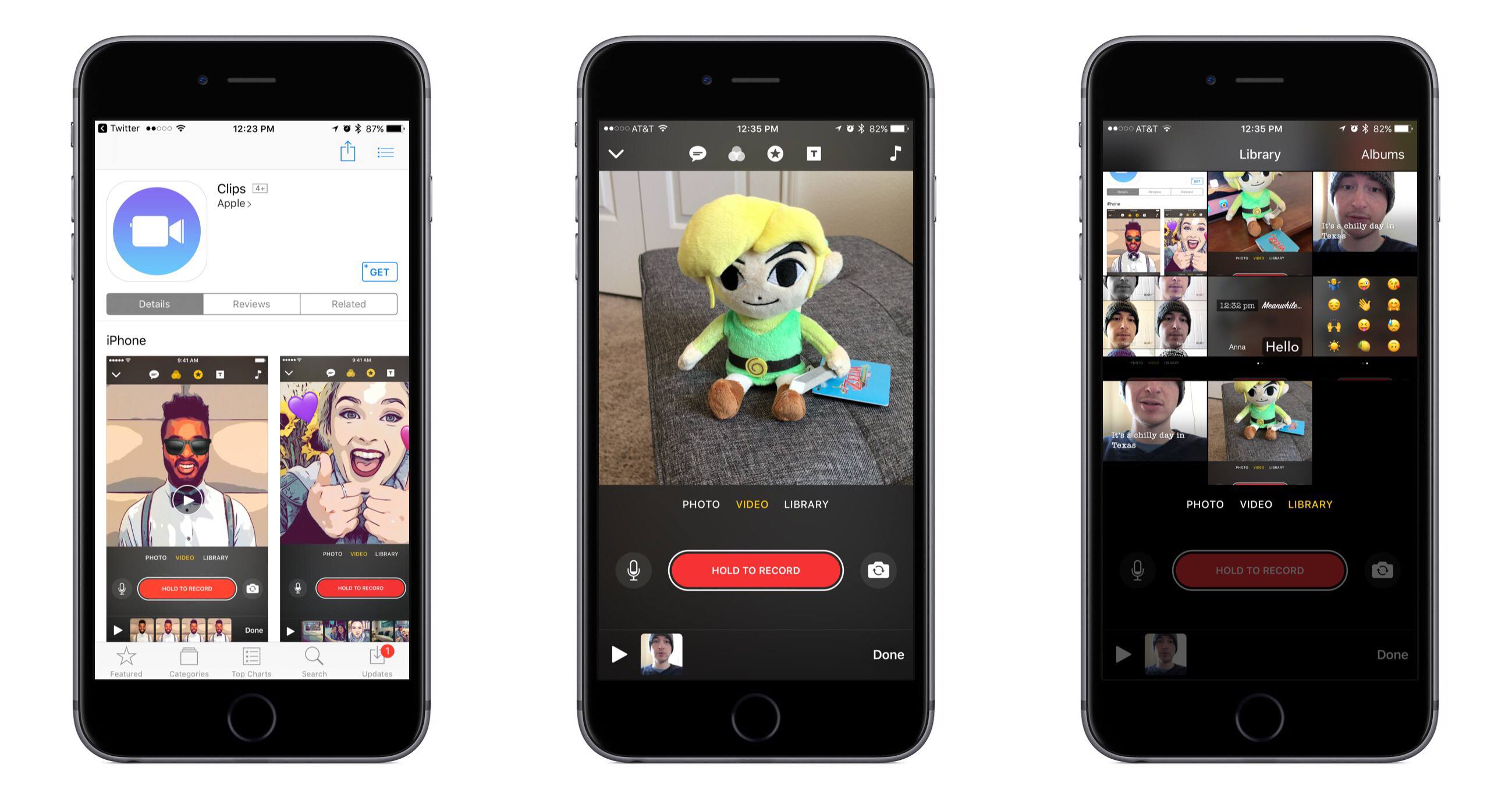
Apple has released a new app for iPhone and iPad, the previously announced video tool Clips.
Apple describes Clips as an app “for making and sharing fun videos with text, effects, graphics, and more.” Essentially it’s a stripped-down version of a video editor like iMovie, optimized to make edits fast and user-friendly on mobile. Its key focus is allowing you to shoot seconds-long clips and string them together into a video worth sharing.
The Twitter API Platform’s Future→
Twitter today disclosed future plans for its API platform and published a public roadmap where developers can track the company’s progress.
One of the most significant changes announced is that later this year the company will be unifying its API platform, combining the strengths of its Gnip APIs with its more affordable REST and streaming APIs. This will simplify the platform and provide more powerful APIs at, in theory, lower costs to developers with smaller-scale needs – though pricing plans have not been announced at this point.
The announcement post contains many details on the API platform’s future, but a few specific things are highlighted which launch today or in the short-term future:
- Today, we launched the Account Activity API, which provides access to real-time events for accounts you own or manage, with delivery via webhooks.
- Today, we also launched a set of new Direct Message API endpoints that will enable developers to build on the new Direct Message features we recently announced.
- Later this year, we’ll launch a new set of tools that enable developers to sign up, access, and manage APIs within a self-managed account. This will including the ability to get deeper access and more features, all with a transparent pricing model.
- We’ll also be shipping a new Search API that provides free access to a 7-day lookback window with more sophisticated query capabilities and higher fidelity data retrieval than is currently available. We’ll also provide a seamless upgrade path to full-fidelity 30-day or full archive lookback windows.
Twitter’s openness regarding its plans should be an encouragement to anyone who depends on third-party Twitter clients like Tweetbot or Twitterrific. The Direct Message API, for example, will now support media attachments like the official Twitter app.
Although it may be some time before we see today’s announcements bring specific benefits to third-party apps, Twitter has had a rocky relationship with developers in the past, and today’s announcement is a sign of commitment to its API platform and developers.
Spotify Will Offer Time-Limited Exclusives of Some Albums to Premium Members→
Music Business Worldwide reports on a new, multi-year deal Spotify has struck with Universal Music Group. One change tied to the deal is that some new albums from Universal will be exclusive to Premium subscribers for a two-week window. Spotify’s CEO Daniel Ek shares:
“We know that not every album by every artist should be released the same way, and we’ve worked hard with UMG to develop a new, flexible release policy. Starting today, Universal artists can choose to release new albums on premium only for two weeks, offering subscribers an earlier chance to explore the complete creative work, while the singles are available across Spotify for all our listeners to enjoy.”
Another change brought by the new deal is highlighted at the end of the article. Quoting a Spotify press release:
‘The new agreement will also provide UMG with unprecedented access to data, creating the foundation for new tools for artists and labels to expand, engage and build deeper connections with their fans.’
Although this information is spun by Spotify as a positive, it may be concerning to any more privacy-conscious users.
 Sleep Watch

Earlier this week, the developers behind Sleep Watch launched a major new version of the app. After testing it for the last couple weeks, Sleep Watch has quickly become my favorite sleep tracking app. Sleep Watch requires an Apple Watch to do its job, but as long as you have an Apple Watch and...
Widgets for iOS Apps, Vol. 1
World Time World Time is a simple app that, on one level, merely does what you can already do with the built-in Clock app: set up clocks for different parts of the world to keep track of what the time is in different places. The value in World Time is that it includes...
In Search of the Perfect Podcast Player
Podcasts are on the rise in broader culture, and they have certainly been on the rise in my life over the last eighteen months. The podcasting world has grown large, and it’s still growing every day, so much so that for a while I had too many podcasts on my plate. I had to...
Twitter Replies No Longer Count @Usernames Against 140-Character Limit→
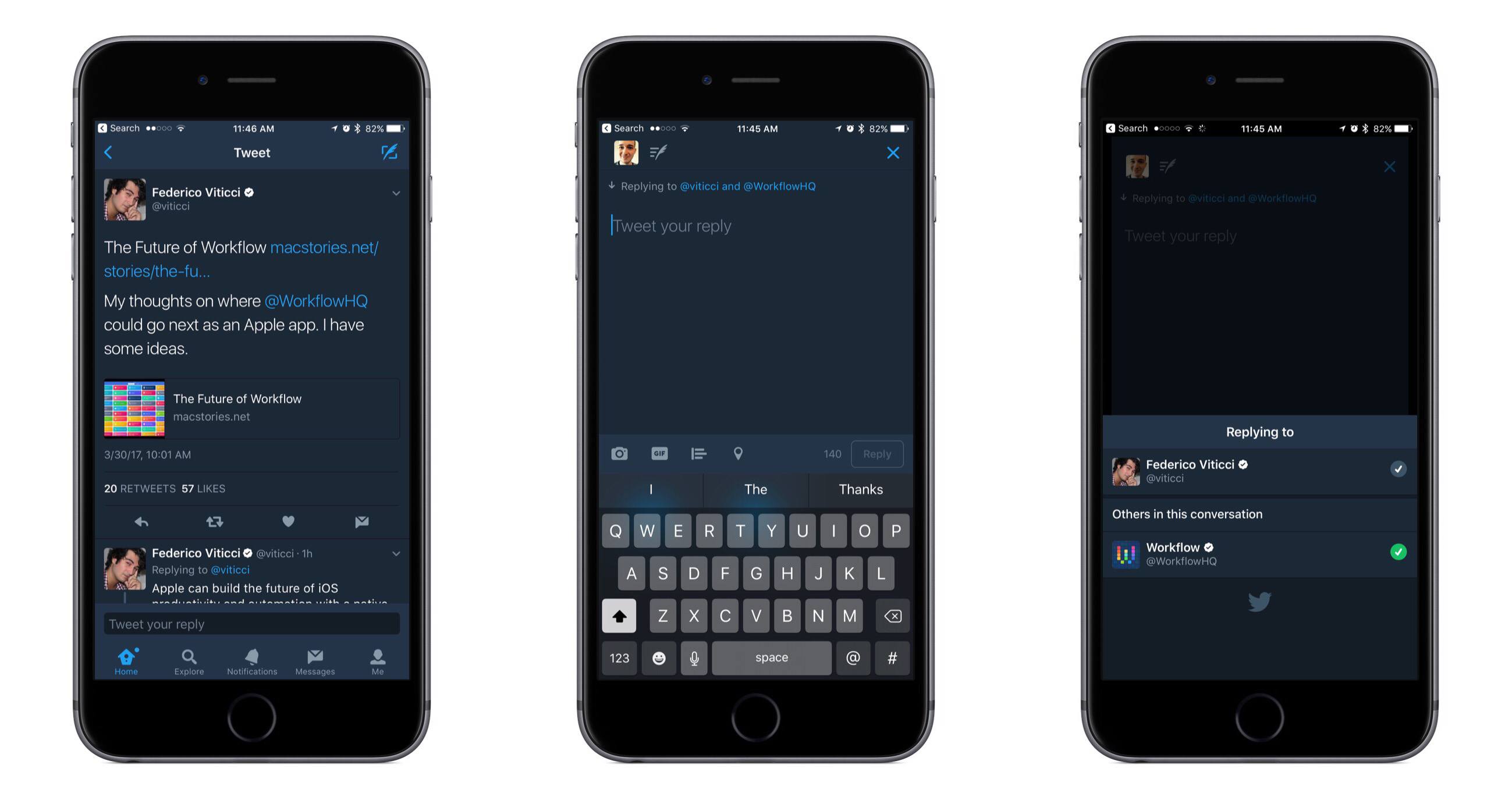
Twitter has announced a major change to the way replies are handled across all platforms – on the web and in iOS and Android apps. Presumably the Mac app will be included as well. Sasank Reddy writes:
Now, when you reply to someone or a group, those @usernames won’t count toward your Tweet’s 140 characters.
With this change, we’ve simplified conversations in a few ways:
- Who you are replying to will appear above the Tweet text rather than within the Tweet text itself, so you have more characters to have conversations.
- You can tap on “Replying to…” to easily see and control who’s part of your conversation.
- When reading a conversation, you’ll actually see what people are saying, rather than seeing lots of @usernames at the start of a Tweet.
One potentially confusing detail worth mentioning: although the usernames of those you reply to will not count against the 140-character limit, if you add any new usernames to the body of your reply, those new mentions will count against your limit.
You can see today’s change in action by watching the following video:
https://twitter.com/twitter/status/847479110616047616
This update is rolling out to all users now. If you haven’t seen it yet, it should be coming to you soon.