Ryan Christoffel

991 posts on MacStories since November 2016

Ryan is an editor for MacStories and co-hosts the [Adapt](https://www.relay.fm/adapt) podcast on Relay FM. He most commonly works and plays on his iPad Pro and bears no regrets about moving on from the Mac. He and his wife live in New York City.

Twitter Announces More User Safety Initiatives

Continuing the company’s recent efforts geared at stopping abuse on its platform, Twitter today announced several changes in a blog post by Ed Ho.

One behind-the-scenes change is in how Twitter monitors potential abuse and proactively addresses it. The company has implemented algorithms meant to detect potentially abusive behavior and address it without the need for users to report the behavior. Ed Ho gives the examples of an account “repeatedly Tweeting without solicitation at non-followers or engaging in patterns of abusive behavior that is in violation of the Twitter Rules.” He admits that mistakes will likely be made as they begin this proactive monitoring, but states that the algorithms and tools will be continually worked on for improvement.

A change more visible to users involves additional tools found in the Twitter app. Ho writes:

We’re also introducing new filtering options for your notifications to give you more control over what you see from certain types of accounts, like those without a profile photo, unverified email addresses or phone numbers…We’re also expanding the mute feature to build on the work we did in November which lets you remove certain keywords, phrases, or entire conversations from your notifications. Now, you’ll be able to mute from your home timeline and you can decide how long this content is muted – one day, one week, one month, or indefinitely.

The final change announced today has to do with Twitter’s transparency in responding to reported harassment. Notifications will be used to confirm that a report of abuse has been received, and also to share if/when an action is taken in response to that report.

The user-facing features announced today will be rolling out soon to all users.

Permalink

Tim Cook Affirms Apple’s Commitment to Pro Users in Annual Shareholder Meeting

Apple hosted its annual shareholder meeting today, and Zac Hall of 9to5Mac has the scoop on Tim Cook’s remarks.

Besides mentioning that this would be the last shareholder meeting at Town Hall because Apple Park will open soon, Cook showed shareholders an unreleased AirPods promo video and called the new product “quite the cultural phenomenon.”

Perhaps the most interesting tidbit from the meeting had to do with Apple’s efforts in the pro market:

Cook also hinted at Apple’s product pipeline by promising Apple will “do more in the pro area.” Cook called out the creative field as especially important to Apple while pushing back against the notion that Apple is too consumer focused now. “Don’t think that something we’ve done or something we’re doing that isn’t visible yet is a signal that our priorities are elsewhere.”

While this isn’t confirmation of a new Mac Pro in the works, or substantial investment in pro software, it is good to hear Cook reaffirm that creatives are an important customer base. He seems convinced that Apple’s product pipeline will prove that the company’s priorities haven’t shifted when it comes to creative professionals.

Permalink

The Power of Apple TV’s Top Shelf

Michael Rockwell of Initial Charge shares how the Apple TV’s Top Shelf feature impacted his recent reorganization of his Home screen:

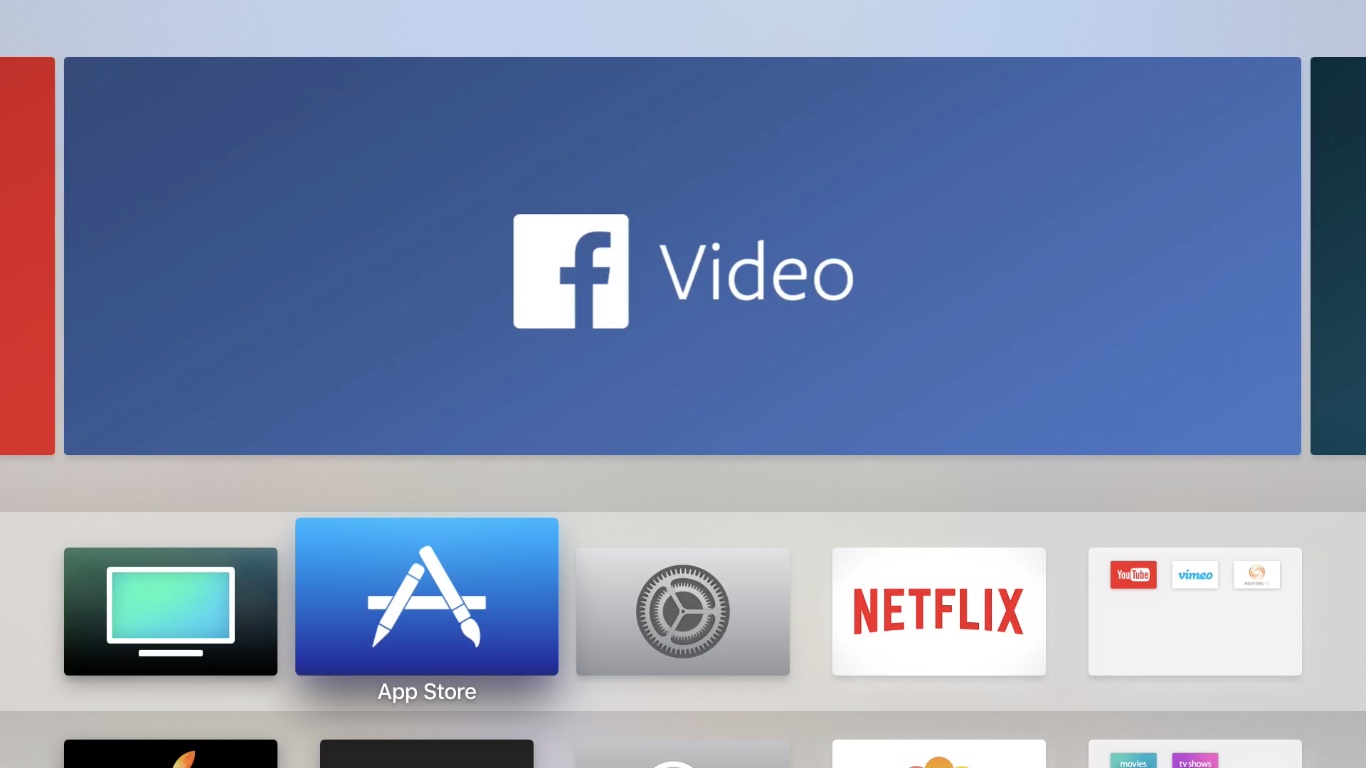
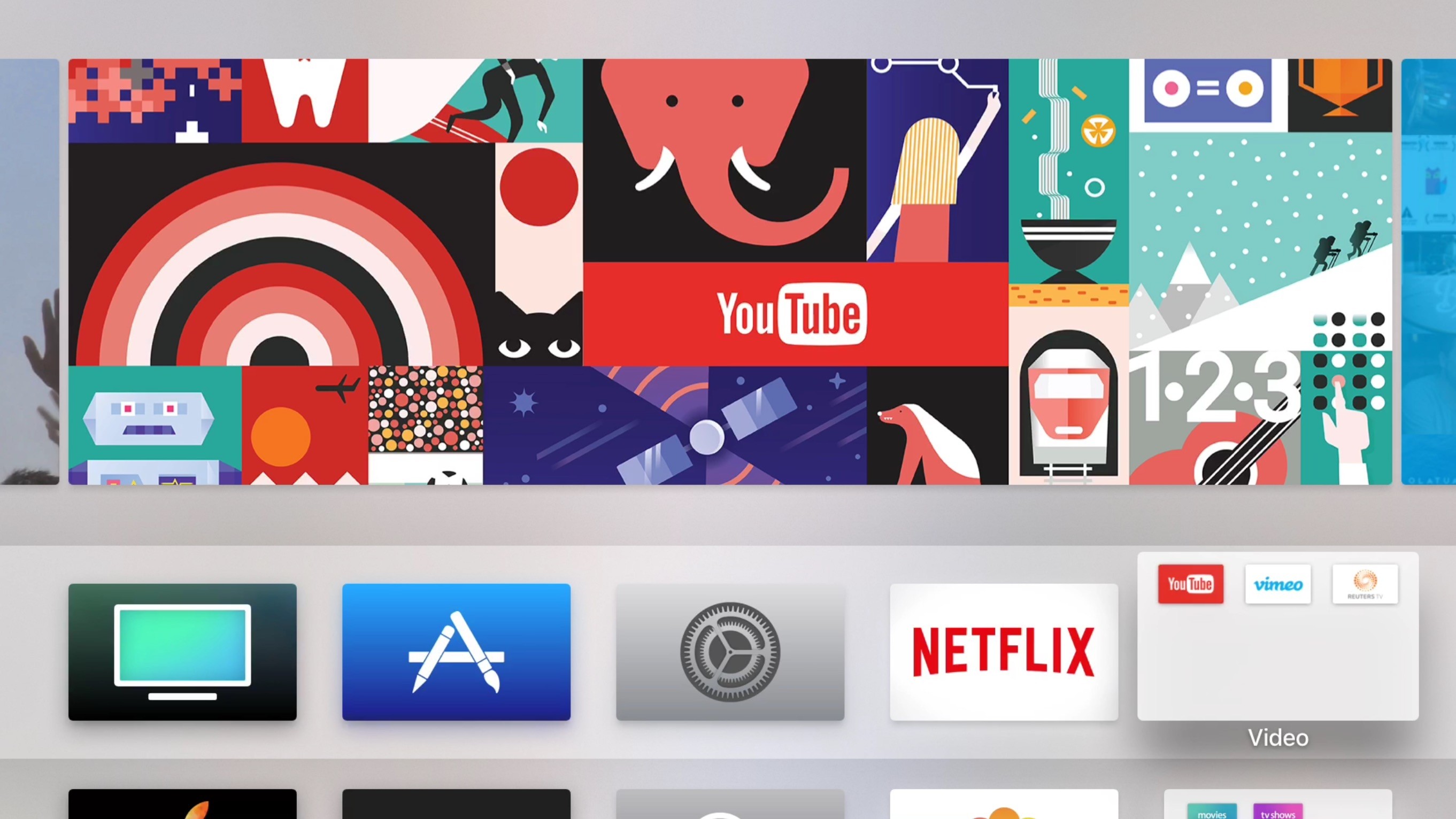
As it turns out, if you create a folder on your Apple TV and place it among the top row of apps, you can scroll through its contents from the Top Shelf.

I hadn’t made use of this feature until this most recent reorganization, though. And it brought me to a conclusion that, perhaps, many others have already come to — the Top Shelf is the most powerful user interface element on tvOS. It turns the Apple TV’s boring grid of icons into an immensely practical display of content from within your favorite apps, that you can play straight from your home screen.

The Apple TV is regularly criticized for its iPhone-like interface of a grid of apps. Rockwell makes a good point though in highlighting how a feature like Top Shelf makes that grid of apps significantly more useful, whether as a tool to navigate folders of apps or to get straight to the content you want.

Despite the navigation improvements made possible by Top Shelf, very few apps make the most of the feature. Currently on my Apple TV’s Home screen, only the App Store and TV app have Top Shelf implementations that I find valuable.

Top Shelf seems to be one of the casualties of a weak App Store on the Apple TV. Because the demand for Apple TV apps appears weak, developers don’t have a strong incentive to take advantage of features like Top Shelf.

As a daily Apple TV user, I’m hopeful Apple will put more concerted efforts into the platform that sparks greater activity in the app ecosystem.

Permalink


Google Updates Gboard with Dictation, Doodles, New Languages, and Emoji

Nearly one year ago Google launched Gboard, a third-party keyboard for iOS that brought the power of Google search to iOS’s keyboard. The company has continuously improved the keyboard over time, with updates including support for multiple languages and a 3D Touch-powered trackpad mode. Earlier this year the keyboard was integrated with Google’s standard search app. Today the improvements continue with three separate highlights.

Dictation

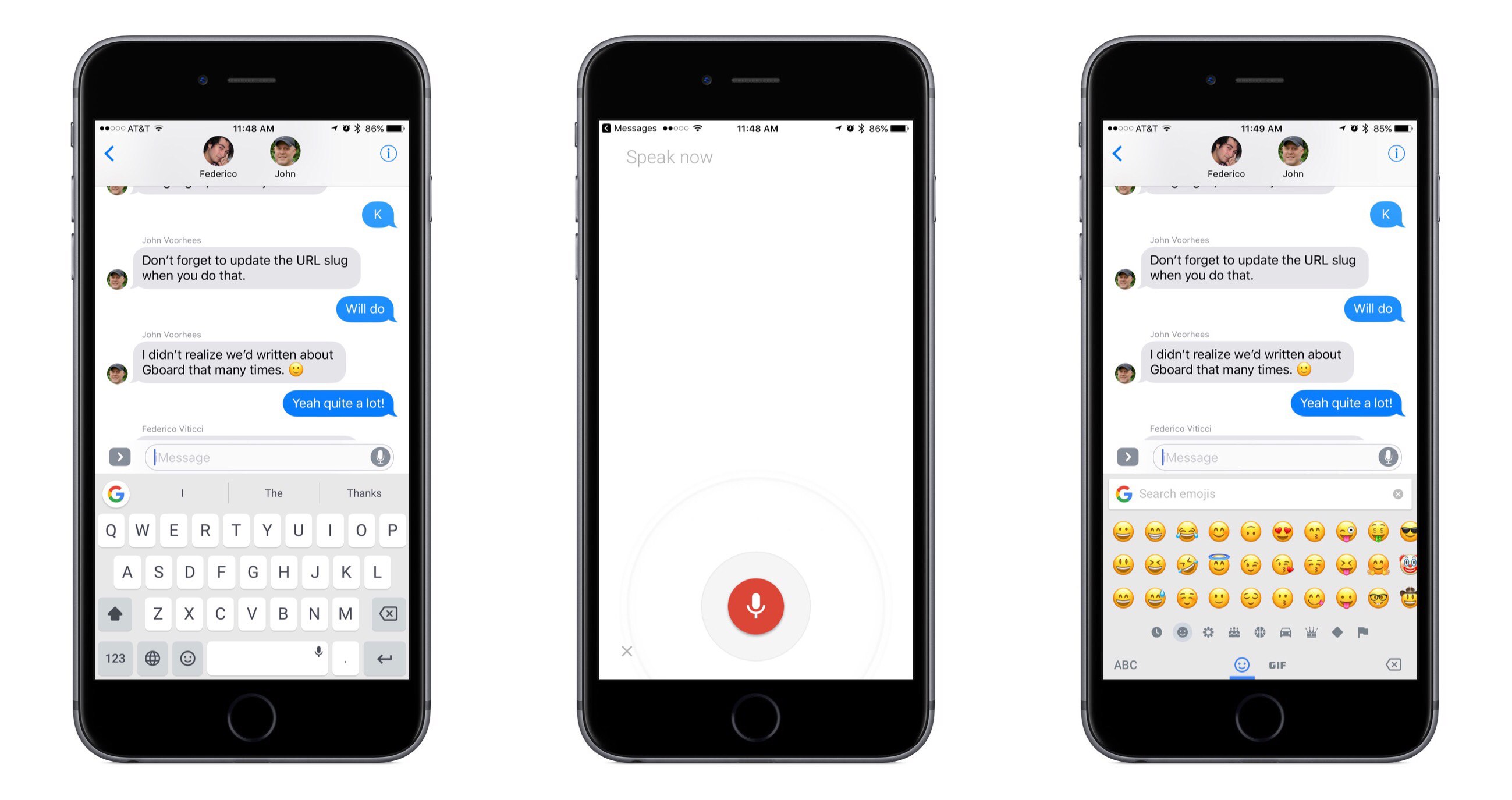
The default iOS keyboard has long presented the option to dictate text rather than type it, and Gboard has gained that ability starting today. Users will notice a speaker icon that now appears on the right side of the space bar. Long pressing that speaker icon will engage dictation mode.

Doodles

Google’s Doodles add a sense of whimsy to the company’s search page, but until today searching through Gboard meant missing out on Doodles. Going forward, whenever a Doodle is available the “G” button on the left side of the keyboard will animate, indicating you can pull up the Doodle with a quick tap.

Languages and Emoji

In addition to support for many new languages – Croatian, Czech, Danish, Dutch, Finnish, Greek, Polish, Romanian, Swedish, Catalan, Hungarian, Malay, Russian, Latin American Spanish and Turkish – Gboard has also been updated to enable searching for and using the new emoji that Apple added to iOS 10.

Gboard can be downloaded from the App Store.


The Omni Group Announces Low-Cost Version of OmniOutliner

Ken Case, CEO of the Omni Group, wrote today about a new detail of its upcoming OmniOutliner 5 software. In addition to the traditional Pro version, OmniOutliner will also come in a new Essentials version.

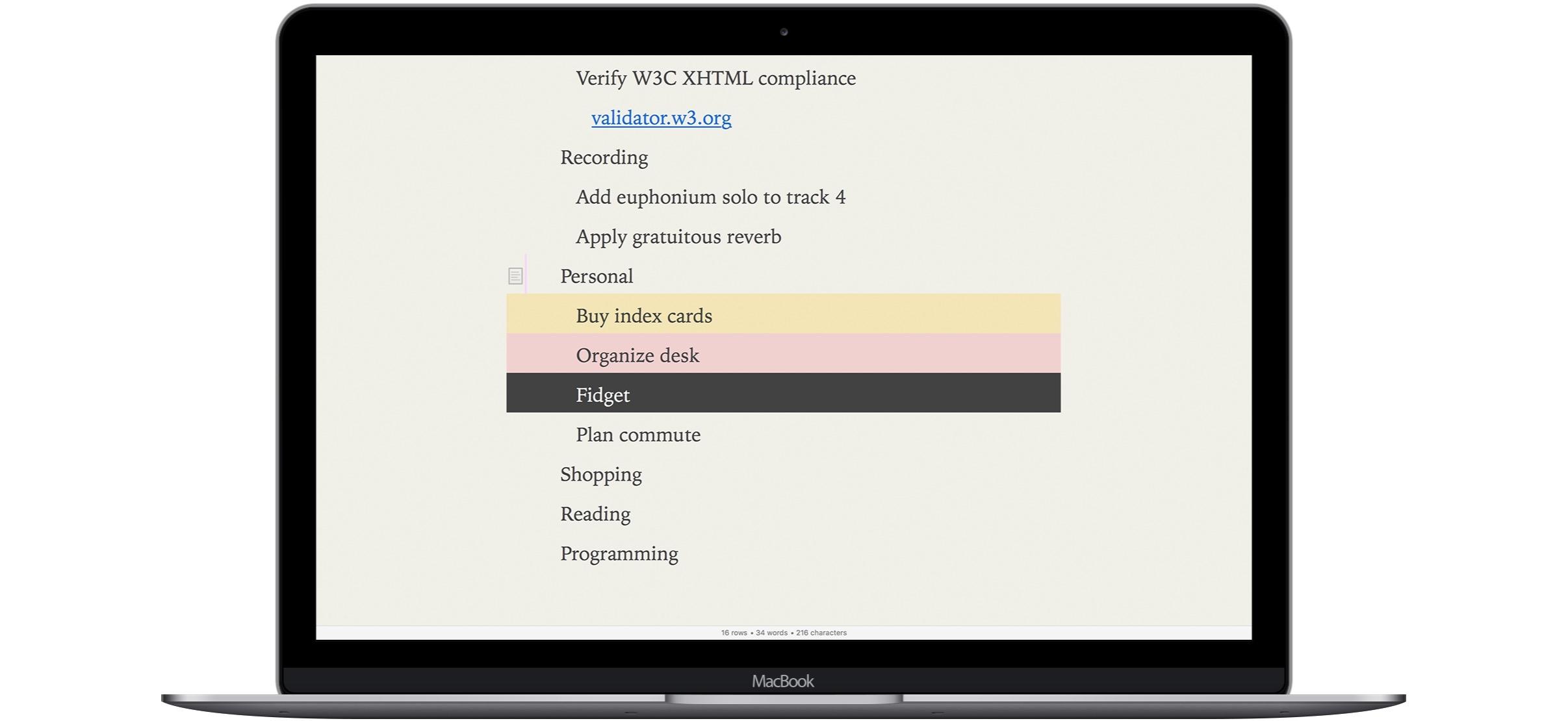
In OmniOutliner’s new Essentials edition, your entire focus is on your own content: there are no distracting sidebars or panels. You can choose to work in a window or in a distraction-free full-screen mode, selecting from a set of beautiful built-in themes. As you write, you’ll be able to see some key statistics about your content so you can track progress towards your goals. But our goal is to help you focus on your content and whatever task you’re working on—not on the tool you’re using.

With the Essentials edition, we’ve lowered OmniOutliner’s entry price from $49.99 to an extremely affordable $9.99. And since we want our upgrade price from Essentials to Pro to be $49.99, the new list price for Pro has been lowered to $59.99:

While Case’s post references OmniOutliner for Mac specifically, he later confirmed in a tweet that OmniOutliner Essentials would be coming to iOS as well.

This announcement represents a shift in direction for the Omni Group. The company’s traditional offerings have included Basic and Pro versions of each program, but the Basic version has historically not been anywhere near the price point of this upcoming Essentials edition. It will be interesting to see if this new approach expands to Omni’s other apps over time.

Today’s news is the second major shift in pricing strategy the Omni Group has made in the past year. Last September saw news that they would begin offering software as free downloads in the App Store, with an In-App Purchase to unlock full functionality. This change in pricing model made it possible to offer free trials, such as with OmniGraffle 7; trials are currently not possible on the App Store under the paid up front model.

OmniOutliner 5 for Mac is currently in a public test that can be downloaded here. More information about the Essentials version is available here.


Castro 2.3 Brings Podcast Triage Through Rich Notifications

Today the team at Supertop announced the release of Castro 2.3, which introduces rich notification support for the podcast app.

Castro 2 launched last August with a new interface for managing podcast episodes that centers around an inbox and queue. With an increasing number of great podcasts available, the traditional model of subscribing to a show and adding all of its episodes to your feed can get overwhelming. In Castro 2 the solution to this problem is to have new episodes land in an inbox. The inbox allows users to decide which episodes make it to their queue for listening, and which don’t.

Previously, when notifications for a new episode came in, you were presented the options to play, queue, or archive the episode. But unfortunately, while the episode’s title would display in the notification, with many podcasts a title isn’t enough information to properly decide whether the show’s content is something you’d be interested in. As such, taking action on a notification often couldn’t happen in an informed way without opening the full app anyways. That changes with today’s update. Thanks to its implementation of iOS 10’s rich notification framework, a notification from Castro will now display a show’s artwork and a portion of the episode description along with the aforementioned action buttons. So now when a show’s episode title is San Frosé, you can be well informed about what the subject matter actually is.

Besides using rich notifications as a triage method, Supertop has one other interesting implementation of the feature. If you pause an episode when there are less than three minutes remaining, Castro will immediately send a silent notification that presents you with the option to archive the show and, optionally, play the next show in your queue. So if a show has a couple minutes worth of outro that you prefer to skip, rather than hitting the skip button several times you can now simply hit pause, then interact with the notification that appears in order to either move to the next show or end playback altogether.

The full list of changes in Castro 2.3 is available on Supertop’s blog. Castro can be downloaded from the App Store.