John
John
AppStories Episode 370 - Apple Vision Pro: Hardware First Impressions
0:00
50:26
50:26
This week, Federico and John tell the story of how Federico got his Apple Vision Pro before sharing their first impressions of the Vision Pro hardware.


 Apple Vision Pro: Hardware First Impressions
  Early Issues with Shortcuts on visionOS
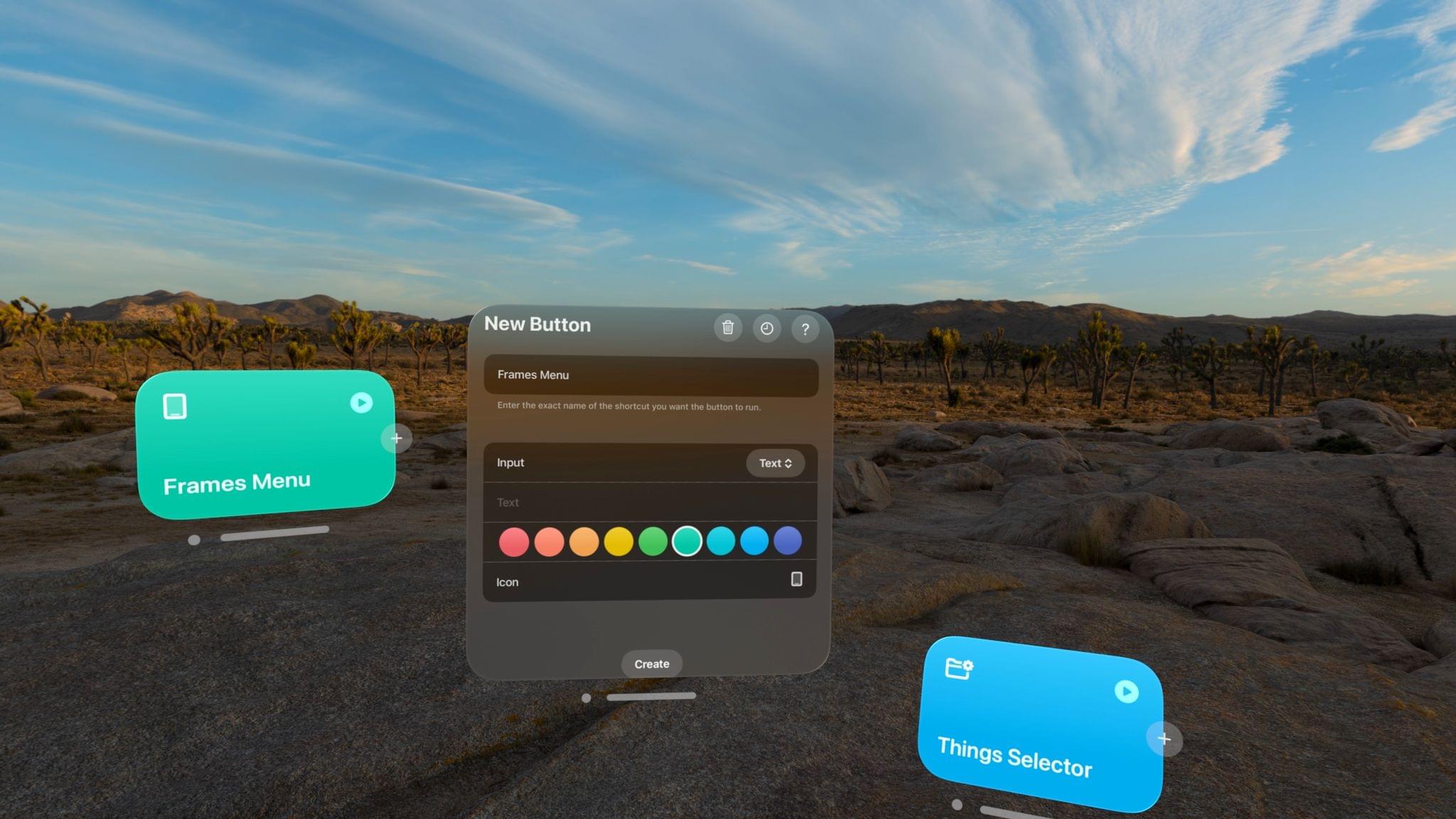
 I received my Apple Vision Pro yesterday (for the full story of how it eventually found its way to Italy, you don’t want to miss the next episode of AppStories), and, as you can imagine, I’ve been busy downloading all the apps, learning my way around visionOS and – just today – using the extended Mac display mode. The first 24 hours with a Vision Pro are a whirlwind of curiosity and genuine nerd excitement, but despite my attention being pulled to a hundred different places, I’ve found the time to test one app in particular: Shortcut Buttons by Finn Voorhees.
I thoroughly enjoyed this story by Anil Dash on how the openness of podcasting (a topic I’ve covered before) has proven so resilient over the years and is, in fact, more relevant than ever in the era of federated social networks:
But here’s the thing: being able to say, “wherever you get your podcasts” is a radical statement. Because what it represents is the triumph of exactly the kind of technology that’s supposed to be impossible: open, empowering tech that’s not owned by any one company, that can’t be controlled by any one company, and that allows people to have ownership over their work and their relationship with their audience.
Side note: this is the first post I’m writing and publishing on MacStories directly from the Vision Pro, which I received this morning. A lot more to follow soon – including wherever you get our podcasts.
How I Prepared for the Vision Pro
Digging into the DMA
The iPhone Settings I Always Enable First There’s no tech commentator better equipped to talk about the history of spatial interfaces in Apple operating systems than John Siracusa, and I enjoyed his latest, thought-provoking column on where visionOS and the Vision Pro’s gesture system fit in the spatial computing world:
Where Vision Pro may stumble is in its interface to the deep, spatial world it provides. We all know how to reach out and “directly manipulate” objects in the real world, but that’s not what Vision Pro asks us to do. Instead, Vision Pro requires us to first look at the thing we want to manipulate, and then perform an “indirect” gesture with our hands to operate on it.
Is this look-then-gesture interaction any different than using a mouse to “indirectly” manipulate a pointer? Does it leverage our innate spatial abilities to the same extent? Time will tell. But I feel comfortable saying that, in some ways, this kind of Vision Pro interaction is less “direct” than the iPhone’s touch interface, where we see a thing on a screen and then literally place our fingers on it. Will there be any interaction on the Vision Pro that’s as intuitive, efficient, and satisfying as flick-scrolling on an iPhone screen? It’s a high bar to clear, that’s for sure.
In yesterday’s review on The Verge, Nilay Patel shared a similar idea: it’s a strange feeling to use a computer that requires you to look at what you want to control at all times. I don’t know what to think about this yet since I don’t have a Vision Pro, but I’m curious to learn how this interaction method will scale over time as we start using this new platform on a daily basis. It’s quite fitting, however, that visionOS is based on the one Apple platform that supports both kinds of manipulation with a pointer and touch.
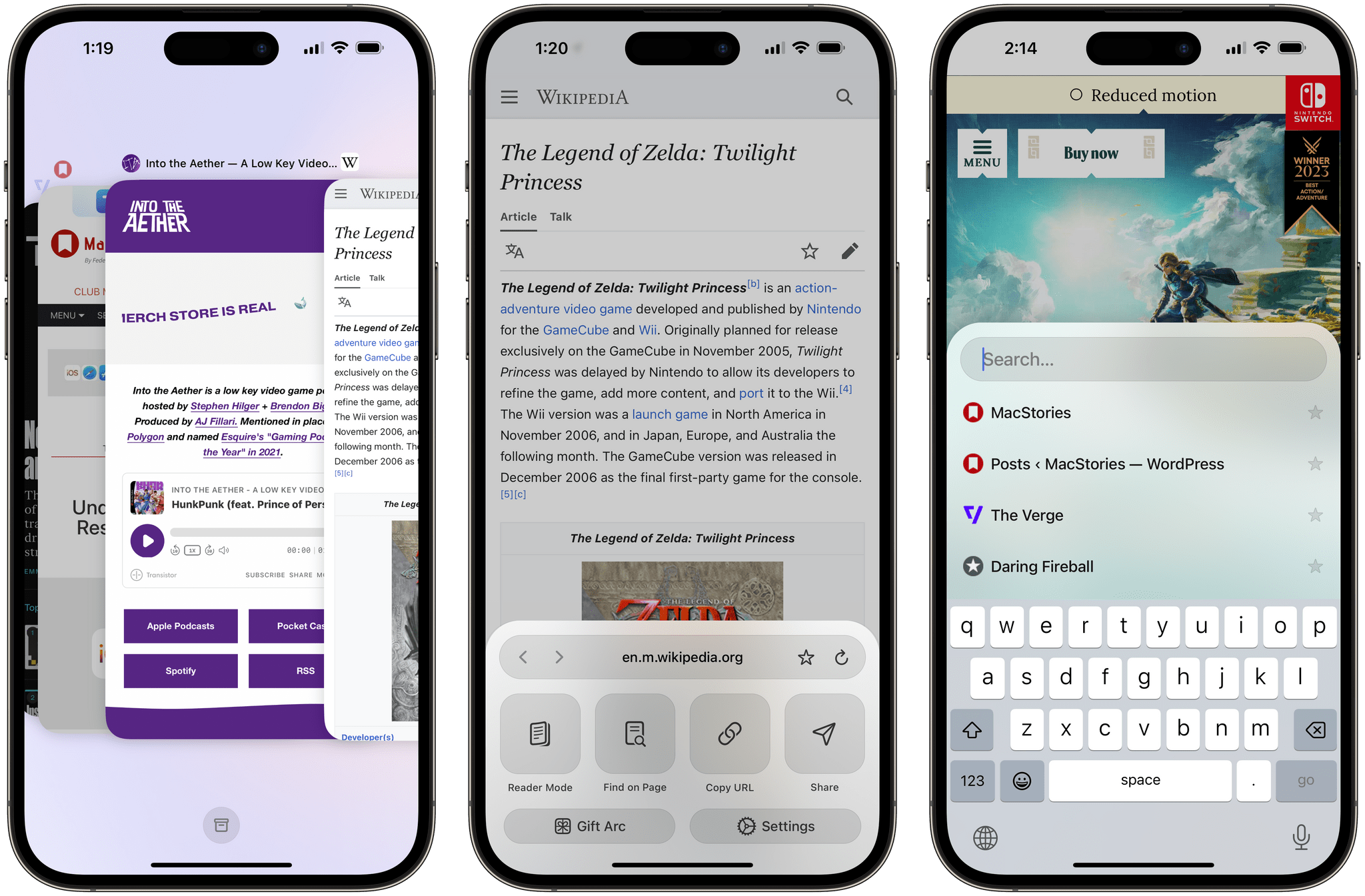
Every once in a while, I come across a new app whose design, feature set, or combination of the two redefines my expectations for a particular category of software. The new Arc Search app for iPhone, which is launching today on the App Store as a separate app from The Browser Company’s previous Arc Companion utility, is one of those experiences.
From the first moment I tried Arc Search for iOS, I knew I wanted to use it as my default iPhone browser. And the reason isn’t because Arc Search does more than Safari (there’s actually a long list of missing features that I’ll cover below), but because despite offering less functionality, the essence of how Arc Search rethinks one-handed web browsing on a phone is so refined and thoughtful, going back to another browser feels like a downgrade.
Arc Search has a long way to go to become a full-featured, mature browser for iOS, and it doesn’t even come with an iPad counterpart yet. But, at the same time, it’s the best take on mobile web browsing I’ve seen in years.