Federico Viticci

10804 posts on MacStories since April 2009

Federico is the founder and Editor-in-Chief of MacStories, where he writes about Apple with a focus on apps, developers, iPad, and iOS productivity. He founded MacStories in April 2009 and has been writing about Apple since. Federico is also the co-host of AppStories, a weekly podcast exploring the world of apps, Unwind, a fun exploration of media and more, and NPC: Next Portable Console, a show about portable gaming and the handheld revolution.

Growl 1.3 To Be Released on Mac App Store, Introduce Lion Support and Drop GrowlMail Support

The developers of Growl, a popular notification system for OS X that’s been around for years and it’s completely free to use, have announced that the plugin is going to become a Mac App Store application through a complete rewrite with OS X Lion in mind, dropping support for older frameworks and “hacks” like GrowlMail and GrowlSafari that wouldn’t probably make it past Apple’s approval. For those not familiar with Growl, the notification system became popular among Mac users because of its highly customizable nature that enabled almost anyone with basic coding and design knowledge to create “themes” for it that changed the appearance and animations of the notification tickets displayed on screen. Growl is supported by hundreds of different applications for the Mac, including big names like Twitter and Dropbox. We have covered a handful of beautiful themes for Growl in the past, and the success of this plugin also inspired several iOS developers to create mobile apps capable of plugging into the desktop system to fetch or send remote notifications. Growl is the undiscussed king of notifications for OS X apps.

Yet the developers are willing to change everything about Growl to get it ready for the Mac App Store and turn it into an app as requested by Apple to developers submitting software to iTunes. In a post on Growl’s official Google Group [via Steve Streza], developer Christopher Forsythe has announced that the upcoming 1.3 release will bring important changes such as the aforementioned Store availability, as well as full support for Lion and a new “app” form that has the obvious advantage of allowing users to easily upgrade to new versions by simply checking on their Mac App Store purchase page. One of the common complaints about Growl, in fact, is that the app often requires the user to download and perform an upgrade. As the existing version comes with a .DMG file that contains an installer for a System Preferences panel, the current Growl 1.2.2 forces users to manually upgrade every time a new version is out. With the Mac App Store and Growl becoming “an app”, the developers want to eliminate the convoluted process of opening and mounting a disk image file, running an installer, and manually upgrading from System Preferences. Read more
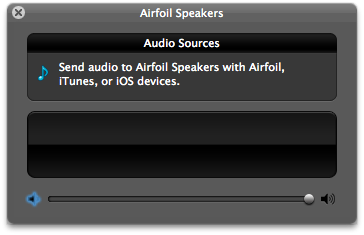
Airfoil 4.5 Released: Extended AirPlay Support & Enhanced Remote Controls

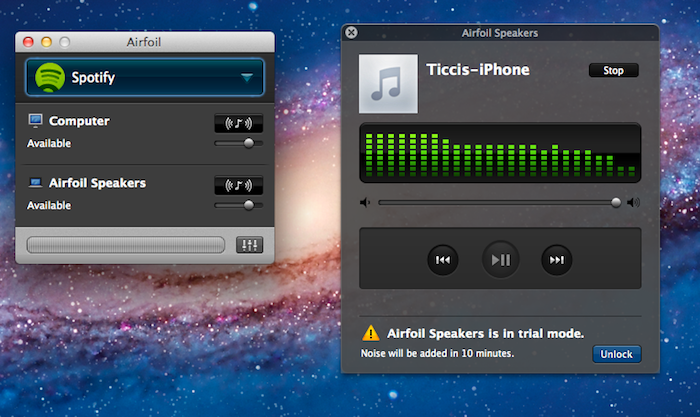
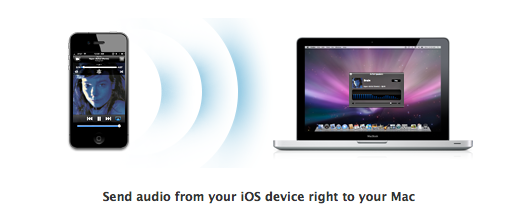
Back in December we reviewed Airfoil 4, an update to Rogue Amoeba’s powerful audio tool for OS X that streamlined the process of sending audio content from various applications to external speakers, computers or Apple TVs, also using the new AirPlay technology. Airfoil 4.5, a major update released today and free for existing customers, builds upon the excellent feature set of version 4 to deliver an even easier AirPlay integration that will allow iOS users to beam any kind of audio from any iOS app to the Airfoil Speakers app running on a Mac. This new functionality may sound very similar to other desktop AirPlay receivers like AirServer, and indeed it is, with the exception that Airfoil Speakers runs in its (beautiful) standalone window that, among other things, visualizes music controls and album artworks even during a wireless AirPlay session.

Rogue Amoeba explains:

First and foremost, Airfoil Speakers for Mac can now receive audio from your iOS device! Launch Airfoil Speakers, and it will appear in the list of AirPlay devices on iOS. When you play audio in an app on your iPhone, iPod Touch, or iPad, you can select Airfoil Speakers from the AirPlay list, and you’ll hear the audio right on your Mac.

The new, powerful Airfoil Speakers are now compatible with iTunes on any Mac or PC and MacStories favorite Radium as well. Similarly to The Iconfactory’s latest update to Take Five for Mac, Airfoil 4.5 can now control apps like Spotify, Rdio and Radium so you’ll see control buttons alongside album artworks and track titles when grabbing audio from these sources. This change is welcome as you won’t be forced to switch to the original application to see what’s playing anymore.

Last, Rogue Amoeba says they’ve added support for AirPlay devices “from companies like iHome, JBL, and many more”, and that AirPlay-enabled hardware will work with Airfoil out of the box with no further configuration needed.

Airfoil 4.5 is a free update for licensed owners of Airfoil 4, and a license key can be purchased here at $25 to unlock the full app (free trial is available). With the much improved Airfoil Speakers utility, at this point we can’t help but recommend Airfoil if you’re looking for a simple, good-looking and powerful solution to manage audio in your house, room or office, and integrate it with Apple’s AirPlay.


3 Column Reader Safari Extension Makes Google Reader Beautiful

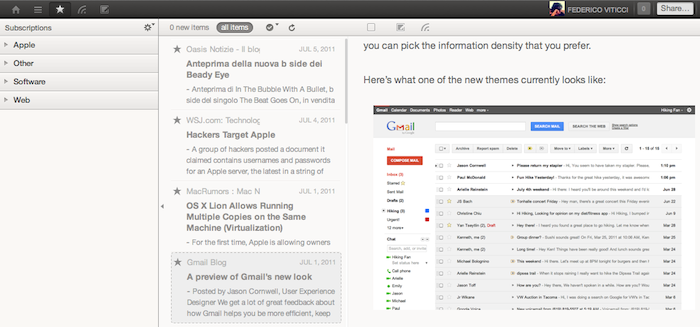
Based on the Pure Reader mod for Google Reader we covered back in December, 3 Column Reader is a new Safari extension released in June and updated last week that enables you to turn the Google Reader website into a beautiful, three-column reading experience for your RSS feeds. Developed by Zackary Corbett, 3 Column Reader is only compatible with Safari for now, and it’s got a minor glitch with the settings icon from Google’s new sharing toolbar launched alongside the Plus social network. However, the extension is being actively developed so we wouldn’t be surprised to see a fix for users logged into Google+ soon.

For everything else, 3 Column Reader looks great: the extension takes Pure Reader’s color scheme (which reminds us of Reeder’s sepia background and monochrome icons) to lay out a three-column setup perfect for widescreen monitors: folders and feeds are listed on the left, a mid panel visualizes the feeds’ titles and excerpts, and the full articles with images are displayed on the right. You can hide the source list by hitting an icon in the mid panel, and most of Google Reader’s web app functionalities are retained, such as popup menus to sort articles, or buttons to mark items as favorite. I didn’t encounter any other compatibility issues when using 3 Column Reader on Safari 5.1 for Lion GM. Read more


Capture: The Fastest App To Record Video On Your iPhone

Released today at $0.99 on the App Store and created by the same developers of Canned, Capture is a minimal and simple utility for the iPhone that addresses a common issue with the iPhone’s Camera app: sometimes you need to capture a moment quickly, but the app takes too long to launch or switch to video recording. Brought to my attention by Ben Brooks, Capture is simply great at what it does: the developers describe it as “a record button for your home screen” and, really, that’s not too far from the truth. Capture starts recording a video as soon as you tap on its (beautiful) icon. You launch the app, and it starts recording after one second. No need to switch to the “video” tab as in Apple’s Camera, no need to wait because, and I don’t know how exactly, Capture is immediately available after you tap on it.

I can see why Capture could become an essential tool for many: by placing the app on the iPhone’s dock, you have quick access to video recording by pressing an icon. This is certainly useful for people who want to “capture” a particular moment in their kids’ life or, overall, users frustrated by the general slowness of Apple’s Camera when it comes to recording a video quickly. For reporters and citizen journalists, Capture might be exactly what they were looking for.

Capture is fast, elegant, lets you activate the iPhone’s Flash but has no support for switching between rear and front facing cameras yet. If you need an app to record video in seconds without waiting, get Capture at $0.99 on the App Store.


The WSJ iPhone App and Negative App Store Reviews

The WSJ iPhone App and App Store Reviews

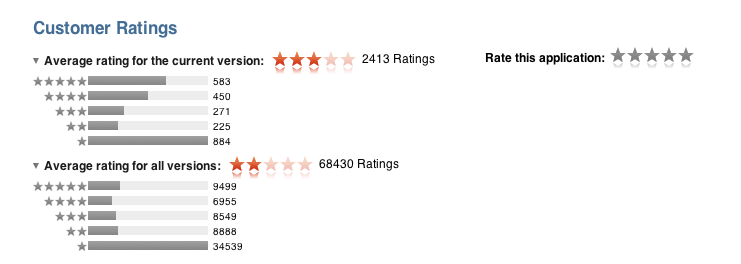
Jakob Nielsen at UseIt.com offers an interesting breakdown of the issues behind the design of the WSJ iPhone app’s initial login screen, which is causing customers to leave negative iTunes reviews as they think the newspaper is forcing existing subscribers to pay again to read content on the iPhone. That is not true (subscribers of wsj.com can access the app for free), but according to Nielsen a poorly designed login screen that puts the focus on new subscriptions and registrations, rather than login, is tricking users to believe that existing subscriptions don’t count against iPhone access.

Wildly persistent users might notice the much smaller Log In area at the bottom of the startup screen. However, they’re unlikely to press this button because their experience with the app so far has taught them that they must register (and pay extra) before being allowed to log in.

Those few users who do press Log In will finally see that they can use their existing www.wsj.com credentials to access the app. However, as the many negative App Store reviews attest, few users ever make it this far.

The full report with screenshots of the WSJ iPhone app and proposed mockups to address the issue is available here. Subscriptions and logins for existing subscribers have always presented usability problems for developers of mobile newspapers and magazine apps, struggling to find the best way to promote both new subscriptions and free access for existing, paying customers. Apple wants to improve the process with its native subscription system based on iTunes accounts, and indeed several publications are experimenting with the new APIs provided by Apple to offer web-based login screens that allow for new registrations and iTunes subscriptions, like The New York Times did in its latest app update.

Permalink

Ahead Of “Awesome” Launch, Screenshots Show Facebook’s Project Spartan

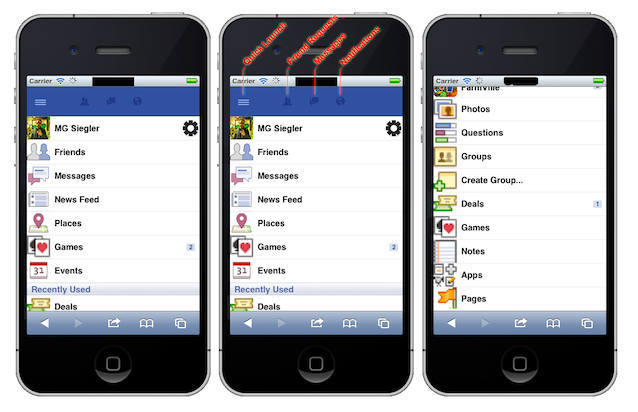
Last week, Facebook’s Mark Zuckerberg revealed the company was preparing for an “awesome” launch this week. A formal announcement is expected today at a media event at Facebook HQ, but several blogs in the past few days have claimed Facebook is set unveil a partnership with communication giant Skype (recently acquired by Microsoft) to bring video chats to the social network, an interesting possibility at the light of Google’s new Plus foray into the social sphere, which among other things features a Hangout functionality to start group video chats with multiple contacts at once. TechCrunch, however, seems to believe that Project Spartan, an HTML5-based development and distribution platform that’s being built with Mobile Safari for iOS in mind, won’t be part of the announcements today, which may or may not also include the long-awaited official iPad app, supposedly nearing a public release. Read more


Fluid App Adds Lion Compatibility and Full Screen Mode

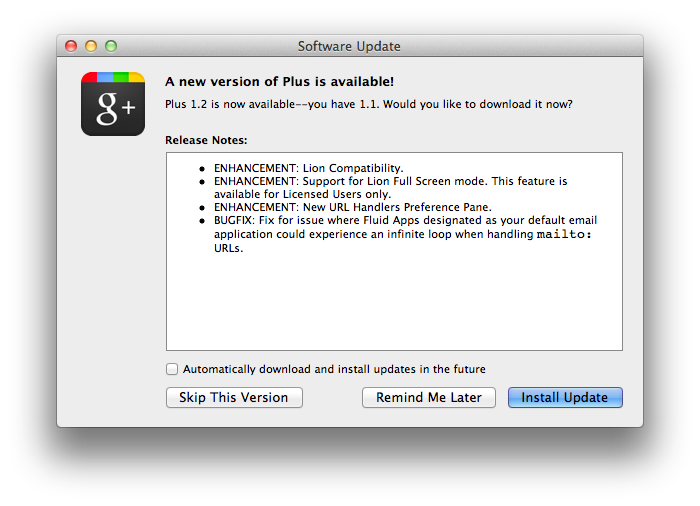
With OS X Lion expected to make its public debut on the Mac App Store in the next few weeks, it is no surprise developers are starting to release updates to their applications to support the new OS and introduce features built upon the new APIs created by Apple. Last night, Panic released four updates to bring Lion support to Coda, Candybar, Transmit and Unison. Fluid App, the popular tool to create native applications for OS X off any website or web app, has also been updated to bring proper Lion compatibility, a few bug fixes and, more importantly, support for Lion’s full screen mode.

Whilst Lion compatibility can be seen in the Fluid changelog here, full screen support is listed under changes to Fluid apps. Indeed,when I opened the Google Plus Fluid app I created earlier this week, I was prompted to perform an update in-app to enable Lion and full screen support, as well as new URL handlers in the Preferences. As with most Apple apps on Lion, full screen mode can be entered by hitting a keyboard shortcut, or pressing an icon in the upper right corner. To return to the standard window view, you’ll have to click the (blue) full screen icon in the menubar again. Animations for my Fluid app on my late-2008 MacBook Pro with SSD were fast and smooth.

Fluid App is available for free, but you can purchase a license at $4.99 via Paypal to unlock additional features like the aforementioned full screen on Lion, separate cookie storage and possibility of pinning apps to the OS X status bar.


JailbreakMe 3.0 Released, Jailbreaks iOS Devices Including iPad 2

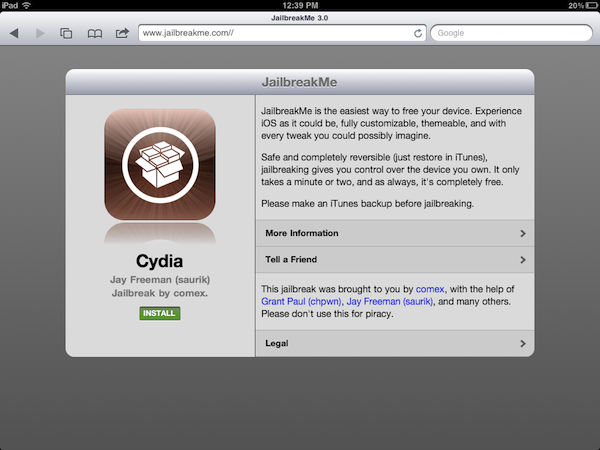
The long-awaited new version of popular jailbreak tool JailbreakMe has been released today and, as previously announced by developer and hacker comex and the Dev-Team, it is capable of jailbreaking a variety of iOS devices running iOS 4.3 and above, including the iPad 2. The procedure of jailbreaking allows users to install unauthorized software on their devices, like Cydia, an alternative marketplace that contains apps, tweaks and graphical modifications Apple can’t approve for sale in its App Store. The popularity of JailbreakMe raises from the fact that the tool is entirely Safari-based, enabling users to press a button in their browser to install Cydia with ease, without having to plug the device into a computer, restore, and follow other additional steps. JailbreakMe takes a few minutes to install Cydia, and it’s completely reversible in iTunes with a restore.

Because of the issues with people leaking the hack behind JailbreakMe 3.0 in the past week, creator comex was forced to accelerate the release, fearing a patch from Apple coming soon with a software update. Just like JailbreakMe 2.0, in fact, the new tool uses a vulnerability in iOS’ PDF display engine to allow the installation of Cydia from Safari. The hole will likely be fixed soon by Apple with a software update, perhaps iOS 4.3.4, but the same Cydia developers are offering a tweak called PDF Patcher 2 (available in Cydia) which patches the JailbreakMe vulnerability after the jailbreak.

JailbreakMe 3.0 supports the following devices as explained by a Dev-Team blog post:

  • iPad1: 4.3 through 4.3.3
  • iPad2: 4.3.3
  • iPhone3GS: 4.3 through 4.3.3
  • iPhone4: 4.3 through 4.3.3
  • iPhone4-CDMA: 4.2.6 through 4.2.8
  • iPod touch 3g: 4.3, 4.3.2, 4.3.3
  • iPod touch 4g: 4.3 through 4.3.3

The Dev-Team also illustrates the current scenario of restoring a device to older versions and SHSH blobs:

Q: Will I permanently lose the jailbreak if I need to restore my device?

A: For all except the iPad2, saving your SHSH blobs should let you always restore your device to iOS versions where this jailbreak works. The iPad2 is a little more complicated. If you have a wifi-only iPad2 and saved SHSH blobs, you’re in good shape. But if you have the GSM or CDMA iPad2, you won’t be able to restore to 4.3.3 or lower once Apple stops signing its baseband. There are a few ideas that might work to get around this limitation, but for now it’s best to assume there’s no going back to 4.3.3 once 4.3.4 is out for iPad2 GSM or CDMA owners.

As we said above, the exploit will likely be fixed soon by Apple (some bloggers are already claiming as early as this week), so if you’re willing to jailbreak your iPad 2 on iOS 4.3.3 or iOS device, head over JailbreakMe.com now, and follow the steps to install Cydia. For Cydia app & tweak recommendations, check out our coverage from the past months, and give a try to Cydia Search to browse available software for your jailbroken device from your desktop.


Analysts Forecast 17 Million iPhones, 8 Million iPads Sold in Q3

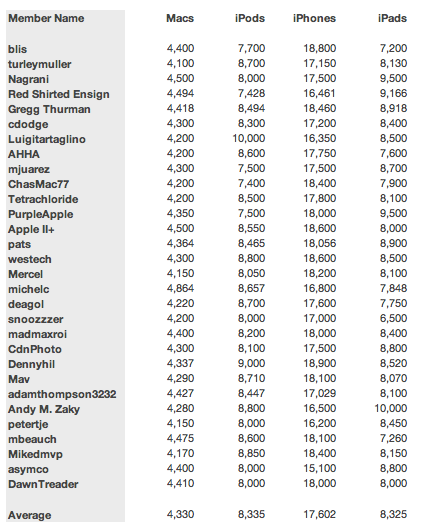
According to the latest estimates by amateur (non-Wall Street) Apple analysts at The Mac Observer’s Finance Board as relayed by Philip Elmer-DeWitt at Fortune, Apple is on track to sell more than 8 million iPads and 17 million iPhones in the third fiscal quarter of 2011. Apple has confirmed that the Q3 2011 financial results will be announced in two weeks, on July 19, and Wall Street’s consensus already claims “the company earned $5.69 per share on sales of $24.67 billion”.

According to the Finance Board (which, among the polled members, includes Horace Dediu of Asymco), Apple will post revenue of $26.5 billion with a 69% year-over-year growth, as outlined in two different reports by Paul Leitao at Posts at Eventide.

The June quarter represents the first fiscal quarter in which Apple iPad sales are a factor in the prior-year performance. This factor alone will will have an impact on year-over-year revenue growth. iPad unit sales and the resulting revenue were not a factor in the prior-year financial performance comparisons in the December (FQ1) and March (FQ2) quarters.

In Q2 2011, Apple posted revenue of $24.67 billion, with 4.69 million iPads, 18.65 million iPhones and 3.76 million Macs sold. Overall, the company posted quarterly revenue growth of 83% and profit growth of 95%. For the third quarter, the Apple Finance Board estimates the Mac’s sales will be consistent with the platform’s recent growth, whilst as far as the iPad 2 goes, Apple’s ability to meet demand (following the alleged supply issues due to the Japan earthquake and tsunami) will play a key role in determining a growth for the device’s sales up from roughly 5 million in Q2. As for the iPhone, Leitao writes:

The average estimate of AFB members suggests the March quarter unit sales growth trend will continue in the June quarter. Last year Apple significantly reduced iPhone unit shipments in the June quarter ahead of the  release of the iPhone 4, leading to favorable conditions for year-over-year unit sales gains in the June quarter this year.

We will know more on July 19, when Apple is expected to post the official financial results for Q3 2011.