



A few days after announcing 4.25 million users in 7 months and roughly two weeks after the latest 1.7 update, Instagram just released version 1.8 in the App Store, adding the usual speed and stability optimizations and a couple of new interesting features. The app went under some speed-related updates before, but now it feels snappier than ever, really: I’m sure the future version 1.9 will make this statement obsolete, but Instagram 1.8 is fast at opening new screens, loading photos and comments. Speaking of which, the team reorganized the comment section to make it faster and more interactive – check out the screenshot above or simply try to leave a comment to a photo and see how it works for you. You get full access to a comment interface that, if you’re viewing your own photo, allows you to delete comment with a swipe or by hitting the gear icon in the upper right corner. In the text entry field, Instagram now comes with username autocompletion for faster writing and replies – just type the “@” symbol and Instagram will retrieve a list of users you can address a reply to. But more importantly, version 1.8 now lets me double-tap on photos to like them, which is incredibly more intuitive than hitting a dedicated heart-shaped button. Overall, it’s (once again) a nice update.
iChromy Wants To Bring The Chrome Experience To The iPad
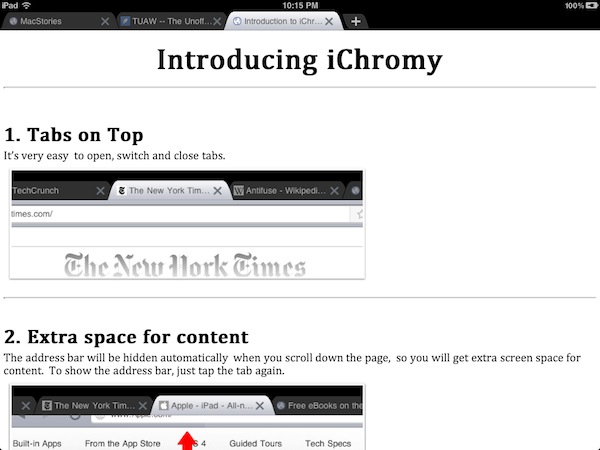
Released earlier today for free on the App Store and developed by the same folks behind web-based bookmarking service Diigo, iChromy is a new third-party iPad browser that aims at bringing the Google Chrome experience on the tablet, obviously without using Chrome’s underlying Chromium open-source project, which can’t be implemented by developers due to Apple’s restrictions. From the name of the app to the iTunes description, the developers of iChromy don’t hide their intentions of developing a heavily Chrome-inspired browser for the iPad; while it still might not look as beautiful as this mockup, I took the app for a quick spin to see whether Chrome (which I love and use on my Mac desktop) could have a proper, unofficial, lightweight counterpart on the iPad.
iChromy is free and the developers will likely introduce a Pro version with more features and deeper Diigo integration in the future, but right now what we have is a simple iPad browser that lacks several must-have functionalities (most of them also available in Safari and not necessarily in powerful alternatives like iCab Mobile) but it’s got tabs on top, a Lion-like Reading List (with the same eyeglasses icon) and decent memory management. More importantly, iChromy has an Omnibox that allows you to search and type addresses in the same bar, like Chrome. So while tabs on top and the Omnibox make for a nice Chrome-like experience that reminded me why it’s still possible to innovate in web browsers on any device, iChromy falls short in the details: you can’t re-arrange tabs, you can’t tap on the status bar to scroll a webpage to the top, you can’t pin tabs. The Omnibox is really, really nice, but the app’s keyboard doesn’t have a .com button and there’s no way to get search suggestions or modify the default search engine. Bookmarks and history are displayed in the Omnibox, but the lack of the .com button on the iPad’s soft keyboard is annoying. Similarly, you can create bookmarks by hitting the “star” button in the Omnibox, but you can’t organize these bookmarks in folders, sync them back to the cloud or import / export them. The Reading List, however, works fairly well in the way it makes entire webpages available offline. Too bad it doesn’t sync anywhere else either, which comes as a surprise considering Diigo’s cloud-oriented nature.
In spite of its missing features, I can’t say iChromy isn’t “nice” in how it mimics Chrome for Mac. The browser is very lightweight, it never crashed on me with multiple pages open in the background and, personally, I think it’s always great to see a browser with tabs on top (I was a huge fan of Safari 4 beta, until Apple killed that magnificent tab implementation). Overall, I see Chromy as an interesting experiment that a) needs some obvious adjustments like the .com button, top scrolling and search suggestions and b) with an upcoming Pro version could have a chance to become a Chrome-inspired, powerful competitor to my personal favorite iCab. We’ll see. In the meantime, go download the app here.
Google Wallet May Work with Future NFC iPhones
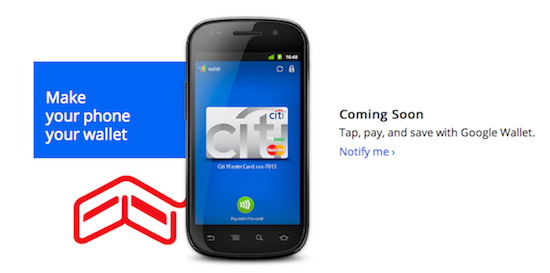
Earlier today Google officially unveiled Google Wallet, the company’s first foray into the near-field communication payment market, based on an app capable of running on the Nexus 4G device and backed by names like Citi, First Data, Sprint and MasterCard. Through the usage of an NFC chip for mobile phones and the Google Wallet app for Android, users will be able to pay with real money from a credit card or “Google Prepaid Card” just by tapping on screen and saving a new transaction. The system is currently being field-tested by Google and will launch publicly this summer in the United States, furthermore it will also support Google’s new Offers platform for special deals and discounts as well as MasterCard’s already deployed PayPass terminals.
Google Wallet has been designed for an open commerce ecosystem. It will eventually hold many if not all of the cards you keep in your leather wallet today. And because Google Wallet is a mobile app, it will be able to do more than a regular wallet ever could, like storing thousands of payment cards and Google Offers but without the bulk. Eventually your loyalty cards, gift cards, receipts, boarding passes, tickets, even your keys will be seamlessly synced to your Google Wallet. And every offer and loyalty point will be redeemed automatically with a single tap via NFC.
As Google is stressing the open nature of its commerce ecosystem, MG Siegler at TechCrunch reports someone at the media event today asked Google’s VP of Commerce Tilenius if the Google Wallet app would eventually run on NFC-enabled iOS, BlackBerry and Windows Phone 7 devices, getting a surprisingly promising answer:
Today, during their Google Wallet/Offers unveiling at the NYC headquarters, Google touted the openness of their new system. Naturally, someone asked a question about what this meant for other, non-Android phone?
“In terms of iPhone, RIM, Microsoft — we will partner with everyone,” Google VP of Commerce Stephanie Tilenius said. Of course, that depends on two things: 1) the inclusion of NFC chips in their phones. 2) the willingness to work with Google on this system.
Of course, considering all the rumors surrounding Apple’s NFC implementation for future iPhones and iPads, it is very likely that Apple will rely on its own payment system based on iTunes accounts or external collaborations with credit card companies, rather than allowing Google to become the preferred system for NFC payments on the iPhone. So while Google is promising today that their app could run on a variety of devices and that they want to partner with everyone to extend the ecosystem, it remains to be seen whether or not Apple will let them release a Google Wallet app for iOS. TechCrunch also reports Google mentioned a “sticker” that could be attached to any device to enable NFC functionalities, and when tapped on another NFC terminal would allow for payments through Google’s cloud, and the Wallet app. Of course, the app would still need to be approved in the App Store or, perhaps, work as a webapp.
Apple was initially rumored to be implementing NFC in the iPhone 5 set for release this Fall, though more recent reports claim the feature will come in future iPhones, not necessarily the one supposed to ship later this year.
Intel Could Make non-Intel Chips for Others
At an investor event in London earlier today, Intel CFO Stacy Smith said the company would be open to make chips based on external intellectual properties and cores, Reuters reports. Using Intel’s chip manufacturing process, widely regarded as superior to most competitors in the silicon-making space, producing chips for other companies would be a “fantastic business” for Intel, Smith said, though it would trigger an “in-depth discussion” within the company.
If Apple or Sony came to us and said ‘I want to do a product that involves your IA (Intel architecture) core and put some of my IP around it’, I wouldn’t blink. That would be fantastic business for us.
Then you get into the middle ground of ‘I don’t want it to be a IA core, I want it to be my own custom designed core,’ and then you are only getting the manufacturing margin, (and) that would be a much more in-depth discussion and analysis.
Intel’s Sandy Bridge processors are currently used in Apple’s MacBook Pros and iMacs, with the popular MacBook Air line rumored to get an upgrade to the same CPU architecture in June or July. Intel, however, does not make chips for mobile devices like the iPhone or iPad, a growing market where Intel has been left behind, putting British company ARM in a leading position as the only chip maker for iOS devices and upcoming tablets that will hit the market later this year. In the past months, due to the popularity of ARM’s architecture, it was rumored Apple could consider switching from Intel to ARM on the desktop as well; on the other hand, Intel announced its intention to develop chips for always-on, always-connected mobile devices with Silvermont and Airmont processors said to be included in future Android and MeeGo devices. As for Apple, it is unlikely that the company will switch architectures on its iOS and OS X platforms in the immediate future, though Smith’s statements could open to some interesting possibilities when it comes to Apple-designed cores combined with Intel’s manufacturing power.
Apple Patents LCD Screen That Plays Nice with Sunglasses
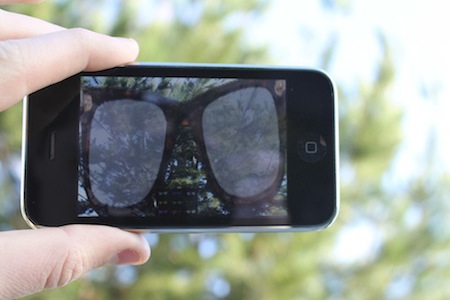
A new patent application surfaced at the U.S. Patent and Trademark Office entitled ”Display that Emits Circularly-Polarized Light” and discovered by AppleInsider today points at a new kind of LCD screens capable of playing nice in outdoor viewing when an iPhone or iPad user is wearing sunglasses to protect himself from harmful UV rays. The problem with polarized sunglasses – not necessarily LCD screens exposed to directly sunlight, something Apple’s own displays have long been criticized due to poor performances when compared to the Amazon Kindle – is that they “only allow through light with an electric field that vibrates in the vertical direction”, and considering current LCD displays have an electric field that vibrates in one direction, the user wearing polarized sunglasses may see distorted images when looking at the screen from certain angles. Polarized sunglasses and LCDs don’t play nice together, and Apple’s proposed solution is aimed at building an LCD display that, with circularly polarized light, allows sunglasses to not see black areas, distorted images, and so forth.
The layer receives the linearly-polarized light on one surface, converts the linearly-polarized light to circularly-polarized light, and then emits the circularly-polarized light from another surface,” the application reads. “By emitting circularly-polarized light, the display reduces the perceived distortion found at some angles when the display is viewed through a linearly-polarizing filter.
The patent design seems to suggest Apple might get around the problem of iOS devices used outdoors assuming people generally tend to wear sunglasses in direct sunlight. The patent credits John Z. Zhong, Wei Chen, Cheng Chen, Victor H.E. Yin, and Shawn R. Gettemy as inventors.
Get Android’s App Launcher on Your iPhone via Jailbreak
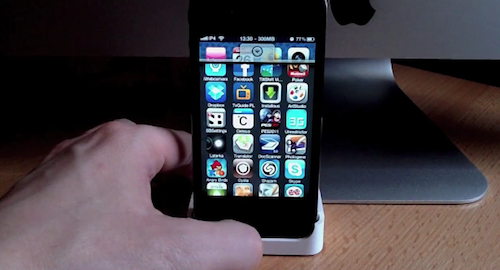
One thing I’ve always liked about the Android operating system, native Cloud Player and Music Beta apps aside, is the possibility to list all your apps and some favorite ones in the app launcher, a vertical window overlaying the “home screen” that can be opened at any time without having to move between pages. iOS allows you to organize apps in different screens and folders, the multitasking tray gives you access to recently used and paused apps, but I’d like to see a way to quickly get ahold of apps that I use a lot, are not on the first home screen, and aren’t suitable for a folder. Similarly, it’d be nice to have a way to see more apps in a single screen, avoiding being forced to constantly switch between pages. Those who decided to jailbreak their 4.3.3 iPhones might find a good solution in AndroidLoader, a $2.99 tweak from ModMyi’s repository that activates and Android-like app launcher window listing all the apps installed on your device. The launcher can display apps in alphabetical order, it can be scrolled vertically and all you have to do to open it is tap on a small icon placed in the middle of the standard iOS dock. The interface looks rather simple and the tweak is said to be very lightweight with minimal memory footprint.
Check out the demo video after the break. AndroidLoader is available now in the Cydia Store at $2.99. [via iSpazio]
Read more
A Lunch At Apple Changed Square’s Name and Design→
A Lunch At Apple Changed Square’s Name and Design
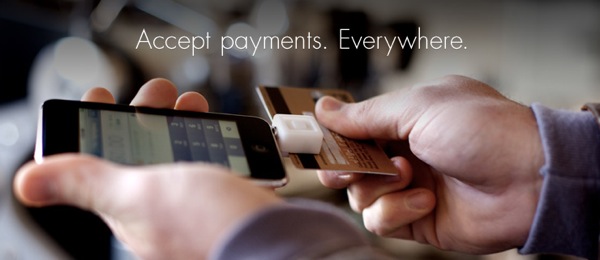
The name Squirrel was known even before Square’s official announcement in December of 2009. As was the fact that the dongle was acorn shaped. The information that a lunch at Apple changed the design of the Square dongle so drastically and was the reason behind the name change is new, as far as I can tell.
I can just imagine that lunch in the Apple cafeteria with Steve Jobs telling Dorsey to drop the woodsy Acorn look and go with something white, minimal and squared off. Hey, it worked for Apple right?
The Next Web reports Jack Dorsey, Twitter co-founder and Square CEO, gave out interesting tidbits on the origins of Square when accepting the 21st Century Visionary award in San Francisco last night. In particular, Square was originally called Squirrel and the reader was wooden and acorn shaped. That was, until a lunch at Apple, quite possibly with Scott Forstall, magically changed the design to a squared off white reader named Square.
Furthermore, it really seems like Apple is a major source of inspiration for Square. From the design of the card reader and the website, to the skeuomorphic attention to detail in the new Card Case app and the whole style of Jack Dorsey’s presentation earlier this week, the simplicity and elegance of Square are certainly well-suited for Apple’s retail stores.
New Rumor Claims Apple Is Considering AMOLED For iPad 3
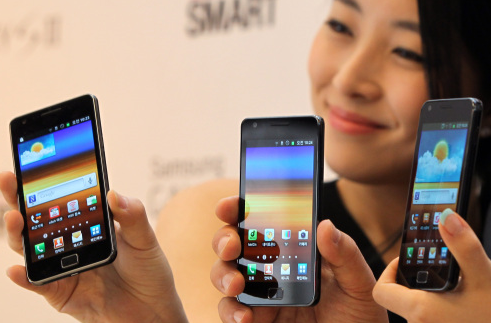
According to a report by The Korea Herald, in a recent visit to South Korea Apple COO (and temporary CEO) Tim Cook has discussed with Samsung the possibility of implementing AMOLED displays in the next-generation iPad, dubbed iPad 3. The “industry sources” cited by The Korea Herald claim that Apple would be interested in the technology for an “upgraded version” of the iPad 2, with the website also relaying an old rumor that suggested Apple could release another iPad model later this year.
Apple wants to tap into Samsung’s AMOLED technology for an upgraded version of the iPad 2, considered as many by the iPad 3 that is likely to be launched toward the end of this year,” a source told The Korea Herald on Wednesday on condition of anonymity.
Tim Cook is not only the COO, but also acting CEO of Apple. During Cook’s trip last week, Apple seems to have offered Samsung an advance for the AMOLED displays, the source said.
Apple’s rumor timeline in regards to AMOLED displays produced by Samsung goes a long way back to 2009: various reports from last year indicated the company had considered AMOLED screens for the iPhone 3GS, but couldn’t implement them due to production capacity issues, high costs and the PenTile technology used by Samsung at the time. Also last year, when Apple was rumored to be working on a new iPad, speculation surrounding the supply chain in Asia claimed Apple was negotiating with Samsung over the usage of AMOLED displays, which didn’t happen as the company preferred standard LCDs with IPS technology produced by LG, among others. Manufacturing issues with LG displays that allegedly caused problems with iPad 2 shipments in the last quarter might lead the company to choose another supplier for the next-generation iPad, though The Korea Herald is also claiming Apple is considering a major shift in the technology being used and an early launch later this year.
Samsung’s AMOLED technology is said to have dramatically improved over the past months to be suitable for tablets, sport brighter colors and deeper blacks, better behavior in direct sunlight and low power consumption. Samsung is currently using AMOLED in its Galaxy S smartphones, and it’s also rumored to use the displays in future tablets running Android. Samsung is currently facing a lawsuit from Apple, whose claims of patent infringement for the design of the iPhone and iOS copied by Samsung’s Galaxy devices and TouchWiz UI have led the tech press to believe future collaborations between the two companies may not go as smoothly as before. [The Korea Herald via 9to5mac]
Pioneer Introduces AppRadio with Powerful iOS Integration
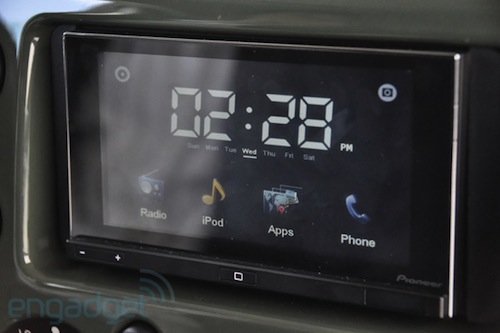
Initially surfaced last month through some FCC filings and rumored to be the first in-car radio to sport full iOS integration with iPhone apps and iPod out music controls, Pioneer officially announced the AppRadio today, with a dedicated iPhone app already available on the App Store for free. With a 800 x 400 6.1-inch multitouch capacitive display, Bluetooth connectivity and possibility to plug directly into an iPhone or iPod touch 4th gen running Pioneer’s software, the AppRadio will not only get usual access to your music library with album artwork and song information visualized on screen (BMW apparently already does that), it will also be capable of letting you interact with iOS calendars, maps, contacts and photos using the touchscreen device. It seems like Pioneer went all out to enable deep iOS integration, so much that certain applications available on the App Store, like Pandora and Rdio, have already announced AppRadio-specific versions with controls meant for the bigger display. On top of that, the AppRadio features a nice digital clock, an on-screen week calendar, a mic, external GPS antenna and a price tag below $500 when it goes on sale at the end of June.
From the press release:
Pioneer is rethinking connectivity by tapping into the power of the smartphone, while simultaneously providing a solution that safely merges the consumer’s connected lifestyle into the vehicle,” said Ted Cardenas, director of marketing for the car electronics division of Pioneer Electronics (USA) Inc. “AppRadio fully embraces the iPhone, which has become the window to our mobile connectivity and provides a comprehensive and safer way to use apps in the car.
There’s more: the AppRadio recognizes multitouch gestures like swipes, pinch and zoom, and the companion iPhone app will alert you of new AppRadio-compatible 3rd party apps as they’re released. iOS 4.2 or later will be required for the AppRadio to work with an iPhone or iPod touch. [via Engadget]