This Week's Sponsor:

Turbulence Forecast

Know before you go. Get detailed turbulence forecasts for your exact route, now available 5 days in advance.


Posts in Linked


Connected, Episode 160: Things Have Taken a Turn

Federico’s iOS 11 review is done. Stephen has an announcement. Myke makes a confession about his Apple TV remote.

On this week’s special episode of Connected, we discuss the making of my iOS 11 review with a focus on Myke’s process for the audiobook. You can listen here.

Sponsored by:

  • Squarespace: Make your next move. Enter offer code WORLD at checkout to get 10% off your first purchase.
  • Freshbooks: Online invoicing made easy.
  • Bombfell: Find the right clothes for you. Get $25 off your first purchase.
Permalink

Craig Federighi Answers Face ID Questions

In a telephone interview with Matthew Panzarino of TechCrunch, Apple’s Senior Vice President of Software Engineering, Craig Federighi, answered many of the questions that have arisen about Face ID since the September 12th keynote event. Federighi went into depth on how Apple trained Face ID and how it works in practice. Regarding the training,

“Phil [Schiller] mentioned that we’d gathered a billion images and that we’d done data gathering around the globe to make sure that we had broad geographic and ethnic data sets. Both for testing and validation for great recognition rates,” says Federighi. “That wasn’t just something you could go pull of the internet.”

That data was collected worldwide from subjects who consented to having their faces scanned.

Federighi explained that Apple retains a copy of the depth map data from those scans but does not collect user data to further train its model. Instead, Face ID works on-device only to recognize users. The computational power necessary for that process is supplied by the new A11 Bionic CPU and the data is crunched and stored in the redesigned Secure Enclave.

The process of disabling Face ID differs from the five presses of the power button required on older iPhones. Federighi said,

“On older phones the sequence was to click 5 times [on the power button] but on newer phones like iPhone 8 and iPhone X, if you grip the side buttons on either side and hold them a little while – we’ll take you to the power down [screen]. But that also has the effect of disabling Face ID,” says Federighi. “So, if you were in a case where the thief was asking to hand over your phone – you can just reach into your pocket, squeeze it, and it will disable Face ID. It will do the same thing on iPhone 8 to disable Touch ID.”

In many respects, the approach Apple has taken with Face ID is very close to that taken with Touch ID. User data is stored in the Secure Enclave, and biometric processing happens on your iOS device, not in the cloud. If you have concerns about Face ID’s security, Panzarino’s article is an excellent place to start. Federighi says that closer to the introduction of the iPhone X, Apple will release an in-depth white paper on Face ID security with even more details.

Permalink

Apple’s Bionic Advantage

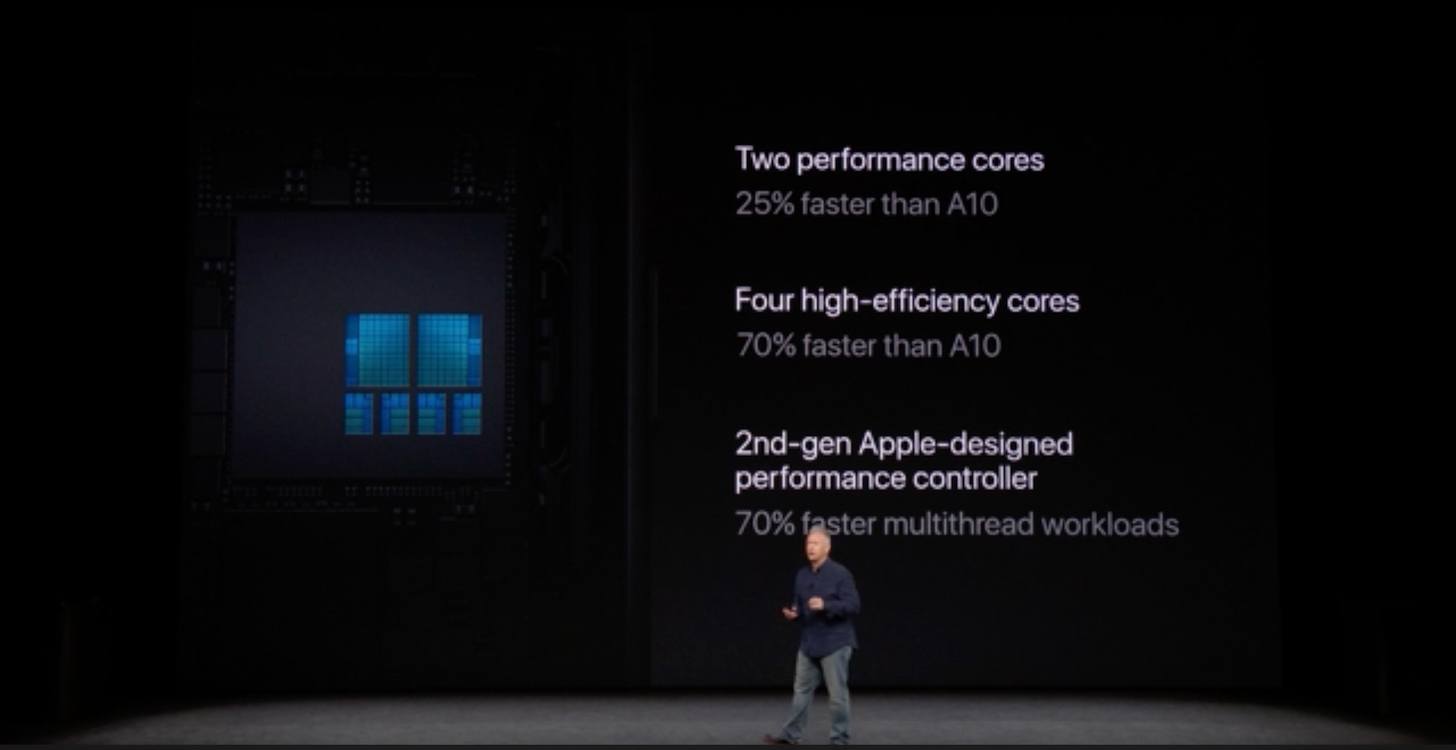
Mashable interviewed Apple’s Senior Vice President of Worldwide Marketing Phil Schiller and Senior Vice President of Hardware Technologies Johny Srouji about Apple new A11 Bionic CPU, which powers the iPhone 8, 8 Plus, and X.

“This is something we started 10 years ago, designing our own silicon because that’s the best way to truly customize something that’s uniquely optimized for Apple hardware and software,” said Srouji.

For Apple, silicon development is an intrinsic part of the iPhone creation process. “It’s not just something you drop in or build around,” said Schiller.

It’s a strategy that has paid off for Apple by giving it more control over the full hardware/software stack and enabling the company to squeeze more performance and energy efficiency out of the tiny chips that power iOS devices. At the same time though, it’s an approach that requires Apple to make big bets far in the future:

Srouji told me that when Apple architects silicon, they start by looking three years out, which means the A11 Bionic was under development when Apple was shipping the iPhone 6 and its A8 chip. Back then we weren’t even talking about AI and machine learning at a mobile level and, yet, Srouji said, “The neural engine embed, it’s a bet we made three years ahead.”

Apple’s tight control over hardware and the software that runs on it isn’t new. It’s one of the cornerstones of the company’s success. What’s remarkable though, is the microscopic level to which Apple has taken the approach. As author Lance Ulanoff points out, the images of chips that Phil Schiller displayed onscreen during the September 12th keynote to illustrate new and improved iPhone technologies weren’t different chips. They were different areas on the same chip – one with leaked Geekbench scores that put it on par with the silicon inside the 2017 13-inch MacBook Pro. That’s extraordinary and likely to be a key advantage that Apple will have over competitors for years to come.

Permalink

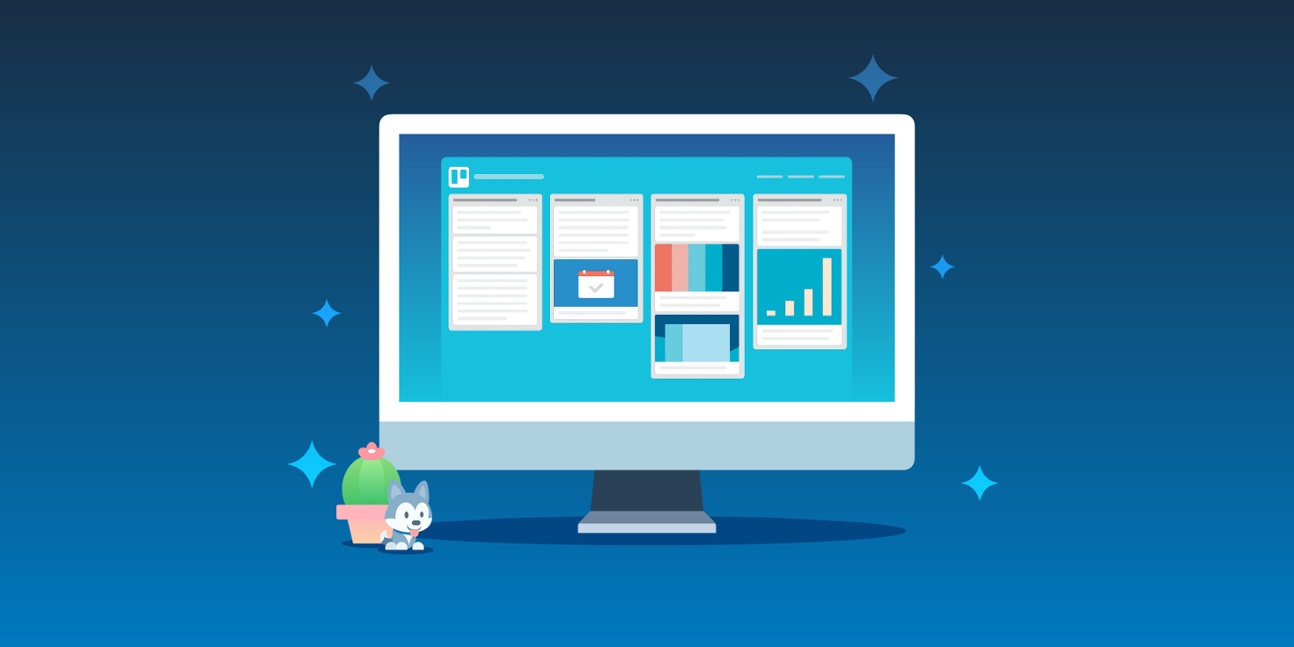
Trello Launches Mac App with Custom Keyboard Shortcuts, Native Notifications, and More

Today Trello introduced a new dedicated Mac app that includes features built for power users, such as customizable keyboard shortcuts, desktop notifications, and more.

Any serious productivity app on the Mac needs to include keyboard shortcuts, and the team at Trello clearly knows that. There are shortcuts for all the expected things like adding a new card, navigating between boards, and more. Where Trello impresses is that you can customize these shortcuts to your liking, making them easier to remember. One unique shortcut allows you to set a specific board to automatically open every time you start the app, saving an extra click.

Since it’s a native app, Trello includes native macOS notifications now, an improvement over the sometimes-janky Safari-powered notifications. It also enables opening boards in separate windows. Lastly, the app supports the Touch Bar for MacBook Pro owners.

Trello is available for download from the Mac App Store.

Permalink

AppStories, Episode 22 – Apps With a Human Touch

On this week’s episode of AppStories, we discuss what’s left now that Federico is finished writing the text of his iOS 11 review, preview some of the upcoming coverage on MacStories and the upcoming second anniversary of Club MacStories, and consider the importance of little human touches that make apps by indie developers a delight to use.

Sponsored by:

  • Omni - Celebrating 25 years of human-centered productivity!
  • Twist - Our mission is to make team communication calmer, more organized, and more productive.

https://staging.macstories.net/episodes/22/embed/

Permalink

AT&T and Verizon Announce Apple Watch Wireless Plan Pricing

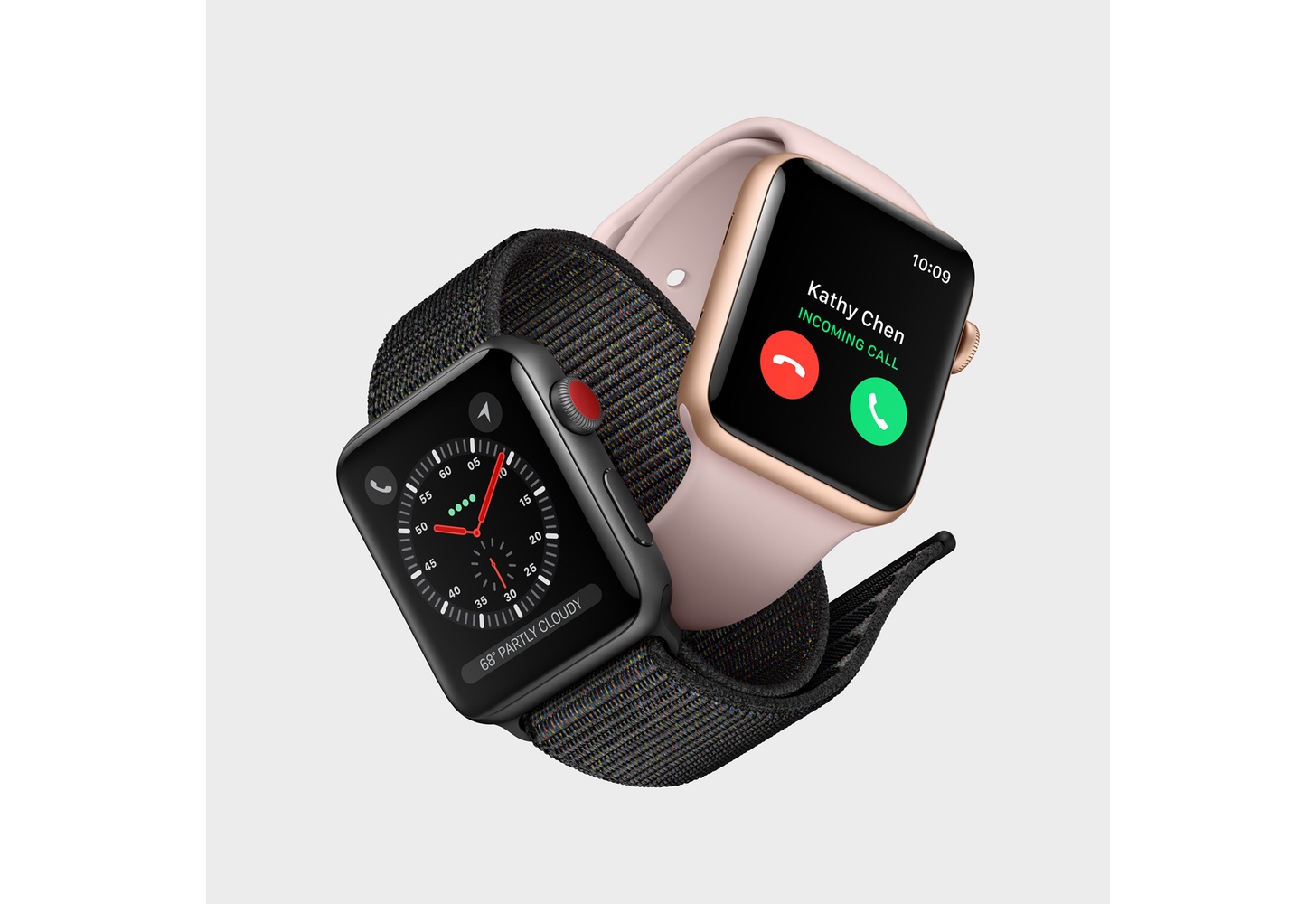
The Street reports that AT&T and Verizon will charge $10 per month to add an LTE-enabled Apple Watch to an existing US data plan. Of the two carriers, Verizon’s offer is a little more generous because the first three months of service are free. According to The Street, Sprint and T-Mobile will also carry the Series 3 Watch in the US, but have not disclosed pricing yet.

You can also follow all of our Apple event coverage through our September 12 hub, or subscribe to the dedicated September 12 RSS feed.

Permalink

Apple Defends Siri Explaining How Its Voice Assistant Works

On the heels of a feature story in Wired last week, Apple executives and engineers opened up about how Siri works in interviews with Fast Company. As the publication explained it, a narrative has emerged that Apple’s AI work is behind other companies’ efforts because of its dedication to user privacy.

In an interview with Fast Company, Apple’s Greg Joswiak disagrees:

“I think it is a false narrative. It’s true that we like to keep the data as optimized as possible, that’s certainly something that I think a lot of users have come to expect, and they know that we’re treating their privacy maybe different than some others are.”

Joswiak argues that Siri can be every bit as helpful as other assistants without accumulating a lot of personal user data in the cloud, as companies like Facebook and Google are accustomed to doing. “We’re able to deliver a very personalized experience … without treating you as a product that keeps your information and sells it to the highest bidder. That’s just not the way we operate.”

The article provides concrete examples of how Siri works and the advances that have been made since it was introduced with a level of detail that has not been shared before.

The effectiveness of Siri and Apple’s machine learning research is an area where Apple’s culture of secrecy has hurt it. Apple seems to have recognized this and has made a concerted effort to turn perceptions around with interviews like the ones in Wired and Fast Company. Apple employees have also begun to engage in more public discussion of the company’s machine learning and AI initiatives through outlets like its recently-introduced journal and presentations made by Apple employees. Apple even enlisted The Rock to help it get the word out about Siri’s capabilities. Competition for virtual personal assistant supremacy has heated up, and Apple has signaled it has no intention of being left out or backing down.

Permalink

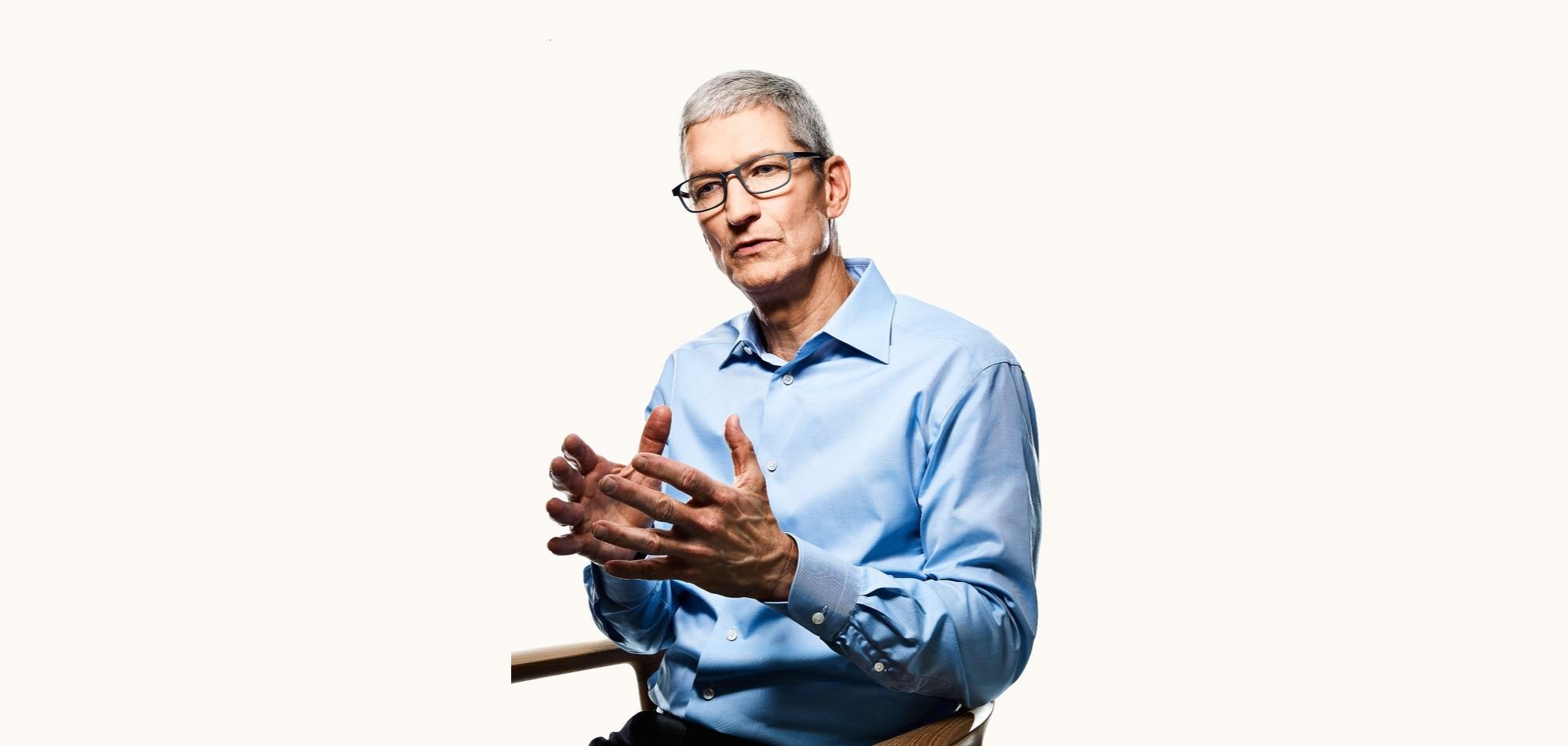
Tim Cook Discusses Apple’s Convictions of Societal Responsibility in New Interview

Source: Fortune

Source: Fortune

Fortune today published an interview Adam Lashinsky held with Apple CEO Tim Cook earlier this year. Their conversation centers on Apple’s attempts at societal contribution, covering topics like health, education, the environment, and more.

In the area of health, Cook acknowledged that while many of the company’s health initiatives are not directly profitable in any way, he does understand that from a financial standpoint health care is a key area for Apple to invest in. And they are investing. He says:

There’s much more in the health area. There’s a lot of stuff that I can’t tell you about that we’re working on, some of which it’s clear there’s a commercial business there. And some of it it’s clear there’s not. And some of it it‘s not clear. I do think it’s a big area for Apple’s future.

One other interesting piece from the interview surrounds Apple’s lack of interest in setting up a company foundation, breaking from the pattern of many other large corporations. Cook explained his reasoning:

When a company sets up a foundation, there is a risk, in my judgment, of the foundation becoming this other thing that is not connected to the company. It has a separate board of directors. They make reasonably independent decisions sometimes. It becomes a separate thing. I don’t want that for Apple. I want everybody involved…If we had a foundation, my fear was it becomes something that 10 or 12 or 20 or 50 people do. And all of a sudden for the 120,000, it’s just this separate thing out there. People work here to change the world. So I think that should be integral to what the company does. Not peripheral in a foundation.

It’s possible we’ll see announcements related to Apple’s work in the areas of health and the environment at its September 12 keynote event, with the former tied to Apple Watch announcements and the latter to the creation of Apple Park, where the event will be held.

Permalink