This Week's Sponsor:

Turbulence Forecast

Know before you go. Get detailed turbulence forecasts for your exact route, now available 5 days in advance.


Posts in reviews


Tripsy Review: The Ultimate Trip Planner for iPhone and iPad

Summer may be over, but there’s never really an offseason for planning future vacations or business trips. We all have our own methods of trip planning – where we store important documents, how to set an agenda and share that agenda with family or friends – but I’d guess most of us aren’t entirely satisfied with our current planning systems. Important information can be scattered across different apps, services, or analog files, which is fine but not ideal. Tripsy aims to solve that problem.

Tripsy isn’t entirely new to the App Store, having first launched almost a year ago, but it recently received a major 2.0 update alongside iOS 13’s debut. While I never used the previous version, the new Tripsy is exactly the tool I’ve wanted for trip planning for a long time. The app serves as a one-stop shop for organizing all of your trip-related information: you can add Apple Maps points of interest to your agenda, scheduling them to specific times and days, add notes to each saved location, store important travel documents in the app, and share your full trip data with fellow travelers. All of this functionality is enhanced by a strong app experience thanks to system features like multiwindow on iPad, Sign In with Apple, dark mode, and more.

Read more


GoodNotes Adds Superior Multiwindowing, Dark Mode, and OCR Scanning

When Apple introduces a fundamental change to how apps interact with iOS (and now iPadOS), it’s always fascinating to see the different ways those changes are adopted by third-party developers. Although Apple sets a baseline for how new frameworks work, it has less control over how they are used, and it’s those implementation details that often have the greatest impact on users.

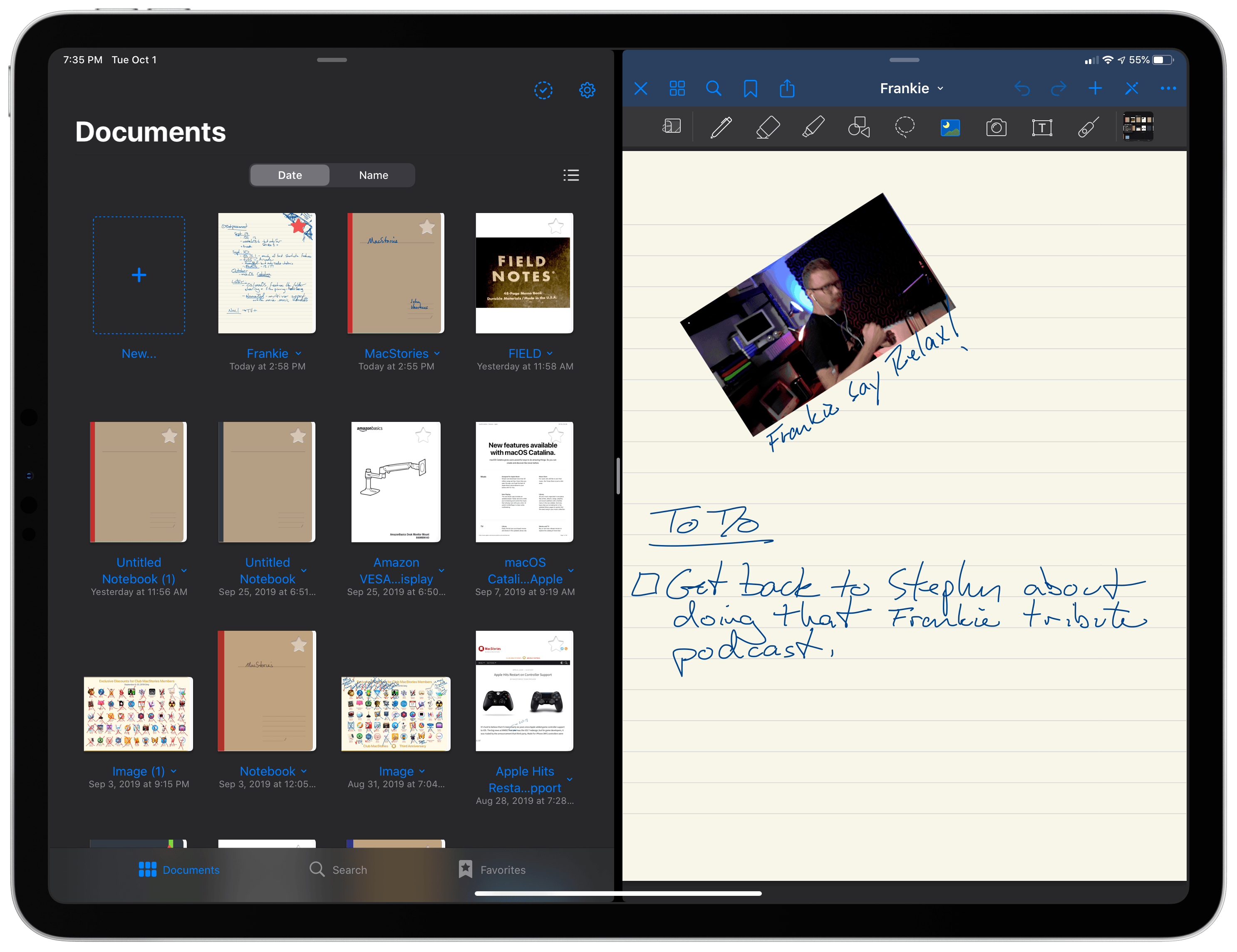
In the inaugural version of iPadOS, that’s been the case for multiwindowing. Many apps stick to the basic built-in ways to open multiple instances of the same app. However, the real power of multiwindowing is revealed by apps like GoodNotes, which goes the extra mile and provides an experience better than any other multiwindow app I’ve tried.

Dragging a PDF into a new window.Replay

What makes GoodNotes special is not just the sheer number of unique ways to open a second window for the app, though that’s impressive in itself, but the thoughtfulness of its execution. In every corner of the app where you might want to move a folder, document, page, or bit of data into a new window or document, you can. The result is a level of flexibility that even Apple’s own iWork suite doesn’t match, further cementing GoodNotes as my favorite app for taking handwritten notes.

Read more


Pixelmator Photo Adds Direct iCloud Photo Library Access, Batch Editing, and New Export Features

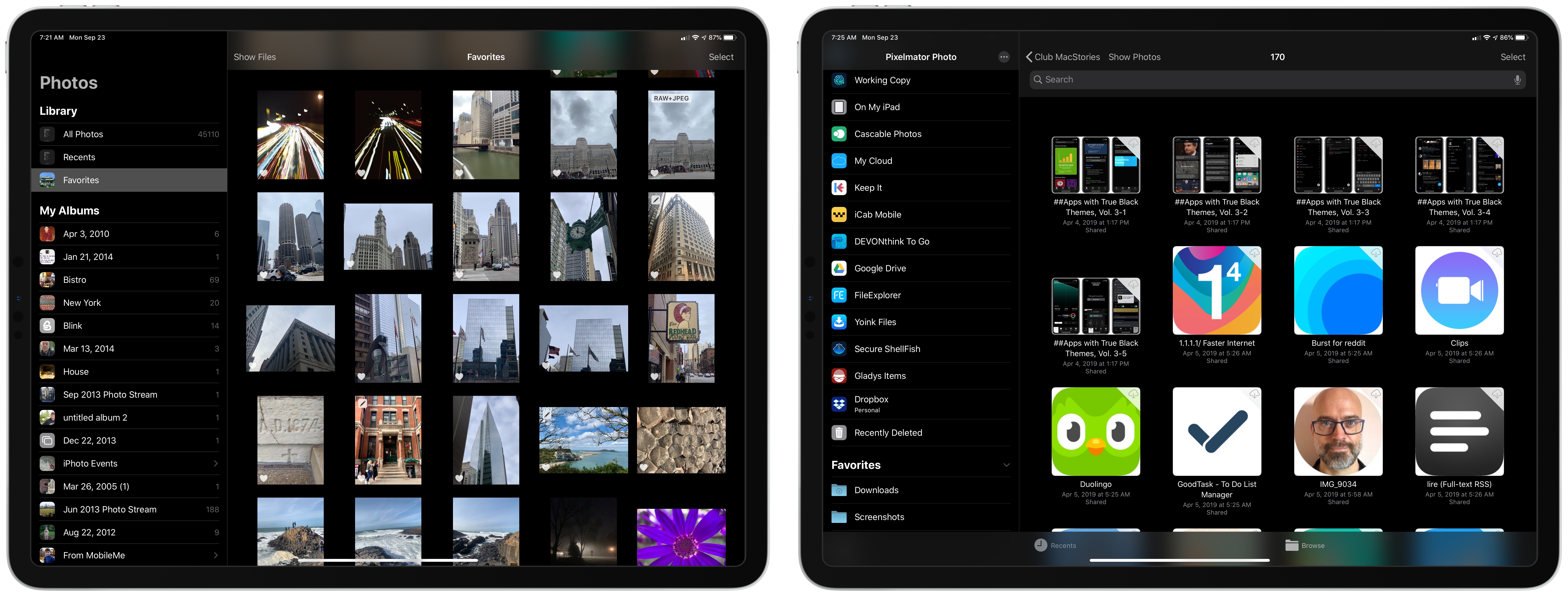
Pixelmator Photo for the iPad has been released with a trio of new features that greatly increase the power of the app. With the update, you can now now edit images in your iCloud Photo Library non-destructively without creating duplicates. There are also new batch-processing workflows and better options for exporting images. It’s an interesting mix of updates that I expect will appeal to a wide audience even though there remain iPadOS features I’d like to see adopted in the future.

Read more


Halide 1.14 Adds New Lens Switching Interface and Guides

Halide 1.14 is out with a new lens switching UI to accommodate the three-camera system of the iPhone 11 Pro and Pro Max. As soon as the update was out, I went for a walk to give it a try.

Halide has introduced a new lens switching button featuring haptic feedback and a dial-like system for moving among the iPhone’s lenses. When you press down on the lens button, you get a tap of haptic feedback to let you know without looking that the lens picker has been engaged.

From there, you can slide your finger among the ultra wide, wide, and telephoto options that radiate out from the button. As you swipe your finger across each option, it enlarges, and you’re met with another little bit of haptic feedback as you swipe over the lenses other than the one already selected. Once you have the lens you want, you simply let go and your iPhone switches to it.

You can also cycle through the lenses in order by tapping the button repeatedly or swipe left for the ultra wide lens or up for the telephoto one. In my brief tests, swiping left or up is the best option if you already know the lens you want, but using the dial-like lens switcher is perfect for considering your options first because Halide has also added lens preview guides.

With the lens button engaged, Halide shows guides for each of your zoom options. That means if you’re using the ultra-wide lens, you’ll see the light gray guidelines for the wide and telephoto lenses. As you swipe over those lenses, the guides change to yellow to highlight the composition you’ll get if you switch to that lens.

If you’re already using the telephoto lens though, Halide will highlight the outer frame of the image to suggest you’ll get a wider shot, though it does not zoom the viewfinder out to show that composition until you lift your finger. You can see how the lens guides work from the screenshots I took at a local high school football field above and in this video:

Switching lenses in Halide.Replay

When you switch to the ultra wide lens, you’ll notice that not all the usual Halide features are available. Manual focus is missing and so is shooting in RAW. That’s because the new iPhone hardware and iOS and iPadOS 13 don’t support those features. Although the ultra wide shots don’t support RAW, Halide has included a ‘MAX’ option in place of the ‘RAW’ option, so you can get the most image data possible from your wide shots, which you can see in the screenshots below.

Ultra wide images are limited to MAX quality (left) instead of RAW, which is supported by the wide and telephoto lenses (right).

Ultra wide images are limited to MAX quality (left) instead of RAW, which is supported by the wide and telephoto lenses (right).

The Halide team says that the latest update also includes noise-reduction adjustments to the RAW images produced by the iPhone 11, but that they are continuing to fine-tune how that app handles RAW photos from the new phones as part of a more significant update that is coming next.

The latest update is relatively small, but I especially like the use of haptic feedback and lens guides, which make it easy to switch lenses when you’re focused on the viewfinder of the camera instead of Halide’s buttons.

Halide is available on the App Store for $5.99.


Agenda Gains Drawing and Handwriting Features, Plus Document Scanning and Dark Mode Enhancements

Once upon a time, in the early days of iOS’ life, note-taking apps on the iPhone and iPad were, strictly speaking, for text-based notes. The original Notes app, pre-iOS 9 makeover, was designed for text alone, and yet despite that limitation it remained the most popular notes app on iOS.

Times have changed. Today Apple Notes is a powerhouse tool for not just typed notes, but also images, document scans, checklists, sketches, rich links, and much more. Apple’s aggressive development of Notes forces third-party contenders to up their games as well, and that’s exactly what Agenda has been doing over the last year.

Agenda is a note-taking client that integrates with your calendar in a way unlike any other app, enabling tying your notes to specific calendar events so they’re easy to keep track of. Recent updates have meaningfully complemented that core purpose, adding Reminders integration, extensive keyboard shortcuts, and file attachments. Over the last couple weeks the app has also launched not one, but two more significant updates, versions 7 and 8, which expand Agenda’s capabilities further with drawing and handwriting features, alongside iOS 13 enhancements such as dark mode integration and document scanning.

Read more


Ulysses Adopts Multiwindow, iOS 13 Design Updates, and Modern Shortcuts

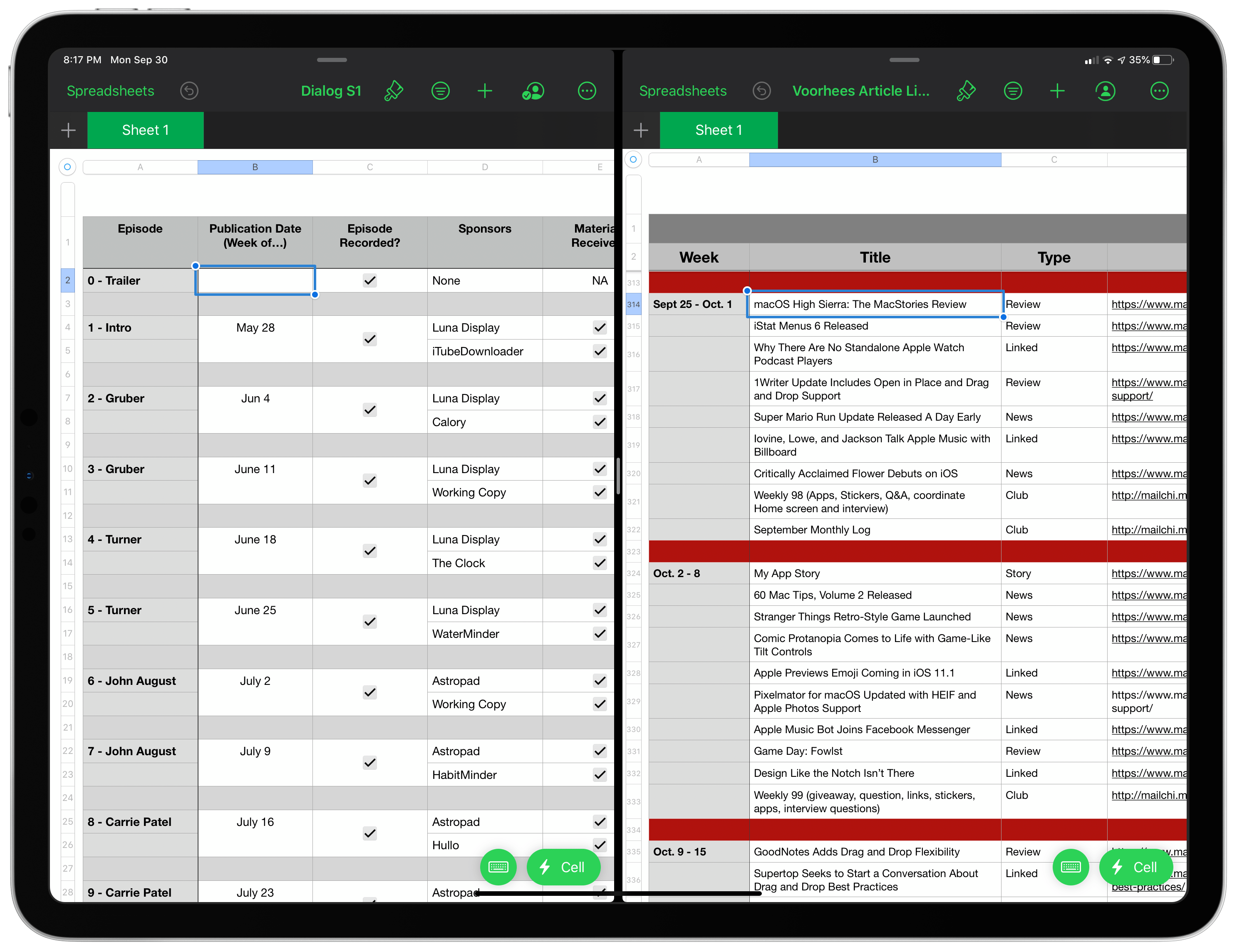
Earlier this year Ulysses debuted the best implementation I had seen of single-app split view on iPad, enabling working in two documents at once or editing a document while simultaneously seeing its export preview. In today’s Ulysses 18 release, that proprietary implementation has been replaced by iPadOS’ native multiwindow capabilities, bringing more power and flexibility than was previously available. Today’s update also integrates with iOS 13’s dark mode and other new design elements, makes automation easier than ever with Shortcuts parameters, and offers a gift to Dropbox users who have long had their Ulysses capabilities restricted.

Read more


tvOS 13: The MacStories Review

tvOS 13 is a surprising release. For years Apple has been pushing the TV app as the main draw of the Apple TV, then earlier this year it brought the app to Samsung TV sets with the promise of further expansion to Roku and Amazon Fire TV devices, along with a smattering of other TV sets. The proliferation of the TV app made the Apple TV seemingly less important to Apple, but in fact with tvOS 13, available now, Apple has launched the biggest tvOS update ever. Before getting too excited, know that the bar for “biggest ever” is extremely low in the case of tvOS, but nevertheless in a year when the Apple TV felt more marginalized than ever, it’s great to see new life breathed into the device.

On the heels of Apple TV Channels debuting earlier this year, and the new Apple TV+ streaming service launching in a matter of weeks, Apple has given the Apple TV an updated Home screen, multi-user functionality, brilliant new underwater screensavers, Picture in Picture, Apple Arcade aided by PS4 and Xbox One controller support, and even more. While it can’t compare to the behemoth release that was iOS 13, tvOS 13 remains a strong update in its own right.

Read more