This Week's Sponsor:

Turbulence Forecast

Know before you go. Get detailed turbulence forecasts for your exact route, now available 5 days in advance.


The Best Way to Take Screenshots on Apple Vision Pro

Taking good-looking screenshots on the Apple Vision Pro isn’t easy, but it’s not impossible either. I’ve already spent many hours taking screenshots on the device, and I thought I’d share my experience and some practical tips for getting the best screenshots possible.

Although I’ve only had the Apple Vision Pro for a week, I’ve already spent a lot of time thinking about and refining my screenshot workflow out of necessity. That’s because after I spent around three hours writing my first visionOS app review of CARROT Weather and Mercury Weather, I spent at least as much time trying to get the screenshots I wanted. If that had been a review of the iOS versions of those apps, the same number of screenshots would have taken less than a half hour. That’s a problem because I simply don’t have that much time to devote to screenshots.

Taking screenshots with the Apple Vision Pro is difficult because of the way the device works. Like other headsets, the Apple Vision Pro uses something called foveated rendering, a technique that’s used to reduce the computing power needed to display the headset’s images. In practical terms, the technique means that the only part of the device’s view that is in focus is where you’re looking. The focal point changes as your eyes move, so you don’t notice that part of the view is blurry. In fact, this is how the human eye works, so as long as the eye tracking is good, which it is on the Apple Vision Pro, the experience is good too.

However, as well as foveated rendering works for using the Apple Vision Pro, it’s terrible for screenshots. You can take a quick screenshot by pressing the top button and Digital Crown, but you’ll immediately see that everything except where you were looking when you took the screen-grab is out of focus. That’s fine for sharing a quick image with a friend, but if you want something suitable for publishing, it’s not a good option.

Fortunately, Apple thought of this, and there’s a solution, but it involves using Xcode and another developer tool. Of course, using Xcode to take screenshots is a little like using Logic Pro to record voice memos, except there are plenty of simple apps for recording voice memos, whereas Xcode is currently your only choice for taking crisp screenshots on the Vision Pro. So until there’s another option, it pays to learn your way around these developer tools to get the highest quality screenshots as efficiently as possible.

Read more


“Wherever You Get Your Podcasts” Is a Radical Statement

I thoroughly enjoyed this story by Anil Dash on how the openness of podcasting (a topic I’ve covered before) has proven so resilient over the years and is, in fact, more relevant than ever in the era of federated social networks:

But here’s the thing: being able to say, “wherever you get your podcasts” is a radical statement. Because what it represents is the triumph of exactly the kind of technology that’s supposed to be impossible: open, empowering tech that’s not owned by any one company, that can’t be controlled by any one company, and that allows people to have ownership over their work and their relationship with their audience.

Side note: this is the first post I’m writing and publishing on MacStories directly from the Vision Pro, which I received this morning. A lot more to follow soon – including wherever you get our podcasts.

Permalink


Apple Updates Its Collection of Windows Apps

Today, Apple introduced a redesigned version of its iCloud for Windows app. The updated app, which allows users to access photos, files, passwords, and other content on a Windows PC, has clarified how it works and where synced content can be found. The app also adds physical password keys and other refinements. I don’t spend a lot of time using Windows, but I appreciate that it makes it easy to access passwords, files, and other content when I do, and today’s update makes that process a little easier, which is great.

The other updates today were to apps that have been available as previews on Windows for a while. That’s no longer the case for Apple Music, Apple TV, and Apple Devices. The functionality of those apps was previously found in iTunes for Windows. Music and TV closely resemble their Mac counterparts, whereas Devices lets users update, backup, restore, and manage their Apple devices on a Windows PC, similar to the way Mac users can do the same in Finder.

iTunes for Windows survives for podcast and audiobook listening.

iTunes for Windows survives for podcast and audiobook listening.

Although today marks the end of many of the core features of iTunes for Windows, the app continues to be available to Windows users to manage their podcasts and audiobooks. However, I wouldn’t be surprised if we see Windows versions of Apple Podcasts and Books in the future.


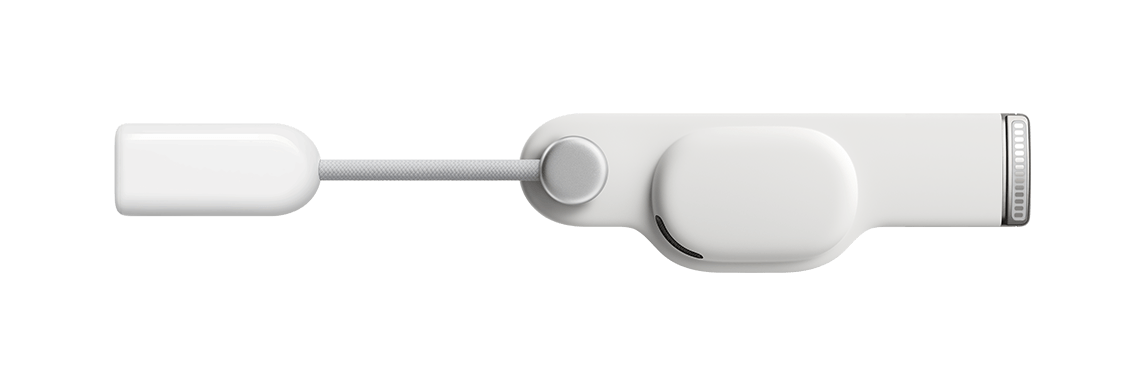
The Apple Vision Pro Developer Strap

Jeff Benjamin writing for 9to5Mac has a comprehensive breakdown on what the Apple Vision Pro Developer Strap can and can’t do. One of the primary benefits for developers is capturing video. As Benjamin writes:

The Developer Strap also lets developers capture a direct video feed from Apple Vision Pro via a wired USB-C connection using Reality Composer Pro. Files transfers of the captured feed occur via the direct USB-C connection. Users without the strap can still capture these feeds but via Wi-Fi only.

Benjamin also explains how to use the strap to access Recovery Mode:

You can also restore visionOS using Recovery Mode via the wired connection made possible by the Developer Strap. This includes downgrading from visionOS beta releases.

My experience is in line with Benjamin’s. The Developer Strap may make capturing short videos and screenshots easier, but it can’t do much else.

I will add, however, that I was contacted by a MacStories reader who tipped me off to one other thing the Developer Strap can do, which is act as a video source for QuickTime. This works a lot like capturing screenshots and video from an Apple TV via QuickTime, and the advantage is that you can capture more than the 60-second cap imposed by Reality Composer Pro. That’s great, except that the capture is foveated, meaning that the video recorded will be blurry everywhere except where you’re looking.

Permalink

Magic Rays of Light: Apple Vision Pro Impressions, TCA Winter Press Tour 2024, and the Road to the Apple Music Super Bowl LVIII Halftime Show

AppStories+ Deeper into the world of apps
0:00
01:44:59

AppStories+ Deeper into the world of apps


This week on Magic Rays of Light, Sigmund and Devon share first impressions of Apple Vision Pro, all of the Apple Original announcements from the Television Critics Association Winter Press Tour, and the lead up to the Apple Music Super Bowl LVIII Halftime Show headlined by Usher.

Show Notes


Send us a voice message all week via iMessage or email to magic@macstories.net.

Sigmund Judge | Follow Sigmund on X, Mastodon, or Threads

Devon Dundee | Follow Devon on Mastodon or Threads

View our Apple TV release calendar on the web.

Subscribe to our Apple TV release calendar.

Read more


Vision Pro App Spotlight: NowPlaying

NowPlaying by Hidde van der Ploeg has come a long way since its start. It’s always been an excellent companion to Apple Music, packed with music discovery features that fill a big gap in Apple’s system app. But, with the visionOS version, van der Ploeg has taken NowPlaying to a new level. visionOS allows users of the app to spread out, focus on the music, and absorb the rich catalog of metadata and editorial content about their music in a beautiful, relaxing atmosphere.

Read more


AppStories, Episode 369 – Digging into the DMA

This week on AppStories, we consider how Apple’s response to the Digital Markets Act will change the world of apps for developers and users in the EU.

Sponsored by:

  • Notion: Do your most efficient work with Notion AI. Try it free today.

On AppStories+, the backstory of Shortcut Buttons a visionOS Shortcuts app by Finn Voorhees.

We deliver AppStories+ to subscribers with bonus content, ad-free, and at a high bitrate early every week.

To learn more about the benefits included with an AppStories+ subscription, visit our Plans page, or read the AppStories+ FAQ.

Read more


Vision Pro App Spotlight: Day Ahead

Day Ahead is an interesting approach to visualizing the events on your calendar. It’s a visionOS-only app that uses what looks like a transparent tube filled with drops of colored liquid that represent the events of your day. It’s strange, but I think there’s something to it that we’ll be seeing from other visionOS developers as they explore the unique characteristics of the Apple Vision Pro.

Read more