
 MacStories Weekly: Issue 286
MacStories Unwind: An AppStories+ Pre-Announcement, Mela, and a New Tetris Game






This week on MacStories Unwind:
MacStories
- Introducing AppStories+: An Extended, Ad-Free Edition Delivered Early
- Mela: An Elegant and Innovative Recipe and Cooking App for iPhone, iPad, and Mac
Club MacStories
- MacStories Weekly
- An Monday teaser
- OtterBox Mobile Gaming Clip for MagSafe
- John on the lead up to a big launch
AppStories
Unwind
- Federico’s Pick:
- John’s Pick:
Introducing AppStories+: An Extended, Ad-Free Edition Delivered Early
Federico and I are excited to introduce AppStories+, an extended, ad-free version of the podcast we’ve been hosting together since 2017, which will be releasing a day earlier than usual with higher bitrate audio. AppStories+ is just one part of a series of announcements that we’ll fully reveal on Monday, August 23, but we wanted to give everyone a first look at one of the tent pole features we’ve been building.
AppStories, Episode 236 – Sideloading Apps and Games on the iPhone and iPad→
This week on AppStories, we explore the world of sideloaded apps and games on the iPhone and iPad, including AltStore and the kinds of apps and game emulators it makes possible.
Sponsored by:
- Memberful – Monetize your passion with membership.
- Technology Untangled – Join Michael Bird as he untangles innovation through a series of interviews, stories, and analyses with some of the industry’s brightest brains.
Mela: An Elegant and Innovative Recipe and Cooking App for iPhone, iPad, and Mac
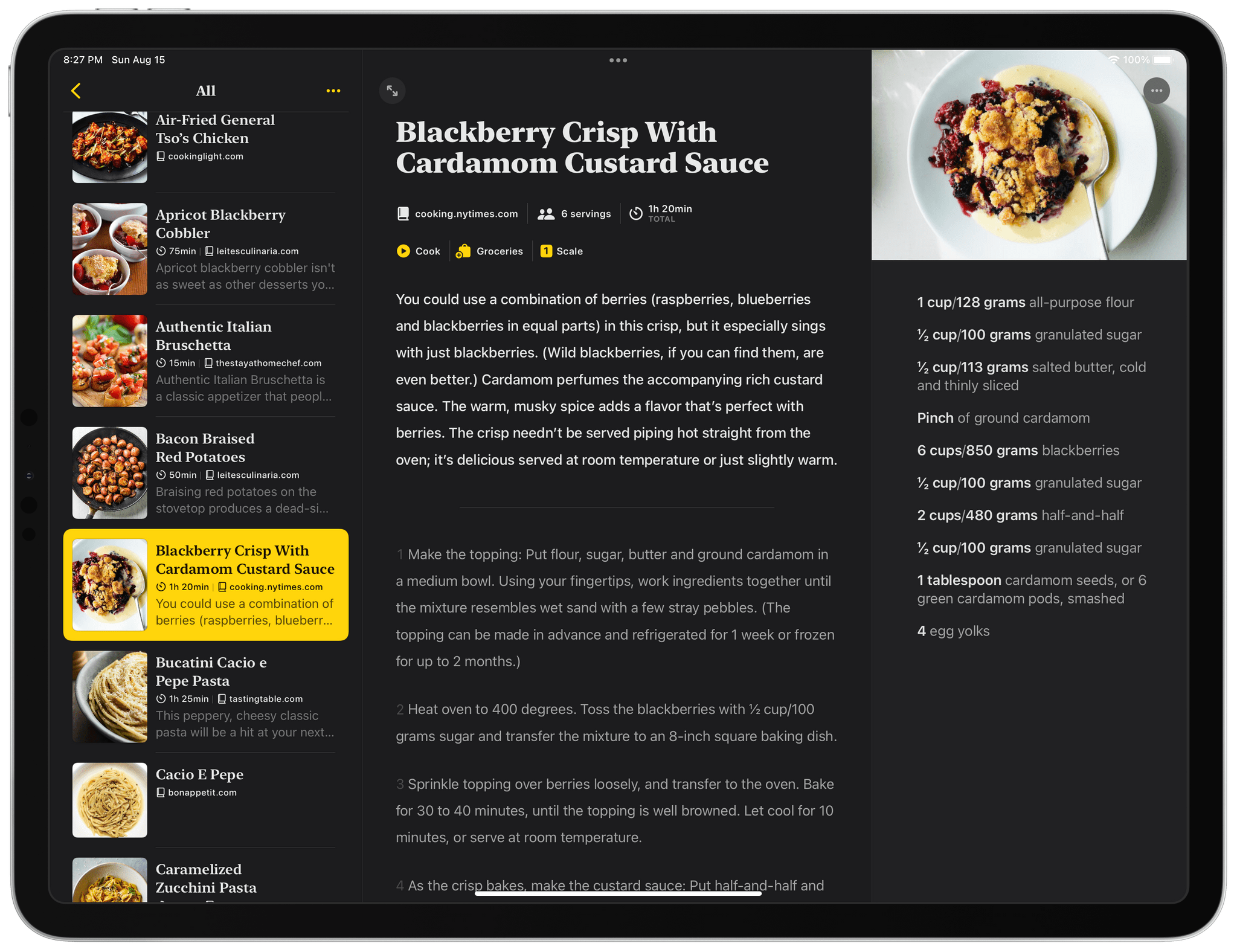
Silvio Rizzi, the developer of RSS client Reeder, has released a brand new recipe and cooking app called Mela for the iPhone, iPad, and Mac, which has immediately become my favorite apps for planning and preparing meals. For me, the two essential aspects of an app like this are how it handles adding new recipes and whether it is easy to use while you’re cooking. Mela excels at both.
I’m going to focus primarily on the iPad experience for this review because the iPad strikes the best balance of portability combined with a large screen that works well when you’re in the kitchen cooking, but the app is also available on the iPhone and Mac. Although my overwhelming preference is to use Mela on an iPad, an equal amount of attention has gone into the design of the iPhone and Mac apps, accounting for the different screen sizes and making the most of each. That’s true on the iPad, too, where the experience differs depending on the size of the iPad you’re using.
MacStories Weekly: Issue 285
MacStories Unwind: Apple Maps, Obsidian, and Markdown Editors in Task Managers
Sponsored by: UpNote – The Best Cross-Platform Note-Taking App
This week on MacStories Unwind:
MacStories
- Apple Maps for iOS and iPadOS 15 and macOS Monterey: The MacStories Overview
- My Obsidian Setup, Part 1: Sync, Core Plugins, Workspaces, and Other Settings
- Things Adds Extensive Markdown Support and Search for Extended Notes Attached to Tasks
- Billie Eilish and Apple Music Promote Spatial Audio with Short Film*
- Joanna Stern of The Wall Street Journal Interviews Craig Federighi About Apple’s Upcoming Child Safety Features
Club MacStories
- MacStories Weekly
- Federico recommends Delta
- Tips on how to set up Sofa
- John’s iPad Air Home Screen
AppStories
Unwind
- Alex’s Pick:
- John’s Pick:
Joanna Stern of The Wall Street Journal Interviews Craig Federighi About Apple’s Upcoming Child Safety Features→
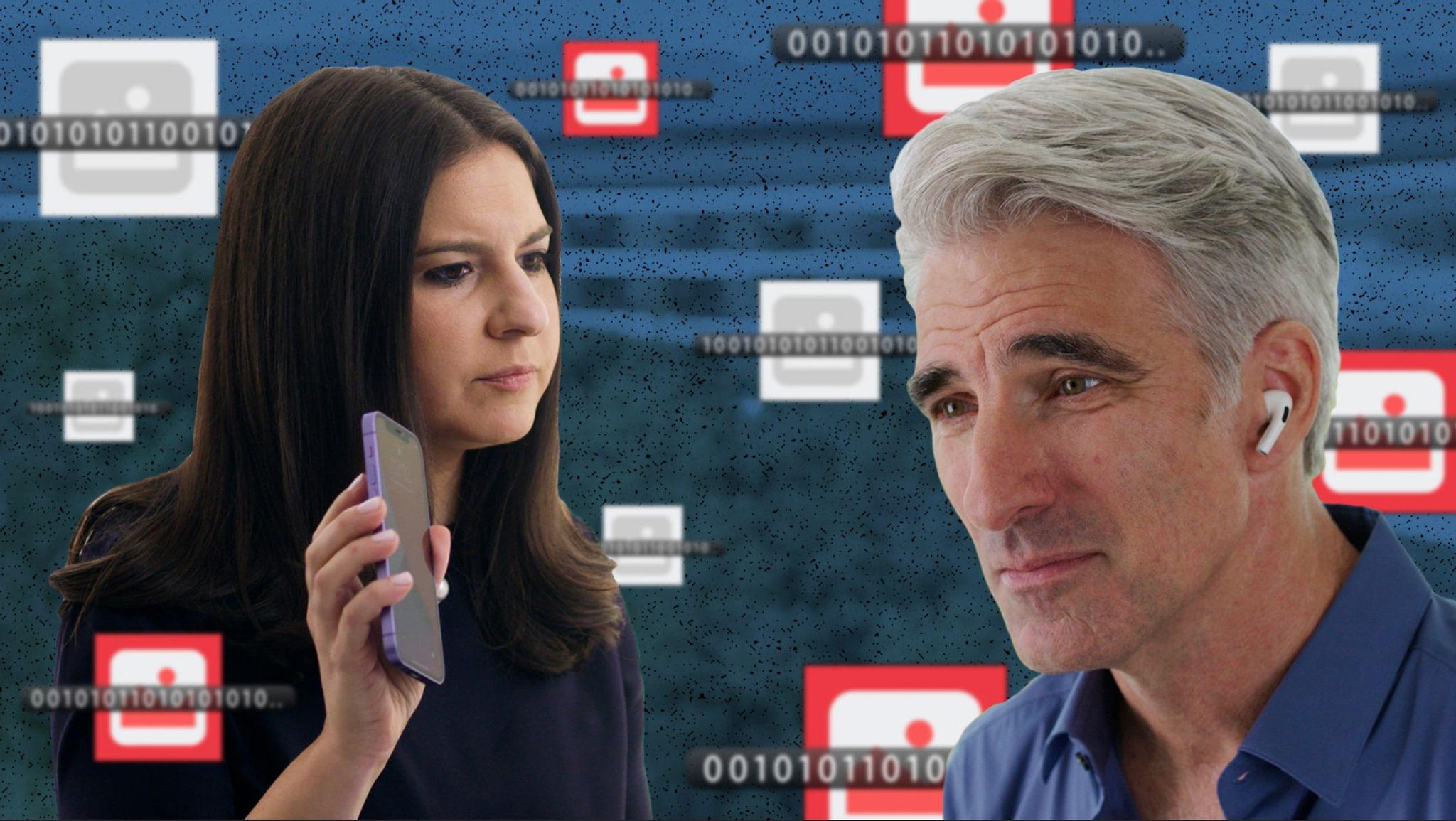
Last week, Apple announced two new child safety features coming this fall that stirred up controversy in the security and privacy world. The first is a technology that scans photos that are uploaded to customers’ iCloud Photo Libraries for digital fingerprints that match a database of known Child Sexual Abuse Material or ‘CSAM’ that is maintained by the Center for Missing and Exploited Children, a quasi-governmental entity in the US. The other is a machine learning-based technology used by Messages on an opt-in basis to alert children, and if they are under 13, their parents, of images flagged by the system as potentially pornographic.
The two technologies are different, but by announcing them at the same time in a way that wasn’t always clear, Apple found itself embroiled in controversy. The company has since tried to clarify the situation by publishing a set of FAQs that go into more detail about the upcoming features than the initial announcement did.
Then today, Apple’s senior vice president of Software Engineering, Craig Federighi, sat down with Joanna Stern of The Wall Street Journal for a video interview to explain the two features and how they work. Stern’s interview is well worth watching because it does more in just under 12 minutes to clarify what Apple is doing, and just as importantly not doing, than anything else I’ve watched or read.
Billie Eilish and Apple Music Promote Spatial Audio with Short Film

Apple and Billie Eilish have collaborated on a video visualizing Spatial Audio, the Dolby Atmos-powered audio technology designed to create an immersive listening experience for music fans. Eilish recently released her album Happier Than Ever, which is available on Apple Music in Spatial Audio and Lossless.
The video begins with Eilish singing Getting Older a cappella in front of a vanity mirror, transitions into a performance of GOLDWING. As Eilish sings, mirrors multiply her reflection, creating a visual metaphor for Spatial Audio.
An audio feature like Spatial Audio isn’t an easy thing to illustrate with video. However, Eilish’s short film hits the nail on the head by capturing the feel of the feature in a beautifully cinematic way that isn’t technical. As a fan of Eilish’s work, I also love her short but captivating performance.