This Week's Sponsor:

Turbulence Forecast

Know before you go. Get detailed turbulence forecasts for your exact route, now available 5 days in advance.


MacStories Unwind: Federico’s iPad Pro Review, M1 iMacs, Spatial Audio and Lossless Streaming, Halide, and Pok Pok Playroom

AppStories+ Deeper into the world of apps
0:00
23:49

AppStories+ Deeper into the world of apps


Sponsored by: Bartender – Take Control of Your Menu Bar

This week, Federico and John recap the week’s Apple announcements and news including the new M1 iPad Pro that Federico reviewed, the new M1 iMac, Spatial Audio and Lossless coming to Apple Music, new watch bands and accessibility features, plus reviews of Halide for iPad, Pok Pok Playroom, and more.

MacStories

Club MacStories

  • MacStories Weekly
    • Wallpaper Collection
    • A Mac window management tip
    • Federico on using a DAC to listen to lossless music

AppStories

Unwind


Apple Introduces Affiliate Program for Podcasts Subscriptions

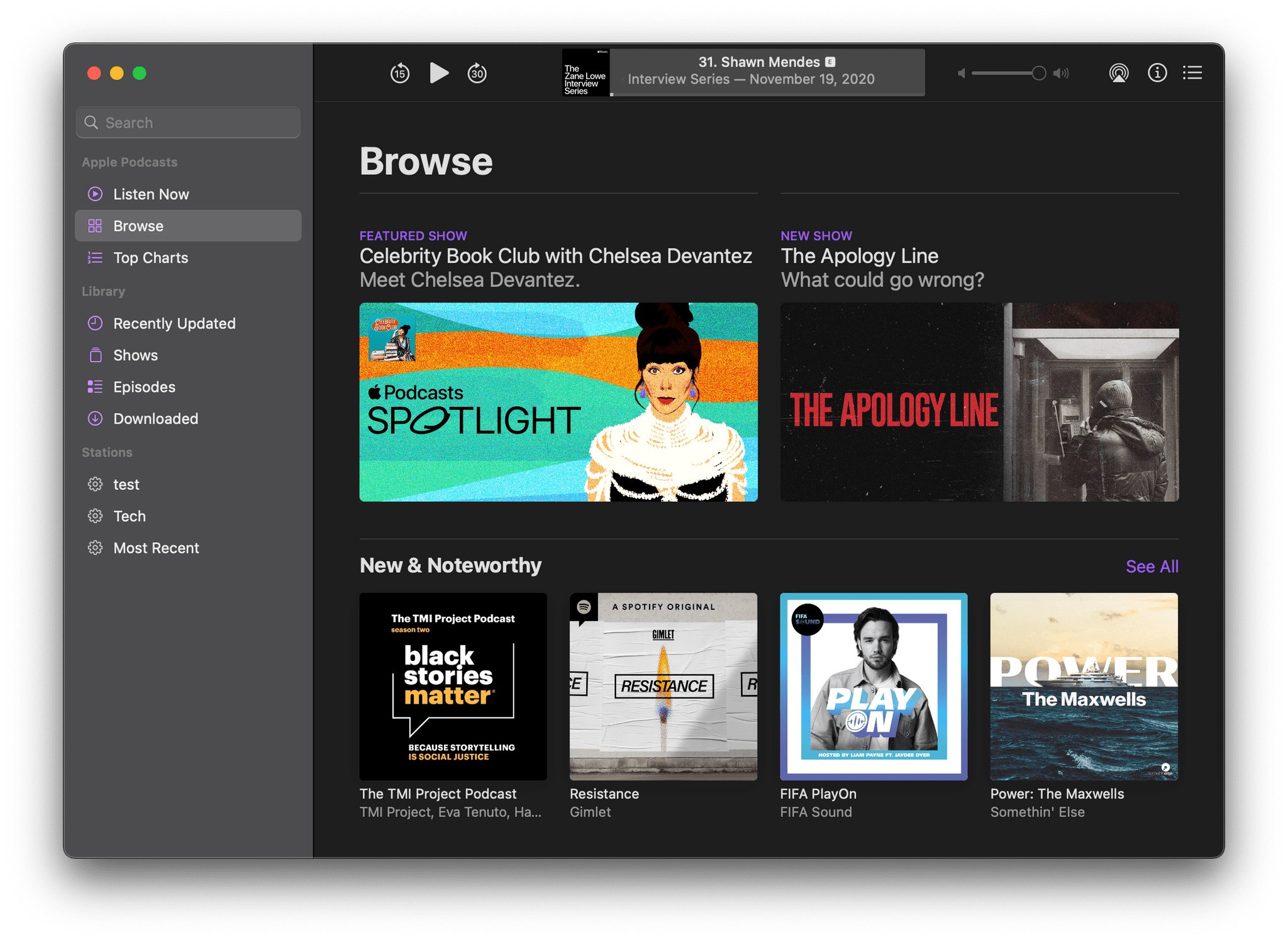
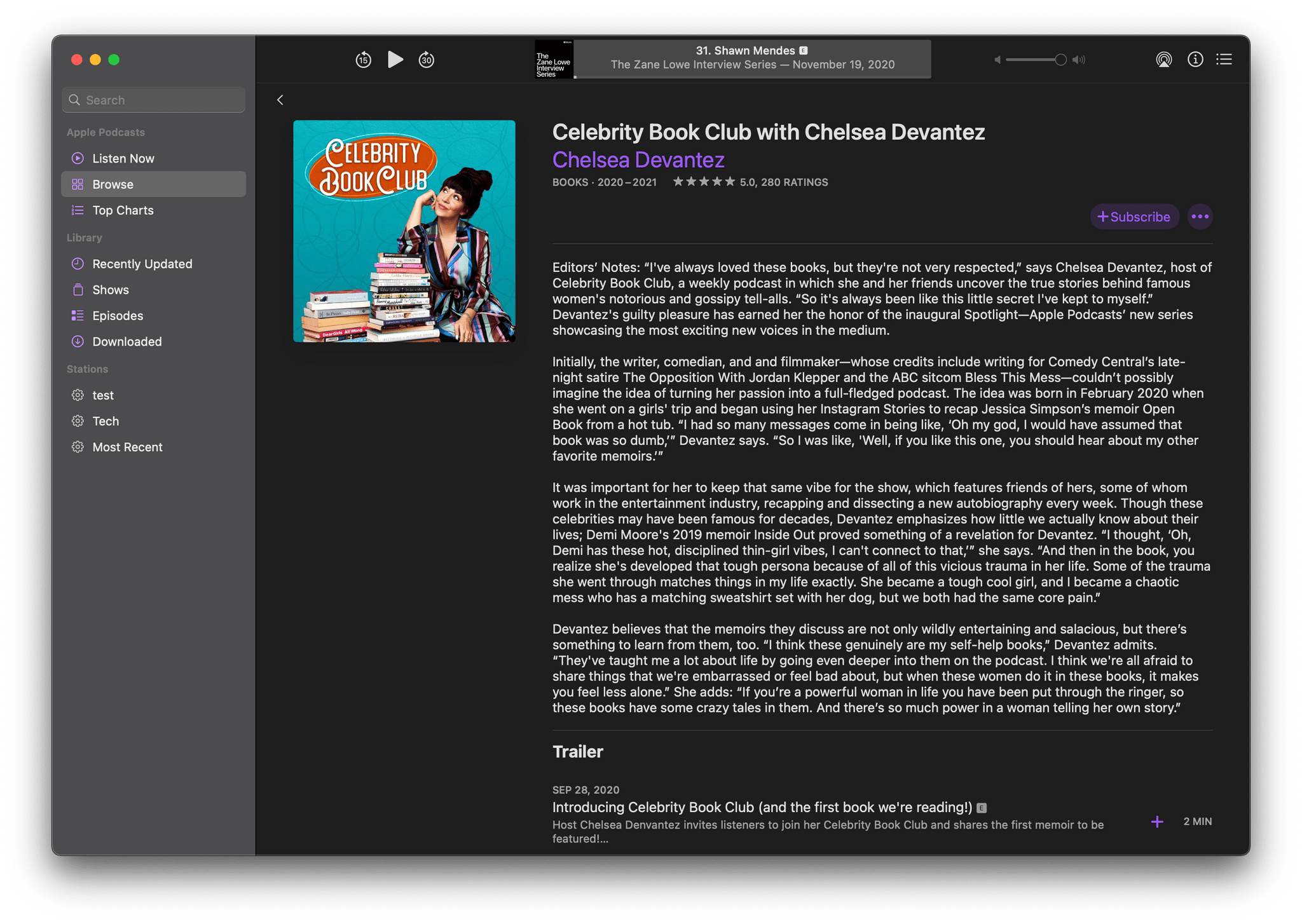
Apple’s Podcasts Subscriptions service is coming soon, and today, the company debuted an affiliate program to help spread the word about the shows that participate in it. As we previously reported, the subscription program will allow podcasters to offer paid versions of their shows. Podcasters can offer paid-only shows or enhanced versions of free shows that add a combination of bonus features, like extended, ad-free, and early-release episodes.

Today’s announcement adds Podcasts Subscriptions to Apple’s existing affiliate programs for iTunes Store content as well as Apple Music, TV+, New+, and Books subscriptions and content. If you apply to the program and are accepted, you’ll be given a token that identifies your affiliate account when you publish a link to a paid podcast. When someone subscribes to a show using your link, you’ll earn a 50% commission on the first month’s subscription fee for any subscriptions signed up within a 30-day window. For example, the new program would mean a $5 payout for a user who signed up for a $10/month subscription. The affiliate program is available to podcaster’s offering shows for subscriptions, adding another way for them to earn money from their shows.

With the exception of apps, which were removed from Apple’s affiliate program in 2018, Apple now offers an affiliate program for all of the subscriptions and content it sells. The success of the App Store ultimately made that affiliate program unnecessary for Apple to continue. However, as a new service, it makes a lot of sense to introduce an affiliate program for Podcasts Subscriptions to help raise its profile among consumers.


Apple Releases New App Tracking Transparency Video

Apple has released a new video in its ongoing ‘Privacy. That’s iPhone’ campaign titled ‘Tracked.’ The latest spot starts with the lead character purchasing a coffee and then being followed around all day by a growing crowd of people that intrude on his privacy. Back home at the end of the day, the protagonist is prompted by his iPhone to ‘Ask App Not to Track’ or ‘Allow’ tracking, and as soon as ‘Ask App Not to Track’ is chosen, the mob of people crowding his apartment pop like balloons, disappearing in puffs of smoke.

Privacy isn’t an easy thing to depict visually, and no doubt, someone will take issue with aspects of the way the video portrays app trackers, but I enjoyed it. The video is entertaining, but it’s also useful to anyone who doesn’t realize how intrusive cross-app and website tracking can be.

This isn’t the first video released in the series. Late last month, Apple released ‘App Tracking Transparency’, which explains how the iOS 14.5 feature works. Earlier this year, the company also released ‘A Day In the Life of Your Data,’ a case study with real-world examples of what app trackers can do.


Austin Mann on the M1 iPad Pro for Pro Photographers

Source: Austin Mann

Source: Austin Mann

I always look forward to Austin Mann’s unique perspective on Apple hardware. His latest review is from Flagstaff, Arizona where he takes Apple’s new M1-based iPad Pro through its paces as he processes photos taken at Great Sand Dunes National Park.

Mann cuts right to the chase:

As any photographer knows, one of the most time-consuming parts of the photo creation process is culling through thousands of images, making selects, and editing the images. Thanks to the M1 chip, faster internal storage, and a few other improvements, the new iPad Pro with M1 is the fastest image sorting tool I’ve ever used.

A great demonstration of the power of the new iPad Pro is the video in Mann’s post in which he moves rapidly through a large set of 60+ MB RAW photos. There’s absolutely no lag, making the iPad Pro a terrific tool for culling large collections of imported shots.

Unsurprisingly, Mann also concludes that the iPad Pro’s big, bright display and mobile data connection make it an ideal tool for previewing images on a sunny day and staying connected to research photo shoots. However, Mann’s wishes for the iPad Pro, like background importing of photos and the ability to connect multiple external storage devices, are precisely the sort of thing that is holding the iPad Pro back from being a more complete solution for photographers and other pro users. Despite the limitations, though, the new iPad Pro looks like a big step up for photographers, which I can’t wait to try with my own camera soon.

Permalink


Apple Announces SignTime and Many Other Accessibility Features Coming to Its Products

Source: Apple.

Source: Apple.

Tomorrow, Apple will launch SignTime, a service that will pair Apple Store and Apple Support customers with on-demand sign language interpreters. The company has several other accessibility features coming too, which will be released later this year.

SignTime will allow customers to communicate with AppleCare and Retail Customer Care inside their browsers using American Sign Language, British Sign Language, and French Sign Language. The service will also be available in-person at retail stores without making arrangements ahead of time. For now, the service is limited to the US, UK, and France, but Apple says it will roll out to more countries over time.

Later this year, Apple will add AssistiveTouch to the Apple Watch. The feature uses hand clenches, pinch gestures, and hand shaking to navigate and select controls in Watch apps. Assistive Touch for the Apple Watch takes advantage of the device’s gyroscope and accelerometer along with the heart rate sensor and machine learning.

Also, coming later this year, the iPad will gain support for third-party eye-tracking devices to assist users in navigating the iPad’s UI. VoiceOver is also being enhanced with new details about people, text, table data, and other objects. The feature will offer far more descriptive information for blind and low vision users than ever before. Users will also be able to add their own image descriptions to their photos using Markup.

For deaf and hard of hearing users, Apple is adding bi-directional hearing aid support. The company is also including support for audiograms, which can be used with Headphone Accommodations to tune playback to a user’s hearing. Background sounds like balanced, bright, or dark noise, and ocean, rain, and stream sounds are being added too.

Source: Apple.

Source: Apple.

Also coming later this year are Sound Actions for Switch Control that uses mouth sounds in place of switches and buttons, customizable display and text size settings for colorblind users, and new Memoji customizations to allow users to add oxygen tubes, cochlear implants, and a soft helmet for headwear. Many of Apple’s apps and services will also be marking Global Accessibility Awareness Day, which is tomorrow, with features, curated collections of content, and sessions.

It’s fantastic to see such a long list of accessibility features being added to Apple’s devices tomorrow and later in the year, which presumably means this fall when the company’s OSes are expected to be updated. It’s also unusual for upcoming OS features to be revealed before WWDC, but with Global Accessibility Awareness Day coming tomorrow, it’s an excellent opportunity to spotlight these important additions to Apple’s OSes and perhaps to free up time at WWDC for other announcements.


Federico’s 2021 iPad Pro Review: Step into the Capture Zone

AppStories+ Deeper into the world of apps

AppStories Episode 219 - Federico’s 2021 iPad Pro Review: Step into the Capture Zone

0:00
01:04:42

AppStories+ Deeper into the world of apps

For this special bonus episode, Federico and John dig into Federico’s review of the 2021 iPad Pro to talk about its Liquid Retina XDR display, Thunderbolt, the gap between the iPad Pro’s hardware and its software, the M1 chip, Center Stage, and more.

:::if {.appstories}
On AppStories+, we kick off bonus content with a behind-the-scenes look at the making of Federico’s iPad Pro review.
:::

Read more


iPad Pro 2021 Review: Future on Standby

The new iPad Pro.

The new iPad Pro.

In recent years, the narrative surrounding the iPad platform, and particularly its more advanced Pro line, has largely focused on the great divide between the iPad’s hardware and software. It’s a story we’ve had to grapple with for a while now: it was clear with the original iPad Pro in 2015 that its software – still called iOS at the time – needed to take better advantage of the 12.9” display, but we had to wait until 2017’s iOS 11 to receive drag and drop between apps; similarly, the iPad Pro was redesigned in late 2018 with the Liquid Retina Display and a gesture-based interaction system, but it was only in 2019 that Apple relaunched the iPad’s software as a standalone platform parallel to iOS but optimized for iPad.

The perception since the iPad Pro’s introduction is that its hardware has consistently leapfrogged its software, leaving many to wonder about the untapped potential of iPadOS and a third-party app ecosystem that could have been vastly richer and more powerful if only iPadOS allowed developers to write more complex apps. Effectively, “too good for its software” has long been the iPad Pro’s hardware mantra.

The 2021 iPad Pro, launching publicly this Friday, doesn’t alter that public perception at all. If anything, this new iPad Pro, which I’ve been testing in the high-end 12.9” flavor with 2 TB of storage for the past week, only widens the chasm between its hardware and software: it’s an absolute marvel of engineering featuring the Apple-designed M1 chip, a brand new Liquid Retina XDR display, and 16 GB of RAM1 that hints at a powerful, exciting future for its software that just isn’t here yet.

I say this as someone who’s been using the iPad as his main computer for nearly a decade at this point: from a mere hardware standpoint, the new iPad Pro is everything I could have possibly dreamed of this year, but it leaves me wanting for so many other iPadOS features I’d love to see Apple address at its developer conference next month.

The new 12.9” iPad Pro hits all the right notes as a modular computer that can be a tablet with an amazing display, a powerful laptop, and an extensible workstation; its hardware is a remarkable blend of tablet-first features and technologies first seen on Apple’s line of desktop computers. It’s hard to believe the company was able to deliver all of it in a device that is only 6.4mm thin. However, the new iPad Pro’s more powerful nature doesn’t fundamentally change my daily workflow. At least not with its current version of iPadOS that will (likely) be obsolete in two weeks.

Let’s dive in.

Read more