This Week's Sponsor:

LookAway

It helps you take regular breaks from your Mac to rest your eyes, without breaking your flow.


Apple Reports Q3 2026 Earnings

Source: Apple.

Source: Apple.

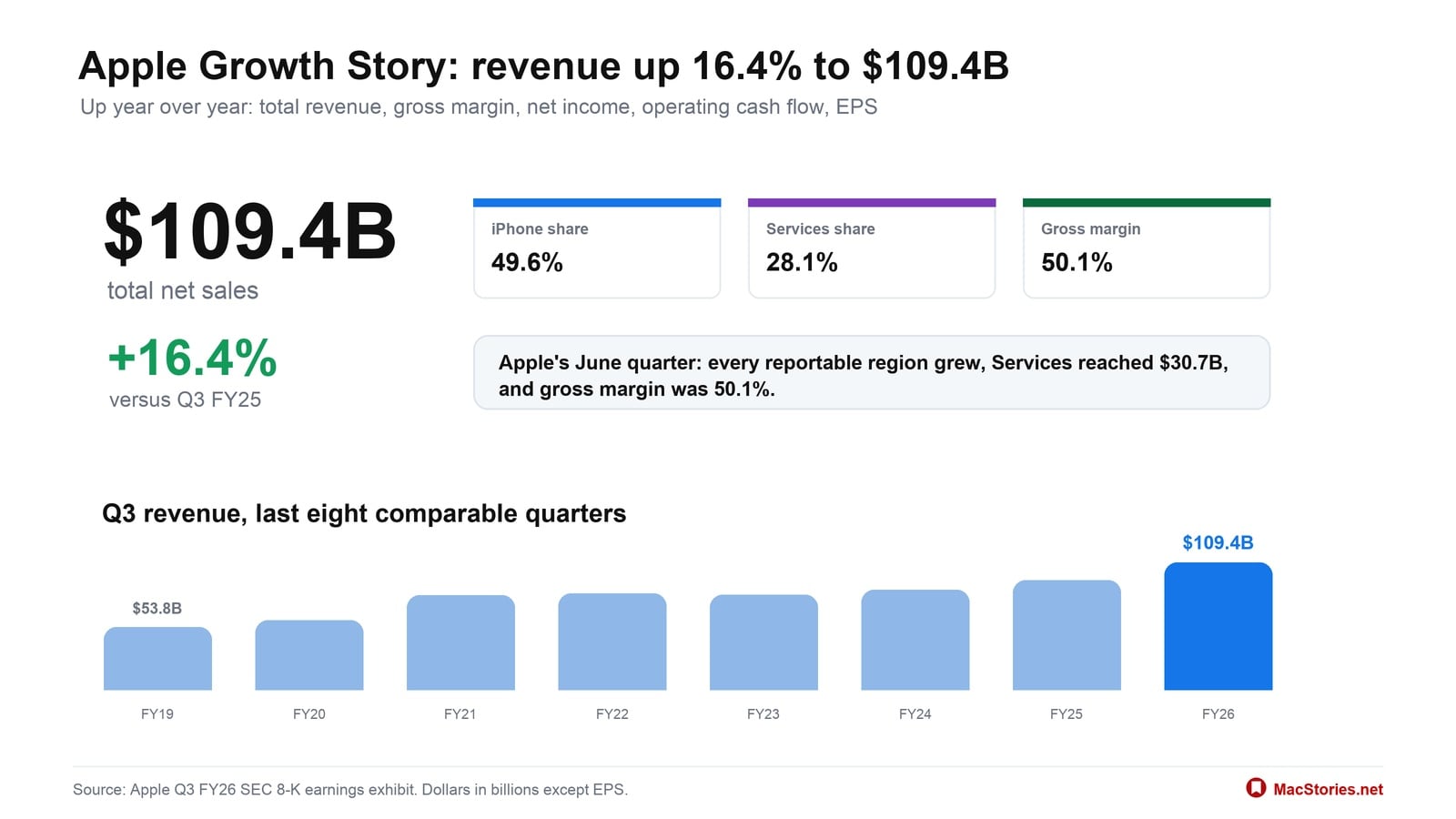
Today, Apple reported its 2026 Q3 earnings, posting quarterly revenue of $109.4 billion. Here are the highlights:

  • Revenue was $109.4B, up 16.4% from Q3 FY25.
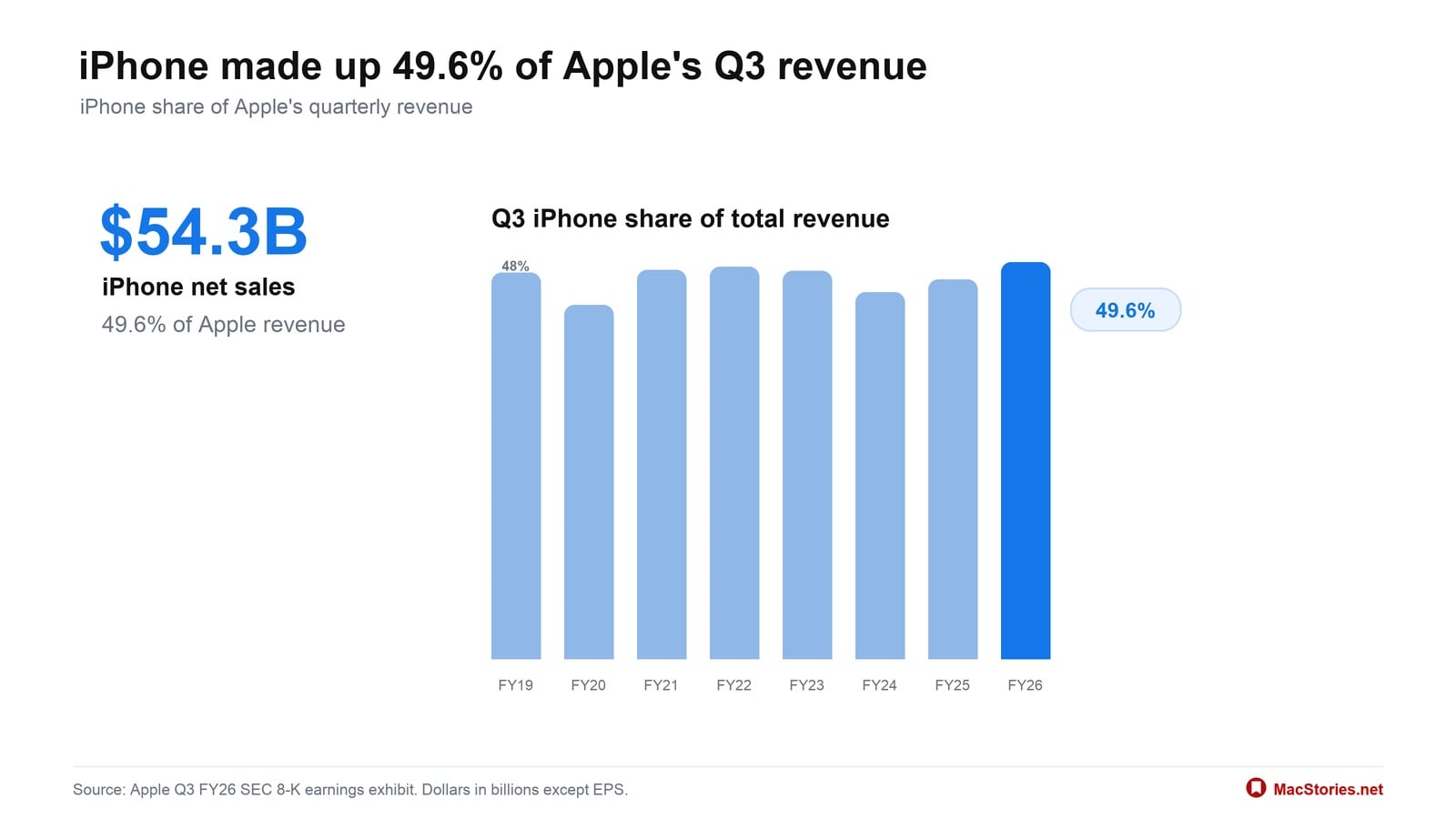
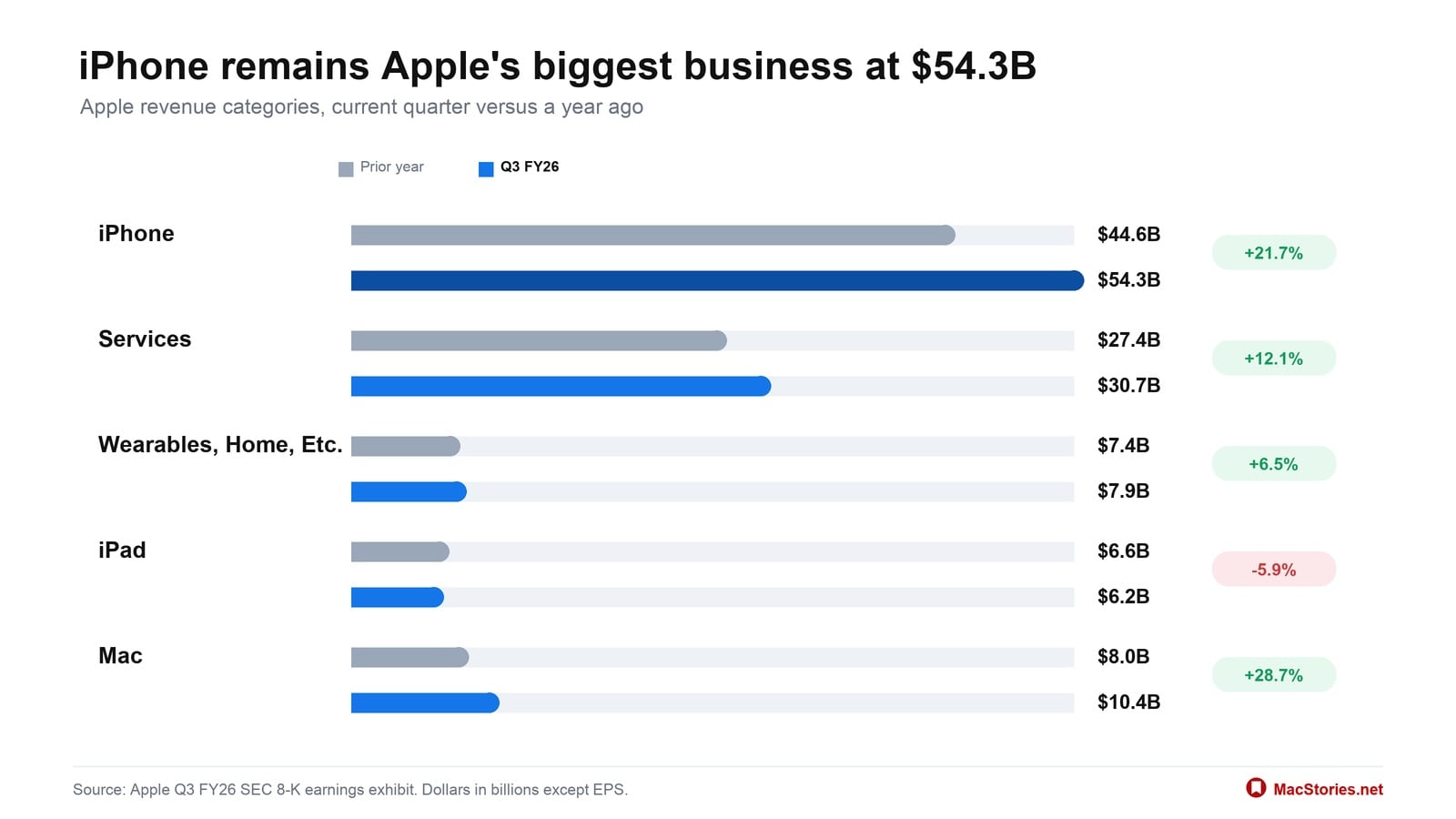
  • iPhone revenue was $54.3B, up 21.7%, and represented 49.6% of Apple’s total revenue.
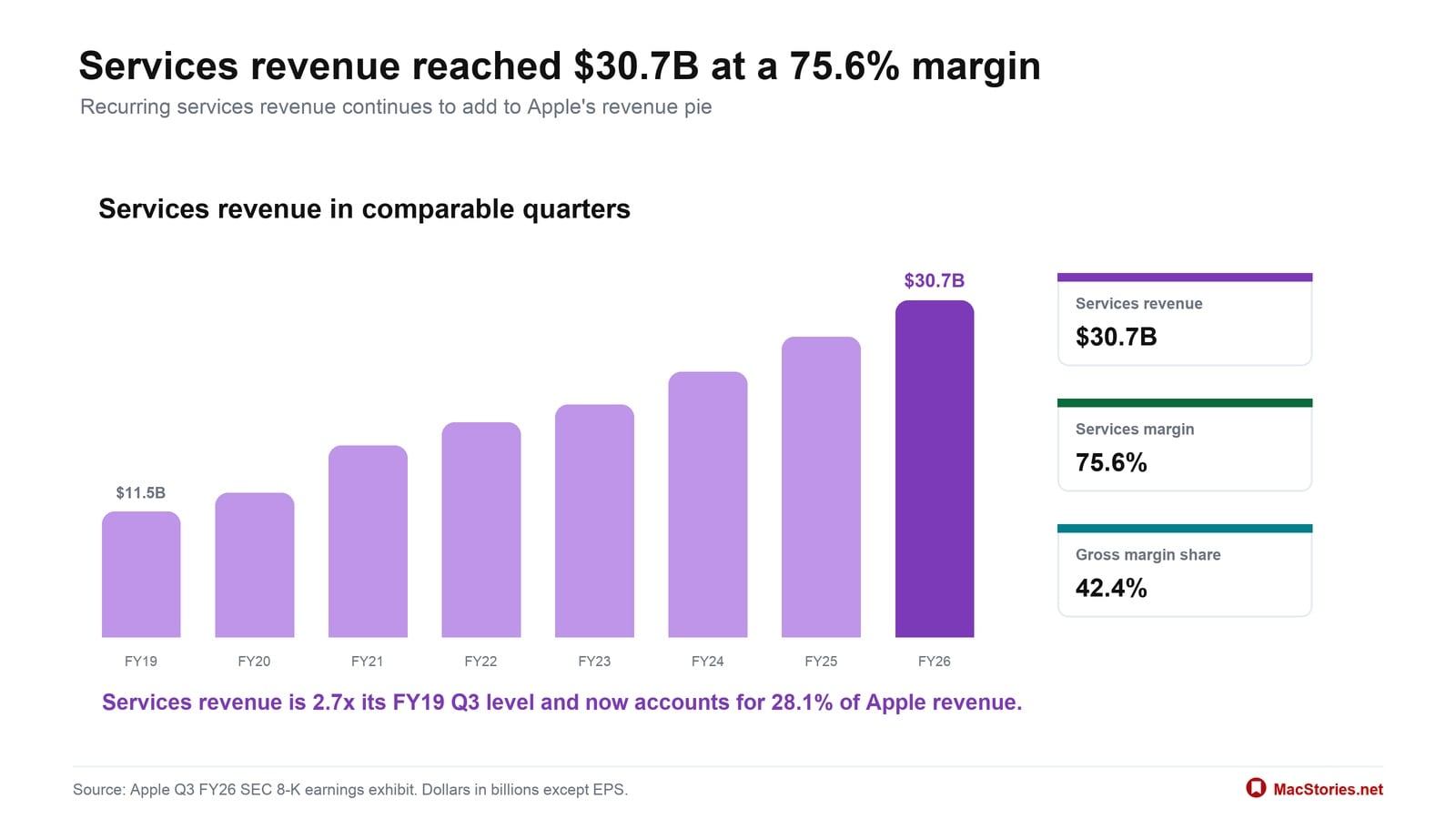
  • Services revenue was $30.7B, up 12.1%, and represented 28.1% of Apple’s total revenue.
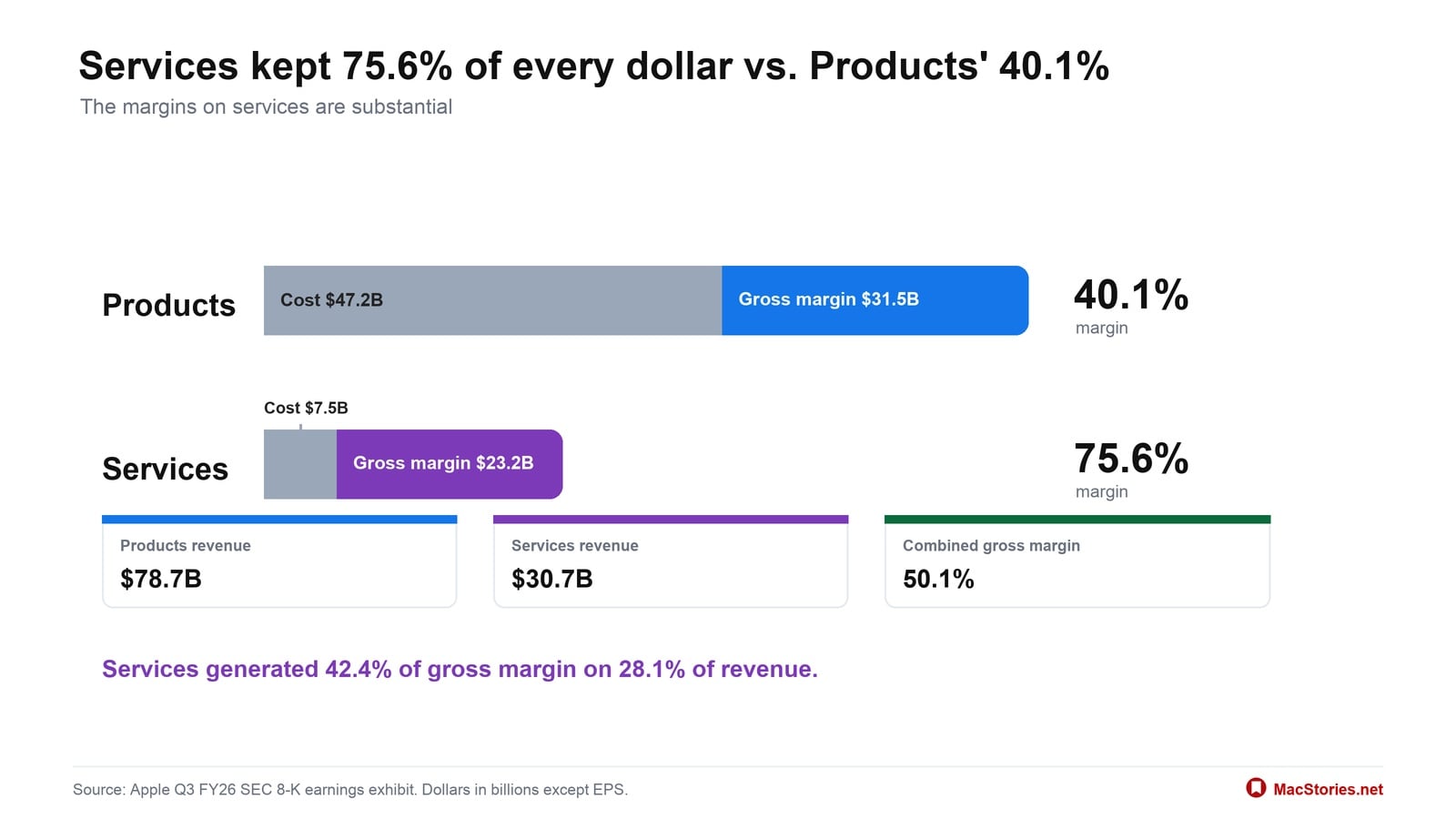
  • Gross margin was $54.8B, up 25.3%, with an overall gross margin rate of 50.1%.
  • Net income was $29.8B, up 27.1%.
  • Operating cash flow was $34.4B, up 23.3%.
  • Diluted EPS was $2.02, up 28.7%.

Apple CEO Tim Cook had this to say about the results:

Today, Apple is proud to report our strongest June quarter ever, with double-digit revenue growth across iPhone, Mac and Services, and in every geographic segment. At WWDC26, we were thrilled to introduce the all-new Siri AI, alongside all of Apple’s latest software innovations and important new child safety features.

For additional context, here’s how the results break down:

In Apple’s latest quarter: every region grew, Services reached $30.7B, and gross margin was 50.1%.

iPhone remained Apple’s largest business at $54.3B, and four of five categories grew year over year. Together, iPhone and Services accounted for 77.7% of Apple’s $109.4B in net sales.

iPhone revenue reached $54.3B, or 49.6% of Apple’s total revenue, keeping it the company’s largest consumer business.

Services reached $30.7B at a 75.6% gross margin, accounting for 28.1% of revenue but 42.4% of gross margin.

Products carried most of the revenue at $78.7B, but Services kept 75.6% of every dollar against Products’ 40.1%.

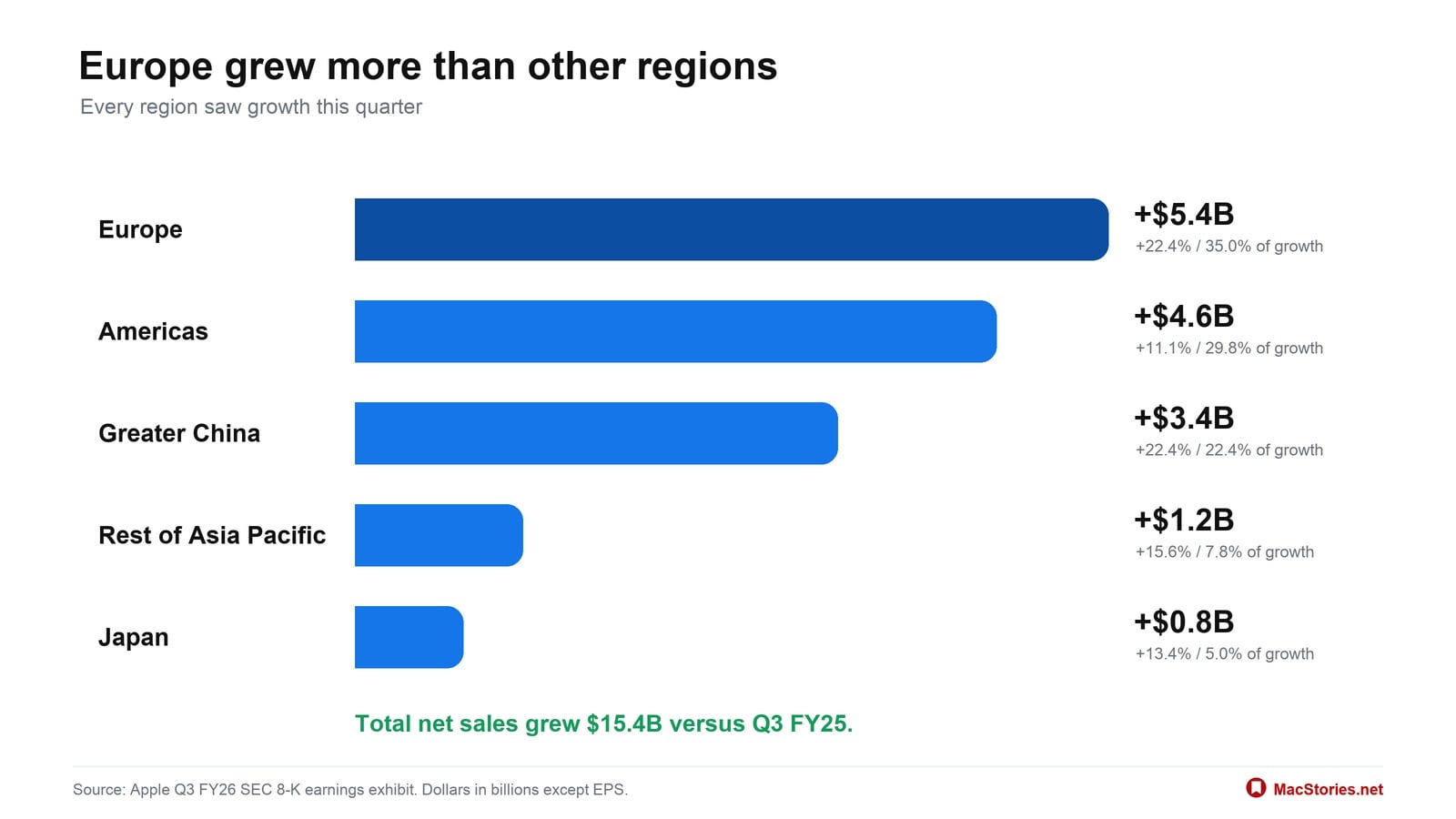
Every reported region grew, and Europe contributed the most new revenue at $5.4B, or 35.0% of Apple’s $15.4B in growth.

Going into today’s earnings call, expectations were high among analysts, who anticipated revenue of $108–109 billion and diluted earnings per share of $1.89. Apple’s results landed at the high end of the expected revenue range and exceeded expectations for earnings per share.


Indie App Sales Event Begins Today with Over 200 Apps

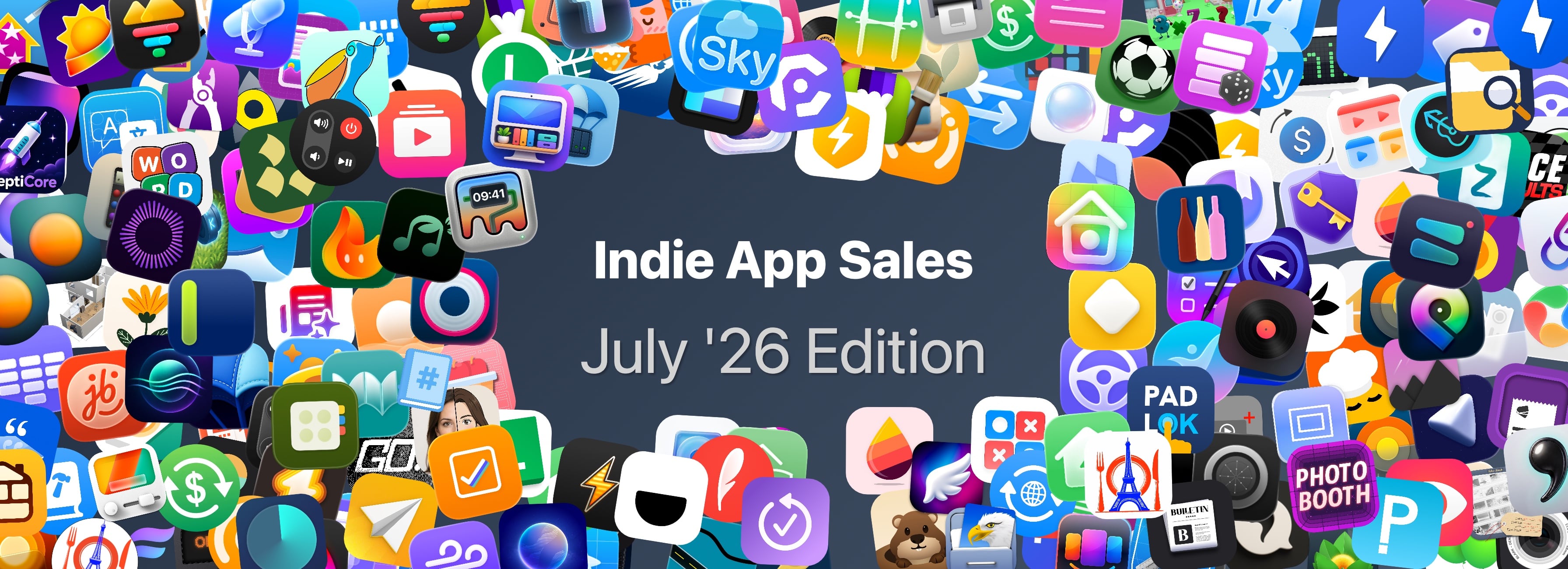
Matt Corey, the maker of Bills to Budget and Signals, has organized indie developers for a big sale that runs from July 28 - 30. The sale includes over 200 apps that will be offered at a discount through Thursday. The list is too long to publish here, but it includes many apps we’ve covered here on MacStories and on Club MacStories in the past, including:

There are a lot of great deals, with many apps discounted 50% or more. What’s listed above is a small fraction of the participating apps, so be sure to visit Indie App Salesand support these great indie apps.


Apple Upgrade Trades Ownership for Lower Monthly Payments

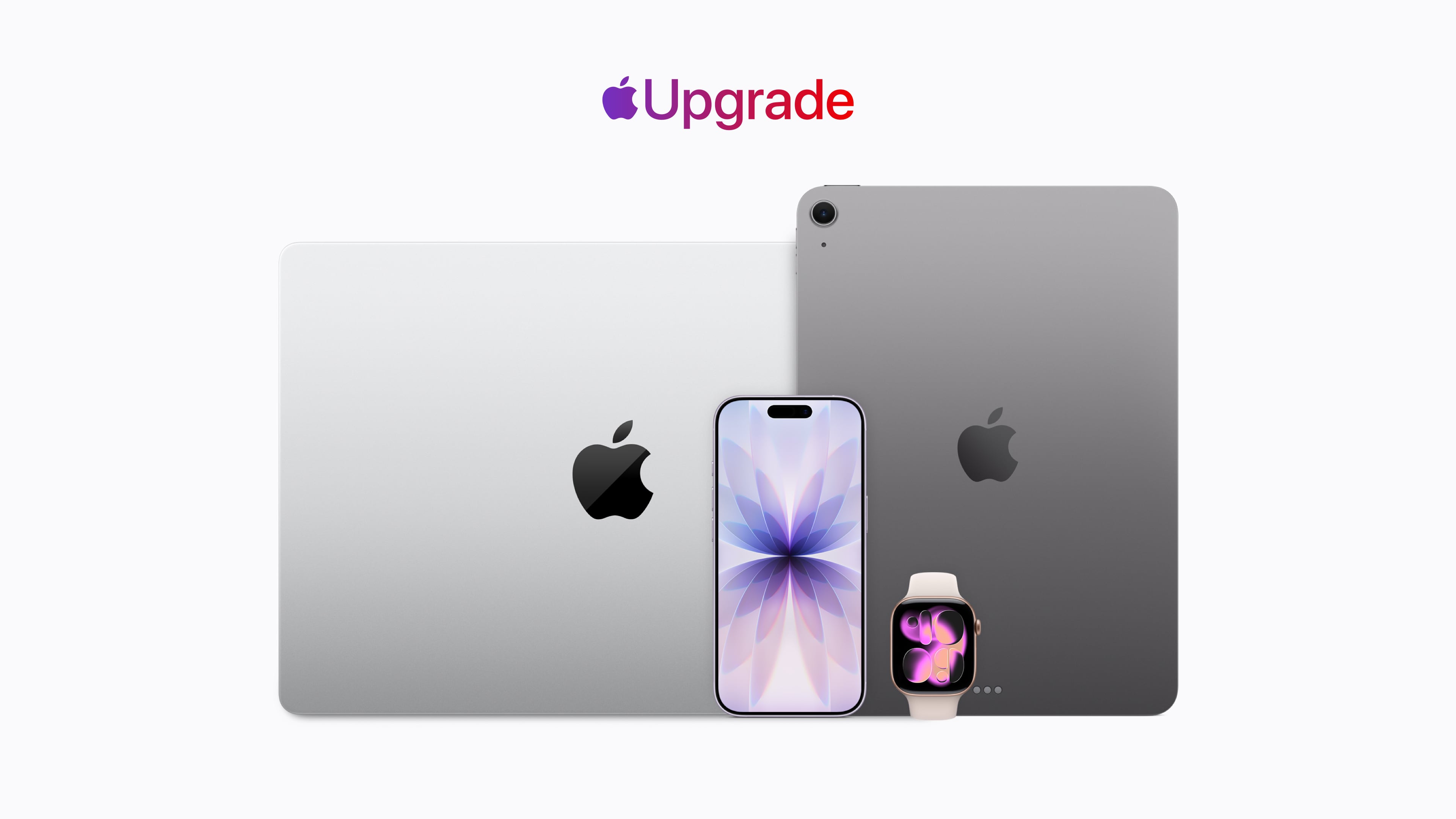
Apple has revealed its new hardware leasing program called Apple Upgrade, which is being offered in collaboration with Klarna. This is Apple’s pitch:

Introducing Apple Upgrade, a new way to always have the Apple products you love. Lease a new iPhone, iPad, Mac, or Apple Watch with pocket-friendly payments and terms that work for you. Then easily upgrade to something new at the end of your lease, and return your current device. It’s that simple.

That pitch comes with a footnote that includes other details worth considering:

  • The program is U.S. only (excluding U.S. territories).
  • You need to be a U.S. resident who is at least 18 years old, or whatever the legal age is where you live.
  • There are eligibility and credit approval requirements and you must have a credit or debit card and an Apple ID.
  • When a device is returned, it must be in good condition or damage fees will be assessed.
  • Upgrades require a new lease subject to whatever eligibility and credit requirements apply at that time.
  • For iPhones, you have to have a carrier and can’t use a prepaid plan.
  • The program isn’t available for refurbished devices or through the Apple Employee Purchase Plan, corporate Employee Purchase Plans, Apple at Work, Government, Education, or Veterans and Military Purchase Programs.

Okay, so maybe it’s not “that simple” after all.

The program is available for the iPhone, iPad, Mac, and Apple Watch product lines. For the iPhone, monthly payments start at $17.99 for an iPhone 17e and start at $34.99 for an iPhone 17 Pro Max, for leasing periods of either 12 months or 24 months.

For iPads, the starting prices range from $12.99/month to $24.99/month, Macs range from starting prices of $24.99/month to $48.99/month, and the Apple Watch ranges from starting prices of $11.99/month to $47.03/month. But again, these are just starting prices. You can configure a fully loaded 16-inch MacBook Pro that is just under $230/month, and it won’t include AppleCare.

As a point of comparison, under the current program that is being discontinued, I pay $69.50/month for an iPhone 17 Pro Max, but I have a 512GB model, so my lease price for the same phone would be $40.83/month, significantly lower, but keep in mind that doesn’t include AppleCare+, which would add $13.99/month or $139/year for that iPhone. On a monthly basis, that puts a new iPhone 17 Pro Max with 512GB of storage and AppleCare+ at just under $55/month. Still a superior deal, but not nearly as good as the landing page might initially lead you to believe.

At the end of your lease you’ll have six months to decide to return the leased device, during which you’ll continue to make monthly payments, or pay a fee equal to the difference between the original purchase price and your lease payments to buy it outright. Your other option is to enter into a lease for a new device. If you return your leased device in poor condition, Klarna will charge you a damage fee. You can also terminate your lease early if you pay the remaining lease payments in full plus any taxes and fees.

If you lease accessories for your device, those don’t have to be returned. Why? Presumably because they have no value to Apple or Klarna.

Of course, if you have a device to trade in, that monthly figure could be significantly reduced. If I had the iPhone 16 Pro Max I had last year to trade in and leased a 17 Pro Max for 12 months, my monthly payments would be under $1. However, keep in mind that once you’re on the leasing train, you no longer own your iPhone, so future upgrades won’t reduce your payments the next time you swap your device for a new model. If you don’t own it, the value isn’t yours to trade in.

If you’re on the existing iPhone Upgrade Program like me, it’s being discontinued, but Apple has a transition offer for you. The old program spread payments over 24 months with the option to turn in an iPhone for a new one after 12 months. That’s not changing. If you’re paid in full on your first 12 months of an iPhone, you can sign up for the new program, get a new iPhone, and return your old iPhone to Apple, which will close your old account but won’t reduce your lease payments. You’re not obligated to join the new leasing program, though. You can also trade in your old iPhone, ending your finance contract, and buy a new full price iPhone.


As you may have figured out by now, I’m not a fan of this program, though I expect it will be successful.

Apple products, like all consumer electronics, are getting more expensive every day. The monthly payments on a leased device look very attractive compared to the pay-up-front price. For years, car leases have induced people into monthly payments that can become a burden when their financial situation changes. Now the same will be true of iPhones, iPads, Macs, and Apple Watches.

Maybe as a practical matter this program isn’t that different from the old financing program, but at least there, you owned your device at the end and could just keep using it indefinitely. With the new program, that’s not an option. When your lease is over, you’re empty-handed and faced with leasing again, buying out the lease, or buying at full price with no trade-in, which is objectively worse.

Ultimately, Apple isn’t responsible for customers’ bad financial decisions, but this program feels like Apple is putting its customers in harm’s way.

Pastebot 3 Doubles Down on Mac Clipboard Automation and Introduces Two New Business Models

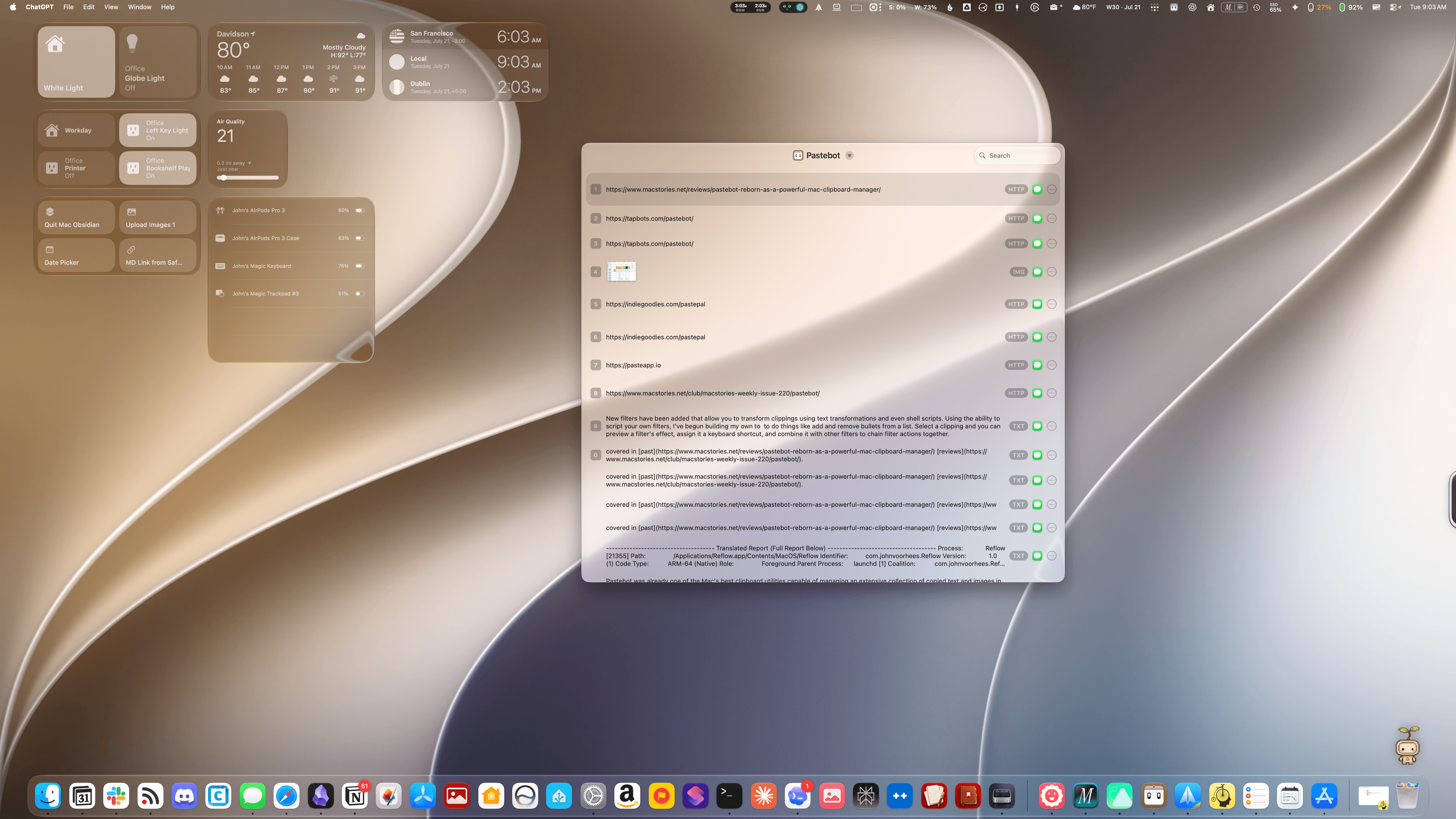
Pastebot's Quick Menu.

Pastebot’s Quick Menu.

Tapbots has released Pastebot 3, a ground-up rewrite of the Mac clipboard manager that includes several powerful automation and customization options, along with two new pricing models.

Pastebot was already one of the Mac’s best clipboard utilities, capable of managing an extensive collection of copied text and images in multiple formats, PDFs, URLs, files, and HTML, along with metadata. The app can handle up to 1,500 clippings and features fast search, extensive customizable keyboard shortcuts, list and detail views of clipboard items, and iCloud sync between multiple Macs.

Read more


Lock Launcher Introduces “No Redirect” Launchers, XL Widgets for iOS 27

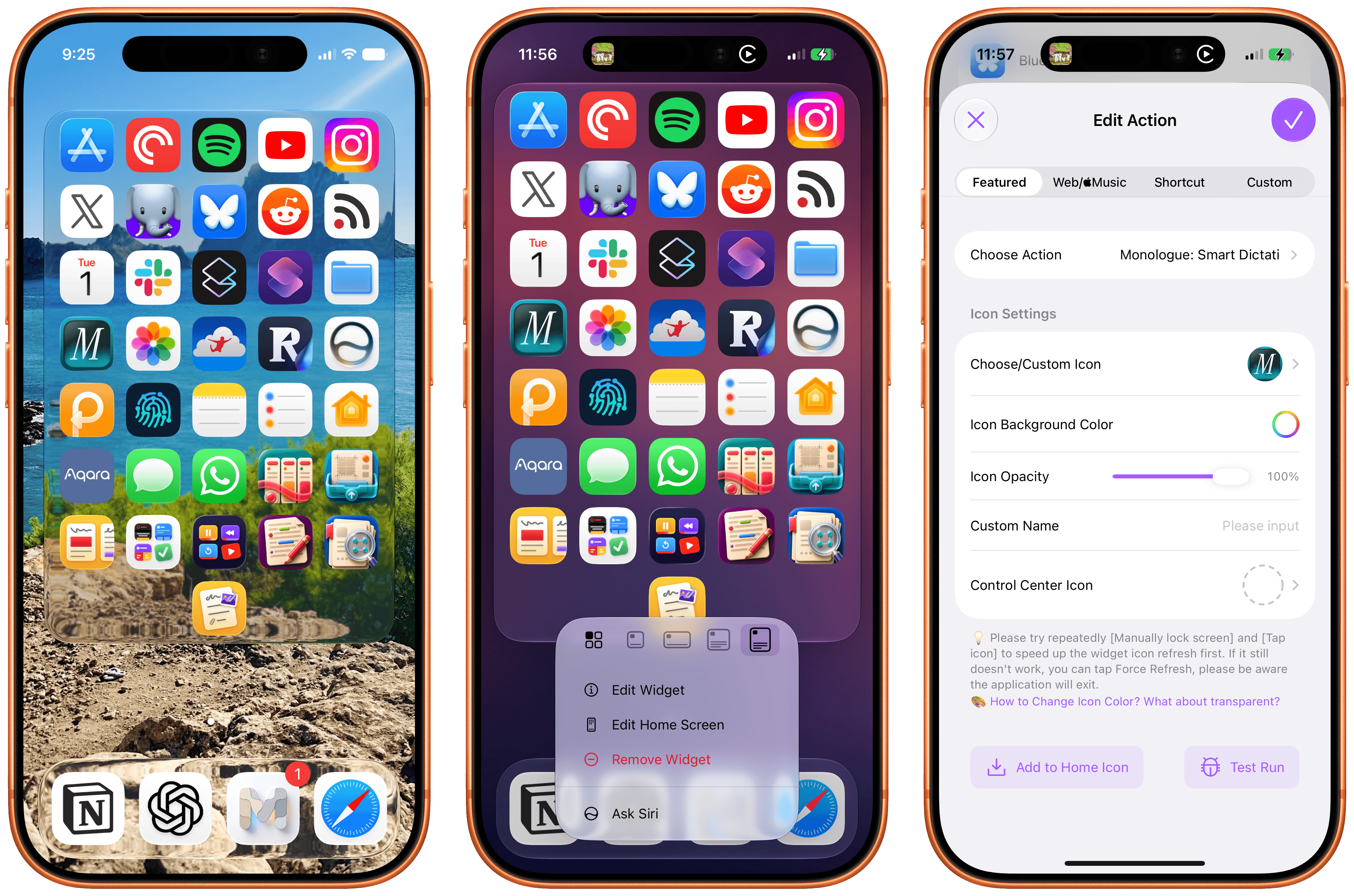
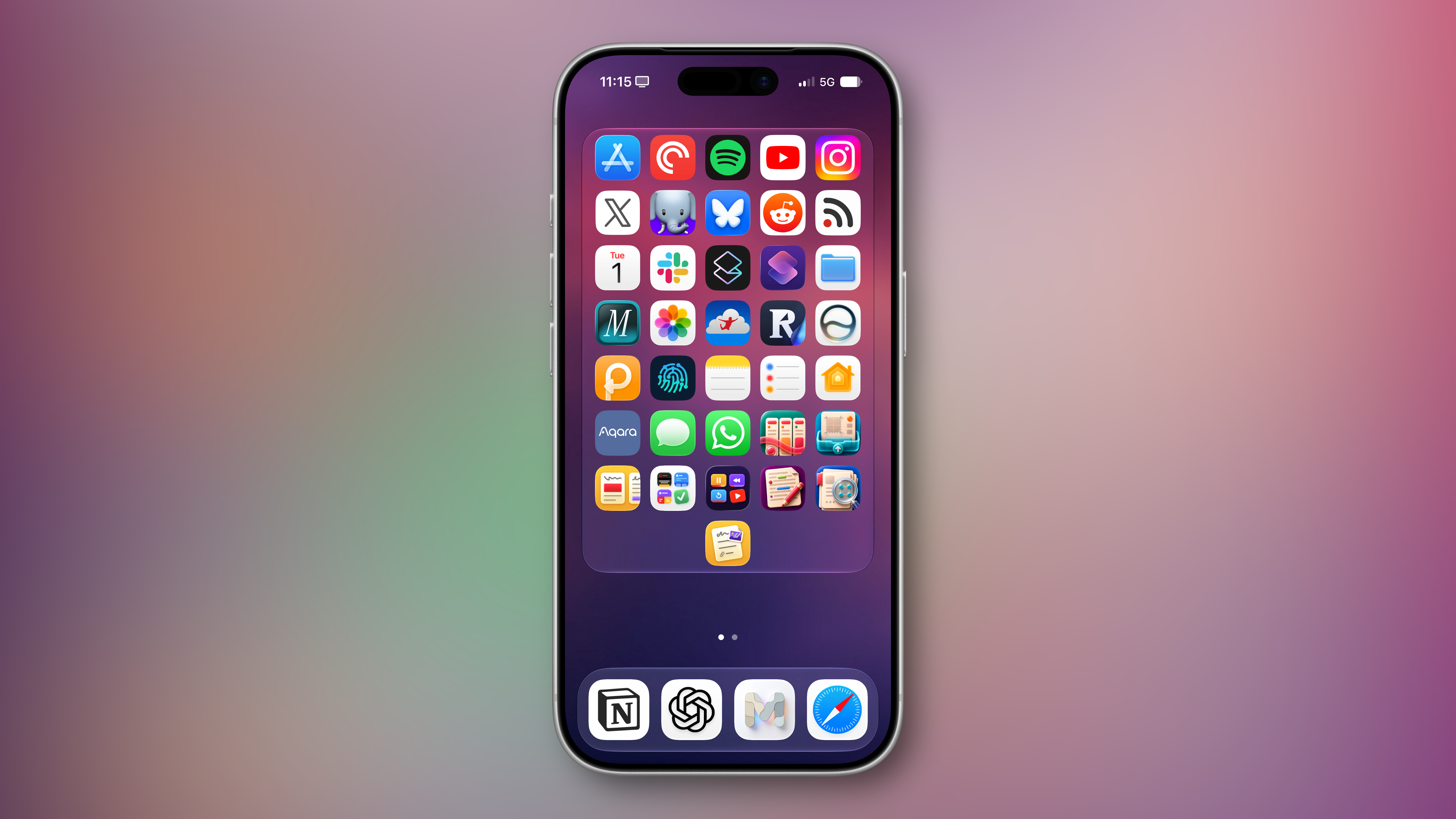
My Home Screen setup with Liquid Glass widgets powered by Lock Launcher.

My Home Screen setup with Liquid Glass widgets powered by Lock Launcher.

I don’t think I ever mentioned it on MacStories (although I probably did at some point on AppStories or Unwind), but my favorite “launcher” app for iOS is a utility called Lock Launcher, which I’ve been using on and off for the last couple of years. Lock Launcher started as an app for adding URL schemes to the Lock Screen a few years back, and it gradually evolved into a comprehensive “widget studio” app to design launcher widgets of all kinds for the Home Screen, Lock Screen, Dynamic Island, Live Activities, and more.

Anyway, I’m covering the app on the site today because it was updated with two features that I didn’t think were possible or allowed on the App Store, and I want to highlight them for our readers. I’m not really sure how the developers were able to add these features to the app; you may want to download it from the App Store quickly, just in case.

For starters, Lock Launcher now lets you create launcher shortcuts that open apps directly and immediately, rather than redirecting you to the Lock Launcher app first.

For years now, launcher apps on the iPhone have had to employ this workaround: you’d tap on a shortcut that opened, say, Ivory, but you would see the launcher app flash onscreen briefly before redirecting you to the actual destination app you selected. Somehow, Lock Launcher is now circumventing this limitation with a ‘Direct Open’ mode that I haven’t seen in other launcher apps for iOS. That sequence of widget, host app, and destination app was, ultimately, the reason why I always stopped using third-party launcher apps, and I love that it’s been removed by Lock Launcher.

Launching apps without redirects via Lock Launcher.Replay

At long last, I’ve been able to create a dense Home Screen with 40 icons (36 in the widget plus 4 in the dock), and they all launch directly when tapped.

My new Home Screen powered by Lock Launcher.

My new Home Screen powered by Lock Launcher.

The screenshot above brings me to the second feature added in the version of Lock Launcher currently available on the App Store: XL widgets on iPhone in iOS 27.

Now, as far as I know, if an app wants to adopt an API exclusive to a future version of iOS, it typically needs to be built against that version’s SDK using the corresponding Xcode beta. However, the App Store isn’t currently accepting apps built with the iOS 27 SDK. And yet, the Lock Launcher developers must have figured out a way to support the new systemExtraLargePortrait widget size and make it work on devices running iOS 27 even though the app was built with the iOS 26 SDK. My best guess: they’re using a workaround that involves visionOS 26 APIs, since the Vision Pro received support for that family of widgets last year. (I’d love to know more about this.)

These two features, combined with the ability to apply the Liquid Glass material to widgets for beautiful refractions of the system wallpaper, make Lock Launcher the most powerful and customizable launcher utility on iOS to date. I hope writing about it doesn’t get the developers in trouble.

Lock Launcher is available for free on the App Store, with advanced features available through an optional Pro in-app purchase.


Inoreader: Build Your Own Newsfeed and Cut Through the Noise [Sponsor]

Staying up to date has never felt more overwhelming.

Between websites, newsletters, podcasts, social media feeds, and specialized publications, valuable information is scattered across countless apps and platforms. The challenge is no longer finding content – it’s keeping up with it without wasting time or missing what matters.

That’s where Inoreader comes in.

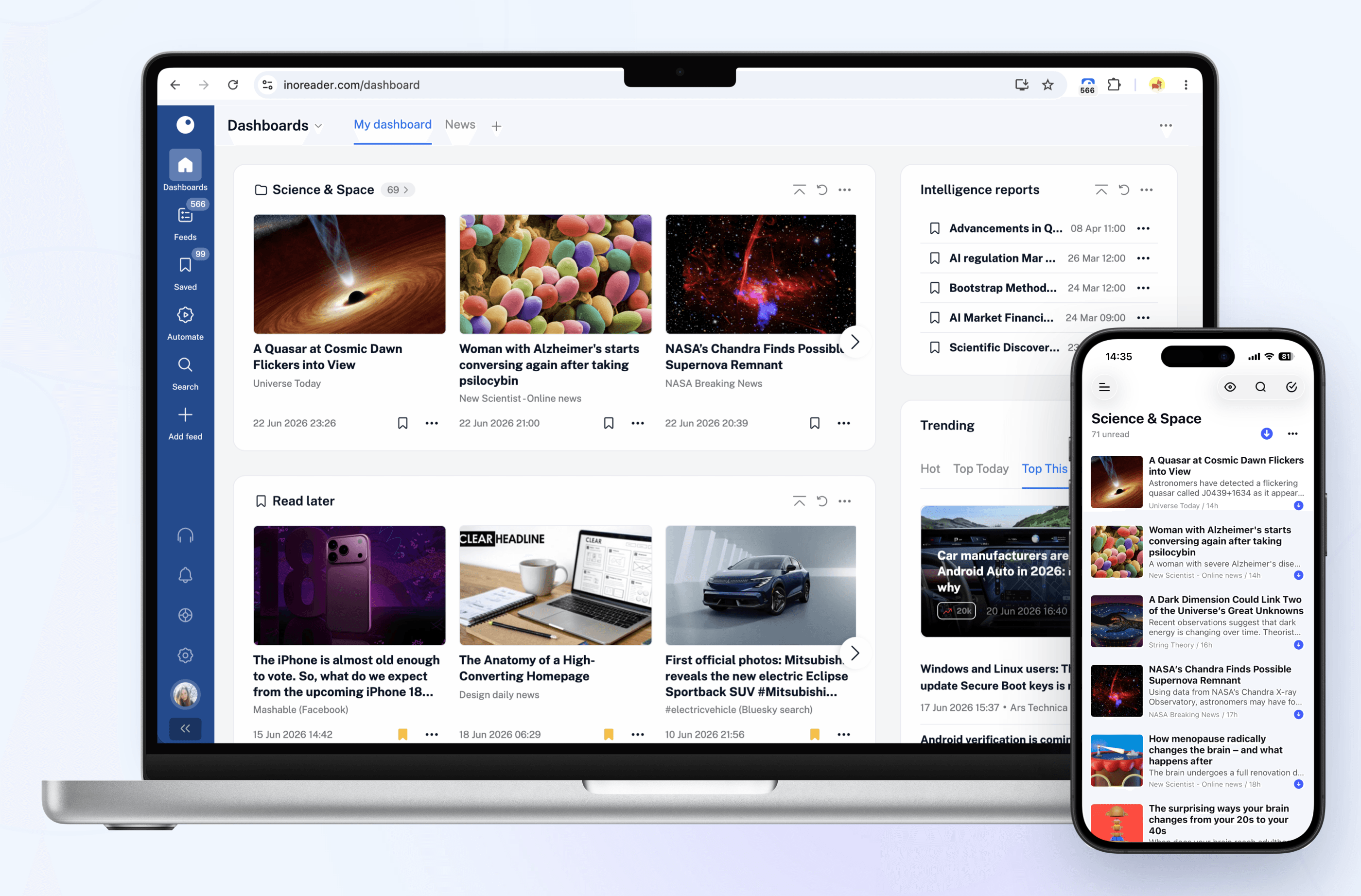
Inoreader helps you build your own personalized newsfeed by bringing together the sources you care about in one place. Instead of jumping between websites, inboxes, and apps throughout the day, you can keep up with everything from a single interface designed to help you stay informed while cutting through the noise.

Unlike algorithm-driven feeds, Inoreader puts you in control. Follow the websites and creators you trust and receive their updates directly. No engagement-driven recommendations and endless scrolling, just the content you’ve chosen to follow.

For those who need more than a traditional feed reader, Inoreader offers powerful monitoring tools. Create custom feeds to track keywords, brands, companies, competitors, products, or industry trends across the web and receive updates automatically whenever something new appears.

As your reading list grows, Inoreader helps you organize and revisit important information. Save articles for later, highlight key passages, add notes, and build a searchable archive of knowledge and insights that remains accessible long after you’ve finished reading.

To help you process larger volumes of content, Inoreader’s Intelligence features can summarize articles, extract key insights, and help you make sense of information faster. Whether you’re following daily news, researching a topic, or monitoring developments in your industry, Inoreader helps you stay informed without getting overwhelmed.

Advanced filtering and automation tools can further streamline your workflow by automatically organizing incoming content, surfacing what matters most, and reducing distractions – saving you time while ensuring important updates never slip through the cracks.

Inoreader is available on the web, iPhone, iPad, and Android devices, with offline reading support on mobile, so your newsfeed is always available when you need it.

You can get started with Inoreader for free, or explore everything the Pro plan has to offer with a 14-day free trial and no credit card required. New Pro subscribers can also get 30% off their first year.

Learn more and get started at inoreader.com.

Our thanks to Inoreader for sponsoring MacStories this week.


Podcast Rewind: Siri AI, the Game Boy Advance Returns, and Smart Ceiling Fans

Enjoy the latest episodes from MacStories’ family of podcasts:

AppStories

This week, Federico and John look at what Siri AI is good at, where it needs improvement, and where it might be heading.

On AppStories+, the conversation expands to Federico and John’s experiences with the betas of macOS Golden Gate, iOS 27, and iPadOS 27.

NPC: Next Portable Console

This week, AYANEO is chasing the classics again, teasing a Game Boy Advance clone, while Magmi is getting vertical – plus, a Mechanism desk stand for your handheld, 8BitDo’s FlipPad, and the GPD Win Max 3 blurs the lines between laptop and console.

On NPC XL, Brendon and John try Armada and report to listeners about whether it’s ready for prime time.

Comfort Zone

Niléane brings her newest fan (literally), Chris just assumed his co-hosts have installed the betas (they have), and they all tell each other how their respective apps could start earning millions.

This week’s Cozy Zone is a complete, and authoritative, tier listing of every Men’s World Cup logo ever.

MacStories Unwind

This week, app launchers, universal truths about ISPs, and an epic movie.

Read more