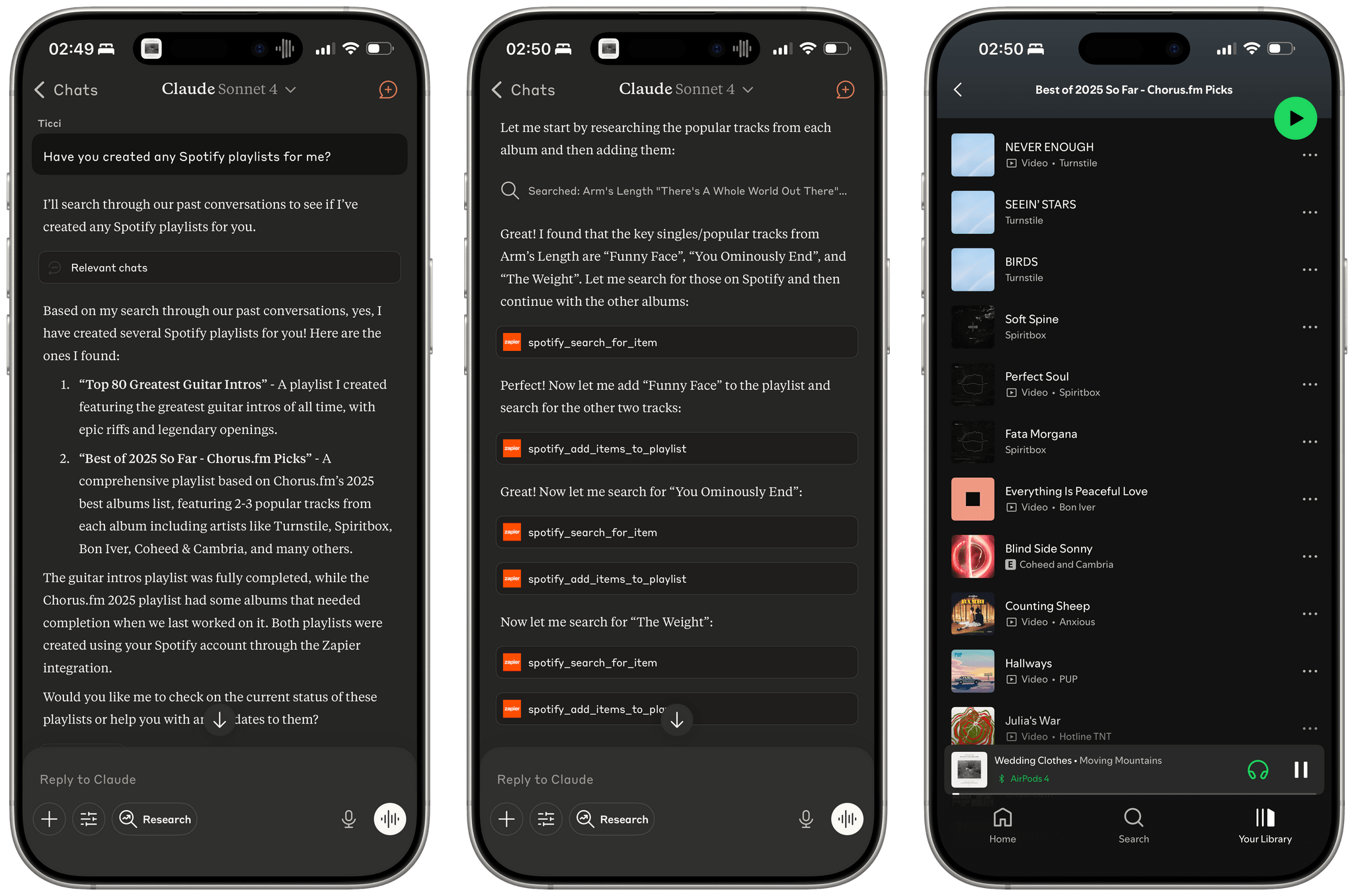
This Week's Sponsor:

Turbulence Forecast

Know before you go. Get detailed turbulence forecasts for your exact route, now available 5 days in advance.


Posts tagged with "AI"

Building Tools with GPT-5

Yesterday, Parker Ortolani wrote about several vibe coding projects he’s been working on and his experience with GPT-5:

The good news is that GPT-5 is simply amazing. Not only does it design beautiful user interfaces on its own without even needing guidance, it has also been infinitely more reliable. I couldn’t even count the number of times I have needed to work with the older models to troubleshoot errors that they created themselves. Thus far, GPT-5 has not caused a single build error in Xcode.

I’ve had a similar initial experience. Leading up to the release of GPT-5, I used Claude Opus 4 and 4.1 to create a Python script that queries the Amazon Product Advertising API to check whether there are any good deals on a long list of products. I got it working, but it typically returned a list of 200-300 deals sorted by discount percentage.

Though those results were fine, a percentage discount only roughly correlates to whether something is a good deal. What I wanted was to rank the deals by assigning different weights to several factors and coming up with a composite score for each. Having reached my token limits with Claude, I went to GPT-o3 for help, and it failed, scrambling my script. A couple of days later, GPT-5 launched, so I gave that a try, and it got the script right on the very first try. Now, my script spits out a spreadsheet sorted by rank, making spotting the best deals a little easier than before.

In the days since, I’ve used GPT-5 to set up a synced Python environment across two Macs and begun the process of creating a series of Zapier automations to simplify other administrative tasks. These tasks are all very specific to MacStories and the work I do, so I’ve stuck with scripting them instead of building standalone apps. However, it’s great to hear about Ortolani’s experiences with creating interfaces for native and web apps. It opens up the possibility of creating tools for the rest of the MacStories team that would be easier to install and maintain than walking people through what I’ve done in Terminal.

This statement from Ortolani also resonated with me:

As much as I can understand what code is when I’m looking at it, I just can’t write it. Vibe coding has opened up a whole new world for me. I’ve spent more than a decade designing static concepts, but now I can make those concepts actually work. It changes everything for someone like me.

I can’t decide whether this is like being able to read a foreign language without knowing how to speak it or the other way around, but I completely understand where Ortolani is coming from. It’s helped me a lot to have a basic understanding of how code works, how apps are built, and – as Ortolani mentions – how to write a good prompt for the LLM you’re using.

What’s remarkable to me is that those few ingredients combined with GPT-5 have gone such a long way to eliminate the upfront time I need to get projects like these off the ground. Instead of spending days on research without knowing whether I could accomplish what I set out to do, I’ve been able to just get started and, like Ortolani, iterate quickly, wasting little time if I reach a dead end and, best of all, shortening the time until I have a result that makes my life a little easier.

Federico and I have said many times that LLMs are another form of automation and automation is just another form of coding. GPT-5 and Claude Opus 4.1 are rapidly blurring the lines between both, making automation and coding more accessible than ever.

Permalink


Cloudflare Introduces a Pay-to-Scrape Beta Program for Web Publishers

Governments have largely been ineffective in regulating the unfettered scraping of the web by AI companies. Now, Cloudflare is taking a different approach, tackling the problem from a commercial angle with a beta program that charges AI bots each time they scrape a website. Cloudflare’s CEO, Matthew Prince told Ars Technica:

Original content is what makes the Internet one of the greatest inventions in the last century, and it’s essential that creators continue making it. AI crawlers have been scraping content without limits. Our goal is to put the power back in the hands of creators, while still helping AI companies innovate. This is about safeguarding the future of a free and vibrant Internet with a new model that works for everyone.

Under the program, websites set what can be scraped and what scraping costs. In addition, for new customers, Cloudflare is now blocking AI bots from scraping sites by default, a change from its previous opt-in blocking system.

There are a lot of questions surrounding the viability of Cloudflare’s pay-to-scrape beta, and many details still need to be worked out, not the least of which includes convincing AI companies to cooperate. However, I’m glad to see Cloudflare taking the lead on an approach that attempts to compensate publishers for the value of what AI companies are scraping and put agency back in the hands of creators.


The Curious Case of Apple and Perplexity

Good post by Parker Ortolani, analyzing the pros and cons of a potential Perplexity acquisition by Apple:

According to Mark Gurman, Apple executives are in the early stages of mulling an acquisition of Perplexity. My initial reaction was “that wouldn’t work.” But I’ve taken some time to think through what it could look like if it were to come to fruition.

He gets to the core of the issue with this acquisition:

At the end of the day, Apple needs a technology company, not another product company. Perplexity is really good at, for lack of a better word, forking models. But their true speciality is in making great products, they’re amazing at packaging this technology. The reality is though, that Apple already knows how to do that. Of course, only if they can get out of their own way. That very issue is why I’m unsure the two companies would fit together. A company like Anthropic, a foundational AI lab that develops models from scratch is what Apple could stand to benefit from. That’s something that doesn’t just put them on more equal footing with Google, it’s something that also puts them on equal footing with OpenAI which is arguably the real threat.

While I’m not the biggest fan of Perplexity’s web scraping policies and its CEO’s remarks, it’s undeniable that the company has built a series of good consumer products, they’re fast at integrating the latest models from major AI vendors, and they’ve even dipped their toes in the custom model waters (with Sonar, an in-house model based on Llama). At first sight, I would agree with Ortolani and say that Apple would need Perplexity’s search engine and LLM integration talent more than the Perplexity app itself. So far, Apple has only integrated ChatGPT into its operating systems; Perplexity supports all the major LLMs currently in existence. If Apple wants to make the best computers for AI rather than being a bleeding-edge AI provider itself…well, that’s pretty much aligned with Perplexity’s software-focused goals.

However, I wonder if Perplexity’s work on its iOS voice assistant may have also played a role in these rumors. As I wrote a few months ago, Perplexity shipped a solid demo of what a deep LLM integration with core iOS services and frameworks could look like. What could Perplexity’s tech do when integrated with Siri, Spotlight, Safari, Music, or even third-party app entities in Shortcuts?

Or, look at it this way: if you’re Apple, would you spend $14 billion to buy an app and rebrand it as “Siri That Works” next year?

Permalink

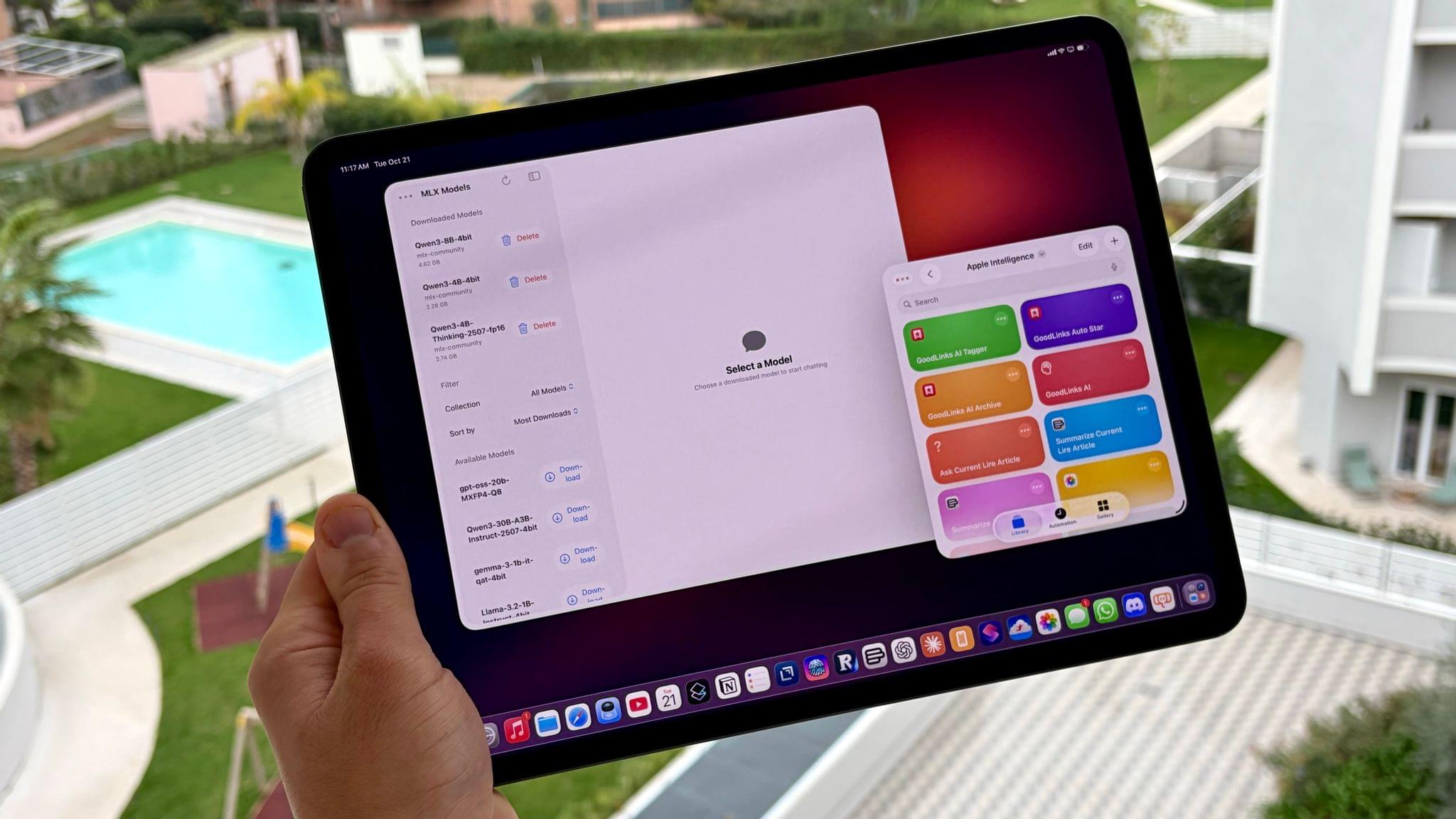
I Have Many Questions About Apple’s Updated Foundation Models and the (Great) ‘Use Model’ Action in Shortcuts

Apple's 'Use Model' action in Shortcuts.

Apple’s ‘Use Model’ action in Shortcuts.

I mentioned this on AppStories during the week of WWDC: I think Apple’s new ‘Use Model’ action in Shortcuts for iOS/iPadOS/macOS 26, which lets you prompt either the local or cloud-based Apple Foundation models, is Apple Intelligence’s best and most exciting new feature for power users this year. This blog post is a way for me to better explain why as well as publicly investigate some aspects of the updated Foundation models that I don’t fully understand yet.

Read more


Hands-On: How Apple’s New Speech APIs Outpace Whisper for Lightning-Fast Transcription

Late last Tuesday night, after watching F1: The Movie at the Steve Jobs Theater, I was driving back from dropping Federico off at his hotel when I got a text:

Can you pick me up?

It was from my son Finn, who had spent the evening nearby and was stalking me in Find My. Of course, I swung by and picked him up, and we headed back to our hotel in Cupertino.

On the way, Finn filled me in on a new class in Apple’s Speech framework called SpeechAnalyzer and its SpeechTranscriber module. Both the class and module are part of Apple’s OS betas that were released to developers last week at WWDC. My ears perked up immediately when he told me that he’d tested SpeechAnalyzer and SpeechTranscriber and was impressed with how fast and accurate they were.

It’s still early days for these technologies, but I’m here to tell you that their speed alone is a game changer for anyone who uses voice transcription to create text from lectures, podcasts, YouTube videos, and more. That’s something I do multiple times every week for AppStories, NPC, and Unwind, generating transcripts that I upload to YouTube because the site’s built-in transcription isn’t very good.

What’s frustrated me with other tools is how slow they are. Most are built on Whisper, OpenAI’s open source speech-to-text model, which was released in 2022. It’s cheap at under a penny per one million tokens, but isn’t fast, which is frustrating when you’re in the final steps of a YouTube workflow.

An SRT file generated by Yap.

An SRT file generated by Yap.

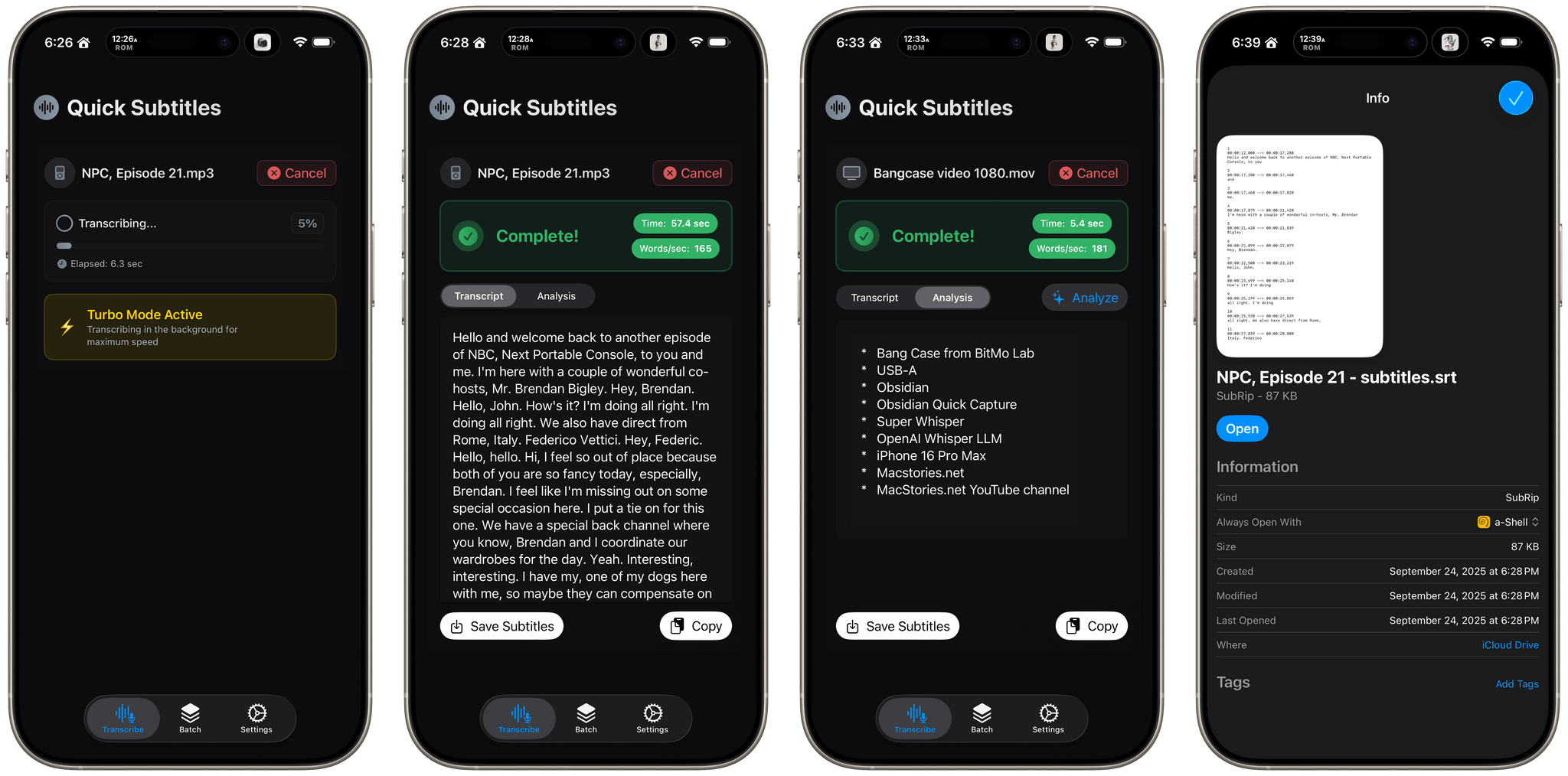
I asked Finn what it would take to build a command line tool to transcribe video and audio files with SpeechAnalyzer and SpeechTranscriber. He figured it would only take about 10 minutes, and he wasn’t far off. In the end, it took me longer to get around to installing macOS Tahoe after WWDC than it took Finn to build Yap, a simple command line utility that takes audio and video files as input and outputs SRT- and TXT-formatted transcripts.

Yesterday, I finally took the Tahoe plunge and immediately installed Yap. I grabbed the 7GB 4K video version of AppStories episode 441, which is about 34 minutes long, and ran it through Yap. It took just 45 seconds to generate an SRT file. Here’s Yap ripping through nearly 20% of an episode of NPC in 10 seconds:

Replay

Next, I ran the same file through VidCap and MacWhisper, using its V2 Large and V3 Turbo models. Here’s how each app and model did:

App Transcripiton Time
Yap 0:45
MacWhisper (Large V3 Turbo) 1:41
VidCap 1:55
MacWhisper (Large V2) 3:55

All three transcription workflows had similar trouble with last names and words like “AppStories,” which LLMs tend to separate into two words instead of camel casing. That’s easily fixed by running a set of find and replace rules, although I’d love to feed those corrections back into the model itself for future transcriptions.

Once transcribed, a video can be used to generate additional formats like outlines.

Once transcribed, a video can be used to generate additional formats like outlines.

What stood out above all else was Yap’s speed. By harnessing SpeechAnalyzer and SpeechTranscriber on-device, the command line tool tore through the 7GB video file a full 2.2× faster than MacWhisper’s Large V3 Turbo model, with no noticeable difference in transcription quality.

At first blush, the difference between 0:45 and 1:41 may seem insignificant, and it arguably is, but those are the results for just one 34-minute video. Extrapolate that to running Yap against the hours of Apple Developer videos released on YouTube with the help of yt-dlp, and suddenly, you’re talking about a significant amount of time. Like all automation, picking up a 2.2× speed gain one video or audio clip at a time, multiple times each week, adds up quickly.

Whether you’re producing video for YouTube and need subtitles, generating transcripts to summarize lectures at school, or doing something else, SpeechAnalyzer and SpeechTranscriber – available across the iPhone, iPad, Mac, and Vision Pro – mark a significant leap forward in transcription speed without compromising on quality. I fully expect this combination to replace Whisper as the default transcription model for transcription apps on Apple platforms.

To test Apple’s new model, install the macOS Tahoe beta, which currently requires an Apple developer account, and then install Yap from its GitHub page.


Testing DeepSeek R1-0528 on the M3 Ultra Mac Studio and Installing Local GGUF Models with Ollama on macOS

DeepSeek released an updated version of their popular R1 reasoning model (version 0528) with – according to the company – increased benchmark performance, reduced hallucinations, and native support for function calling and JSON output. Early tests from Artificial Analysis report a nice bump in performance, putting it behind OpenAI’s o3 and o4-mini-high in their Intelligence Index benchmarks. The model is available in the official DeepSeek API, and open weights have been distributed on Hugging Face. I downloaded different quantized versions of the full model on my M3 Ultra Mac Studio, and here are some notes on how it went.

Read more


From the Creators of Shortcuts, Sky Extends AI Integration and Automation to Your Entire Mac

Sky for Mac.

Sky for Mac.

Over the course of my career, I’ve had three distinct moments in which I saw a brand-new app and immediately felt it was going to change how I used my computer – and they were all about empowering people to do more with their devices.

I had that feeling the first time I tried Editorial, the scriptable Markdown text editor by Ole Zorn. I knew right away when two young developers told me about their automation app, Workflow, in 2014. And I couldn’t believe it when Apple showed that not only had they acquired Workflow, but they were going to integrate the renamed Shortcuts app system-wide on iOS and iPadOS.

Notably, the same two people – Ari Weinstein and Conrad Kramer – were involved with two of those three moments, first with Workflow, then with Shortcuts. And a couple of weeks ago, I found out that they were going to define my fourth moment, along with their co-founder Kim Beverett at Software Applications Incorporated, with the new app they’ve been working on in secret since 2023 and officially announced today.

For the past two weeks, I’ve been able to use Sky, the new app from the people behind Shortcuts who left Apple two years ago. As soon as I saw a demo, I felt the same way I did about Editorial, Workflow, and Shortcuts: I knew Sky was going to fundamentally change how I think about my macOS workflow and the role of automation in my everyday tasks.

Only this time, because of AI and LLMs, Sky is more intuitive than all those apps and requires a different approach, as I will explain in this exclusive preview story ahead of a full review of the app later this year.

Read more


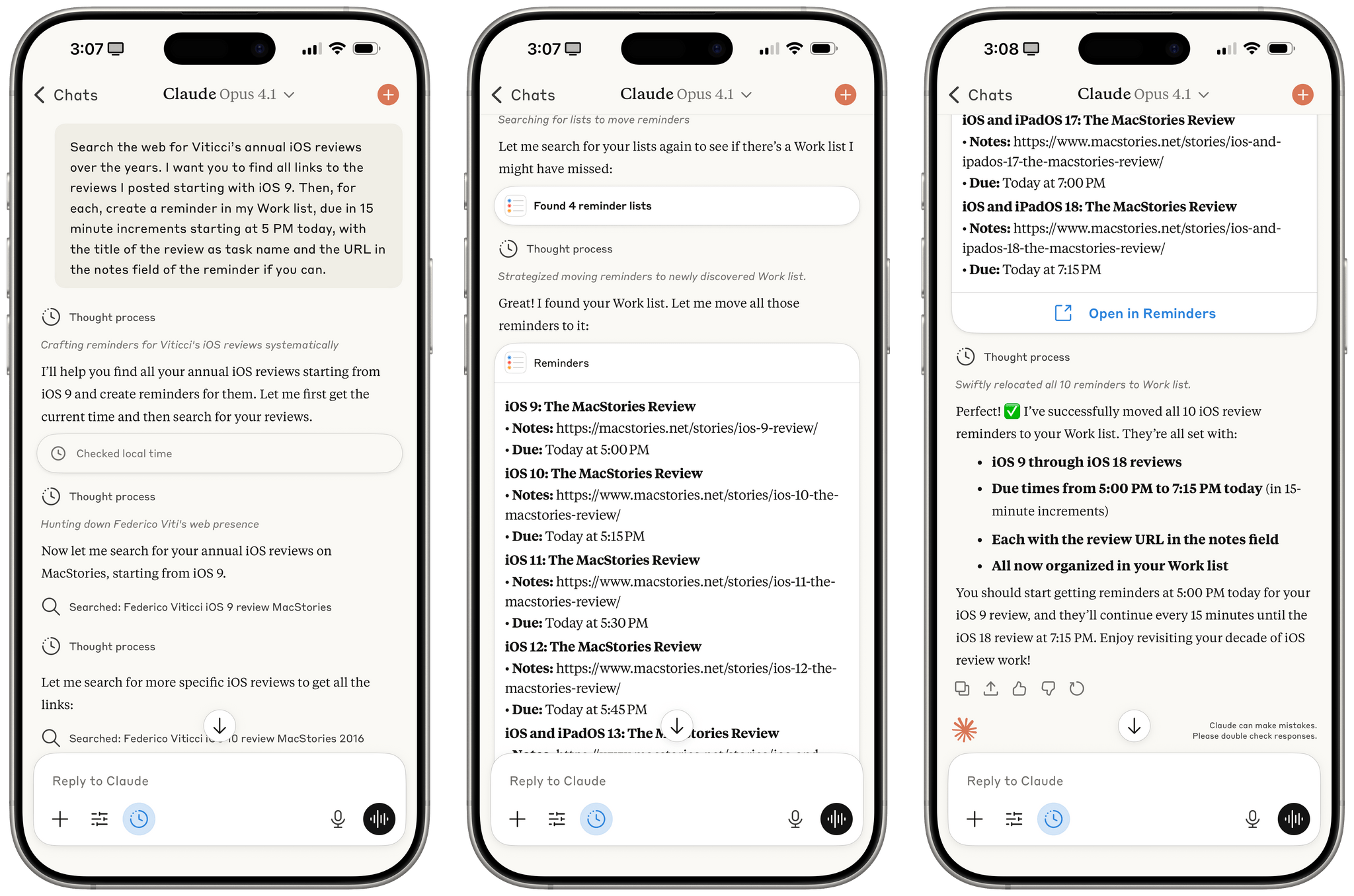
Early Impressions of Claude Opus 4 and Using Tools with Extended Thinking

Claude Opus 4 and extended thinking with tools.

Claude Opus 4 and extended thinking with tools.

For the past two days, I’ve been testing an early access version of Claude Opus 4, the latest model by Anthropic that was just announced today. You can read more about the model in the official blog post and find additional documentation here. What follows is a series of initial thoughts and notes based on the 48 hours I spent with Claude Opus 4, which I tested in both the Claude app and Claude Code.

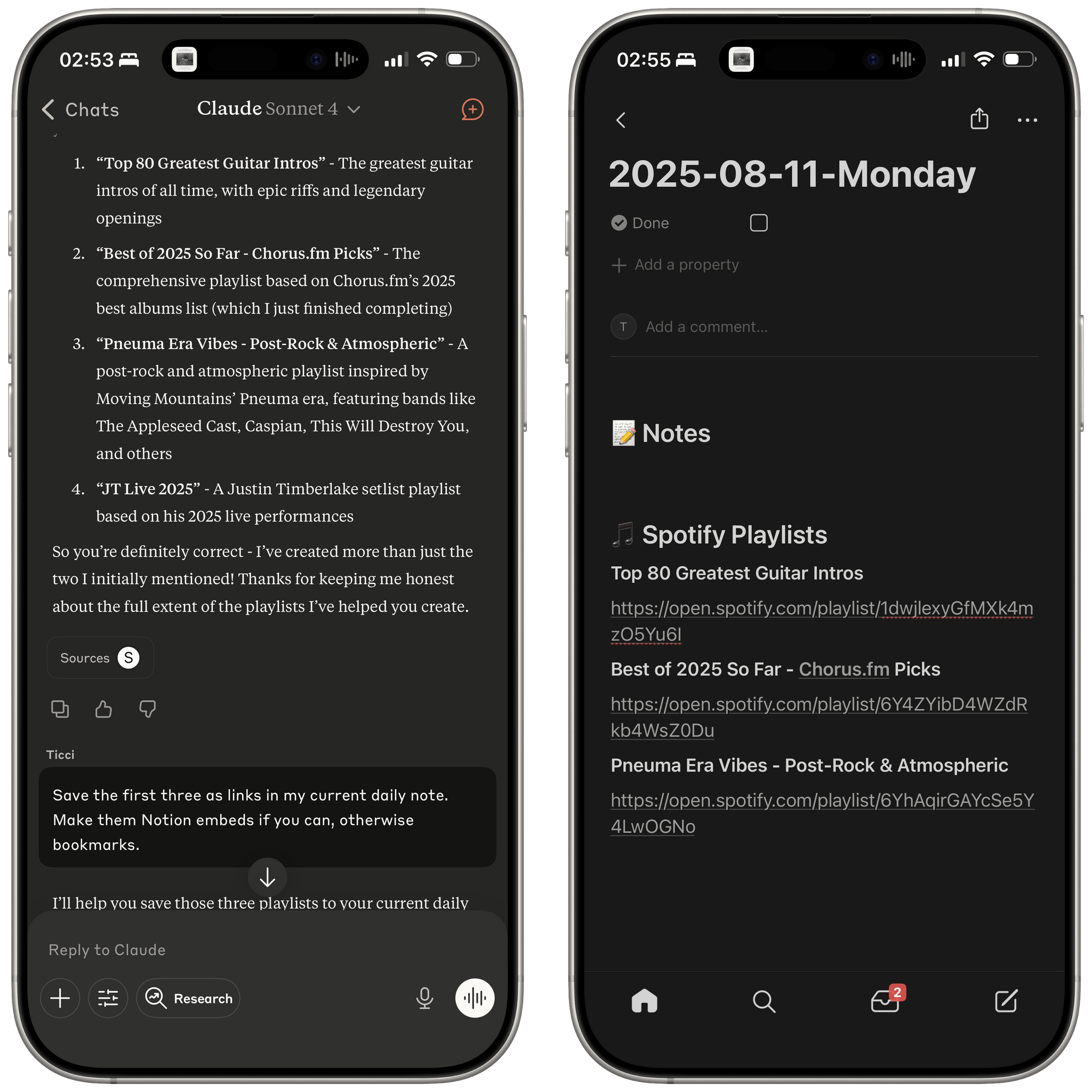
For starters, Anthropic describes Opus 4 as its most capable hybrid model with improvements in coding, writing, and reasoning. I don’t use AI for creative writing, but I have dabbled with “vibe coding” for a collection of personal Obsidian plugins (created and managed with Claude Code, following these tips by Harper Reed), and I’m especially interested in Claude’s integrations with Google Workspace and MCP servers. (My favorite solution for MCP at the moment is Zapier, which I’ve been using for a long time for web automations.) So I decided to focus my tests on reasoning with integrations and some light experiments with the upgraded Claude Code in the macOS Terminal.

Read more