Posts tagged with "iOS"

Apple Releases iOS 4.2.2 for Apple TV 2G

A few minutes ago Apple pushed a minor software update for the Apple TV 2nd generation. The firmware file, available for download here, is labelled 4.2.2 (build 8F305), but we’re pretty sure it’ll follow another nomenclature in the internal Apple TV settings or Apple’s website, as with previous releases. iOS 4.2.1 for the second generation Apple TV was released on March 22 with various fixes including TV compatibility and audio improvements.

Apple’s official Downloads webpage hasn’t been updated with a changelog yet, so we’ll update this post as more information about the update becomes available. [via]

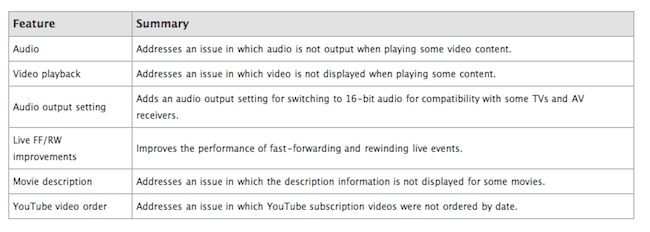
Update: Here’s the full changelog for 4.2.2. As expected it contains various bug fixes and stability improvements.


Apple’s In-App Purchase Policy Forces iFlowReader to Shut Down

BeamItDown Software, developers of iFlowReader, today announced that they will be forced to cease their operations at the end of this month. The move comes after Apple decided to enforce rule 11.13 of the ‘App Store Review Guidelines for iOS Apps’ – with Apple set to begin removing apps that do not conform to this rule by June 30. This means iFlowReader, which sold eBooks through an online store, would have to offer the same books within the app through In App Purchases – consequently meaning Apple gets its 30% cut of every sale made through the app.

In a statement on its website, BeamItDown Software makes it clear how if they went ahead and followed Apple’s guidelines, they would have to take a loss on every e-book sold – clearly not a sustainable business model. They explain that this occurs because the largest publishers (which account for more than 90% of the e-books they sell) have adopted an “agency model” in which means resellers, such as BeamItDown, receive a margin of less than 30% after paying the publisher. They say that the big publishers adopted this agency model after Apple negotiated with them over the iBooks deal. Prior to the agency model, resellers would typically receive a 50% discount on e-books.

The end result of BeamItDown Software and their iFlowReader, which had become quite a popular iOS e-reader with over six million downloads, is that it has, in essence, been shoved out of the iOS e-book market by the power Apple has over developers who rely on the iOS platform.

“We bet everything on Apple and iOS and then Apple killed us by changing the rules in the middle of the game.”

If you are a user of the app and its service, the short story is you will still be able to read your e-books, but you will have to jump through some hoops to ensure this. You will have until May 31st this year (the end of this month!) to do a few things related to back-up and downloading all your e-books from the site, which is shutting down. Jump to their statement for the details on this.

It was back in February when it was reported that Apple was tightening its hold on the iOS walled garden after it was revealed that Sony’s e-reader app was rejected for re-directing users to an online store for e-book purchases. Apple responded shortly after saying;

We have not changed our developer terms or guidelines,” Apple spokesperson, Trudy Muller, told The Loop. “We are now requiring that if an app offers customers the ability to purchase books outside of the app, that the same option is also available to customers from within the app with in-app purchase.

The impending shutdown of BeamItDown does raise the question over whether Apple is using monopolistic behavior to force out other e-book services. In their statement they highlight that with one swift change in policy application, Apple will be able to sell e-books at a cheaper rate than every other service on iOS and likely force a number of services, like iFlow Reader to completely shut down because they cannot afford that 30% cut.

What sounds like a reasonable demand when packaged by Apple’s extraordinary public relations department is essentially an eviction notice to all e-book sellers on iOS…They want all e-book business on iOS and since they have the unilateral power to get it, we are out of business and the iFlow Reader is dead.

In the face of such questions, many will argue that Apple deserves to have complete control over its own App ecosystem, and that Android and the Kindle offer strong competition to Apple and iBooks. However, at least in my mind, I get the sense that Apple, with it’s large user base, may have unfairly forced this company out of the e-book market to advance the use of iBooks.

Section 11.13 of App Store Review Guidelines for iOS Apps

Apps can read or play approved content (magazines, newspapers, books, audio, music, video) that is sold outside of the app, for which Apple will not receive any portion of the revenues, provided that the same content is also offered in the app using IAP at the same price or less than it is offered outside the app. This applies to both purchased content and subscriptions.



Ballmer Confirms Skype’s Commitment to Other Platforms

Ballmer Confirms Skype’s Commitment to Other Platforms

We will continue to invest in Skype on non-Microsoft client platforms,” said Ballmer during a news conference announcing the company’s plan to buy chat and Internet phone software maker Skype for $8.5 billion.

Following this morning’s big announcement of Microsoft buying online communication giant Skype for $8.5 billion, Mac and iOS users immediately questioned the acquisition as a way for Microsoft to turn Skype into an exclusive service for Windows Live-connected devices and other Microsoft products such as the Xbox. Steve Ballmer, however, was quick to reassure everyone that Skype will continue working on the Mac, iOS and all the other platforms it currently runs on (including RIM’s BlackBerry and Symbian), also citing how the company has a “track record” when it comes to these matters – Microsoft has a full version of Office 2011 available for Macs, and many apps for iPhones and iPads.

The question, however, is whether Skype will ever release a native iPad app as promised last year, and if the new owner will also bring some welcome interface changes to the Mac app. It would interesting to see Microsoft making a better UI for Skype, just as I’d be curious to see Ballmer heavily touting his recently bought software toy on iPhones and iPad. Time, as usual, will tell.

Permalink

Apple Patents Detail Web Clip Widgets for iOS, iPad with Extra Connector

According to a series of new patent designs published by Patently Apple, Apple has been experimenting with interesting concepts to let users create web clip widgets on iOS, and have an extra connectivity port on the iPad while in landscape mode.

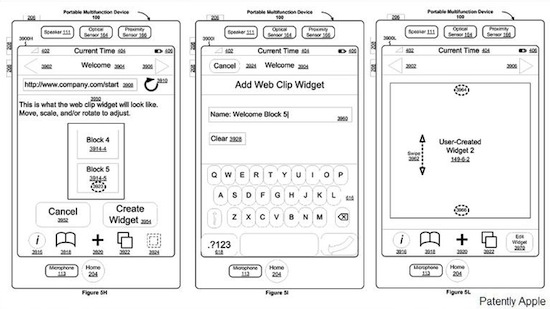
Web clip widgets were first introduced at the WWDC 2006, and through OS X Dashboard integration they allowed users to grab a portion of a webpage, save it as a widget in the Dashboard, and receive live updates when the original webpage changed. The feature came quite in handy for saving weather-related websites, e-commerce pages or blogs, but didn’t work really well with webpages that required a login system. However, it’s still a cool tech that enables users to visually select elements from a webpage to save locally on their Dashboards. Apple has been playing around with the idea of doing the same with iOS’ Safari, apparently, although neither the iPhone or iPad have support for homescreen widgets or Dashboard. The awarded patent design details the process of creating a web clip widget in Safari, with the possibility to “move, scale and/or rotate” content to adjust it to your needs. The menu appears to pop in as an overlay to the current webpage in Safari, but the patent doesn’t explain how a web clip would later be accessible from the Springboard. Current versions of iOS let users bookmark a website to the homescreen, but that’s still visualized as an icon – not a clip preview. Perhaps we’ll know more with iOS 5 at the upcoming WWDC.

The iPad-related patent is not new to the rumor mill, but it seems to confirm the original iPad was being tested in a version that featured an extra connector while in landscape mode.

Apple has been granted a design patent for what appears to be the original iPad Wi-Fi + 3G model that just happened to have a landscape USB slot as is clearly noted below in patent figures 1 and 6. It’s unknown at this time as to why Apple decided to scrap the secondary Landscape USB slot – when consumers clearly wanted such an option.

Apple credits Steve Jobs and Jonathan Ive (alongside other team members) for the invention. Both the original iPad and the iPad 2 come with a single connector below the device’s Home button, but it was rumored before Apple was planning on adding a second port for better landscape usage.


Rdio Launches API for Mobile Devices

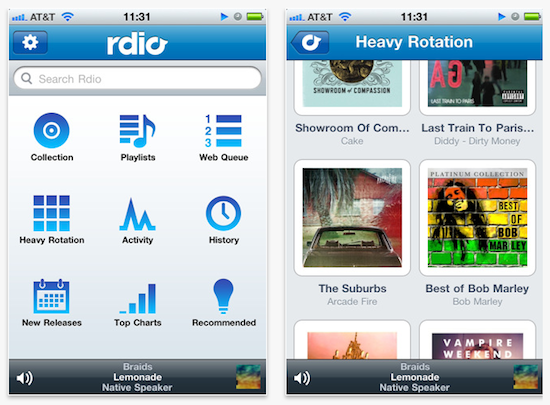
Music streaming service Rdio, quite popular in the US and Canada but currently unavailable due to regional restrictions in the rest of the world, announced yesterday the release of an API for iOS and Android devices that will allow developers to build apps that are integrated with Rdio’s music and social functionalities. The API – documentation available here and here – will let third-party devs build apps that search “all the artists, songs, albums, playlists, and top charts in Rdio’s catalog of over 8.5 million songs.” On top of that, the API will also bring playlist creation and editing outside of the official Rdio app, as well as the possibility to show a user’s Heavy Rotation, collections or follow other people. For a first release, it sounds like a solid API for iOS and Android.

Attending Google I/O 2011? Take a closer look at our Mobile API on Android devices at Rdio’s Developer Sandbox at Moscone Center in San Francisco. If you won’t be there or want to see the API in action yourself, download the Rdio Music Quiz from the iPhone App store.

While our Mobile API doesn’t yet support our affiliate program, it will soon. So make sure to sign up for it now and start building that incredible mobile app you always wanted to make.

The current API and service terms won’t let developers create paid apps that directly plug into Rdio. Still, with Spotify struggling to launch in the US and an impressive userbase and app selection after a few months, Rdio has the chance to maintain a healthy ecosystem for music streaming apps in the US, and take it from there to Europe. Rdio has big plans for sure, and it’ll be interesting to follow its developments in the next months, especially after Apple will unveil its rumored cloud music service with full labels’ support.


Duke Nukem Forever Also Coming To iOS?

As noted by TouchArcade, popular yet never released console and PC game Duke Nukem Forever might be coming to iOS devices, too. Duke Nukem Forever is particularly interesting as a title as it’s become synonym of vaporware online: development started in 1997, but the game never actually came out (in spite of promotional material and screenshots being handed out to the press and fans) due to multiple delays from the original developers, 3D Realms. If you’ve been following Duke Nukem Forever’s history throughout the years, you know that the brand’s userbase came to the point where many lost any kind of hope in seeing the game officially out: that was until 2010, when game studio Gearbox revealed they had picked DNF off 3D Realms’ hands and were busy working on a full adaption and rewrite for current-gen consoles. They announced a release date for May 2010, but the game was delayed again. It should be finally coming out after 14 years on June 9, 2011, and it’s already available for pre-purchase on Steam.

Digging into the game’s manual, a TouchArcade reader found out the developers included “Apple App Store Additional License Terms” – a bunch of legalese that most gamers usually skip, but it’s intended to inform users about licensing terms, agreements, and so forth. This could mean a mobile version of Duke Nukem Forever is also in the works, which wouldn’t be surprise considering the App Store userbase nowadays and the fact that the Unreal Engine runs on iPhones and iPads. Gearbox hasn’t confirmed they’ll use the Unreal Engine in the game, but that’s a possibility if DNF is really being ported to iOS devices. As TouchArcade notes, the license terms might also refer to the Mac App Store, although Gearbox specifically stated there weren’t any announcements related to the Mac or Linux platforms – and the terms clearly mention the iPhone and iPod touch in regards to the software license.

After all these years, it’d be nice to see the Duke on the iPad.


Microsoft Azure Toolkit for iOS Now Available

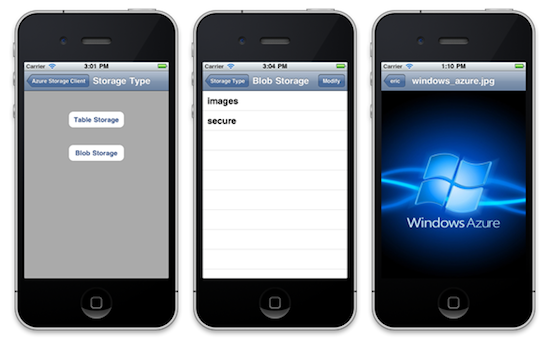
Following the release for Windows Phone 7 in March, Microsoft today announced the availability of the Azure toolkit for iOS, which can be downloaded now from GitHub. Similarly to Amazon Web Services, Microsoft’s Azure is a cloud platform hosted on the company’s servers that allows developers to build, host and scale web applications. Today’s iOS toolkit includes resources and services for developers to integrate Azure in their iPhone and iPad apps, including an Objective-C library to work with Azure services (such as storage and push notifications), documentation, a sample iOS app with full Azure storage integration, as well full source code for the aforementioned Objective-C library with Xcode project files. More details on Azure Toolkit for iOS can be found here.

Last March we released the Windows Azure Toolkit for Windows Phone 7, which provided a set of generic services for Windows Azure.  This toolkit was the first step in enabling developers to build native experiences on multiple platforms using Windows Azure.  As the next step in this process, today we’re pleased to announce the release of the Windows Azure Toolkit for iOS.  This toolkit contains resources and services designed to make it easier for iOS developers to use Windows Azure.

Downloads:

Microsoft has also release a Cloud Ready package to simply the process of setting up Azure services, and it has announced the release of an Android toolkit for next month. [via The Next Web]


Amazon Cloud Player Now Works with iOS Safari

Back in late March, Amazon launched Cloud Player for the web and Android devices, an online interface that, relying on music uploaded to your Amazon account via Cloud Drive, allowed you to stream music from the cloud via a web browser or the native Android application, built into the OS with direct connection to Amazon’s servers to fetch and stream songs on the go. The service, however, wasn’t working with iOS devices, and it wasn’t a Flash issue: somehow, the website itself didn’t want to cooperate with Mobile Safari on iPhones, iPod touches and iPads. We noted that there was a way to make it work by using an alternative browser like iCab Mobile and changing the app’s user agent, but it was convoluted and far from being a reliable alternative to playing music locally in the iPod app, or from third-party services like MOG and Spotify, which do have native iOS apps. The lack of iOS compatibility for Cloud Player left many wondering whether the company intentionally decided to block the service, betting exclusively on the Android platform – which is the foundation for Amazon’s new app marketplace.

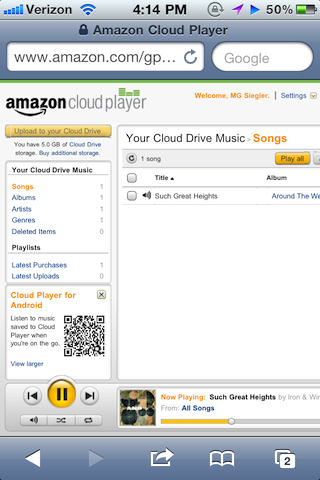
As noted by TechCrunch today, however, Cloud Player seems to be working in the iOS browser now. Songs stream just fine, and they even pause automatically during an incoming phone call or if a Push Notification is received. It’s unclear how Amazon exactly “unlocked” the feature and why it went online so quietly without any major announcement, but my guess is the Cloud Player team simply added a string to allow Mobile Safari to start a QuickTime streaming session within the browser.

You might think this had to due with Flash or another technology that iOS wasn’t compatible with, but it wasn’t. It looked like something else was simply blocking it from working. Well, good news. That’s no longer the case.

If you visit Amazon’s Cloud Player through the Safari web browser on an iOS device, you’ll see that it does in fact now work. You’ll first hit a warning page telling you that your browser is not supported, but just ignore that. Click into the music in your drive and it will begin playing.

MG Siegler notes the implementation is still far from perfect (uploading requires Flash, but you wouldn’t be able to upload files from iOS anyway) and the solution implies listening to music in a regular browser window. Still, it’s a start for Amazon, and it reignites speculation of a native Cloud Player app for iOS coming in the near future. The website, for now, is restricted to US access only.

Rumors in the past months pointed at Apple building a full-featured music streaming service based on iTunes, wrapped inside the upcoming iCloud infrastructure for Mac and iOS devices. There’s little doubt at this point Apple hasn’t at least considered the possibility of letting users upload their music collection or subscribe to an à la carte service for streaming songs off the cloud. With the WWDC roughly a month away, we should know more about Apple’s cloud plans and new music options soon.