


 Federico
This week, Federico explains his return to the Mac, including his hardware setup and the apps he’s using, and John recommends some apps he should try.
 Interesting Links
Developer and Club member Vidit Bhargava met Tim Cook yesterday during his trip to India and had the chance to demo his dictionary app LookUp for Cook. (Link) Allison Johnson published a great review of the iOS game Pocket City 2 for The Verge this week. (Link) Aqara’s millimeter wave presence sensors are one...
Breaking Up Shortcuts for Maximum Flexibility
During the 2021-22 holiday break, I went a little overboard with Obsidian and Shortcuts in an attempt to automate every aspect of the documents I create each week. I dove into the Obsidian Dataview plugin and created templates triggered by shortcuts in an attempt to generate shells of the dozen or so documents I create...
App Debuts
Music Timer Music Timer combines music and a Pomodoro timer into one app on your Mac. The menu bar app works with both Apple Music and Spotify and lets you customize the length of your timers. Press start, and your music starts alongside your timer, which is a nice way to dive into a...
Automation April, a Shortcuts Workshop, and an Email Poll
Here are the highlights from the Club MacStories Discord this week: The Automation April channel continued to be incredibly active this week as members shared their creations for the Automation April Shortcuts Contest and swapped tips and tricks for building shortcuts. We held our second Automation April Shortcuts Workshop in Discord with Rosemary Orchard, which...
MacStories Unwind: How I Met Your Father, Pokémon Scarlet, and Rabbit Hole






This week on MacStories Unwind, Federico started watching How I Met Your Father, season 2, on Hulu, which in itself is a minor miracle from Italy, and picked up Pokémon Scarlet again, while I stumbled across Rabbit Hole, an action/thriller/conspiracy show on Paramount+ starring Keifer Sutherland.
Federico’s Picks:
- How I Met Your Father, Season 2
- Pokémon Scarlet
John’s Pick:
Automation April: Hyperduck Leverages the Power of URL Schemes to Control Your Mac from an iPhone or iPad
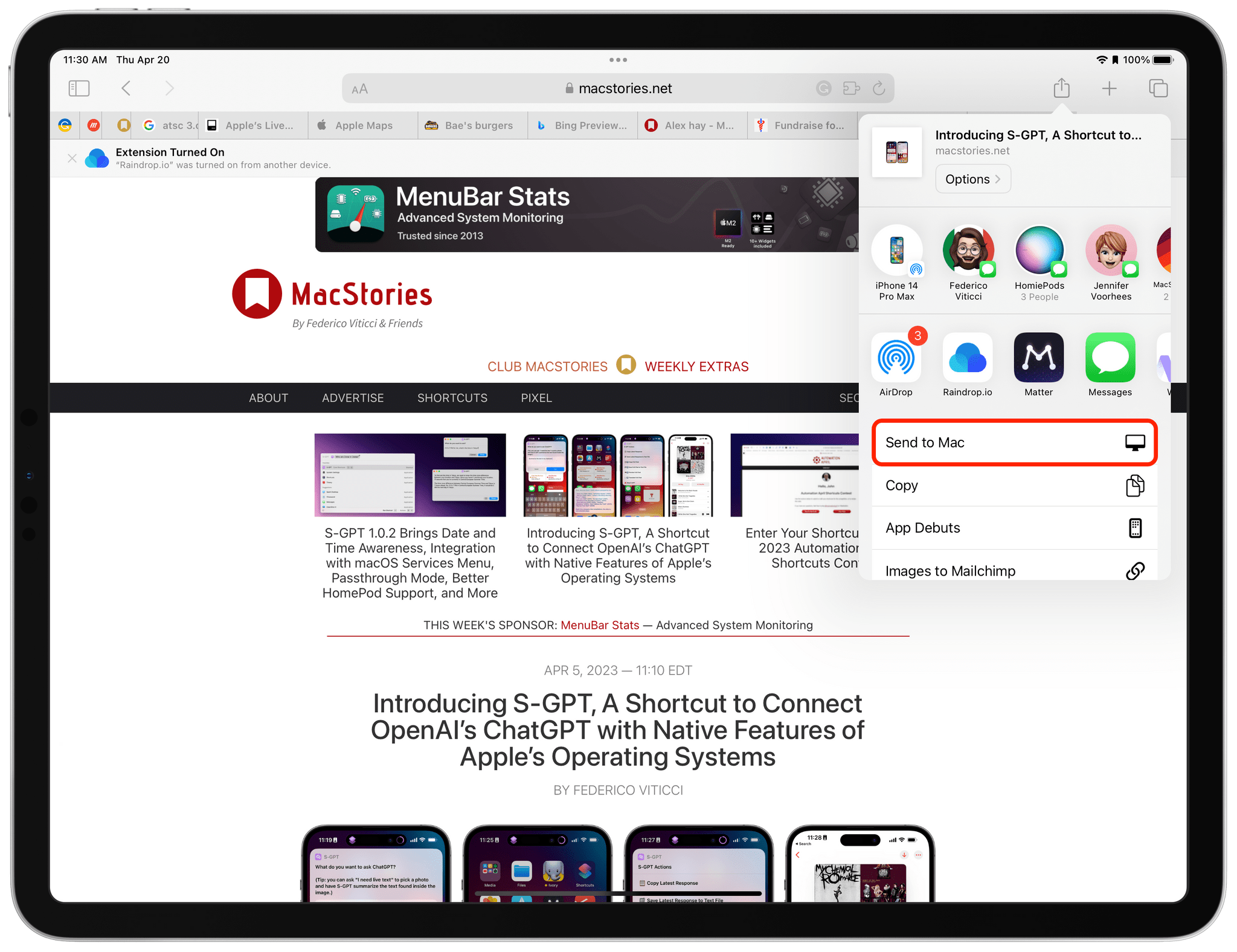
Hyperduck is a recent utility from Sindre Sorhus for sending URLs from an iPhone or iPad to your Mac that has some very interesting applications. Hyperduck hasn’t replaced my use of AirDrop, Handoff, and other Apple technologies that move data between devices, but it has extended those features in meaningful ways and has quickly worked its way into my everyday computing life.
Hyperduck does just one thing very well. It sends URLs from an iPhone or iPad to a Mac using iCloud. That’s different than how AirDrop works, which has some advantages.
AppStories, Episode 325 – Automation April: Third-Party Apps with Great Shortcuts Support→
This week on AppStories, we dig into third-party apps with excellent shortcuts support.
Sponsored by:
- Viso – Beautiful minimal image viewer for macOS.
](https://cdn.macstories.net/banneras-1629219199428.png)
On AppStories+, My Mac Studio is in the shop, so Federico and I are both using MacBook Airs.
We deliver AppStories+ to subscribers with bonus content, ad-free, and at a high bitrate early every week.
To learn more about the benefits included with an AppStories+ subscription, visit our Plans page, or read the AppStories+ FAQ.
Automation April: Mac Outliner Bike Adds Shortcuts Support
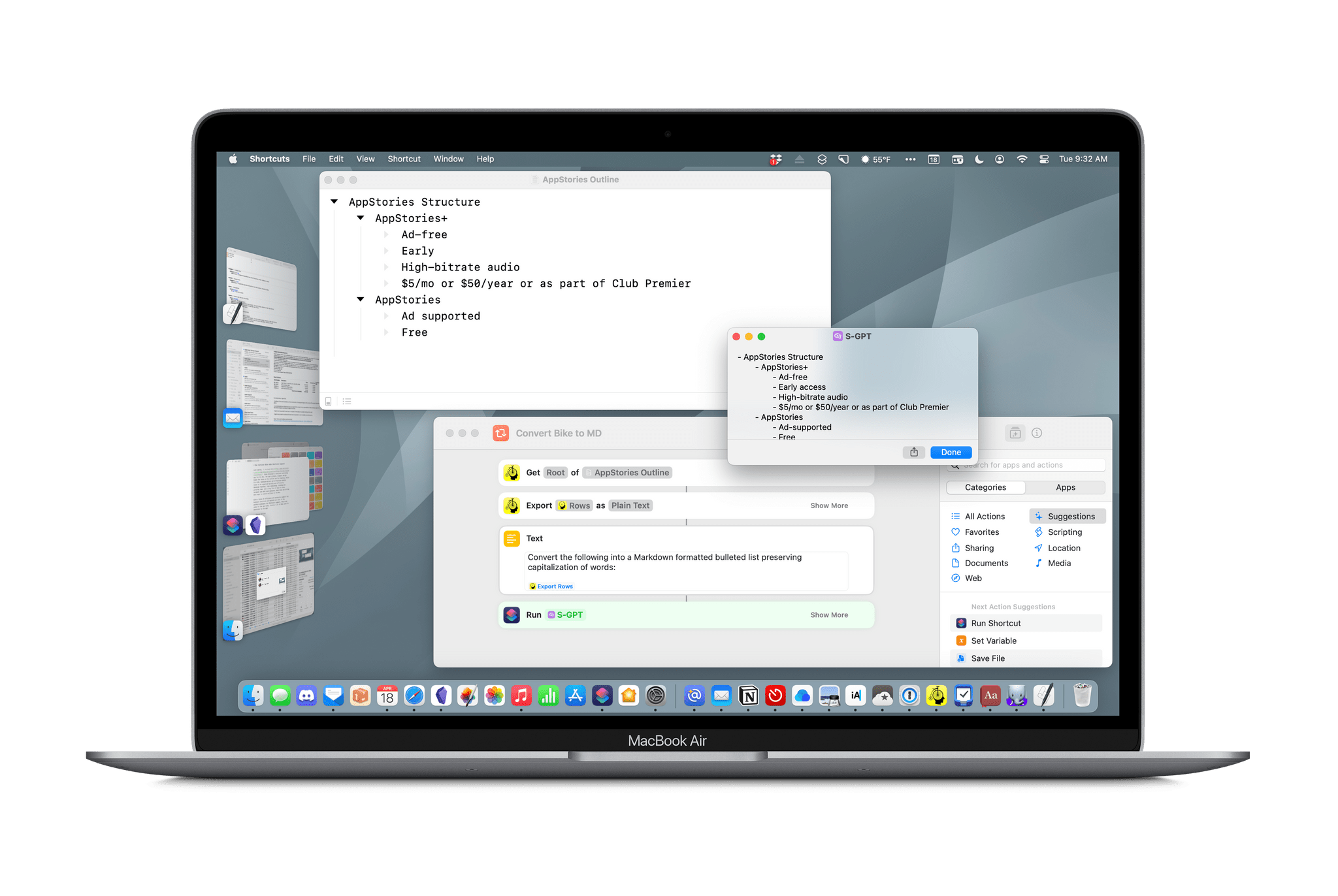
Last spring, I reviewed Bike, Jesse Grosjean of Hog Bay Software’s excellent outlining app for the Mac. The app’s simple, elegant design keeps the focus on the outline you’re creating, while its rich, keyboard-driven set of features enable ideas to be organized quickly and efficiently. Advanced features, like versioning, linking and grouping rows, and a long list of ways to view, navigate and edit your outlines, make Bike one of the best ways to create outlines on the Mac.
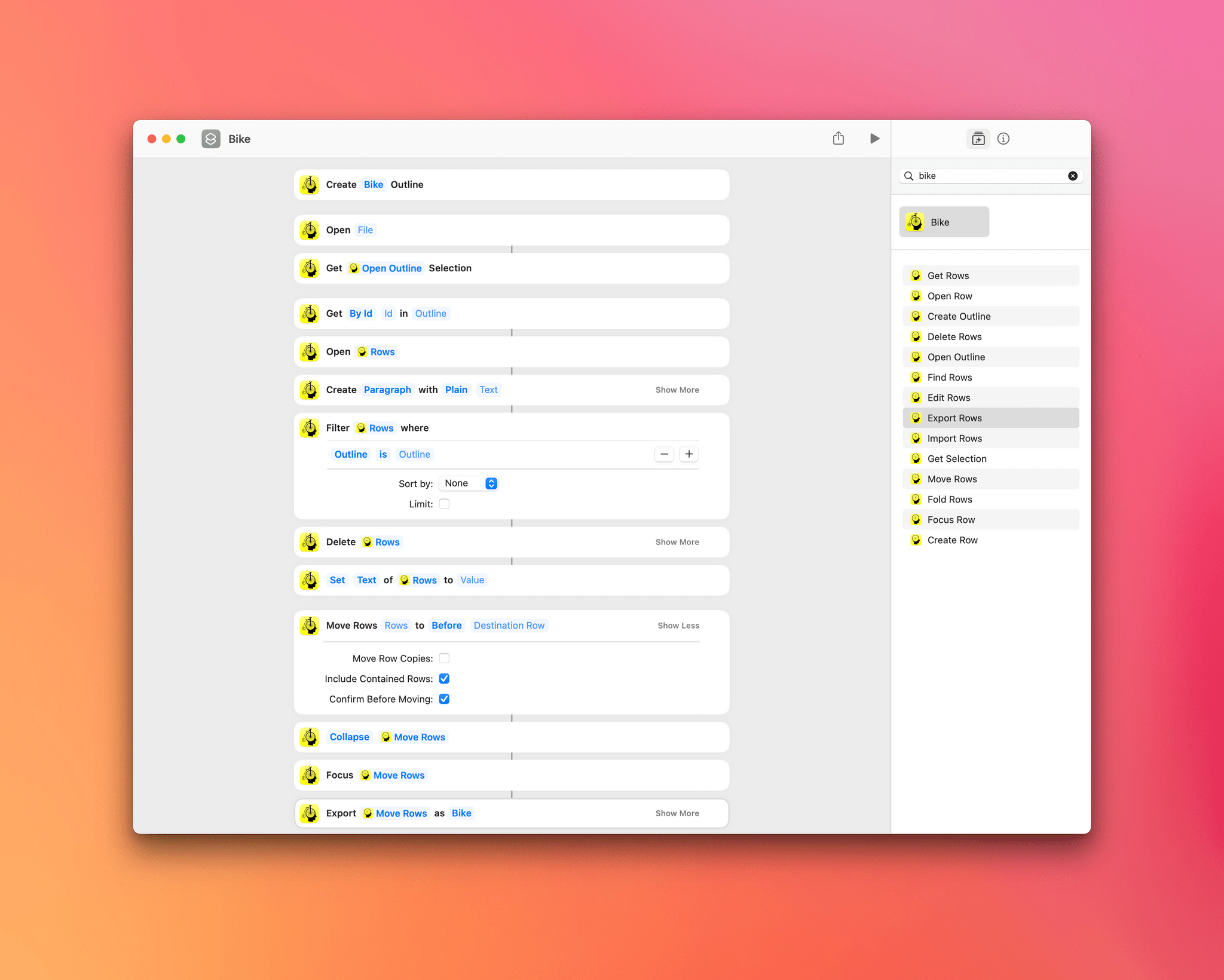
Bike’s focus on efficiency and extensive support for keyboard shortcuts and AppleScript make it the perfect candidate for Shortcuts support, which was added to the app today. Version 1.11 of Bike adds 14 Shortcuts actions to the app:
- Create Outline
- Open Outline
- Open Row
- Get Rows
- Fold Rows
- Focus Row
- Edit Rows
- Import Rows
- Export Rows
- Find Rows
- Create Row
- Delete Rows
- Move Rows
- Get Selection
The actions cover a lot of the functionality of Bike with a focus on outlines, text and row selections, and rows. Outlines can be created from scratch or existing ones opened, and Get Selection returns any selected text and its outline row.
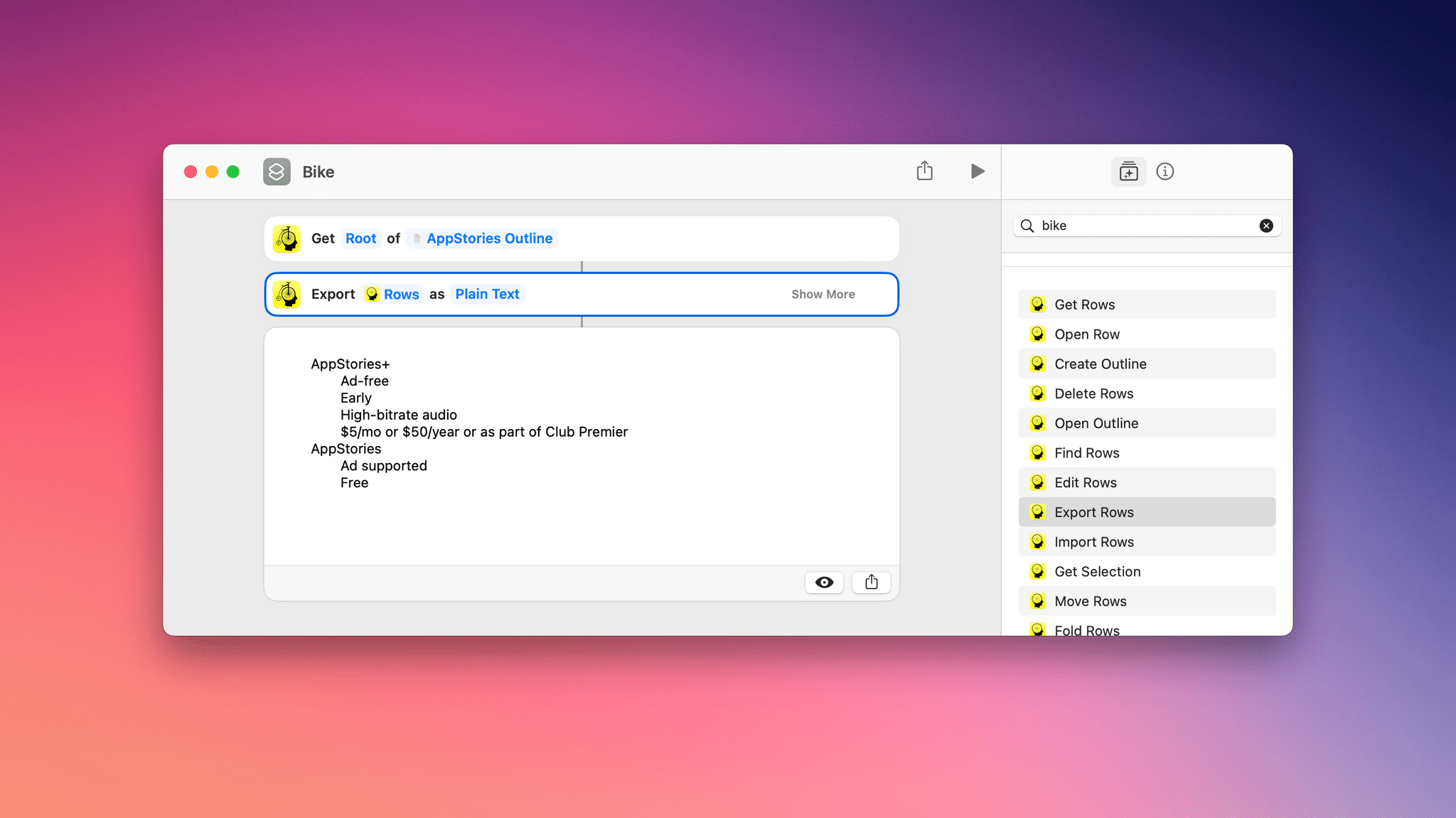
The remainder of Bike’s Shortcuts actions apply to rows, the building blocks of outlines. Rows can be opened in-app or retrieved in a variety of ways, such as by their root, row ID, focus, selection, ancestor rows, child rows, and descendant rows by using the Get Rows action. There’s also a Find Rows action that uses predicate filtering to allow rows matching multiple criteria to be located and sorted. Rows can be imported and exported in Bike, OPML, and plain text formats too.
Rows can also be created, edited, deleted, and moved within an outline with precision, thanks to a detailed set of action parameters. Actions for focusing on particular rows and folding and unfolding rows round out the available actions by allowing users to use Shortcuts to prepare their outline work environment automatically.
I’ve only just begun experimenting with Bike’s new Shortcuts integration, but it’s clear that thanks to extensive parameter and predicate filtering, the automation opportunities are extensive. Especially if you work with big outlines that require frequent, repetitive edits, Bike’s new Shortcuts integration could save you a lot of time.
Bike 1.11 is available on the App Store and directly from Hog Bay Software as a free download. Some features, including Shortcuts support, require a $2.99/month or $19.99/year subscription from the App Store or a one-time license purchase directly from Hog Bay Software, which comes with one year of updates.
You can also follow MacStories’ Automation April coverage through our dedicated hub, or subscribe to its RSS feed.