John Voorhees

5429 posts on MacStories since November 2015

John is MacStories' Managing Editor, has been writing about Apple and apps since joining the team in 2015, and today, runs the site alongside Federico. John also co-hosts four MacStories podcasts: AppStories, which covers the world of apps, MacStories Unwind, which explores the fun differences between American and Italian culture and recommends media to listeners, Ruminate, a show about the weird web and unusual snacks, and NPC: Next Portable Console, a show about the games we take with us.

2020 Apple Design Award Winners: The AppStories Interviews

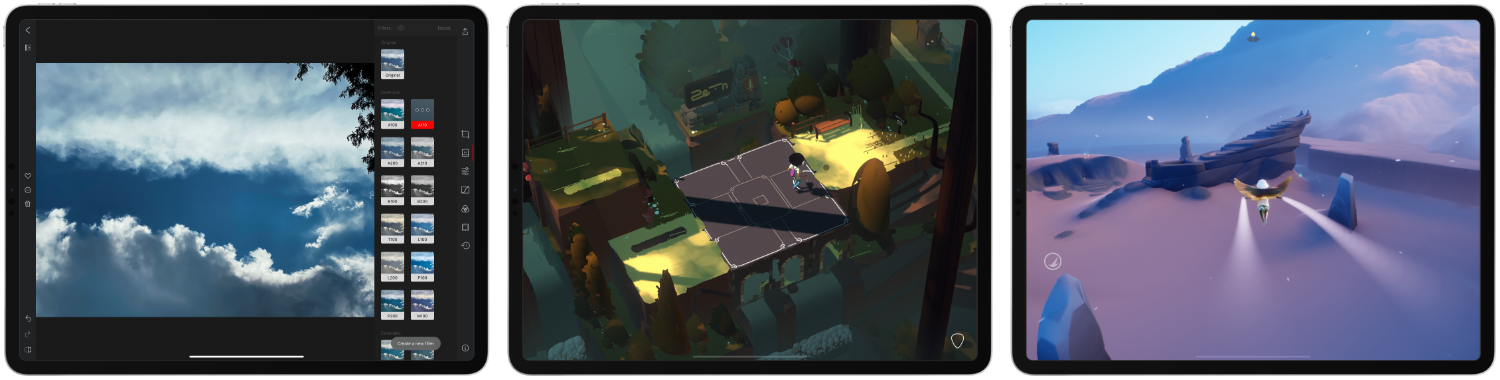
Federico and I had the pleasure of interviewing three of the 2020 Apple Design Award winners for AppStories. The awards, which were announced by Apple last Monday, recognize “outstanding app design, innovation, ingenuity, and technical achievement.”

For today’s special episode, we spoke with Majd Taby of Bergen Co., the creator of photo and video editing app Darkroom, Sam Rosenthal of The Game Band, the studio behind Where Cards Fall, which was a launch title on Apple Arcade, and Jenova Chen, of thatgamecompany and the creative director of Sky: Children of the Light, an innovative social adventure game. All three interviews are terrific conversations that reveal common threads of thoughtful design, innovative approaches that feature the latest Apple technology, and a deep understanding of their users.

Thank you to Majd Taby, Sam Rosenthal, and Jenova Chen for taking the time for the interviews, Apple for helping arrange them, and as always, thank you for listening to AppStories. We hope you enjoy the episode.


https://staging.macstories.net/podcasts/appstories/episodes/174/embed/

Permalink

MacStories Unwind: The ADAs, New Apple Watch Details, and Big Sur’s Redesign

AppStories+ Deeper into the world of apps
0:00
35:58

AppStories+ Deeper into the world of apps


Sponsored by Streaks Workout: Work out in your home with no equipment.

This week on MacStories Unwind:

MacStories

Club MacStories

  • MacStories Weekly
    • John shares a collection of small but interesting changes coming in macOS Big Sur
    • Federico shares an OmniFocus shortcut for iOS and iPadOS 14
    • Ryan considers Apple’s plans for gaming
    • We’ve got a reader straw poll about WWDC 2020
  • Monthly Log
    • John on the Big Sur redesign and whether it’s a sign of an imminent touchscreen Mac, part of a longer-term experiment, or something else
    • Stephen considers the design changes coming to the Mac with Big Sur
    • Ryan shares some of the apps he’s switching to while testing iOS and iPadOS 14

AppStories

Unwind Picks


Michael Flarup on Big Sur’s New Design

In the years since iOS 7 ushered in flat, minimalistic design, Michael Flarup has consistently pushed back, insisting that the trend had gone too far and there was still room for fun and expression in design. With the redesign of macOS 11 Big Sur, Apple surprised the design world by introducing a design that harmonizes macOS with the company’s other OSes, while providing room for expressiveness.

As Flarup explains:

Materials and dimensionality has made its way back into the interface —and every single app icon for every application and utility that Apple ships with macOS has been redesigned with depth, textures and lighting. This is a big deal. Probably bigger than what most people realise.

The post is a fantastic overview of where design stands on Apple’s platforms today and the influence that the company’s choices have on the design community. Whether intended or not, the unexpected design shift on macOS is one that Flarup expects to see radiate out to affect the design of iOS and iPadOS too:

With this approach Apple is legalising a visual design expressiveness that we haven’t seen from them in almost a decade. It’s like a ban has been lifted on fun. This will severely loosen the grip of minimalistic visual design and raise the bar for pixel pushers everywhere. Your glyph on a colored background is about to get some serious visual competition.

It’s interesting to consider where this new direction will lead. Big Sur’s iconography is part of a broad redesign on macOS that runs far deeper than the design changes made to iOS or iPadOS this year. Whether those platforms will follow the Mac’s lead in the future or take their own paths is something I expect to see debated a lot in the months to come. However it plays out, though, I’m glad to see the Mac retain character in its design as it heads into what promises to be a new era for the Mac.

Permalink


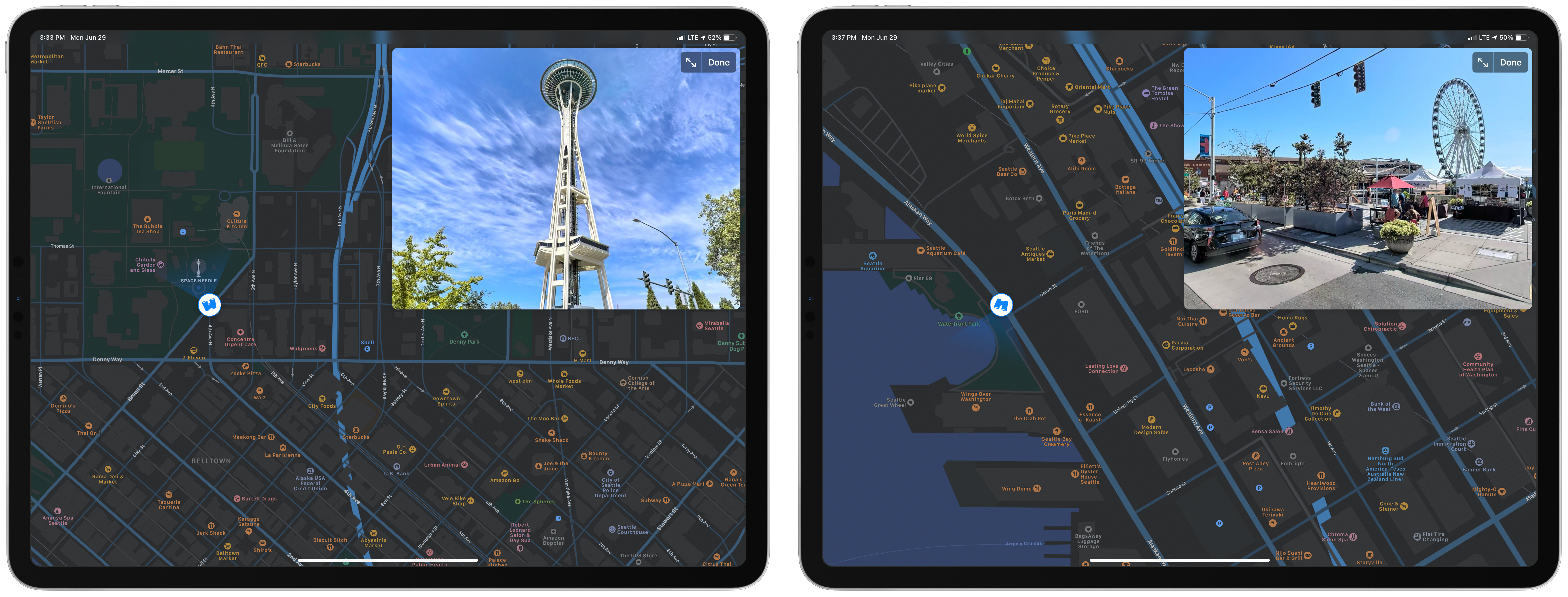
Apple Adds Look Around for Seattle, Washington in Maps

It was clear during WWDC that Apple is forging ahead with its Maps app at full-speed. Not only were several interesting refinements to the app and its underlying data announced during the conference keynote and sessions, but Apple continues to improve the functionality of its maps throughout the year, adding its Look Around feature to Seattle, Washington today.

Look Around was the marquee addition to Maps in iOS 13. The feature, which competes with Google Street View, provides a 3D representation of the world from a car’s vantage point. When you zoom far enough into an area that supports Look Around, an icon of a pair of binoculars appears in the top right-hand corner of the screen. Tapping it opens a separate overlay that you can pan around by swiping and move through by tapping along streets. The animations are smooth and the images high-resolution, making Look Around a terrific way to explore an unfamiliar area before visiting.

Seattle joins ten other US cities as the eleventh area to add the Look Around feature. The last city added was Chicago and parts of its suburbs, which were added in April.

At WWDC, Apple announced that Apple is updating its map data in Ireland, the UK, and Canada later this year. With the US map data updated, I’m glad to see Apple moving forward in other countries. I expect that before long, we’ll see other countries add the new map data too.

Also, I hope that the addition of Look Around in Seattle marks an acceleration of that feature. It’s a fantastic resource in the 11 major urban areas it covers. Still, I’d love to see Look Around expand to smaller cities and public spaces over time, making it useful to a broader cross-section of the world’s population.