

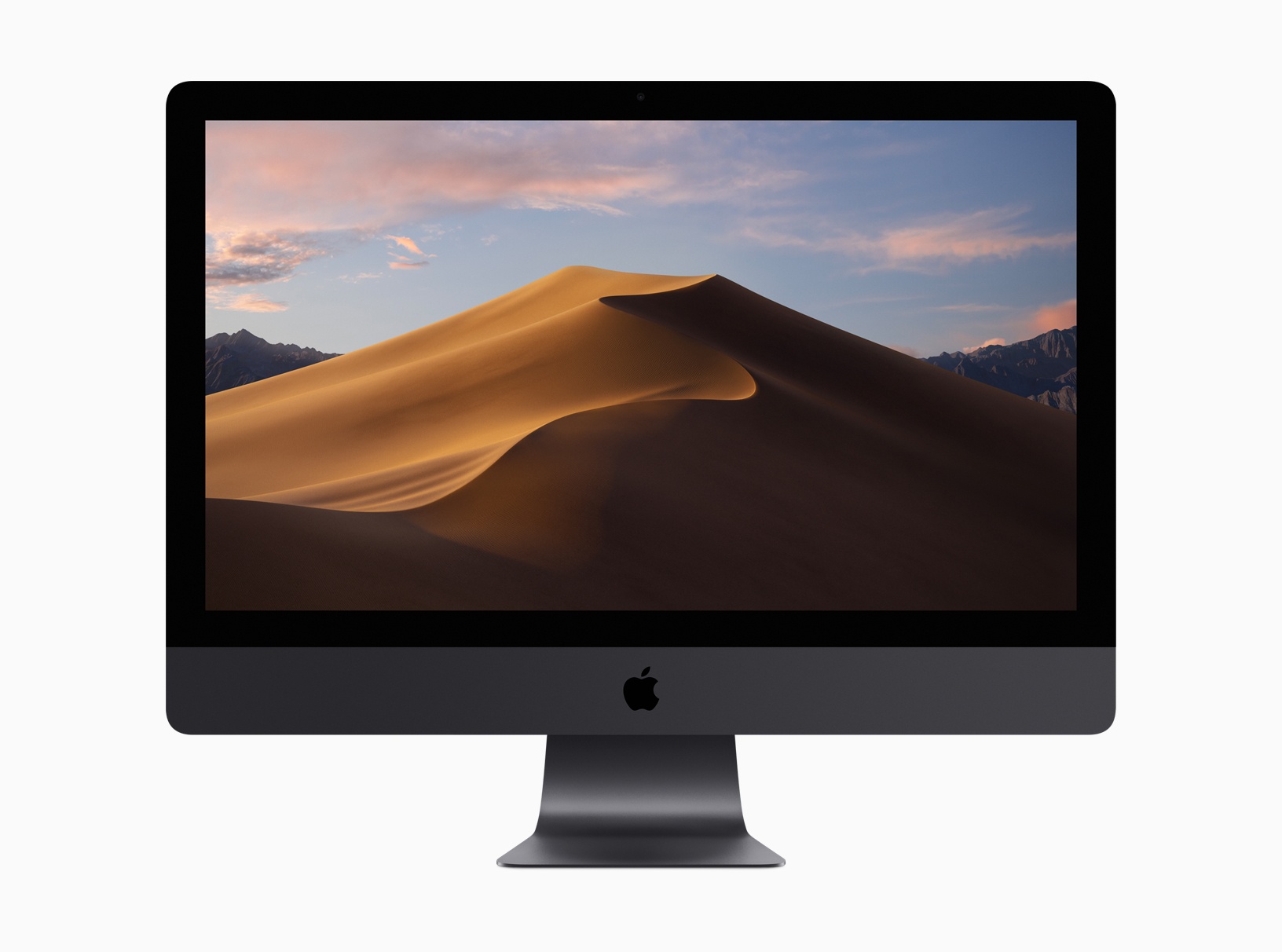
During its WWDC keynote presentation today, Apple took the wraps off macOS 10.14, also known as Mojave, which will be released this fall. One of the marquee features of the update is a completely redesigned Mac App Store, which we will cover in a separate article. In addition to a previously-leaked Dark Mode, the update will also include Finder, screenshot, and Desktop updates, the addition of several apps previously-available only on iOS, which Apple ported to the Mac using new frameworks under development for release in late 2019, and other new features.
 Imagining What iOS Could Do for Mac Apps
 Federico
How One Apple Programmer Got Apps Talking to Each Other→
With WWDC around the corner and speculation continuing about why Apple purchased Workflow a little over a year ago, Wired has published a profile of Sal Soghoian, who worked on Automator at Apple until 2016. The feature piece, also covers the development of x-callback-urls on iOS and the introduction Workflow, which was acquired by Apple in 2017.
Soghoian is a guy who’s built a long career creating technology that lets users hand the tedium of repetitive grunt work off to their computers in creative ways. In the early 2000s, he created a program that let Mac users turn clunky, multi-step tasks into something that could be run at any time with just a double click of the mouse. This process, and the field where Soghoian’s excels, is known as PC automation. Nearly a decade after the original Automator app arrived on the Mac, a group of hungry iOS developers were inspired to hard-code a way for apps to share information between each other. The creation, which built upon Soghian’s [sic] work, made iOS more elegant and useful.
Since leaving Apple, Soghoian’s automation work has continued at The Omni Group where he works on a JavaScript-based automation scheme for the company’s apps. Soghoian has also written about automation and created a conference on the topic.
Automation has a long history at Apple. However, in the 18 months or so since Soghoian left Apple and roughly one year since the company acquired Workflow, Apple has been relatively quiet about automation. One of my hopes for WWDC this year is that we start to see signs of why Apple acquired Workflow and its team of talented developers that include the incorporation of some of their automation work into iOS and macOS.
 Great Games for the Weekend (Vol. 1)
...
Q&A
...
App Debuts
...
Something More than Finder for iOS
...
Retrobatch from Flying Meat Brings Nodal Batch Processing of Images to the Mac
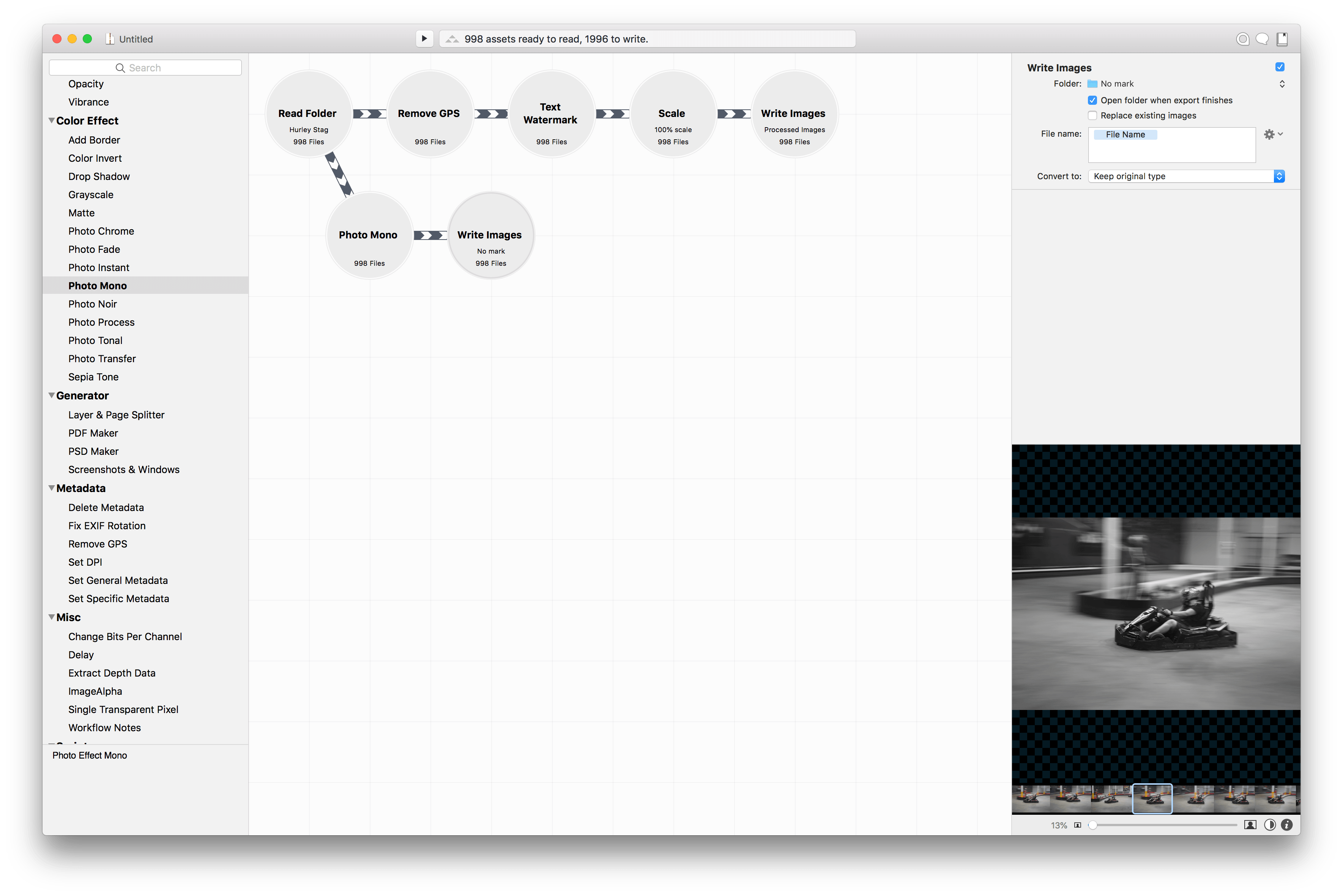
Retrobatch is a new batch photo processing app for the Mac from Flying Meat, the maker of Acorn. Batch processing of photos isn’t new. There are plenty of apps available that let you manipulate collections of photos. What’s different about Retrobatch is how it goes about processing images.
If you’ve ever used Audio Hijack from Rogue Amoeba, you’ll understand the power of Retrobatch immediately. The app is based on the idea of linking individual nodes together to create complex workflows. Point your new workflow at a batch of images, hit go, and Retrobatch goes about its work, delivering your processed photos to wherever you specify. The power is in abstracting complex actions into simple building blocks that can be strung together and branched as though you were building a flowchart.
That last point is the essential distinction between Retrobatch and other batch processors. Most image processors are linear, moving through a series of steps that outputs modified images. Retrobatch’s nodal structure allows you to start with a folder of images, perform actions on them, and then branch off to different actions at any point in the process.
AppStories, Episode 57 – Pick 2: Spark 2 and 1Password 7 for Mac→
On this week’s episode of AppStories, we go in-depth on two recently updated apps. In this installment of Pick 2, Federico covers Spark 2, which has added app integrations into the iOS version and team collaboration to the iOS and Mac versions while John covers 1Password 7 for the Mac, a significant redesign that expands the functionality and flexibility of features like Watchtower and Vaults.
Sponsored by:
- Lambda School - A revolutionary new school that invests in you. Take the free two-week iOS development course.
- Inoreader - The place to discover, organize, and monitor the web.
https://staging.macstories.net/podcasts/appstories/episodes/57/embed/