John Voorhees

5429 posts on MacStories since November 2015

John is MacStories' Managing Editor, has been writing about Apple and apps since joining the team in 2015, and today, runs the site alongside Federico. John also co-hosts four MacStories podcasts: AppStories, which covers the world of apps, MacStories Unwind, which explores the fun differences between American and Italian culture and recommends media to listeners, Ruminate, a show about the weird web and unusual snacks, and NPC: Next Portable Console, a show about the games we take with us.

Retro Videogame Streaming Service Antstream To Launch on the App Store Next Week

In the wake of the Digital Markets Act, Apple made a couple of worldwide changes to its App Review Guidelines, along with many EU-specific updates. One of the worldwide updates was to allow third-party game streaming services.

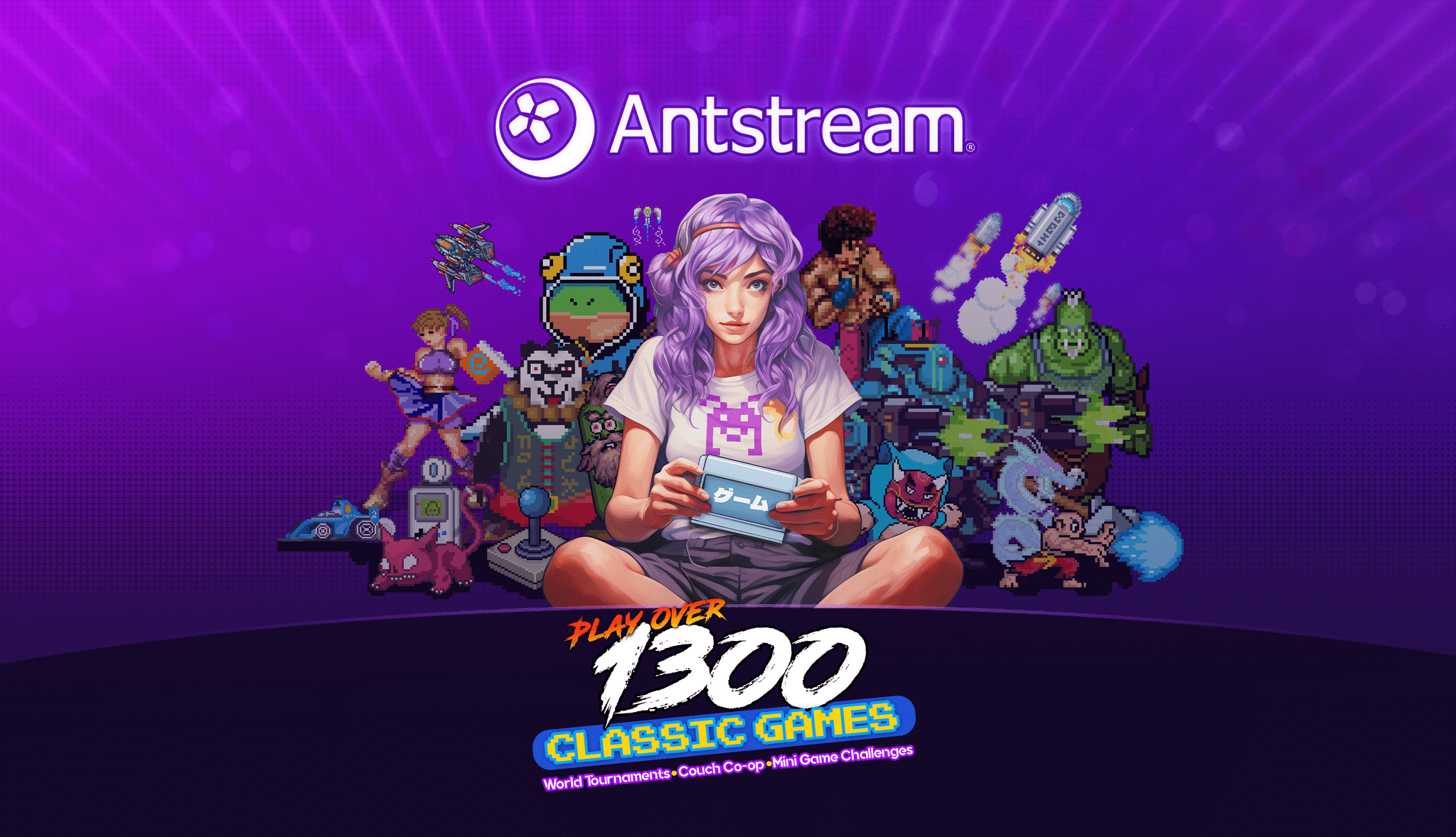
Today, Antstream became the first game streaming service to announce that it will launch an app on Apple’s App Store. Antstream is a retro game streaming service with a catalog of over 1,300 videogames. The service, which is available on multiple other platforms in the EU, US, and Brazil, will bring its licensed library of games to the iPhone and iPad next week on June 27th.

Antstream’s catalog covers a wide variety of retro systems, including the Atari 2600, Commodore 64, SNES, Megadrive, PlayStation One, and Arcade classics. Antstream Arcade normally costs $4.99 per month or $39.99 per year but will be available for $3.99 per month or $29.99 per year for a limited time when it launches on the App Store.

I haven’t used Antstream Arcade yet, but I’m looking forward to trying it to see what’s in the catalog and check out how it performs over Wi-Fi.


Apple Developer Academies in Six Countries to Add AI Courses This Fall

Today, Apple announced that this fall, the company will offer a new curriculum for its Developer Academy students focused on machine learning and artificial intelligence.

According to Apple:

Beginning this fall, every Apple Developer Academy student will benefit from custom-built curriculum that teaches them how to build, train, and deploy machine learning models across Apple devices. Courses will include the fundamentals of AI technologies and frameworks; Core ML and its ability to deliver fast performance on Apple devices; and guidance on how to build and train AI models from the ground up. Students will learn from guided curriculum and project-based assignments that include assistance from hundreds of mentors and more than 12,000 academy alumni worldwide.

The new curriculum will be offered at 18 academies in Brazil, Indonesia, Italy, Saudi Arabia, South Korea, and the United States. With the company’s emphasis on Apple Intelligence at WWDC, it’s not surprising that the skills needed to implement those new features are being added to its educational efforts.


How We’re Trying to Protect MacStories from AI Bots and Web Crawlers – And How You Can, Too

Over the past several days, we’ve made some changes at MacStories to address the ingestion of our work by web crawlers operated by artificial intelligence companies. We’ve learned a lot, so we thought we’d share what we’ve done in case anyone else would like to do something similar.

If you read MacStories regularly, or listen to our podcasts, you already know that Federico and I think that crawling the Open Web to train large language models is unethical. Industry-wide, AI companies have scraped the content of websites like ours, using it as the raw material for their chatbots and other commercial products without the consent or compensation of publishers and other creators.

Now that the horse is out of the barn, some of those companies are respecting publishers’ robots.txt files, while others seemingly aren’t. That doesn’t make up for the tens of thousands of articles and images that have already been scraped from MacStories. Nor is robots.txt a complete solution, so it’s just one of four approaches we’re taking to protect our work.

Read more


The Origin Story of Apple Podcasts’ Transcripts

Ari Saperstein, writing for The Guardian, interviewed Ben Cave, Apple’s global head of podcasts and Sarah Herrlinger, who manages accessibility policy for the company, about Apple Podcasts transcripts. The feature, which was introduced in March, automatically generates transcripts of podcast episodes in Apple’s catalog and has been a big accessibility win for podcast fans.

The origins of Apple’s transcription efforts began modestly:

Apple’s journey to podcast transcripts started with the expansion of a different feature: indexing. It’s a common origin story at a number of tech companies like Amazon and Yahoo – what begins as a search tool evolves into a full transcription initiative. Apple first deployed software that could identify specific words in a podcast back in 2018.

“What we did then is we offered a single line of the transcript to give users context on a result when they’re searching for something in particular,” Cave recalls. “There’s a few different things that we did in the intervening seven years, which all came together into this [transcript] feature.”

Drawing from technologies and designs used by Apple Music and Books, the feature has been lauded by the accessibility community:

“I was knocked out on how accurate it was,” says Larry Goldberg, a media and technology accessibility pioneer who created the first closed captioning system for movie theaters. The fidelity of auto-transcription is something that’s long been lacking, he adds. “It’s improved, it has gotten better … but there are times when it is so wrong.”

My experience with Podcasts’ transcripts tracks with the people interviewed for Saperstein’s story. Automatically generated transcription is hard. I’ve tried various services in the past, and I’ve never been happy enough with any of them to publish their output on MacStories. Apple’s solution isn’t perfect, but it’s easily the best I’ve seen, tipping into what I consider publishable territory. The feature makes it easy to search, select text, and generate time-stamped URLs for quoting snippets of an episode, which makes the app an excellent tool for researching and writing about podcasts, too.

Permalink

The Pizza Is the Model

AppStories+ Deeper into the world of apps

AppStories Episode 391 - The Pizza Is the Model

0:00
30:47

AppStories+ Deeper into the world of apps

This week, Federico and John recap WWDC week with more on their early testing of the iOS and iPadOS 18 betas and an in-depth conversation about why they are disappointed with Apple’s decision to train its large language models on the Open Web.

Read more


WWDC 2024: The AppStories Interviews with ADA and Swift Student Challenge Distinguished Winners

AppStories+ Deeper into the world of apps

AppStories Episode 390 - WWDC 2024: The AppStories Interviews with ADA and Swift Student Challenge Distinguished Winners

0:00
40:53

AppStories+ Deeper into the world of apps

Today, for a special episode of AppStories recorded at Apple Park, Federico and John interview ADA winners Devin Davies, the maker of Crouton, Katarina Lotrič and Jasna Krmelj from Gentler Streak, and James Cuda and Michael Shaw of Procreate, plus Adelaide Humez and Dezmond Blair, Distinguished Winners of Apple’s Swift Student Challenge.

Read more


WWDC 2024: The AppStories Interviews with ADA and Swift Student Challenge Distinguished Winners

Devin Davies, the developer of Crouton.

Devin Davies, the developer of Crouton.

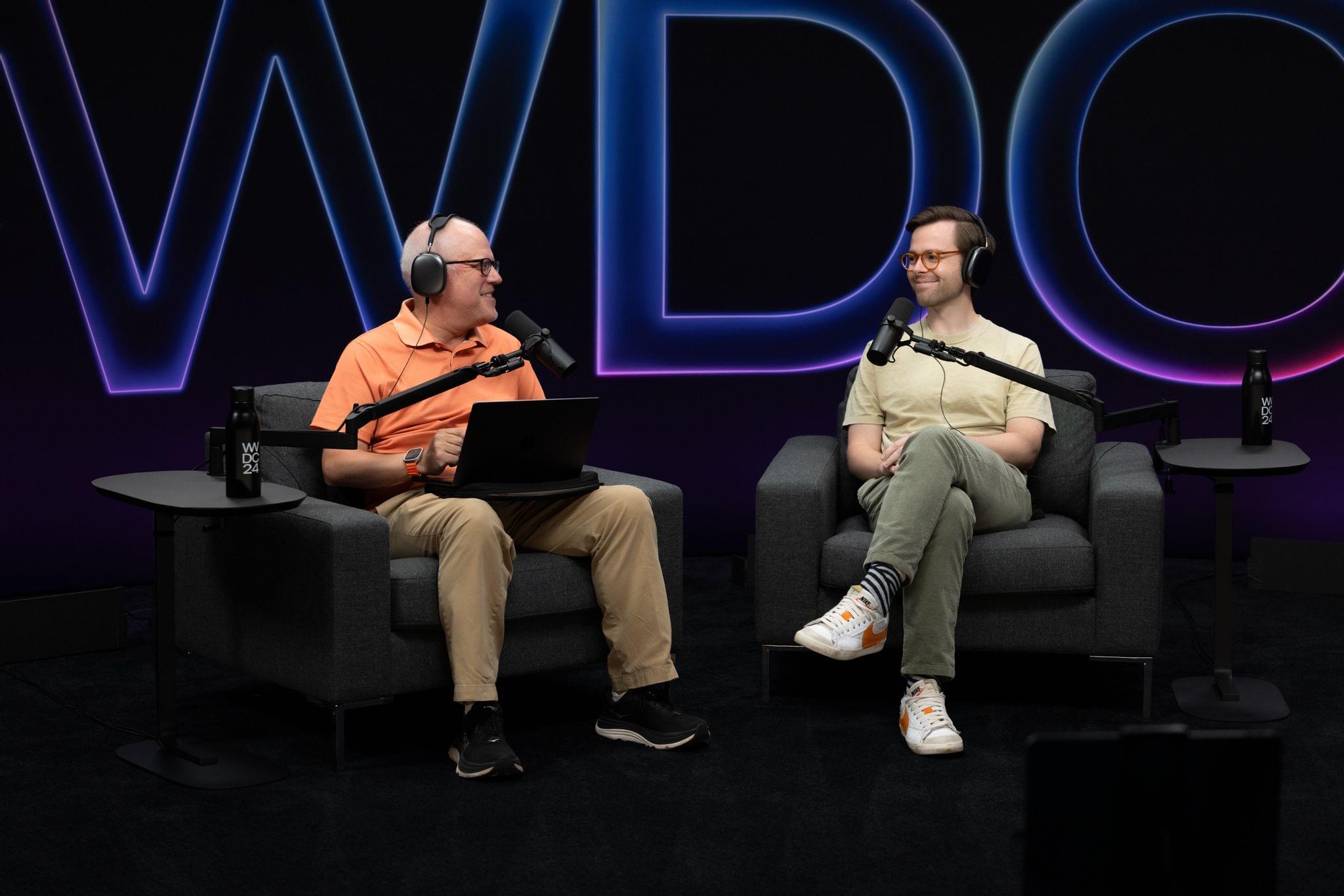
To wrap up our week of WWDC coverage, we just published a special episode of AppStories that was recorded in the Apple Podcasts Studio at Apple Park. Federico and I interviewed three of this year’s Apple Design Award winners:

Devin Davies.

Devin Davies.

  • Devin Davies, the creator of Crouton, which won an ADA in the Interaction category
Katarina Lotrič and Jasna Krmelj of Gentler Streak.

Katarina Lotrič and Jasna Krmelj of Gentler Streak.


- Katarina Lotrič, CEO and co-founder, and Jasna Krmelj, CTO and co-founder, of Gentler Streak, which won an ADA in the Social Impact category

James Cuda, CEO, and Michael Shaw, CTO, of Procreate.

James Cuda, CEO, and Michael Shaw, CTO, of Procreate.


- James Cuda, CEO, and Michael Shaw, CTO of Procreate, which won an ADA for (Procreate Dreams) in the Innovation category

We also interviewed two of the Swift Student Challenge Distinguished Winners:

  • Dezmond Blair, a student at the Apple Developer Academy in Detroit. His app marries his passion for biking and the outdoors with technology, which creates an immersive experience.
  • Adelaide Humez, a high school student from Lille, France. Her winning app, Egretta, allows users to create a journal of their dreams based on emotions.

In addition to being available as always in your favorite podcast app as an audio-only podcast, This special episode of AppStories is available on our new MacStories YouTube channel, which is also the home of Comfort Zone, one of the two podcasts we launched last week and other video projects.


We deliver AppStories+ to subscribers with bonus content, ad-free, and at a high bitrate early every week.

To learn more about the benefits included with an AppStories+ subscription, visit our Plans page or read the AppStories+ FAQ.

Permalink