This Week's Sponsor:

Turbulence Forecast

Know before you go. Get detailed turbulence forecasts for your exact route, now available 5 days in advance.


Posts in Linked

Connected, Episode 214: The Californian Idea of Food

Stephen was wrong, and Myke demands an apology before explaining what makes up dust. The FileMaker world is considered, then Federico explains why he thinks the ????emoji is wrong. Lastly, Adobe and Palm are both in the news.

Last week’s episode of Connected was a fun one – we discussed food emoji, Photoshop on iPad, and the Shortcuts 2.1 beta. You can listen here.

Sponsored by:

  • Squarespace: Make your next move. Enter offer code CONNECTED at checkout to get 10% off your first purchase.
  • Luna Display: The only hardware solution that turns your iPad into a wireless display for your Mac. Use promo code CONNECTED at checkout for 10% off.
  • PayPal: When it comes to growing your business, PayPal is your payments partner for today and tomorrow.
Permalink

AppStories, Episode 84 – Frequently-Used Shortcuts, Part 2

On this week’s episode of AppStories, we cover more of our favorite shortcuts, focusing on web API-based shortcuts and creating menus to organize and launch shortcuts.

Sponsored by:

  • Luna Display - The only hardware solution that turns your iPad into a wireless display for your Mac. Use promo code APPSTORIES at checkout for 10% off.
  • Freshbooks - Online invoicing made easy.

https://staging.macstories.net/episodes/84/embed/

Permalink

Phil Schiller on the iPhone XR

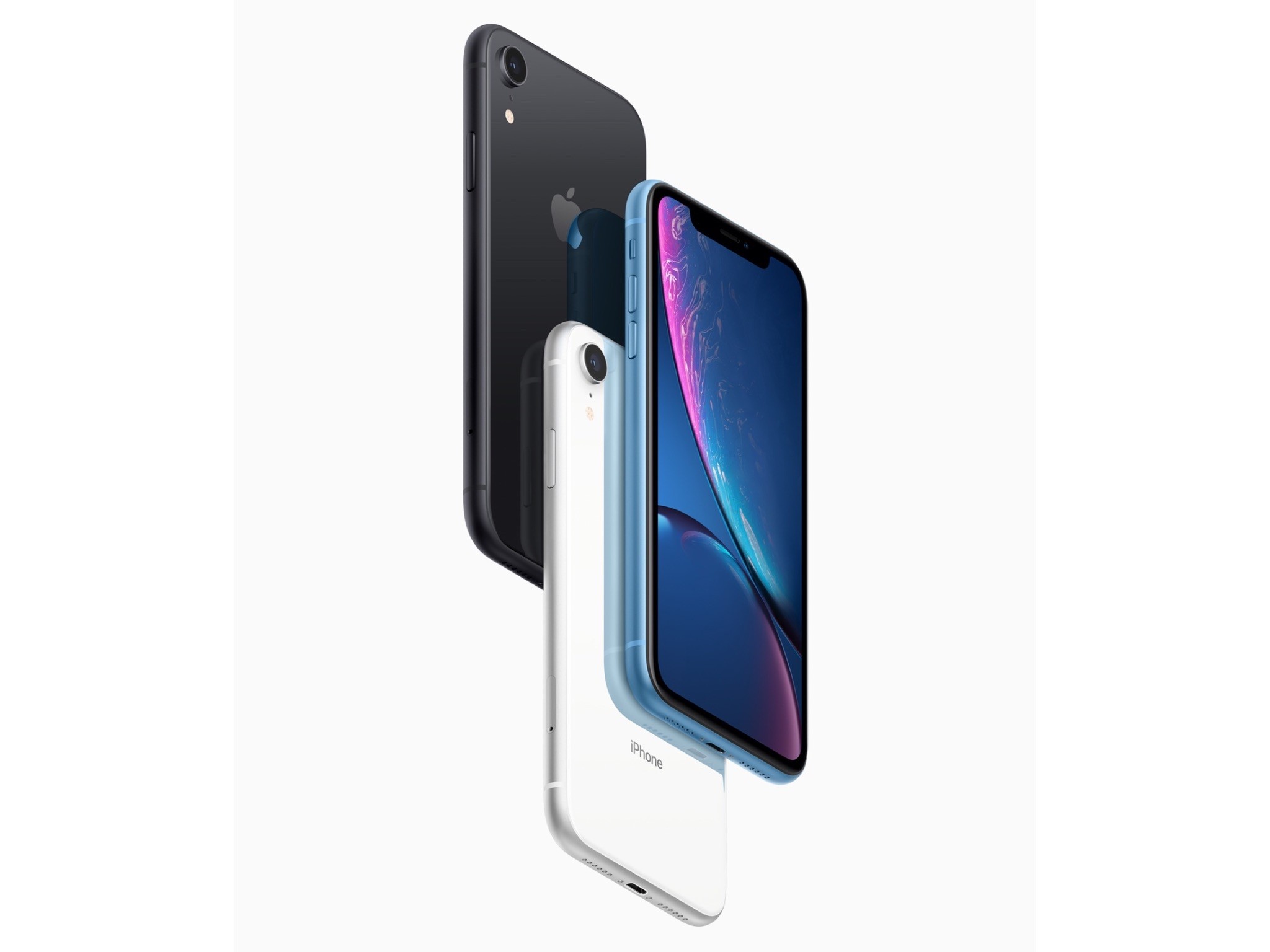
Phil Schiller, Apple’s Senior Vice President of Worldwide Marketing, was interviewed by Engadget about the iPhone XR, which will begin arriving on doorsteps and in stores on Friday.

Engadget’s Chris Velazco asked Schiller about the meaning behind the new iPhone’s ‘XR’ moniker. According to Schiller, XR doesn’t stand for anything in particular, but he associates XR with cars:

“I love cars and things that go fast, and R and S are both letters used to denote sport cars that are really extra special,” he said with a smile.

Velazco, who clears up some confusion about the screen, which detects and tracks touches at 120Hz but doesn’t refresh at that rate, also asked about criticisms that the LCD panel in the XR isn’t as high-resolution as some other premium mobile phones. Schiller responded:

“I think the only way to judge a display is to look at it,” he told me, adding that Apple calls these screens “retina displays” because your eye can’t discern individual pixels unless you press your face up right against the glass. “If you can’t see the pixels, at some point the numbers don’t mean anything. They’re fairly arbitrary.”

I’m looking forward to trying the XR, especially the camera. I ordered one for my youngest son, which arrives Friday. One of the conditions when my kids get an Apple product that I don’t buy for myself is that I get first crack at it for MacStories, so I plan to do some side-by-side photo tests with the XR and XS Max soon. If the early indications are correct, I expect the XR will hold up reasonably well to the dual-lens models.

For more from Schiller about the XR, be sure to check out Velazco’s full interview on Engadget.

Permalink

Why Photoshop on iOS Is A Huge Win for the iPad Pro

Jason Snell, writing for Macworld on the announcement of Photoshop coming to iPad next year:

Adobe’s move to iPad instantly makes everyone who knows, loves, or relies on Photoshop a possible candidate for an iPad Pro. And make no mistake, the iPad Pro is already plenty powerful enough to run Photoshop, and with the Apple Pencil it’s got an input method that will satisfy most graphics pros. Even better, Adobe has said that it will be building in cloud syncing for Photoshop files, so that you’ll be able to seamlessly hand off projects directly from one device to another.

A lot of the criticism of the iPad Pro as a flawed tool for doing real work comes down to software. The hardware is capable—but where’s the software? These arguments have been weak for a while now—I think Microsoft Office for iPad is aces, and Apple’s iWork apps are remarkably capable, too—but with every major app that arrives on the platform, the quieter that criticism has to get. Adobe’s also bringing a simplified version of Premiere, called Premiere Rush, to the iPad. I wonder if Apple’s considering just how Final Cut and Logic might work on the iPad?

As I’ve been arguing for a while now, I believe we’re witnessing a shift in how tech companies – both platform owners and development studios – approach desktop and tablet software. Multiple factors – from better-looking displays and more powerful GPUs to cloud-based file management and subscriptions – are converging to make it possible to have a consistent app experience on every device you have without compromise. In this transition, iPad versions of desktop apps will be treated less like “companion” apps to a “real” desktop one and more like the same app, with the same features, optimized for touch and capable of adapting to the kind of computer it is running on (and adaptivity becomes especially important when you start considering external display output, for instance).

Photoshop, as Snell writes, is a first step. If Apple is truly pushing this vision forward, perhaps it’s time they also start treating the iPad as a place for real pro apps, not just companion utilities of macOS apps.

Permalink

App Bundles Are Coming to the Mac App Store

In a brief post on Apple’s Developer news site, the company announced that it is adding support for app bundles to the Mac App Store. According to the post:

…now, you can create app bundles for Mac apps or free apps that offer an auto-renewable subscription to access all apps in the bundle.

The post points to developer documentation on creating app bundles that that has been revised to mention Mac apps. The process for setting up a bundle, which will allow developers to offer up to 10 Mac apps as a single purchase, appears to be the same as it is for iOS developers. Unfortunately for those developers with iOS and macOS apps, it does not appear possible to create a mixed bundle of iOS and Mac apps.

Permalink


Project Gemini Is a New iPad Illustration App Coming from Adobe

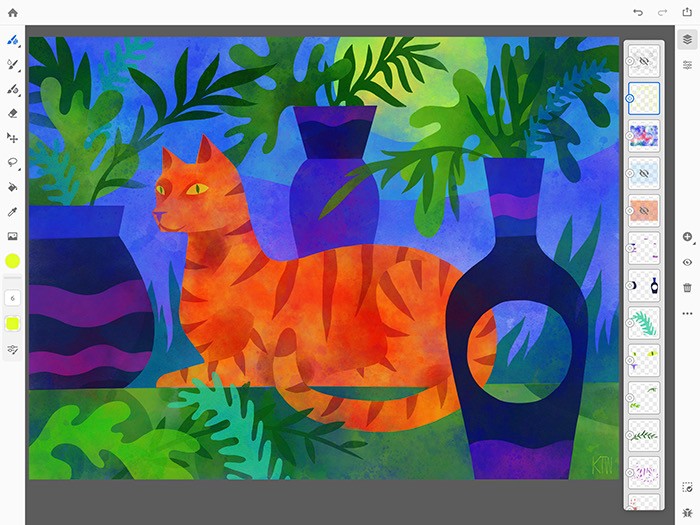
Along with details about the forthcoming Photoshop for iPad, Adobe has announced another brand new iPad app coming soon, dubbed Project Gemini:

Today we announced Project Gemini—a focused new app focused specifically on drawing and painting. Building on Photoshop’s powerful brush engine, this new app combines powerful Photoshop brushes, precise and scalable vector brushes, and an entirely new category of groundbreaking Live oil and watercolor brushes – you’ve never seen anything like them. In addition, layers, selections, and masks enable the most modern non-destructive drawing and editing workflows.

Most importantly, though, we’ve built Project Gemini with the illustration community.

Kyle Webster, of KyleBrush.com, joined Adobe in 2017 to help build Gemini and act as an ambassador and advocate for the illustration community. Along with Kyle, a group of illustrators with diverse styles and backgrounds have been working closely with us to help Gemini achieve its potential.

According to the announcement post, the genesis of this new app was advancements in hardware that enabled Adobe’s team to build more powerful tools than were previously possible. They highlight “selection and masking tools, combined raster and vector drawing capabilities” as some examples.

I’m not in the target market for this app, but I’m excited to see Adobe continue to rethink how modern iPads can enable more powerful, yet accessible app experiences than before.

If you’d like to join the Gemini beta when it begins, Adobe has a short survey available for interested testers.

Permalink

The State of Gaming on the Apple TV

Samuel Axon of Ars Technica published an article over the weekend about the state of gaming on Apple TV, inspired by the recent demise of Minecraft on the platform. In it he shares quotes from notable iOS and tvOS game developers about Apple’s problems with the Apple TV as a gaming platform.

On the subject of Minecraft, Team Alto developer Ryan Cash said:

“If I were in charge of the game…I think I’d really try to stay there. While the platform certainly isn’t the biggest, it continues to grow, and it’s a great way for certain types of audiences to experience gaming, often for their first time.”

Strange Flavour’s CEO Aaron Fothergill expressed similar sentiments, highlighting how easy it is to port a game from iOS to tvOS. He did, however, share one common request for the platform:

“I…like the idea of game controllers (ideally Apple ones) being bundled with the Apple TV as an actual Apple option. So there’s an Apple TV being sold specifically for games.”

Finally, developer Patrick Hogan shared three things he believes Apple should do:

  • Include an Apple-branded, full-featured controller with every Apple TV.
  • Market the Apple TV as a gaming platform.
  • “Spend a lot of money on funding platform exclusives, ports, and presence at every major gaming expo and conference to break the chicken-egg problem of getting customers to make it viable to devs.”

Gaming is clearly an area where Apple could have more success if it wanted to. Producing a controller to bundle with the Apple TV, even if it were just included with certain SKUs of the device, wouldn’t be that difficult for the company. Clearly it’s just something that the execs in Cupertino don’t want to pursue at this time.

It could be challenging bridging the gap between the touch-first games of iOS and potential controller-first titles on the Apple TV, but if Nintendo can walk that line successfully with the Switch, I don’t doubt that Apple could do the same. Until such a strategy shift takes place though, Apple TV gaming is likely to remain stuck in mediocrity.

Permalink

iOS 12’s Adoption Rate

In my iOS 12 review from last month, here’s what I wrote about iOS 11’s slow adoption rate as it related to its performance:

While iOS 11 may go down in Apple software history as the touchstone of the iPad’s maturity, it will also be remembered as one of the company’s most taxing releases for its users. You don’t have to look far into the iOS 11 cycle for headlines lamenting its poor stability on older hardware, plethora of design inconsistencies (which were noted time and time again), and general sense of sluggishness – issues that may have contributed to a slower adoption rate than 2016’s iOS 10.
[…]
With iOS 12, Apple wants to rectify iOS’ performance woes, proving to their customers that iOS updates should never induce digital regret.

It sounds like at least part of Apple’s plan to focus on performance to entice upgrades to iOS 12 is working. Here’s Benjamin Mayo, writing for 9to5Mac last week:

Apple launched iOS 12 with much fanfare earlier this month but early adoption appeared sluggish. However, in the following weeks, iOS 12 adoption has actually outpaced iOS 11 now, according to data from Mixpanel.

iOS 12 is now installed on more than 50% of active iPhones, iPads and iPod touch devices. It took iOS 11 a month to reach this milestone; iOS 12 has achieved it in under twenty days.

The numbers have since been confirmed by Apple on its Developer site.

Anecdotally speaking, I’ve yet to hear of any friends or family members who updated to iOS 12 and regretted it. It’s almost as if Apple was able to somewhat slow down and ship a higher-quality iOS release that more users can enjoy and recommend to others. Or maybe it’s just the Memoji.

Permalink