Posts in Linked

The State of Gaming on the Apple TV

Samuel Axon of Ars Technica published an article over the weekend about the state of gaming on Apple TV, inspired by the recent demise of Minecraft on the platform. In it he shares quotes from notable iOS and tvOS game developers about Apple’s problems with the Apple TV as a gaming platform.

On the subject of Minecraft, Team Alto developer Ryan Cash said:

“If I were in charge of the game…I think I’d really try to stay there. While the platform certainly isn’t the biggest, it continues to grow, and it’s a great way for certain types of audiences to experience gaming, often for their first time.”

Strange Flavour’s CEO Aaron Fothergill expressed similar sentiments, highlighting how easy it is to port a game from iOS to tvOS. He did, however, share one common request for the platform:

“I…like the idea of game controllers (ideally Apple ones) being bundled with the Apple TV as an actual Apple option. So there’s an Apple TV being sold specifically for games.”

Finally, developer Patrick Hogan shared three things he believes Apple should do:

  • Include an Apple-branded, full-featured controller with every Apple TV.
  • Market the Apple TV as a gaming platform.
  • “Spend a lot of money on funding platform exclusives, ports, and presence at every major gaming expo and conference to break the chicken-egg problem of getting customers to make it viable to devs.”

Gaming is clearly an area where Apple could have more success if it wanted to. Producing a controller to bundle with the Apple TV, even if it were just included with certain SKUs of the device, wouldn’t be that difficult for the company. Clearly it’s just something that the execs in Cupertino don’t want to pursue at this time.

It could be challenging bridging the gap between the touch-first games of iOS and potential controller-first titles on the Apple TV, but if Nintendo can walk that line successfully with the Switch, I don’t doubt that Apple could do the same. Until such a strategy shift takes place though, Apple TV gaming is likely to remain stuck in mediocrity.


Permalink

iOS 12’s Adoption Rate

In my iOS 12 review from last month, here’s what I wrote about iOS 11’s slow adoption rate as it related to its performance:

While iOS 11 may go down in Apple software history as the touchstone of the iPad’s maturity, it will also be remembered as one of the company’s most taxing releases for its users. You don’t have to look far into the iOS 11 cycle for headlines lamenting its poor stability on older hardware, plethora of design inconsistencies (which were noted time and time again), and general sense of sluggishness – issues that may have contributed to a slower adoption rate than 2016’s iOS 10.
[…]
With iOS 12, Apple wants to rectify iOS’ performance woes, proving to their customers that iOS updates should never induce digital regret.

It sounds like at least part of Apple’s plan to focus on performance to entice upgrades to iOS 12 is working. Here’s Benjamin Mayo, writing for 9to5Mac last week:

Apple launched iOS 12 with much fanfare earlier this month but early adoption appeared sluggish. However, in the following weeks, iOS 12 adoption has actually outpaced iOS 11 now, according to data from Mixpanel.

iOS 12 is now installed on more than 50% of active iPhones, iPads and iPod touch devices. It took iOS 11 a month to reach this milestone; iOS 12 has achieved it in under twenty days.

The numbers have since been confirmed by Apple on its Developer site.

Anecdotally speaking, I’ve yet to hear of any friends or family members who updated to iOS 12 and regretted it. It’s almost as if Apple was able to somewhat slow down and ship a higher-quality iOS release that more users can enjoy and recommend to others. Or maybe it’s just the Memoji.

Permalink

Genius Enters New Partnership with Apple Music

Today Genius, the online music encyclopedia, shared word of a new partnership it has formed with Apple – more specifically, with Apple Music. From the company’s announcement post:

Starting today, Apple Music subscribers who visit Genius will be able to play any song in full right from the song page, simply by signing into their Apple Music account.

Genius is a great place to find historical information about a song, so the ability to play any track without leaving Genius makes for a great user experience. Embedded Apple Music tracks is only one half of this partnership though. Even if you’ve never used Genius, you’re bound to benefit from this agreement because of a second piece of news. The announcement post continues:

Genius has the world’s best lyrics database and now it’s available on Apple Music. Genius will provide lyrics to thousands of hit songs on the service—bringing world-class accuracy and timeliness powered by Genius’s global community of artists and fans.

It’s unclear at this time whether the addition of Genius lyrics to Apple Music will bring lyrics to songs that previously didn’t have any, or simply more accurate lyrics to songs that already have them. Hopefully both benefits are in store for Apple Music users.

In the first couple years of Apple Music’s life, the service didn’t strike very many partnerships with third-party businesses. That appears to be changing this year, with the recently completed acquisition of Shazam, free service offers for Verizon wireless customers, and now Genius integrations, Apple is extending its service in new ways to better compete with Spotify.

Permalink

Apple Watch Face Legibility

In a post on Marco.org, Overcast developer Marco Arment critiques the design of many of the current Apple Watch faces. Using a variety of analog watches as references, Arment highlights the design elements that make them legible, few of which are followed by Apple’s faces:

Across a wide variety of brands, styles, and price points, a few key design principles are clear:

  • The hour markers for 12 (and often 3/6/9) are more prominent.
  • The hour indices are much larger than the minute markings.
  • The hour hands nearly touch the hour indices.

These all improve legibility by making it as fast and easy as possible to know which hour is being indicated (and minimize the chance of an off-by-one error), first by orienting your eyes to the current rotation with the 12 marker, then by minimizing the distance between the hour hand and the indices it’s between.

Arment is especially critical of the Infograph face, which is so hard to read that many people have resorted to using a digital time complication with it. He concludes that it’s time for Apple to allow third parties to create watch faces.

We covered our Apple Watch faces on AppStories this week, and both Federico and I noted that we use a digital time complication with the Infograph watch face because the hands are so hard to read. As Arment’s piece points out, that isn’t uncommon, but it shouldn’t be necessary and is a pretty clear indication that the design is flawed. I’ve been happy with the Series 4 Watch’s support for more complications, but I also want more face options and flexibility across watch faces. It’s time for Apple to re-evaluate its current watch faces and reconsider letting developers create faces of their own.

Permalink

AppStories, Episode 82 – Our Apple Watch Faces, Complications, and Docks

On this week’s episode of AppStories, we talk about how we’ve set up our new Series 4 Apple Watches including the complications we use, new apps we are trying, and what’s in our Watch docks.

Sponsored by:

  • Linode - High performance SSD Linux servers for all of your infrastructure needs. Get a $20 credit with promo code ‘appstories2018’
  • Freshbooks: Online invoicing made easy.

https://staging.macstories.net/podcasts/appstories/episodes/82/embed/

Permalink

Connected, Episode 212: NanoHippo

Stephen answered Myke’s PopSocket challenge, and Federico attempts to name all of iOS 12.1’s new emoji.

On this week’s episode of Connected, the most accurate description of iOS 12.1’s new emoji you’ll ever find. You can (and should) listen here.

Sponsored by:

  • Pingdom: Start monitoring your websites and servers today. Use offer code CONNECTED to get 30% off.
  • Hover: Get a .DESIGN domain with 85% off your first year.
  • Casper: The Internet’s favourite mattress. Get $50 off select mattresses with the code ‘CONNECTED’.
Permalink

Apple’s Watch Face Problem

Jason Snell today published the article I’ve been itching to write, outlining the current mess that is Apple’s watch face ecosystem. The Apple Watch in so many ways is in its best position ever, which makes the lack of coherence in Apple’s watch face strategy particularly surprising.

As Apple continues to create new watch faces at a regular clip, those faces have grown more and more fragmented in what they can do. The Siri face introduced last year was an interesting new direction for watch faces, yet it remains one of a kind in many ways. The Series 4 Watch’s Infograph faces come with a whole new set of complications, all of which are wonderful except that they don’t work on other faces, nor do older complications work on the new faces. This lack of compatibility is frustrating enough, but what may be even more vexing is that Apple itself hasn’t even provided new complications for all of its apps, only some of them – I’d love a Podcasts complication on my Infograph face, but it simply doesn’t exist.

Snell offers up a handful of suggestions for where Apple should focus its watch face efforts going forward, all of which earn my total agreement. He writes:

Every face needs to be modernized and support the new complication styles, at least on Series 4. Key system apps and features like Messages and cellular status should be available on all faces. Every face design should be more flexible.

And moving forward, Apple should allow developers even more power in building complications. Complications should be able to appear when they have something to say and disappear when they don’t—for example, I’d love for a Timer complication to appear when I’m running a timer, but the rest of the time I’d rather not see it. If complications truly are the best face of Apple Watch apps, the developers of those apps need more power to build good ones.

Every one of these ideas is entirely reasonable, and would go a long way toward fixing the current watch face mess. I know we just got watchOS 5, but I hope watch faces are a strong area of focus for Apple in next year’s watchOS 6.

Permalink

More Than 70 New Emoji Coming Later This Fall Are Now Available in the iOS 12.1 Beta

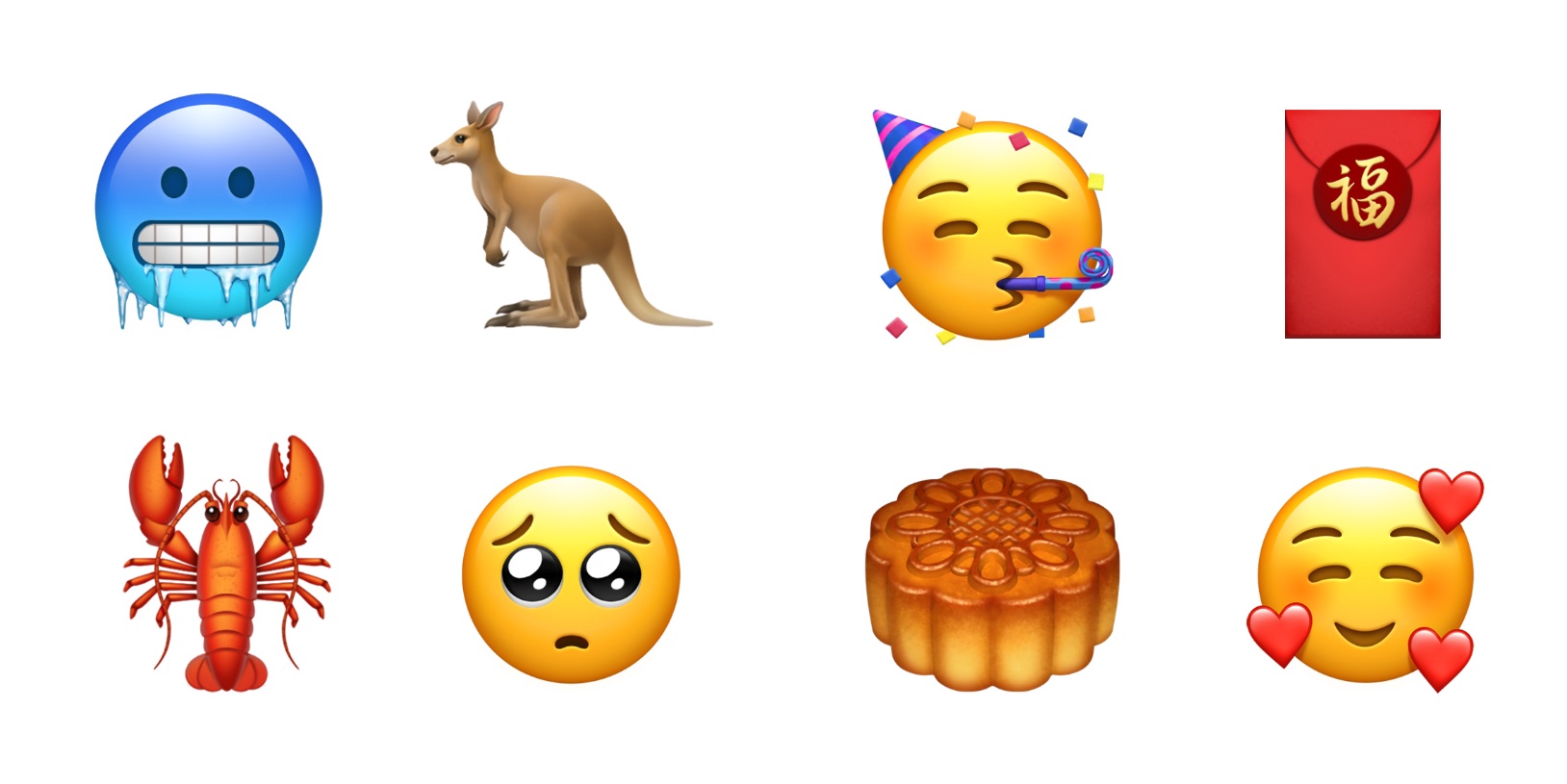
Apple has announced that later this fall, it will release more than 70 new emoji. The emoji, which will be released when iOS 12.1 is shipped, will be included on the Mac and Apple Watch too.

The new glyphs, which are based on the characters approved by the Unicode Consortium as part of Unicode 11.0, include a wide variety of themes. For people, there are new options for gray, red, and curly hair, and for bald people. The new set of emoji also includes new foods, animals, sports, and other activities like travel.

Among the animals added are a raccoon, kangaroo, lobster, swan, parrot, peacock, and llama. Foods include leafy greens, a cupcake, a bagel, moon cake, mango, and salt. Sports have added a softball, frisbee, lacrosse stick and ball, and skateboard. There are new emotive smiley faces too.

Looking to next year, Apple says that for Unicode 12.0, which will be the basis for emoji released in 2019, it is working with the Unicode Consortium to add disability-themed emoji. Although the emoji announced today will be officially released until later this fall, you can try them now as part of the iOS 12.1 beta and public preview released today.

Permalink

Apple Adds More Than 30 Worldwide Companies to Business Chat

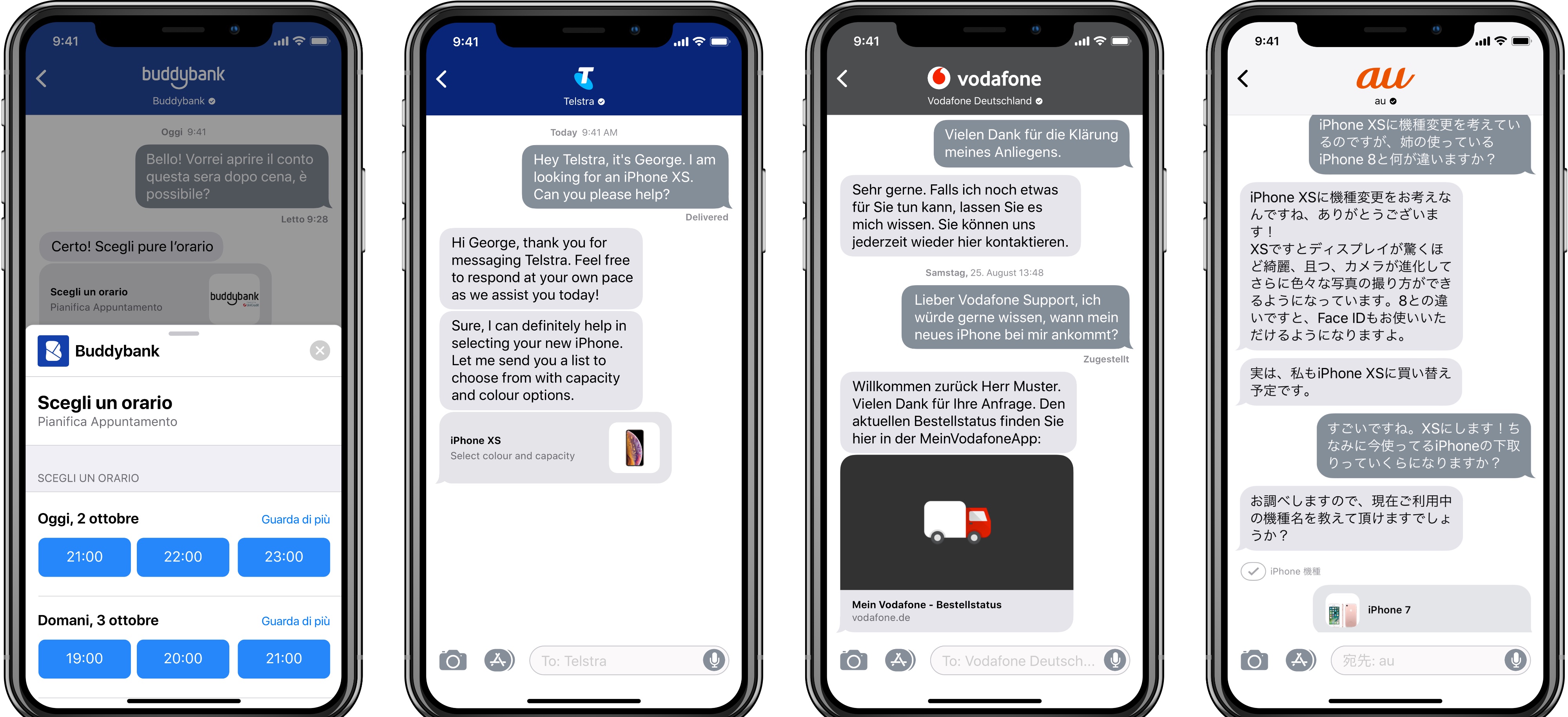
Apple introduced Business Chat at WWDC in 2017 and launched it with iOS 11.3 this past March. Today, Apple confirmed to TechRadar that the feature, which began as a beta with a handful of US business partners, has been rolled out worldwide.

As we explained in our overview of iOS 11.3:

Business Chat is a way for businesses to communicate with their customers directly over iMessage. Apple’s goal with Business Chat is to elevate the customer service experience to take advantage of the best native features of iOS, such as iMessage’s inherent privacy and security, iMessage apps, Apple Pay, and integration with Maps, Safari, and Spotlight.

Initially supported by only a handful of US companies like Discover, Hilton, Lowe’s and Wells Fargo, the roster was expanded in July to include Dish, Aramak, Four Seasons, Harry & David, and American Express. With today’s launch, that list has been expanded significantly to include companies based in Europe and Asia, as well as additional companies in North America. According to TechRadar, the additions include more than 30 companies:

Europe

  • Matchesfashion (UK)
  • nPower (UK)
  • Robins & Day (UK)
  • buddybank (Italy)
  • Engie (France)
  • La Redoute (France)
  • AXA Insurance (Switzerland)
  • Swisscom (Switzerland)
  • Vodafone Germany
  • NH Hotels (Europe) 

North America

  • 1800 Contacts 
  • DirecTV Now
  • Fairmont Hotels including the Claremont Club & Spa in Berkeley
  • Kimpton Hotels
  • Freshly 
  • Macerich Malls  including Scottsdale Fashion Square and Santa Monica Place
  • Mall of America 
  • Men’s Wearhouse 
  • Jos A. Bank
  • Overstock.com
  • Quicken Loans 
  • SnapTravel (US, Canada)
  • West Elm
  • Hendrick Automotive Group
  • Four Seasons (Canada) is expanding to 88 properties around the globe, 100+ languages
  • Lithia Group

Worldwide

  • Burberry

Asia

  • Telstra (Australia)
  • Harvey Norman (Australia) 
  • KDDI (Japan)
  • Credit Suisse (Singapore and Hong Kong)

Much like Apple Pay, Business Chat is the sort of feature that isn’t likely to see significant user adoption until a large enough pool of businesses use it to reach most iPhone owners. Still, today’s broad rollout in multiple countries shows that the service is beginning to get traction. It will also be interesting to see how much longer Business Chat retains the ‘beta’ label.

Permalink