This Week's Sponsor:

Turbulence Forecast

Know before you go. Get detailed turbulence forecasts for your exact route, now available 5 days in advance.


Posts in Linked

Remaster, Episode 46: A Farm and an Odyssey

Stardew Valley review, Mario Odyssey preperations, and details on the new Nintedo Switch console update.

On this week’s episode of Remaster, we go over the changes in the latest Switch software update and Myke explains why he’s been enjoying Stardew Valley so much. You can listen here.

Sponsored by:

  • Squarespace: Make your next move. Enter offer code INSERTCOIN at checkout to get 10% off your first purchase.
Permalink

Workshelf 1.1

As we’ve seen with the release of iOS 11, the emerging market of shelf apps for iPad has proven to be a fun playground for developers to figure out how to enhance the system’s drag and drop experience. We’ve published two stories on our favorite shelf apps released so far (here and here), and I’m keeping an eye on new developments every week. One of the most recent updates is Workshelf 1.1, which has gained a new icon and refreshed interface (thankfully, the original blue background is gone) as well as welcome tweaks to in-app previews and shelf management.

Workshelf, developed by Ross Kimes, is one of the more power user-oriented shelf apps thanks to its support for multiple shelves and raw file representations. In version 1.1, Workshelf can import documents from the Files app, it comes with new sorting options, and it lets you open URLs from an item’s detail page. This feature remains one of my favorite touches of Workshelf: in addition to viewing all the “flavors” of an item dropped in the app (such as a link and an image for a JPEG dragged from Safari), you can also tap & hold a specific file representation to drag it out of Workshelf.

I’ve been using Gladys on my iPad for the past few weeks (another shelf app that offers a variety of advanced features, plus a Files provider extension), but I’m going to give Workshelf another try.

Permalink

Connected, Episode 164: My Mother Has a Bunch of Keyboards

Live in Chicago, the boys discuss the Google Home Mini’s rough launch, the future of AR at Apple and Federico’s baker.

We had so much fun recording this episode of Connected live in Chicago last night. We rarely get to record Connected in person, so this episode is extremely special to me. You can listen here.

Sponsored by:

  • Squarespace: Make your next move. Enter offer code WORLD at checkout to get 10% off your first purchase.
  • Timing: The automatic time tracking app for macOS. Use this link to get 10% off your purchase of Timing.
  • Incapsula: Secure and accelerate your website. Connected listeners get one month free.
Permalink

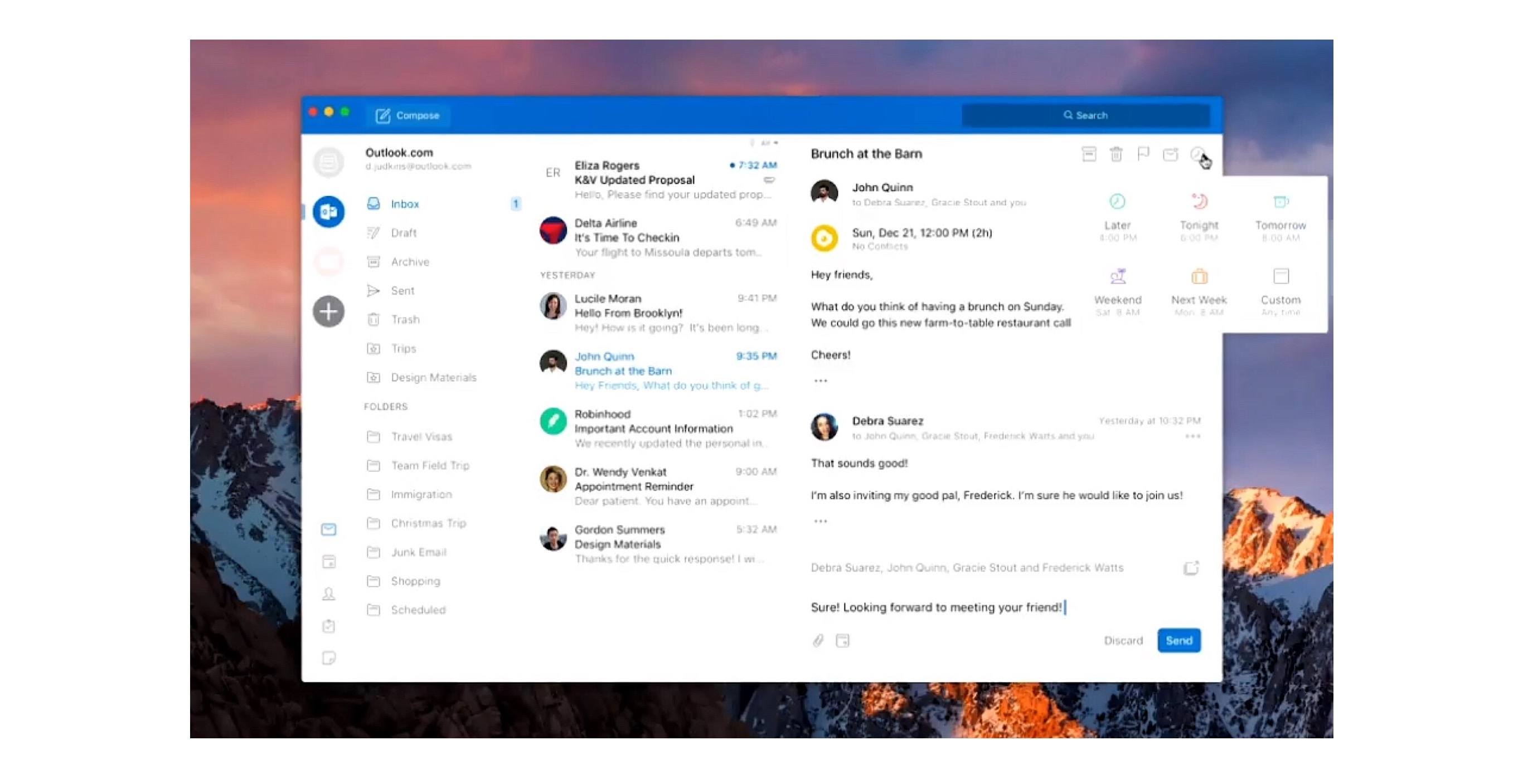
Microsoft Outlook for Mac Undergoing Major Redesign

Tom Warren of The Verge reports on Outlook for Mac details shared at the Microsoft Ignite conference last month:

A lot of the changes look very similar to the Outlook for iOS app, with a single-line ribbon and a smaller set of default commands. Reducing complexity is one of the key aims of the redesign, to make it easier for new and existing Outlook users to navigate the email app.

A new customizable ribbon will let Outlook for Mac and Windows users control which buttons are available, so you can tailor the email interface to your own common tasks. The left navigation panel will include quicker access to folders across multiple accounts, and looks like the switcher in Outlook for iOS.

Outlook for iOS has long been among the top email clients on the mobile platform. It pairs a clean, beautiful interface reminiscent of iOS’ Mail.app with the power user features Apple appears content to ignore. Moving Outlook for Mac away from its traditional desktop roots and further into the modern era looks to be a clear win.

The full Ignite session detailing future Outlook changes is available on YouTube.

Permalink

Canvas, Episode 46: Versions

Making, accessing and using versions of files is something that has been built into some iOS apps for a while now but few know how to access the feature.

On this week’s Canvas, Fraser and I take a look at our favorite options for dealing with file revisions on iOS, including my workflow for collaborating with the MacStories team. You can listen here.

Sponsored by:

  • SaneBox: Clean up your inbox in minutes. Sign up for a two-week free trial and a $20 credit.
Permalink

Movie Studios Launch Movies Anywhere Service

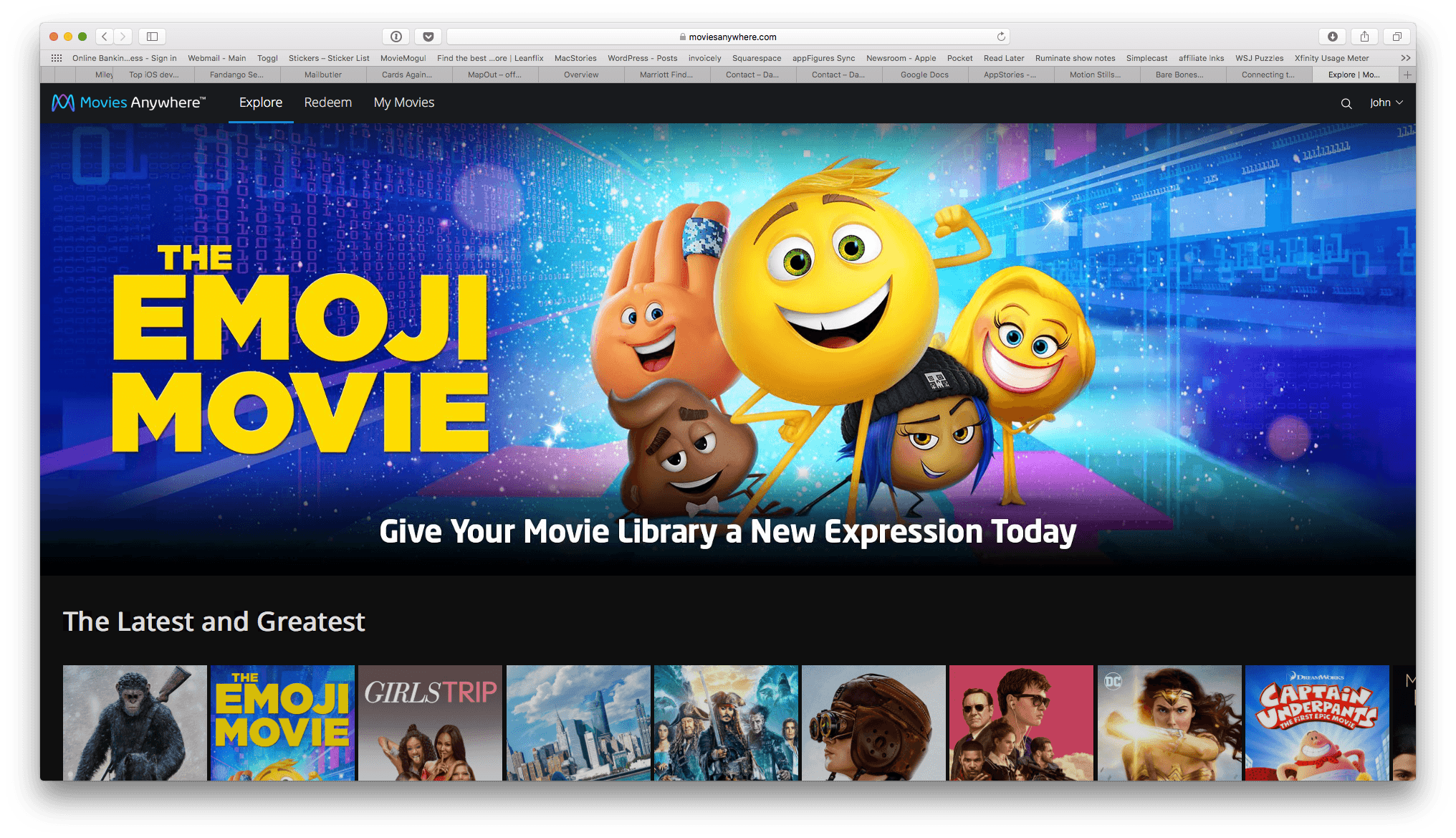
Services that promise to consolidate your digital movie collection in one place have come and gone over the years, so I was initially skeptical when I heard about Movies Anywhere, a new US-only service launched by Disney and other movie studios. However, after some preliminary testing of the service, I’m optimistic that Movies Anywhere stands a chance to become the first such service to catch on.

As reported by The Verge:

The big difference here is selection. Warner Bros., Universal, Sony Pictures, and Twentieth Century Fox have all signed on to Movies Anywhere. Along with Disney’s films, that gives the service a launch library of more than 7,300 titles.

Another differentiator with Movies Anywhere is platform support:

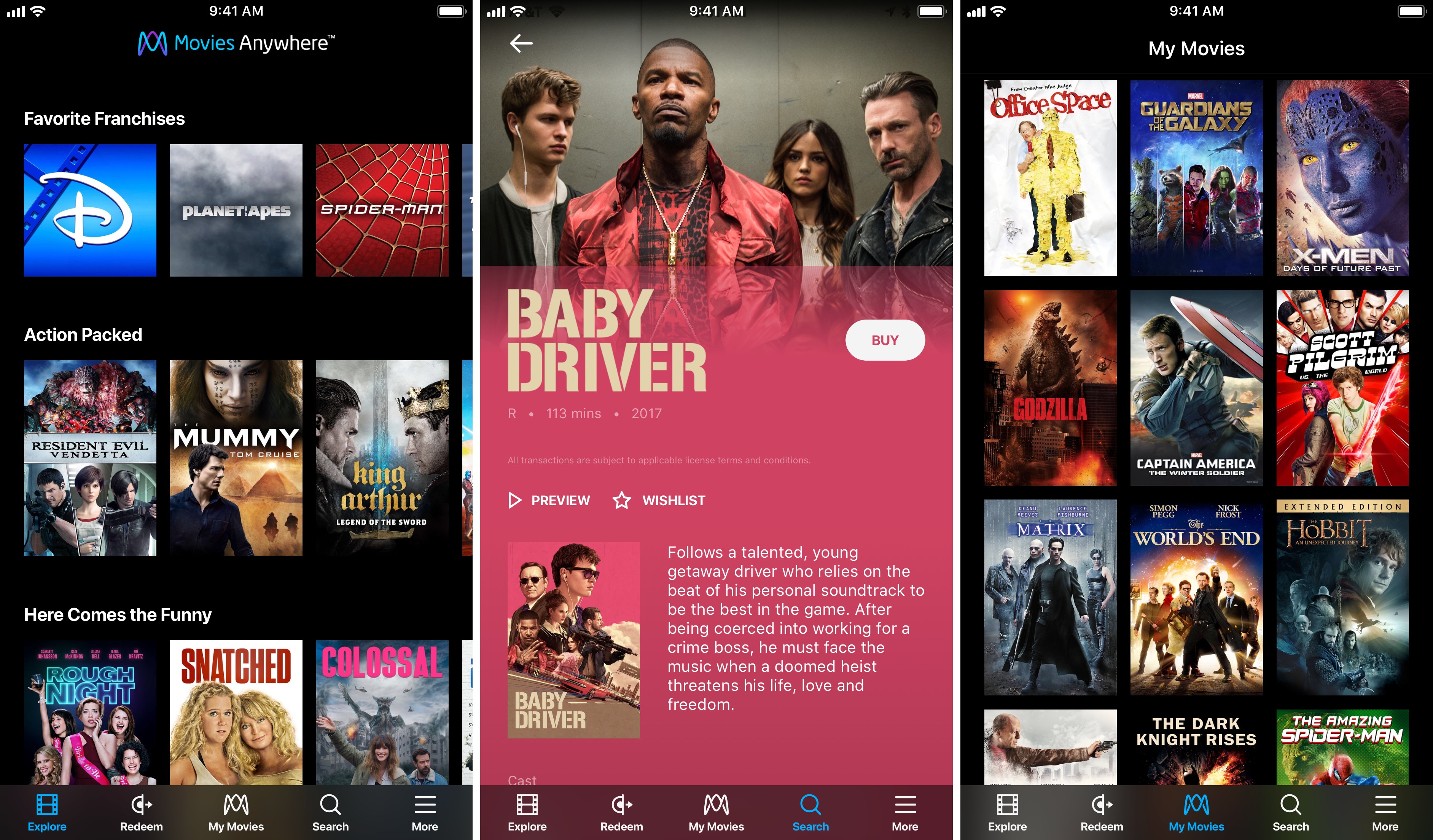
The promise of “buy once, watch anywhere” only works if a customer’s preferred device supports the service in question. The Movies Anywhere app will be available for iOS, Apple TV, Android, Android TV, Amazon Fire devices, and as part of Roku’s offerings. It will also support Chromecast, and titles will also [be] watchable through the service’s standalone website. And while apps for competing services have usually been clunky or awkward, the brief demo we saw of the Movies Anywhere app looked sleek and well-designed.

Movies Anywhere also gives customers the choice of where to buy their movies, though not without caveats on iOS.

Movies Anywhere will let customers browse for titles they’re interested in within the app itself, then allowing them to complete the purchase with their retailer of choice at the very end. (Android users will have the ability to purchase from Google Play, Amazon, or Vudu; those with Apple devices will only be able to purchase from iTunes, unless they head to a browser to purchase from a competitor directly.)

I tried to purchase a movie from the Movies Anywhere iOS app and sure enough, the only option was to buy it from iTunes. The workaround is to log into the Movies Anywhere service in Safari or another web browser, which will present you with the full menu of purchasing options. One other limitation that affects all platforms is that Movies Anywhere does not tell you how much a movie costs on each service. If you’re looking for a bargain, you’ll have to follow the link to each service to see how much they charge.

In the limited time I’ve had to try Movies Anywhere, I’ve been impressed. Logging into iTunes and Amazon Prime Video was quick and easy, and the movies I own on both providers showed up almost instantly in the iOS app and on the Movies Anywhere website. Playback happens in the Movies Anywhere app in a player that supports subtitles, closed-captioning, AirPlay, chapters, 15-second skipping ahead and back, and the option to pick up where you left off or start over if you exit the player. If Movies Anywhere can continue to grow its library of titles, the promise of all your movies anywhere you want them may finally become a reality.

Movies Anywhere is available on the App Store (US only).

Permalink

Connected, Episode 163: U2 Red

Stephen’s keyboard is disintegrating as Federico explains AirPlay 2, and Sonos and Google have new products out for the holiday season.

On this week’s Connected, we also consider some of the potential problems for Sonos’ third-party integrations and take a look at the Pixel 2. You can listen here.

Sponsored by:

  • Blue Apron: A better way to cook. Get 3 meals free with your first purchase, and free shipping!
  • Bombfell: Find the right clothes for you. Get $25 off your first purchase.
  • Mack Weldon: Smart underwear for smart guys. Get 20% off with the code CONNECTED.
Permalink

Supertop Seeks to Start a Conversation About Drag and Drop Best Practices

With the goal of encouraging a dialogue among developers, Supertop, the maker of Castro, has published a series of suggested best practices for implementing drag and drop on iOS. As Oisin Prendiville explains:

Ideally, experiences that users have in one app should stand to benefit them in others. As a community of developers and designers we should be looking to agree upon shared best practices to provide a consistent user experience. There’s an opportunity here to help users understand and embrace drag and drop as a powerful way to interact with touch devices, just as they have on the desktop for years.

The post considers five implementation aspects of drag and drop complete with animated GIF examples of ‘dos and don’ts.’

As we’ve discussed on AppStories, Castro’s execution of drag and drop is one of the best we’ve seen since iOS 11’s introduction. That makes the app an excellent jumping off point to frame the conversation among the broader iOS development community. I hope others take Supertop up on its offer to discuss these topics further because users could stand to benefit a lot from a set of canonical approaches to drag and drop.

Permalink

The Limitations of watchOS Development

Benjamin Mayo recently built his first watchOS app, a companion to his iOS app for scanning and creating QR codes, Visual Codes. On his blog he outlines his experiences developing for the Apple Watch, focusing particularly on how limited third-party developers are with their apps.

Apple engineers are using a completely different technology stack to create the system apps. They get to real write real iOS apps with a watchOS appearance theme, essentially. Third-party developers have to use WatchKit — a completely separate abstracted framework that exposes only high-level interface objects (whilst creating UIKit components under the covers).

The current WatchKit API leaves no room for invention. iOS innovations like pull-to-refresh came about because the iPhone OS UI frameworks were flexible enough to let developers and designers run wild with their own ideas, if they wanted to. Some of these custom controls worked so well Apple later incorporated them as standard components in UIKit. That free reign creativity simply can’t happen on the watch at the moment. Apple defines what is possible.

Apple has clearly invested a lot into advancing the Apple Watch from a hardware perspective, and even in the native OS experience – both key areas to grow. But Mayo puts the spotlight on an area that’s clearly lagging behind.

In past years the lack of tools available to make third-party watchOS apps was less important, as the Watch itself still bore several key limitations – slow hardware, a confused OS, and being tethered to the iPhone. Few developers cared about being creative with Watch apps because everyone knew the Watch could barely handle the vanilla apps of the time anyways. It’s a testament to the recent evolution of the Watch as a product that WatchKit’s shortcomings now appear so disappointing.

Permalink