Posts in Linked

Spotify Files Complaint Against Apple with the European Commission

Daniel Ek, CEO of Spotify, writing on recent actions the company has taken against Apple:

Spotify has filed a complaint against Apple with the European Commission (EC), the regulatory body responsible for keeping competition fair and nondiscriminatory. In recent years, Apple has introduced rules to the App Store that purposely limit choice and stifle innovation at the expense of the user experience—essentially acting as both a player and referee to deliberately disadvantage other app developers. After trying unsuccessfully to resolve the issues directly with Apple, we’re now requesting that the EC take action to ensure fair competition.
[…]
What we are asking for is the following:

  • First, apps should be able to compete fairly on the merits, and not based on who owns the App Store. We should all be subject to the same fair set of rules and restrictions—including Apple Music.
  • Second, consumers should have a real choice of payment systems, and not be “locked in” or forced to use systems with discriminatory tariffs such as Apple’s.
  • Finally, app stores should not be allowed to control the communications between services and users, including placing unfair restrictions on marketing and promotions that benefit consumers.

In addition to Ek’s note, Spotify has also launched a website, TimeToPlayFair.com, that outlines in greater detail its grievances against Apple. The site contains a timeline documenting Spotify’s working relationship with Apple, highlighting things such as Spotify’s inability to integrate with Siri, the long delay before they could offer an Apple Watch app, and Apple’s frequent App Store rejections when Spotify added language promoting its Premium service. The full timeline can be viewed here.

Spotify’s aim is to promote a level playing field between Apple’s apps and services and those of third parties. One example Spotify highlights at several points in its timeline is that they were unable to create an Apple Watch app until after watchOS 5 launched. Apple Music has been on the Watch for years, so there’s clearly a disadvantage to Spotify there – however, that disadvantage was due to the limitations of OS-level APIs provided to all third-party developers, not just those who compete with Apple services.

watchOS is still a relatively young platform. At what point should Apple be forced to prioritize development of frameworks that better equip third-party services to exist on its platform rather than developing other important enhancements to its software? These complexities are going to make it very interesting to see how the European Commission views this case.


Permalink


Niantic Previews Harry Potter: Wizards Unite, the Studio’s Follow-Up to Pokémon GO

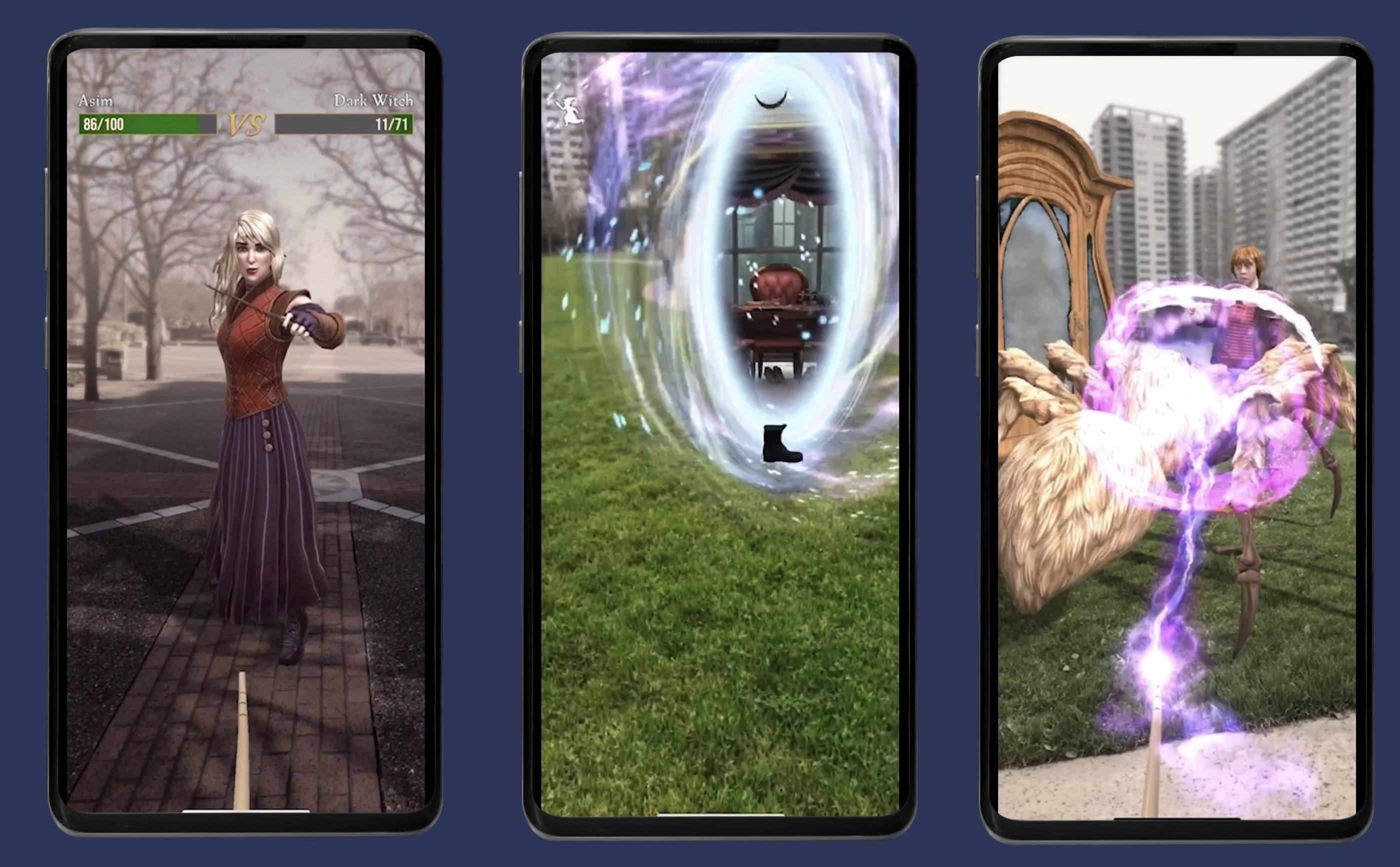
Later this year the team at Niantic will launch a new game based on a very popular IP: Harry Potter. The game’s full title is Harry Potter: Wizards Unite, and it will come to both iOS and Android as an AR-centered gaming experience in the vein of Pokémon GO, Niantic’s biggest hit.

Today Nick Statt of The Verge published his impressions of Wizards Unite following a preview Niantic hosted recently. Statt writes:

The core activity in Wizards Unite involves collecting a mix of artifacts and sometimes saving notable characters from the series who are stuck in a bad situation, like the titular Harry being pinned down by a spooky dementor. From there, you play a little tracing mini-game, to evoke the casting of a spell and then collect the item or free your friend. Afterward, you’re able to add that item or character to your collections book, earn experience points, and level up.
[…]
Beyond traversing the map, collecting those artifacts, and visiting inns to eat food, players of Wizards Unite will have a few more advanced activities to keep them busy. Those include leveling up your character, picking a subclass (called a “profession”) to learn new abilities, and then teaming up with up to five other players to compete in a fortress (what Niantic has designed to be this game’s version of gym battles from Pokémon Go). These team challenges feel like a cross between a traditional strategy game and something similar to Nintendo’s Fire Emblem, where one-on-one battles take place simultaneously after players select an enemy from a top-down map.

Based on Statt’s article, Harry Potter: Wizards Unite is going to have a lot more depth and complexity to it than Pokémon GO, which I’m excited about. Pokémon GO has scaled over time to become more of a gamer’s game than it used to be, but with Wizards Unite it sounds like that added depth will be there from the start for those who want it.

There’s still no firm release date available for Wizards Unite, but a 2019 launch is confirmed.

Permalink

Apple Music Commissions Custom Playlist Art

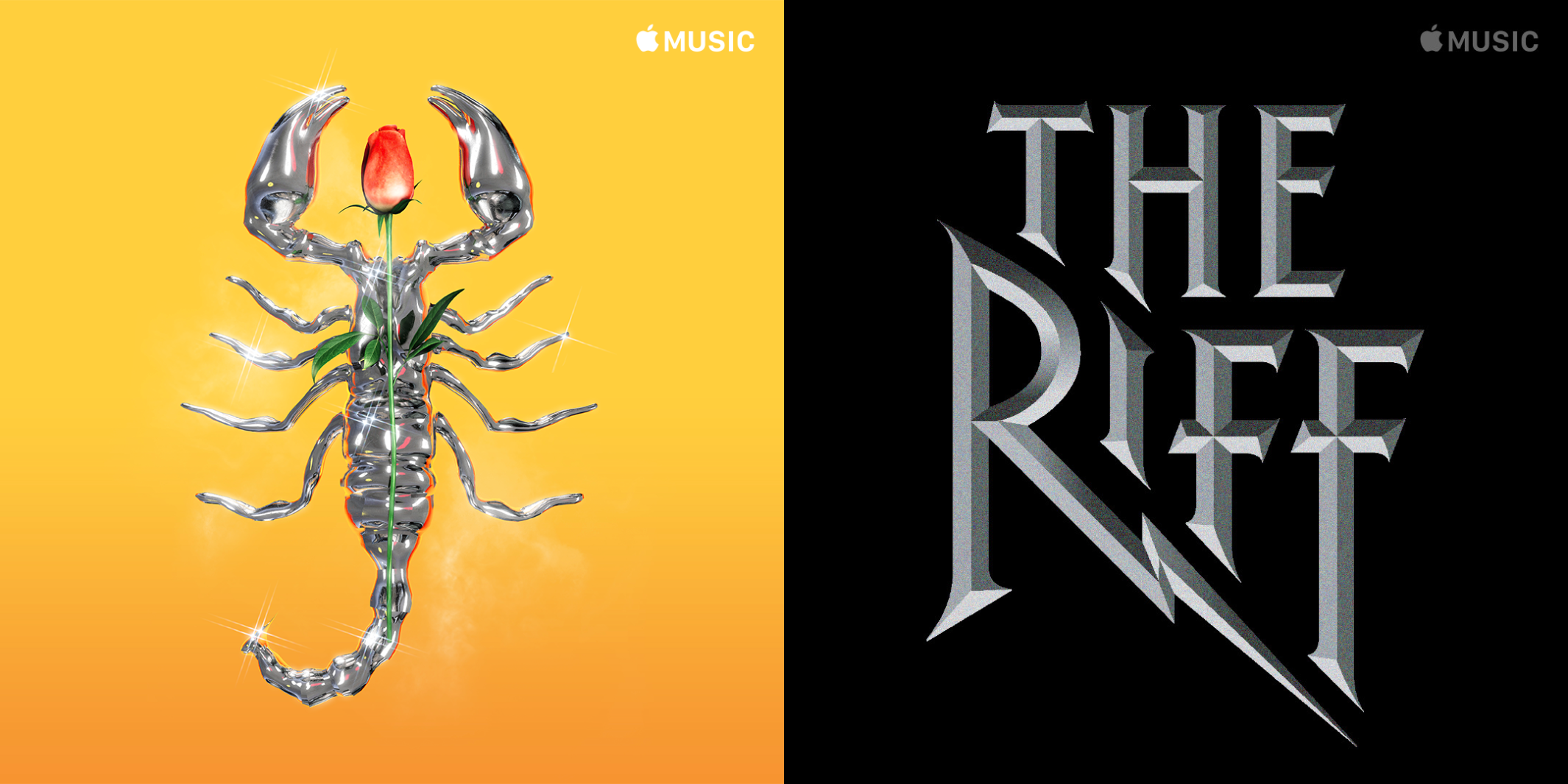
If you’re an Apple Music subscriber, you’re probably familiar with its playlist artwork styles. Some work well to tie together collections of related playlists like Decades, Essentials, and Deep Cuts. The trouble is though, that has also bred a certain sameness across Apple Music’s many playlists. That’s beginning to change as Apple rolls out custom playlist artwork from high-profile music industry artists.

Bijan Stephen of The Verge was told that the new artwork is designed to:

“connect more directly with the communities and the culture for which they were intended,” says Rachel Newman, Apple’s global director of editorial. Before now, Apple’s playlists had a uniform presentation that didn’t necessarily speak to the music. “In many ways, it’s a visual representation of the music that you will find inside that playlist,” said Newman.

Newman told Stephen that the company is rolling out the new artwork over the next few months and intends to redesign ‘many thousands’ of playlists.

The Verge also spoke to several artists involved in the project for its story. Stole “Moab” Stojmenov who created the cover of the Migos’ album Culture explained how he approached the challenge:

“Giving a shape and an image to music is never an easy process,” he wrote. “My style and my creative process have been always characterised by a significant presence of symbology and very powerful images, in addition to a very minimal and simple design. I think this project was somehow a bit different, but it also gave me the chance to create a real manifesto of my style.

The new playlist art published so far is excellent. There’s a wide range of styles that suit the music showcased in each playlist. By drawing on a wide range of talent from the music industry, the company should be able to imbue each playlist with a personality that was sometimes lacking in the past.

Permalink

Connected, Episode 233: AirDrop the Bass

Federico talks about the new MacStories Shortcuts Archive and the guys check in with iOS 12 halfway through its lifecycle.

On this week’s episode of Connected, we reassess the impact of iOS 12’s major new features. You can listen here.

Sponsored by:

  • ExpressVPN: High-Speed, Secure & Anonymous VPN Service. Get 3 months free with a 1-year package.
  • Hover: Extensions for anything you’re passionate about. Grab a .ME domain for $9.99.
  • Luna Display: The only hardware solution that turns your iPad into a wireless display for your Mac. Use promo code CONNECTED at checkout for 10% off.
Permalink

AppStories, Episode 101 – iOS 13 Wish List Part 1: Files and the iPad Home Screen

On this week’s episode of AppStories, we discuss our iOS 13 wishes for the Files app and iPad home screen.

Sponsored by:

  • DEVONthink – Information management reinvented: Save, organize, and recall all your documents whenever you need them. Use the link above or the code: promo-appstories-2019-01 at checkout for an exclusive 10% discount.
  • Linode – High-performance SSD Linux servers for all of your infrastructure needs. Get a $20 credit.

https://staging.macstories.net/podcasts/appstories/episodes/101/embed/

Permalink

Connected, Episode 232: The Unique Blend of Tattoos and Automation

After skipping follow-up, Myke and Federico try to explain the new USB branding, discuss fingerprint sensors and the merits of Evernote in 2019, and wish for apps that don’t exist (but should).

On this week’s episode of Connected, I share more details about my Evernote experiments as well as an idea for an app I’d like to exist. You can listen here.

Sponsored by:

  • eero: Never think about WiFi again. Get $100 off the ‘Eero base unit and 2 beacons package’, and a year of eero Plus.
  • Luna Display: The only hardware solution that turns your iPad into a wireless display for your Mac. Use promo code CONNECTED at checkout for 10% off.
  • Squarespace: Make your next move. Enter offer code CONNECTED at checkout to get 10% off your first purchase.
Permalink

USB 3.0 and USB 3.1 Merged Under New USB 3.2 Branding

Juli Clover, writing for MacRumors about the latest rebrand in USB spec land:

The USB Implementers Forum (USB-IF), this week announced a rebranding of the USB 3.0 and USB 3.1 specifications, under the USB 3.2 specification. As outlined by Tom’s Hardware, USB 3.0 and USB 3.1 will now be considered previous generations of the USB 3.2 specification.

Going forward, USB 3.1 Gen 1 (transfer speeds up to 5Gb/s), which used to be USB 3.0 prior to a separate rebranding, will be called USB 3.2 Gen 1, while USB 3.1 Gen 2 (transfer speeds up to 10Gb/s) will now be known as USB 3.2 Gen 2.

It gets better though:

If the swap between USB 3.1 Gen 1 and Gen 2 to USB 3.2 wasn’t confusing enough, each of these specifications also has a marketing term. The new USB 3.2 Gen 1 with transfer speeds up to 5Gb/s is SuperSpeed USB, while USB 3.2 Gen 2 with transfer speeds up to 10Gb/s is known as SuperSpeed USB 10Gbps. The USB 3.2 Gen 2x2 specification with transfer speeds up to 20Gb/s is known as SuperSpeed USB 20Gbps.

Make sure to check out the comparison table on MacRumors to admire the full extent of these changes.

As someone who’s been experimenting with USB-C accessories compliant with the USB 3.1 spec over the past few months, I can’t even begin to stress how confusing for the average consumer all of this stuff can be. It took me days to wrap my head around the differences between the physical USB-C connector, the underlying specs it can support, and the DisplayPort compatibility mode – and I do this for a living. In my experience, if you’re looking to buy modern USB accessories compatible with an iPad Pro or MacBook Pro, you’re better off looking for a technical spec label rather than the “friendly names” such as “SuperSpeed”, which manufacturers often fail to mention in their spec sheets.

Until today, if you wanted to buy USB-C accessories supporting the highest data transfer rates on the 2018 iPad Pro, you had to look for devices compliant with USB 3.1 Gen. 2; with today’s rebrand, the 2018 iPad Pro supports USB 3.2 Gen. 2 for transfers up to 10 Gbps, but not the similarly-named USB 3.2 Gen. 2x2. I’m sure this is going to be so easy to explain to someone who’s looking for the “fastest” USB-C cable for their iPad Pro.

Permalink

AppStories, Episode 100 – App Trends

On this week’s episode of AppStories, we discuss some of the trends we expect will drive app development on iOS and the Mac this year and into the future.

Sponsored by:

  • MacStadium – Private clouds and dedicated Macs for developers and teams doing iOS/Mac app development. Start a Mac mini subscription and get two months for the price of one with the code APPSTORIES.
  • Luna Display – The only hardware solution that turns your iPad into a wireless display for your Mac. Use promo code APPSTORIES at checkout for 10% off.

https://staging.macstories.net/podcasts/appstories/episodes/100/embed/

Permalink